Content
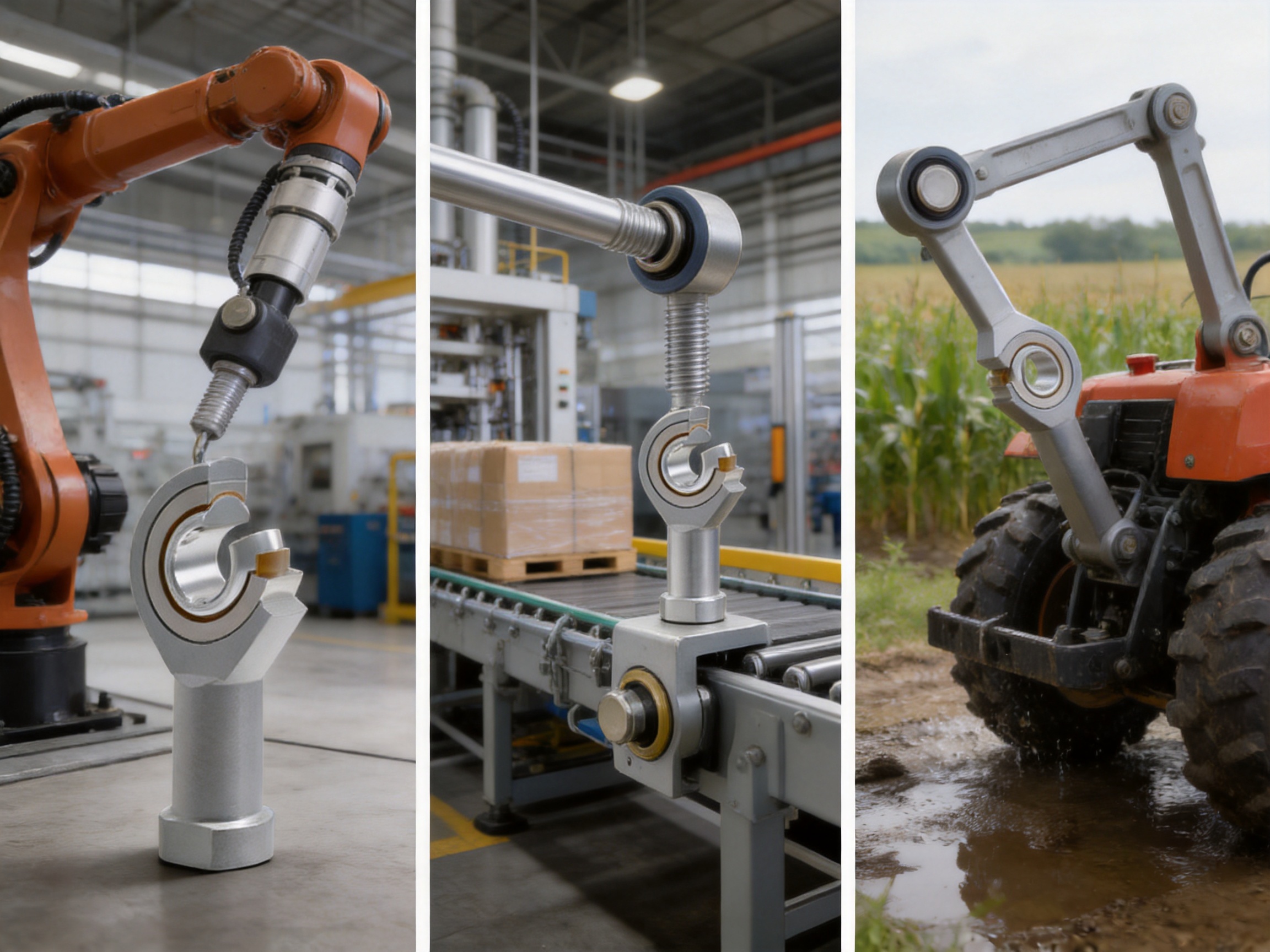
Rod end bearings are compact mechanical components that connect moving members while allowing controlled angular movement, oscillation, and misalignment. Although their appearance is simple, their performance has a direct influence on the precision, service life, noise level, and maintenance requirements of the complete machine. In automation equipment, robotic arms, linkages, control mechanisms, agricultural machinery, packaging systems, and general industrial assemblies, a rod end bearing must withstand alternating loads while maintaining smooth movement in a limited installation space.
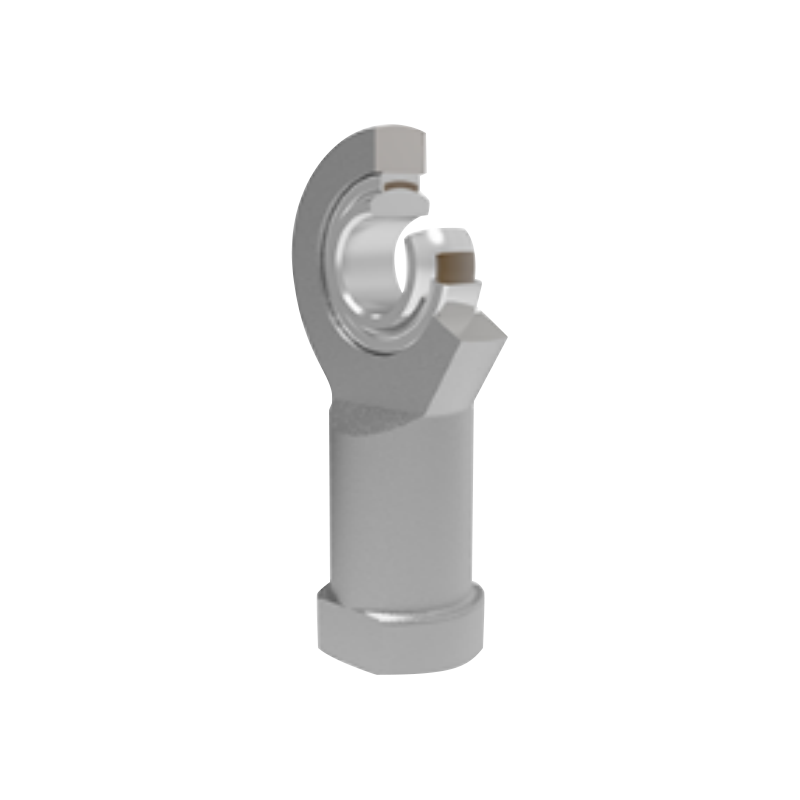
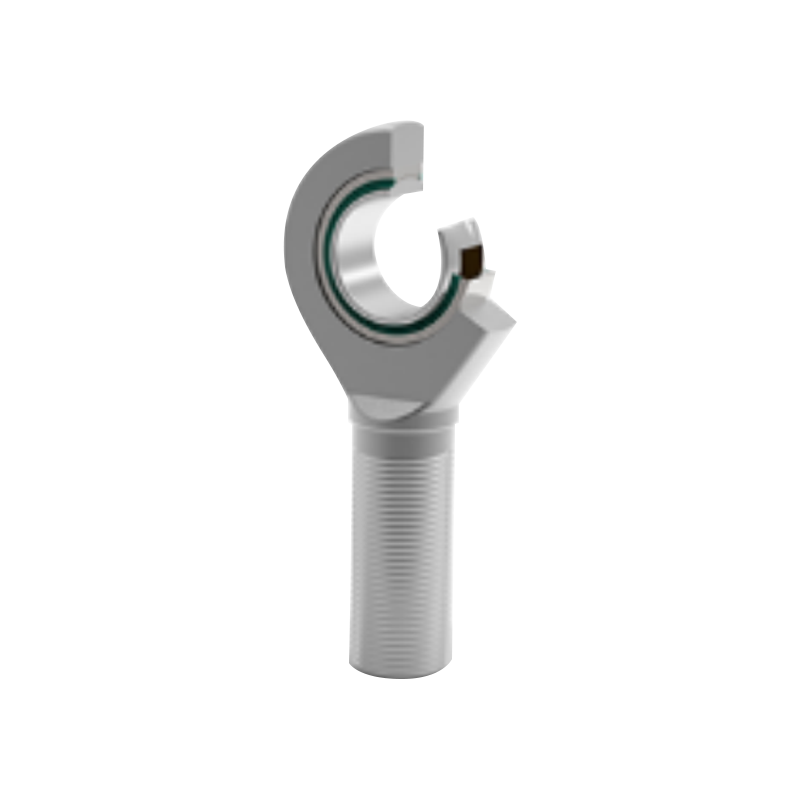
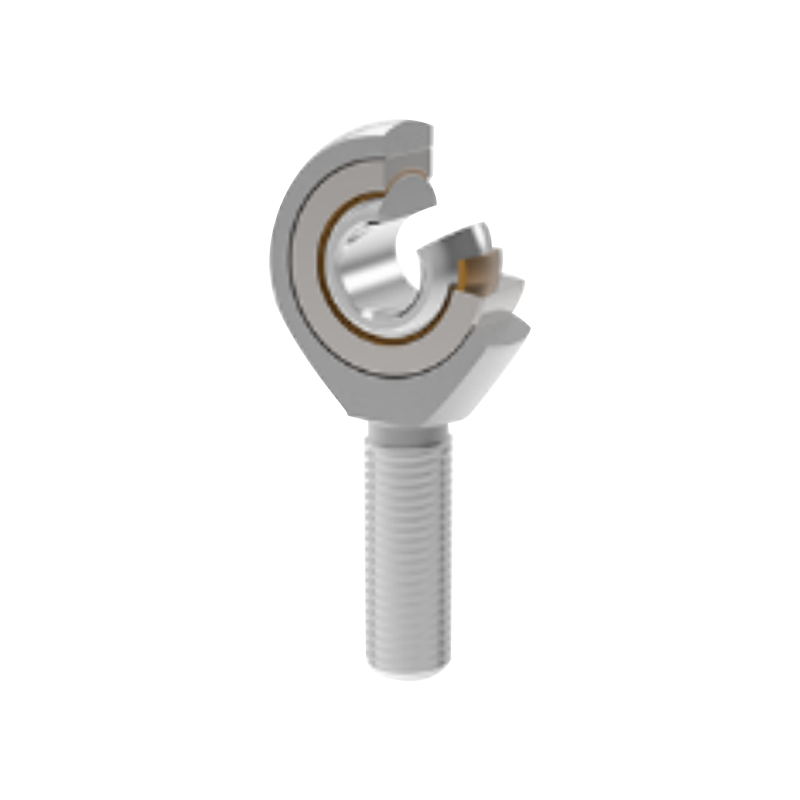
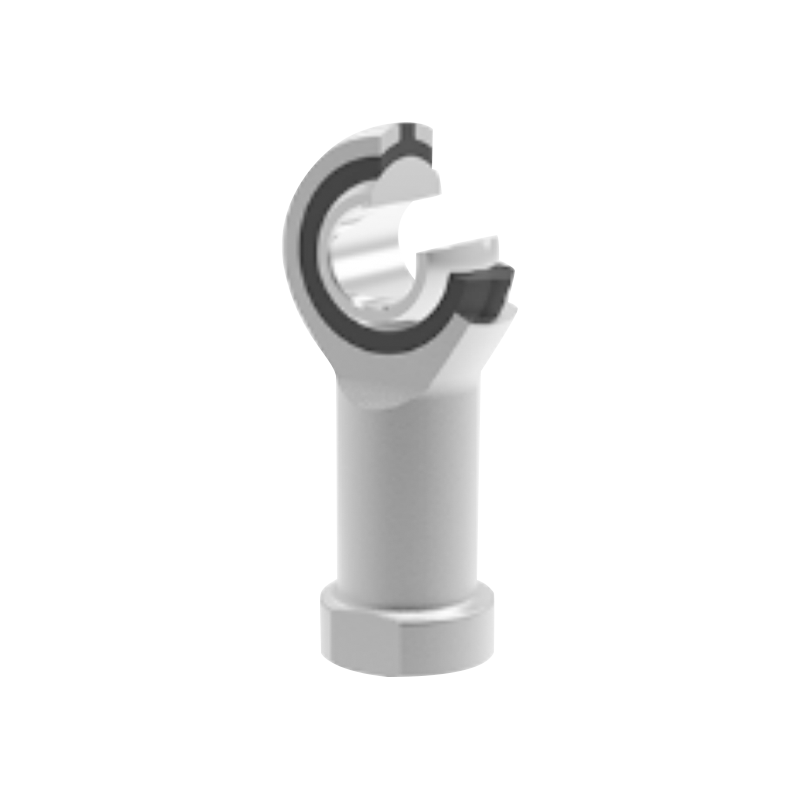
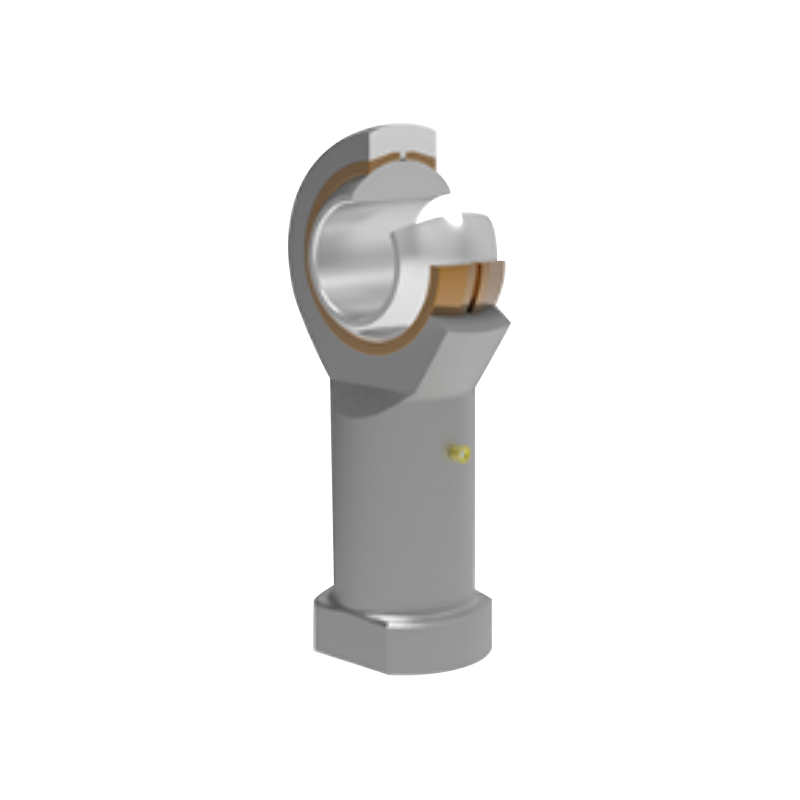
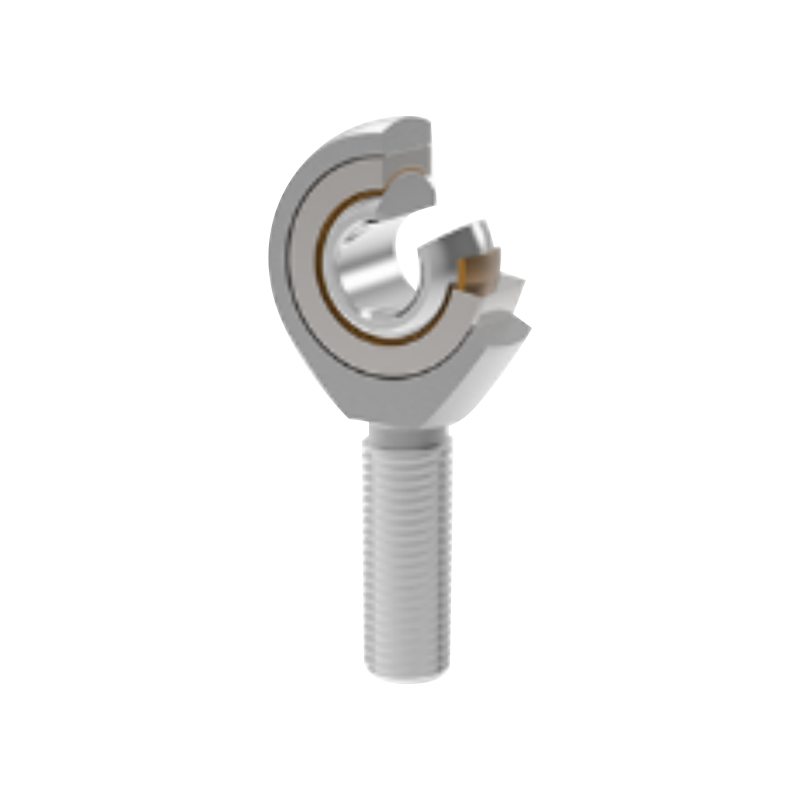
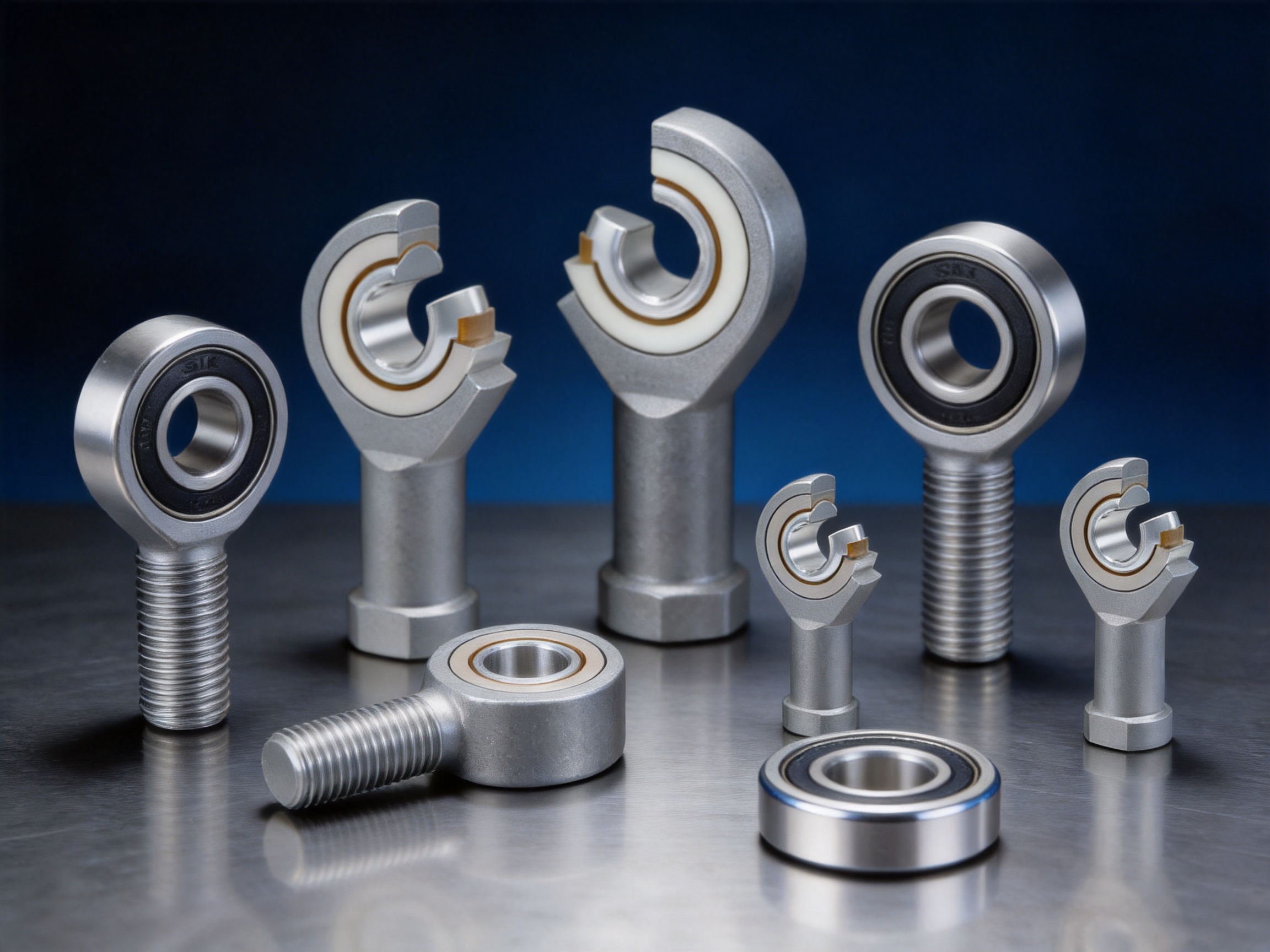
SIK and SAK maintenance-free self-lubricating rod end bearings are engineered for applications where conventional grease-lubricated rod ends may create unnecessary maintenance work or may not be suitable for continuous oscillating movement. Their design combines a carbon-steel rod end body, corrosion-resistant galvanizing, a bronze-based sliding layer lined with PTFE composite material, and a hardened, chrome-plated bearing steel inner ring. This material combination provides stable sliding performance, high wear resistance, and reduced dependence on external lubrication.
The product range includes internally threaded SIK…C models and externally threaded SAK…C models in nominal sizes from 5 mm to 20 mm. Metric thread customization, special thread precision, and left-hand thread configurations are available for equipment designers who require a non-standard connection. The operating temperature range is approximately -50°C to +150°C, allowing the bearings to serve in a broad range of industrial environments.
For buyers and engineers, the main value of this product is not limited to its basic load capacity. It lies in the combination of maintenance-free operation, material compatibility, compact construction, corrosion protection, customizable threads, and controlled manufacturing. These features make the SIK/SAK series a practical alternative to ordinary rod ends that rely on frequent relubrication or less durable sliding surfaces.
SIK/SAK Maintenance-Free Self-Lubricating Rod End Bearings
A rod end bearing, also called a spherical rod end or heim joint in some markets, is used at the end of a rod, shaft, actuator, or linkage. The bearing allows the connected parts to pivot relative to one another while transmitting radial, axial, or combined loads. Its spherical inner ring accommodates angular movement and helps prevent binding when the connected components are not perfectly aligned.
In a typical mechanism, one side of the rod end is connected to a threaded rod or actuator. The other side is attached to a pin, bolt, or shaft passing through the spherical bore of the inner ring. As the mechanism moves, the inner ring rotates or oscillates within the bearing housing. A properly selected rod end ensures that this movement remains smooth and that loads are transferred without excessive clearance or premature wear.
Rod ends are frequently installed in pairs or in complete linkage systems. Examples include robotic joints, linear actuator connections, steering systems, valve control mechanisms, suspension linkages, conveyor adjustments, lifting equipment, and machine-tool positioning assemblies. In each case, the bearing must tolerate the actual combination of load, movement frequency, angle, speed, environmental exposure, and installation accuracy.
Unlike a conventional rolling bearing, a self-lubricating rod end normally uses a sliding contact between the spherical inner ring and a lining material. The sliding pair must therefore be selected carefully. The SIK/SAK series uses a steel inner ring against a PTFE composite sliding surface supported by a bronze base. This arrangement is intended for oscillating movement and intermittent or continuous angular adjustment, where rolling elements may not offer the most practical solution.
The rod end body provides the structural connection between the bearing and the threaded rod or machine component. For the SIK/SAK series, the body is made from carbon steel. Carbon steel offers a useful balance of strength, machinability, dimensional stability, and cost efficiency. It can be formed and machined accurately while maintaining sufficient mechanical strength for a wide range of linkage applications.
The body is galvanized to improve resistance to rust and general atmospheric corrosion. Galvanizing creates a protective zinc layer over the steel surface. This is especially valuable in equipment exposed to humidity, condensation, workshop contaminants, outdoor air, or occasional contact with moisture. While galvanizing does not eliminate the need for proper storage and installation, it provides a meaningful improvement over an untreated carbon-steel surface.
The galvanized finish also improves the practical service life of the component during handling and assembly. Bearings may be stored for extended periods, transported through changing climates, or installed in machinery before the machinery is commissioned. A corrosion-resistant external surface helps preserve thread quality and reduces the risk that surface oxidation will interfere with assembly.
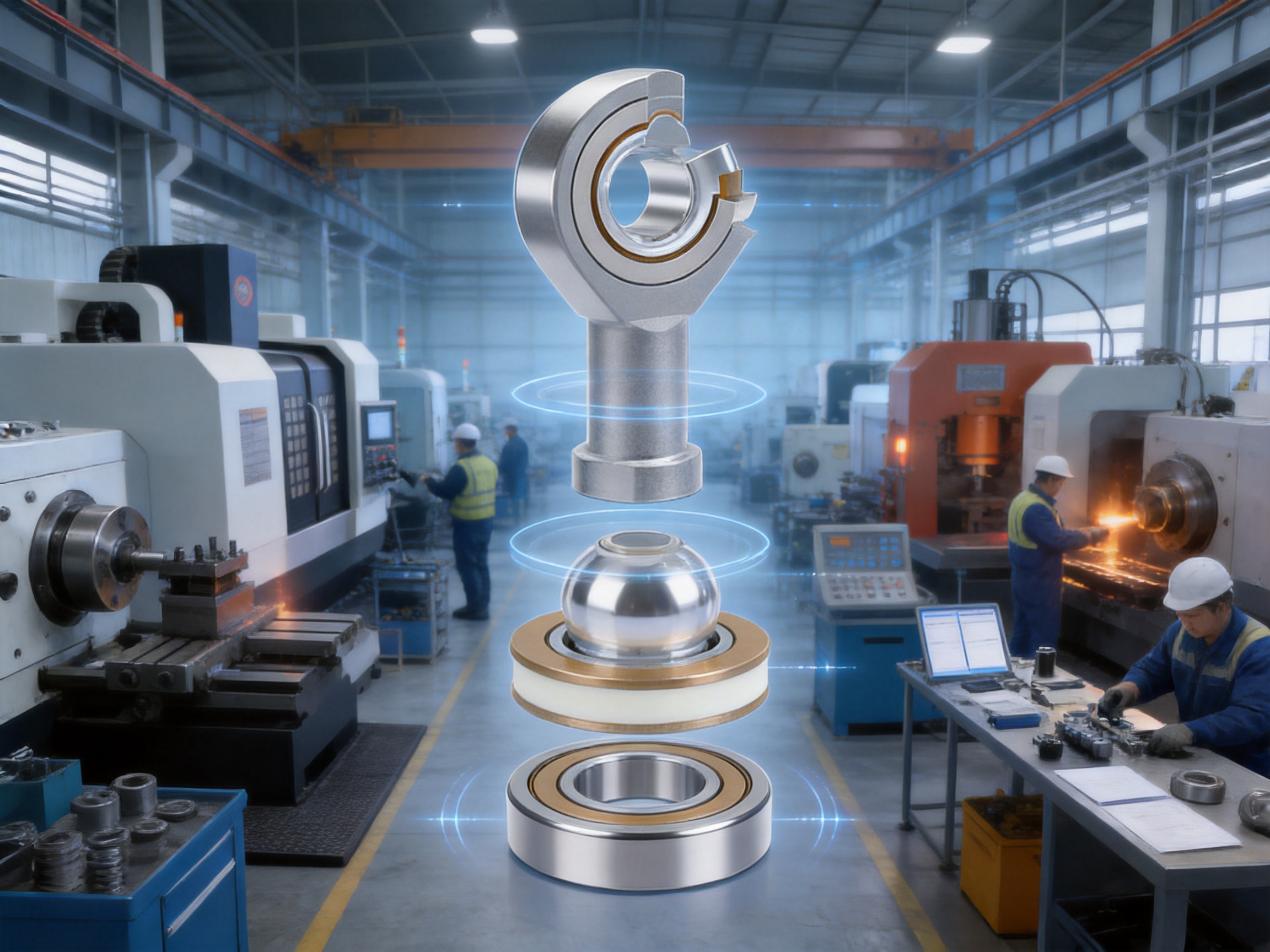
The outer ring incorporates a bronze base with PTFE composite material precisely lined on the sliding surface. This is the core of the maintenance-free design. Bronze provides a stable support structure for the lining, while PTFE composite material creates a low-friction interface against the spherical inner ring.
PTFE is widely recognized for its low coefficient of friction and favorable sliding characteristics. In a composite bearing lining, PTFE is engineered together with supporting materials so that the final layer offers a better balance of friction, wear resistance, dimensional stability, and load-carrying capability than unmodified PTFE alone. The lining is designed to remain in place during repeated oscillation and to provide consistent contact across the spherical sliding area.
The bronze base contributes strength and heat dissipation. It helps support the composite layer when the bearing is subjected to radial loading and repeated changes in direction. The result is a sliding system that is more suitable for industrial motion than a simple plastic-on-steel contact.
Because the PTFE composite lining is designed to provide self-lubricating performance, the bearing does not require routine grease application under normal conditions. This is particularly useful where lubrication points are difficult to reach, where grease could attract dust, or where equipment operators need to minimize scheduled maintenance.
The inner ring is made from bearing steel. It is integrally quenched and then spherically hard chrome plated. Bearing steel is selected for its hardness potential, fatigue resistance, dimensional stability, and ability to maintain a smooth finished surface.
Integral quenching increases the hardness and strength of the inner ring. The spherical geometry must remain accurate because the ring is the moving contact surface inside the PTFE-lined outer ring. Any significant distortion, roughness, or local defect can increase friction and accelerate lining wear. Heat treatment and finishing therefore play an important role in achieving reliable operation.
The hard chrome plating provides additional surface protection and high wear resistance. It creates a durable contact surface capable of working against the PTFE composite lining during repeated angular movement. Chrome plating can also improve resistance to surface oxidation and help preserve the spherical finish over the service life of the bearing.
The combination of a hardened steel substrate and hard chrome surface is a major advantage over basic uncoated steel rod ends. In applications with frequent oscillation, the improved surface hardness can help reduce scoring, galling, and early clearance growth. The result is a more stable bearing interface and more predictable performance.
In a conventional metal-on-metal rod end, grease is usually required to reduce friction and prevent excessive wear. The grease must be replenished at suitable intervals, and the bearing may need a grease fitting or an accessible lubrication path. If the grease dries out, becomes contaminated, or is washed away, the sliding surfaces may deteriorate quickly.
The SIK/SAK maintenance-free design replaces this dependence on external grease with a PTFE composite sliding layer. During operation, the PTFE-based surface provides a low-friction interface with the chrome-plated spherical inner ring. The lining is intended to supply the lubricating effect required for normal sliding and oscillating motion.
This design offers several operational benefits. First, it reduces the number of lubrication points in the machine. Second, it helps maintain cleaner operation in environments where grease can collect dust or product residue. Third, it supports installation in locations where a service technician cannot easily access the bearing. Fourth, it makes the bearing suitable for mechanisms where lubrication could contaminate nearby components.
Maintenance-free does not mean that the bearing can be ignored under every condition. Correct load selection, proper alignment, clean installation, protection from damaging chemicals, and routine inspection remain important. The self-lubricating lining is a performance feature, not a substitute for correct engineering practice.
The sliding friction pair for the product is steel and PTFE composite material. This should be considered during application review. The bearing is especially appropriate for oscillating movement, angular adjustment, and moderate-speed linkage motion. If an application involves high-speed continuous rotation, extreme shock loading, abrasive particles, or chemical exposure outside the material’s compatibility range, the manufacturer should be consulted before final selection.
The most visible advantage is reduced maintenance. A conventional grease-lubricated rod end may require periodic relubrication according to the machine’s operating schedule. In a large production line with hundreds of linkage points, these tasks consume labor and may require machine stoppage. Self-lubricating rod ends help simplify the maintenance program by removing routine grease application under normal operating conditions.
Reduced maintenance can also improve equipment availability. Every lubrication task introduces a possibility of missed service, incorrect grease selection, contamination, or accidental damage during access. A bearing designed for self-lubricating operation reduces these risks and helps the machine remain operational for longer intervals.
Grease can attract dust, metal particles, fibers, and other contaminants. In textile machinery, packaging equipment, clean production areas, and general automation systems, excessive grease may be undesirable. The PTFE composite lining supports low-friction movement without requiring an exposed grease reservoir.
A cleaner bearing environment can benefit adjacent sensors, seals, guideways, and workpieces. It can also simplify housekeeping and reduce the chance that lubricant will migrate into an area where it is not wanted.
The hardened, spherically chrome-plated inner ring is designed to resist wear during repeated sliding movement. Compared with a basic soft or untreated steel contact surface, this construction provides a stronger working interface for the PTFE composite lining.
The quality of the spherical surface is important because the load is distributed through the contact between the inner ring and outer-ring lining. A stable surface finish helps control friction and reduces the risk of localized damage. This contributes to smoother motion and longer functional life.
The galvanized carbon-steel body offers better environmental protection than an untreated carbon-steel body. It is suitable for many indoor industrial environments and selected outdoor or humid applications, subject to the actual exposure conditions.
Corrosion resistance is particularly important around threads. Rust on a thread can make adjustment difficult, prevent accurate installation, and complicate future replacement. The galvanized surface helps protect the connection area during storage, assembly, and operation.
Rod ends are often selected because they provide a compact connection while allowing angular movement. The SIK and SAK configurations offer internal- and external-threaded options, allowing designers to match the bearing to different linkage arrangements.
The available sizes cover nominal bore diameters from 5 mm to 20 mm. This range supports miniature mechanisms, light automation assemblies, medium-duty linkages, and a variety of actuator connections. Thread customization can further improve compatibility with existing equipment.
The stated operating temperature range is approximately -50°C to +150°C. This broad range supports applications exposed to cold environments, heated machinery, industrial process areas, and changing ambient conditions.
Temperature suitability should always be considered together with load, movement frequency, speed, surrounding chemicals, and installation conditions. The PTFE composite lining and metallic components may respond differently to temperature changes, so application-specific verification is recommended for severe thermal cycling or continuous operation at the limits.
The SIK…C series is the internally threaded configuration. The threaded bore is located inside the rod end body, allowing a male threaded rod or stud to be screwed into the bearing. This arrangement is useful when the connecting rod has an external thread or when the bearing is installed at the end of an adjustable male-threaded member.
The SAK…C series is the externally threaded configuration. A threaded shank extends from the rod end body and can be installed into a tapped hole, clevis, adjustment sleeve, or other internally threaded component. This configuration is often convenient when the machine structure provides an internal thread or when the rod end must be locked with a nut.
The model designation includes the nominal size and the letter C, identifying the self-lubricating configuration described in the product range. The provided series covers sizes such as SIK5C, SIK8C, SIK10C, SIK12C, SIK14C, SIK16C or SIK18C-related configurations, and SIK20C, together with corresponding SAK models. Product identification should be confirmed against the current manufacturer drawing before ordering, particularly where catalog records use different naming conventions for the 16 mm and 18 mm versions.
| Series | Thread arrangement | Nominal bore range | Sliding pair | Temperature range | Typical use |
|---|---|---|---|---|---|
| SIK…C | Internal metric thread | 5–20 mm | Steel / PTFE composite | -50°C to +150°C | Adjustable linkages with male-threaded rods |
| SAK…C | External metric thread | 5–20 mm | Steel / PTFE composite | -50°C to +150°C | Installations using tapped holes or locknuts |
The two configurations use the same general material concept but differ in how they integrate into the machine. Selecting the correct thread arrangement can simplify installation, reduce the number of adapters, and improve adjustment range. In a new design, the choice should be made according to the actuator, rod, clevis, available wrench clearance, locking method, and expected adjustment frequency.
The following table summarizes representative dimensions and load ratings from the supplied product data. Dimensions are in millimeters unless otherwise noted. Because rod-end dimensions can vary by revision, the official drawing and current quotation should be used for final design approval.
| Model | Bore d | Body width B | Ball diameter dₖ | Thread | Dynamic load kN | Static load kN | Approx. weight kg |
|---|---|---|---|---|---|---|---|
| SIK5C | 5 | 8 | 11.112 | M5 | 3.6 | 4.6 | 0.024 |
| SIK8C | 8 | 12 | 15.88 | M8 | 7.6 | 8.2 | 0.053 |
| SIK10C | 10 | 14 | 19.05 | M10 | 12 | 15 | 0.110 |
| SIK12C | 12 | 16 | Approximately 22.23 | M12 | 14 | 19 | 0.140 |
| SIK14C | 14 | 19 | 25.4 | M14 | 19 | 24 | 0.200 |
| SIK20C | 20 | 25 | 34.93 | M20 × 1.5 | 34 | 40 | 0.430 |
| SAK5C | 5 | 8 | 11.112 | M5 | 3.6 | 3.9 | 0.017 |
| SAK10C | 10 | 14 | 19.05 | M10 | 12 | 15 | 0.085 |
| SAK14C | 14 | 19 | 25.4 | M14 | 19 | 24 | 0.170 |
| SAK20C | 20 | 25 | 34.93 | M20 × 1.5 | 34 | 40 | 0.400 |
The table demonstrates that the product range combines compact dimensions with useful load-carrying capability. The smaller models are suitable for lightweight mechanisms and compact control systems, while the larger sizes provide substantially higher load ratings for heavier linkages. The exact application load must include static load, dynamic load, shock, vibration, misalignment, and safety factors.
Some supplied catalog entries contain typographical irregularities in model names or dimension fields. For example, certain rows use similar designations for different nominal sizes, and some values appear to have been converted or transcribed imperfectly. Engineers should therefore treat the table as a product-range guide and request a controlled dimensional drawing for production use.
Thread compatibility is often a decisive factor in rod-end selection. A bearing with the correct bore but the wrong pitch may require an adapter, reduce the available adjustment length, or create unnecessary assembly complexity. The manufacturer can provide products with different thread pitches or special thread precision upon request.
Customization may be useful for replacement projects, imported machinery, special actuators, and systems that require a precise adjustment relationship. The customer should provide the thread standard, nominal diameter, pitch, tolerance class, engagement length, and any required inspection criteria.
Left-hand thread versions are also available. In the product identification format, the letter “L” and the word “Left” are added after the model number and thread marking. An example of an internal-thread designation is SILK20C M20 × 1.5 Left 6H. An external-thread example is SALK20C M20 × 1.5 Left 6g.
Left-hand and right-hand rod ends are commonly used together in turnbuckle-style adjustment systems. Rotating the connecting tube can then lengthen or shorten the assembly without removing the rod ends. This arrangement is useful for alignment, tension adjustment, steering linkages, and machine setup procedures.
When ordering a left-hand thread, the thread direction should be clearly marked on drawings, purchase documents, packaging, and assembly instructions. Mixing left- and right-hand components without clear identification can lead to installation errors or unexpected adjustment direction.
UKL Bearing Manufacturing Co., Ltd. integrates research and development, production, and international distribution. Its stated manufacturing activities cover forging, turning, heat treatment, grinding, assembly, and packaging. Managing these operations within an integrated production system can improve process coordination and reduce dependence on unrelated subcontracting steps.
For a rod end bearing, consistency between these processes is essential. The body must be formed and machined accurately, the inner ring must receive appropriate heat treatment, the spherical surface must be finished correctly, and the PTFE composite lining must be positioned uniformly. Assembly must then maintain the required relationship between the inner ring and lined outer ring.
Integrated manufacturing also improves traceability. Production information can be connected to material batches, heat-treatment records, machining operations, inspection results, and packaging records. This provides a stronger foundation for quality analysis and customer support than a supply chain with poorly connected process stages.
Forging or controlled forming can improve the structural integrity of metallic components by producing a compact grain structure and reducing internal discontinuities. For rod end bodies and rings, appropriate forming practices contribute to strength and dimensional consistency before machining.
After forming, excess material and surface conditions must be controlled carefully. The subsequent turning and grinding operations establish the final geometry, thread dimensions, spherical profile, and contact surfaces. Process control at this stage helps prevent variation between batches.
Turning is used to create cylindrical and threaded features, internal bores, shoulders, external shanks, and other rotational geometries. Accurate turning is particularly important for the SAK external-threaded shank and the SIK internal-threaded body.
Thread quality affects installation torque, adjustment smoothness, engagement strength, and interchangeability. Tool condition, workholding, cutting parameters, and in-process measurement all influence thread performance. Special thread pitches or precision classes require additional control and inspection.
The inner ring is integrally quenched to improve hardness and wear resistance. Heat treatment must be controlled to obtain the required metallurgical properties while limiting distortion. Because the inner ring has a spherical geometry, dimensional changes during quenching must be considered during process planning.
After heat treatment, grinding and finishing operations can restore the required dimensions and surface quality. Hardness testing, dimensional inspection, and process documentation help confirm that the ring meets the intended performance requirements.
The spherical inner ring is one of the most important precision surfaces in the bearing. Grinding and finishing must produce a smooth, accurate spherical profile that contacts the PTFE composite lining evenly. A poor surface finish may increase friction, while an inaccurate profile may create localized loading and uneven wear.
Grinding also helps remove heat-treatment scale and correct controlled dimensional allowances. The final surface must be compatible with hard chrome plating and subsequent inspection. The manufacturing sequence is therefore designed around the relationship between geometry, hardness, coating, and sliding performance.
Hard chrome plating provides the inner ring with a wear-resistant working surface. Plating thickness, adhesion, surface condition, and post-plating finishing must be controlled. The coating should follow the spherical geometry without creating excessive roughness or dimensional distortion.
Properly managed chrome plating supports a stable friction pair with the PTFE composite lining. It also adds another layer of surface protection for applications where the bearing may encounter humidity or intermittent exposure to corrosive conditions.
The PTFE composite material is precisely lined on the sliding surface of the bronze-based outer ring. Uniform lining thickness and secure bonding are important to load distribution and wear behavior. The assembly process must avoid damaging the lining while inserting and positioning the hardened inner ring.
Final assembly may include checks for movement, fit, clearance, appearance, and thread condition. Depending on the customer’s requirements, additional inspection plans may be developed for dimensions, material certificates, coating quality, friction behavior, or load performance.
The company reports a production capacity of approximately 10,000 to 50,000 units per month and more than 15 years of OEM and ODM export experience. This combination is valuable for both standard and customized projects. Standard products can be supplied in repeatable quantities, while OEM customers can discuss special dimensions, markings, packaging, and thread configurations.
The stated employee range of 201 to 500 supports the presence of dedicated manufacturing, engineering, quality, sales, and after-sales functions. For international customers, this organizational structure can provide a more complete service than a purely trading-based supplier.
Robotic mechanisms contain multiple joints and linkages that repeatedly change angle. Rod ends can connect actuators, motion arms, sensor brackets, and compact adjustment assemblies. A maintenance-free design is beneficial because many robotic joints are enclosed or difficult to reach after installation.
The low-friction PTFE composite lining helps support smooth movement, while the hardened spherical inner ring provides a wear-resistant contact surface. In automation systems, reduced maintenance can help preserve production availability and reduce the need for frequent access to guarded areas.
Linear actuators often produce a straight pushing or pulling force while the connected machine member follows a curved path. A rod end at the actuator tip allows the necessary angular compensation. Without this flexibility, side loading may be transmitted into the actuator rod, increasing wear and reducing actuator life.
The internal and external thread options make the series suitable for different actuator architectures. Designers should verify the actuator’s maximum thrust, stroke frequency, side-load condition, and required articulation angle before choosing a size.
Machine tools and intelligent production systems frequently use adjustable linkages for guards, sensors, fixtures, tool changers, and control mechanisms. These components may operate in environments containing metal chips, cutting fluid mist, dust, or vibration.
The absence of routine grease requirements can be an advantage where lubricant contamination is undesirable. Nevertheless, protective covers or seals may still be necessary when abrasive particles can reach the sliding area.
Packaging machines often operate at high cycle rates and contain many small adjustment points. Rod ends can be used to connect cams, pneumatic cylinders, guide adjustments, and product-handling mechanisms. The small sizes in the SIK/SAK range can support compact equipment layouts.
Because production lines are sensitive to downtime, reducing scheduled lubrication points can simplify preventive maintenance. The correct bearing size should be selected based on peak dynamic load, not only the average operating load.
Agricultural equipment includes linkages exposed to vibration, changing temperatures, dust, moisture, and intermittent operation. The galvanized body offers useful external corrosion resistance, while the self-lubricating design can reduce service requirements in locations where grease access is inconvenient.
Outdoor applications require careful consideration of water, mud, fertilizers, pesticides, abrasive soil, and impact loading. The bearing should be protected from direct contamination whenever practical, and inspection intervals should be established according to the severity of service.
Other possible applications include valve actuators, inspection equipment, lifting devices, control levers, adjustable supports, suspension mechanisms, and custom machinery. The broad size range and thread customization options allow the series to be adapted to many connection designs.
Begin by identifying whether the bearing will carry radial load, axial load, or a combination. Rod ends are commonly loaded radially through the spherical bore, but the actual machine geometry may introduce axial forces or bending moments. The static and dynamic ratings should be compared with the maximum calculated service loads.
Dynamic load relates to movement during operation, while static load relates to stationary or slowly changing conditions. Shock loads, vibration, acceleration, and emergency stops may produce temporary forces greater than the nominal working load. A suitable safety factor should be applied according to the application and industry practice.
Self-lubricating rod ends are often selected for oscillating or alternating angular movement. The movement angle, frequency, and stroke pattern affect lining wear. Small-angle oscillation can be more demanding than broad movement because the same section of the sliding surface may experience repeated localized contact.
Designers should record the expected angular range, cycles per minute, daily operating hours, and total service-life target. These factors provide a more useful basis for evaluation than speed alone.
The rod end should be aligned with the direction of load as closely as possible. Excessive side loading can increase contact pressure and accelerate wear. The mounting bolt or shaft should fit the spherical bore correctly and should not create interference that prevents free angular movement.
During installation, the bearing should not be forced into position by twisting the body beyond its intended articulation range. The connecting rod should be adjusted without transmitting excessive torque through the spherical lining. Locknuts, spacers, washers, and retaining elements should be selected to preserve the designed movement.
Choose SIK for internal-threaded connections and SAK for external-threaded connections. Confirm the nominal diameter, pitch, thread tolerance, handedness, engagement length, and available installation space. For turnbuckle arrangements, verify that the left-hand and right-hand versions are correctly paired.
Review temperature, humidity, water exposure, dust, abrasive particles, chemicals, cleaning agents, and nearby lubricants. The stated temperature range is -50°C to +150°C, but continuous operation at either extreme should be assessed separately from short-term exposure.
Galvanizing protects the carbon-steel body, but aggressive chemicals can attack zinc coatings. Similarly, PTFE has broad chemical resistance, but the complete bearing assembly includes steel, bronze, chrome, and other materials that may respond differently to a specific chemical. Technical confirmation is recommended for chemical-processing environments.
Although the SIK/SAK series is maintenance-free in normal self-lubricating operation, careful installation remains essential. Before installation, inspect the bearing for transport damage, corrosion, thread deformation, foreign particles, or visible lining damage. Do not install a bearing that has been dropped or subjected to a heavy impact.
Clean the mating shaft, bolt, or threaded rod before assembly. The spherical bore and sliding area should remain free of chips, abrasive dust, and hard particles. Do not use aggressive tools directly on the chrome-plated spherical surface or PTFE composite lining.
When installing an internal-threaded model, engage the male thread smoothly and avoid cross-threading. When installing an external-threaded model, use the appropriate nut or tapped hole and ensure that sufficient thread engagement is achieved. Tightening torque should be appropriate for the mating hardware and should not distort the rod end body.
After assembly, move the linkage through its complete intended range. Confirm that there is no binding, interference, excessive angular restriction, or contact between the body and adjacent components. If the mechanism uses two opposing rod ends, adjust both sides carefully to prevent unintended preload.
Routine greasing is generally unnecessary and may be undesirable because unsuitable grease can attract contaminants or alter the intended sliding behavior. Instead, maintenance personnel should inspect for increasing play, unusual noise, rough movement, corrosion, lining displacement, cracked mounting hardware, and changes in system alignment.
Replacement intervals should be based on actual operating conditions. A bearing working under light loads and occasional motion may last significantly longer than one exposed to high-frequency oscillation, shock, contamination, or misalignment. Condition monitoring can include visual inspection, measured clearance, movement resistance, and the performance of the connected mechanism.
Rod end bearings are sensitive to small variations in geometry and material quality. A product may have the correct nominal bore and thread while still performing poorly if the spherical profile, lining adhesion, heat-treatment hardness, or surface finish is inconsistent.
For this reason, manufacturing capability is a major purchasing consideration. UKL’s stated process coverage—from forging and turning through heat treatment, grinding, assembly, and packaging—supports a more controlled production chain. The company’s R&D activities include high-precision bearings and components for CNC machines, robotics, and intelligent automation systems, which are demanding fields for dimensional accuracy and repeatability.
Digital production control can assist with process monitoring, batch traceability, inspection records, and corrective action. When combined with experienced production personnel and suitable measurement equipment, it helps convert design specifications into consistent products.
OEM and ODM support is another strength for customers developing equipment around a special linkage. Instead of modifying the machine to fit a standard bearing, the customer may request a different thread pitch, thread precision, left-hand arrangement, marking, or packaging method. Such customization can improve integration and reduce the number of separate adapters and transition parts.
International distribution experience is also relevant. Export customers may require stable packaging, clear product identification, consistent documentation, shipment coordination, and technical communication across time zones. A supplier with established distribution to Europe, Asia, Africa, Russia, the United States, and other markets is positioned to support broader sourcing programs.
Grease-lubricated metal rod ends can be effective in heavy-duty or highly loaded applications, particularly where regular lubrication is easy and acceptable. However, they require a suitable grease, access for service, and protection against contamination. Their performance can decline if maintenance is missed.
The SIK/SAK self-lubricating design is advantageous where maintenance access is limited, clean operation is preferred, or grease application would be inconvenient. It may reduce operating costs associated with lubricants, service labor, and planned downtime.
Plastic rod ends may offer low cost and light weight, but their load capacity, dimensional stability, temperature range, and wear resistance can be limited depending on the polymer and design. The bronze-supported PTFE composite lining used in this product provides a more structured sliding system, while the hardened chrome-plated steel inner ring offers a durable contact surface.
This combination is better suited to industrial applications requiring stronger mechanical performance and more controlled wear behavior than a basic molded plastic joint.
Rolling-element bearings are highly effective for continuous rotation and low-friction high-speed movement. A rod end with a sliding spherical interface, however, is often more practical for oscillating motion, angular misalignment, and compact linkage connections. It can accommodate the geometric requirements of a pivoting joint without requiring a separate housing, shaft arrangement, or seal system.
The correct choice depends on the motion profile. The SIK/SAK series should be evaluated as a self-lubricating spherical sliding solution rather than as a direct replacement for every rolling bearing.
UKL Bearing Manufacturing Co., Ltd. was established in 2020 according to the supplied company information and operates as an integrated manufacturer and trader. The company reports a workforce of approximately 201 to 500 employees and more than 15 years of OEM and ODM export experience. Its business model combines manufacturing resources with international customer service.
The company’s production facilities include multiple lines for forging, turning, heat treatment, grinding, assembly, and packaging. This manufacturing structure is suitable for bearing products that require close coordination among material preparation, precision machining, surface treatment, and final inspection.
UKL also reports monthly production capacity in the range of 10,000 to 50,000 units. This capacity can support repeat orders for distributors, machine builders, and industrial OEMs while allowing the company to handle customized products in accordance with project requirements.
The R&D focus includes cross roller bearings, dual-direction thrust angular contact ball bearings, and other precision products used in CNC machinery, robotics, and intelligent automation. This technical background complements the requirements of maintenance-free rod ends, especially where customers need controlled motion, compact design, and reliable service life.
The company’s export markets include the United States, Italy, Germany, Poland, South Africa, Egypt, India, and other regions. Its multilingual service team provides technical response, installation guidance, and after-sales support. For international buyers, these capabilities can simplify communication from initial product selection through production, shipment, and field application.
When requesting a quotation, customers should provide the model or desired configuration, nominal bore, thread arrangement, thread pitch, thread direction, quantity, load, movement pattern, temperature, and operating environment. A sketch or assembly drawing is helpful when the bearing will be used in a custom linkage.
For OEM projects, it is useful to specify packaging, marking, inspection reports, material documentation, surface-finish requirements, and delivery schedule. If the bearing will be installed in a regulated industry, customers should identify any applicable quality, traceability, or documentation requirements at the beginning of the project.
Before mass production, a sample evaluation can verify thread fit, articulation angle, mounting clearance, movement smoothness, and compatibility with the connected rod or actuator. Functional testing under representative loads can provide additional confidence in the final design.
Replacement buyers should compare more than the nominal bore. The existing bearing’s thread direction, body width, ball diameter, overall length, load rating, mounting style, and operating environment must all be considered. A visually similar rod end may not be interchangeable if its thread, articulation, or load capacity differs.
It means the bearing is designed to operate with a self-lubricating PTFE composite sliding layer and normally does not require routine grease replenishment. The bearing still requires correct installation, suitable load selection, environmental protection, and periodic inspection for wear or damage.
SIK models use an internal metric thread, while SAK models use an external metric thread. The correct series depends on how the rod end will connect to the actuator, rod, clevis, tapped hole, or adjustment assembly.
The sliding friction pair is bearing steel and PTFE composite material. The outer ring has a bronze base with PTFE composite material on the sliding surface. The inner ring is made from bearing steel, quenched, and spherically hard chrome plated.
The stated operating temperature range is approximately -50°C to +150°C. The suitability of continuous operation near the upper or lower limit should be verified together with the expected load, movement frequency, chemicals, and thermal cycling.
Yes. Left-hand thread versions can be provided. The designation should include “L” and “Left” after the model number and thread marking, with the correct thread tolerance and pitch clearly specified.
Products with different pitches or special thread precision can be provided upon request. Customers should submit the required diameter, pitch, tolerance class, thread direction, and connection dimensions for confirmation.
The galvanized carbon-steel body provides improved rust prevention and is useful in many humid or outdoor environments. However, direct exposure to salt spray, aggressive chemicals, standing water, mud, or abrasive contaminants should be evaluated carefully. Additional protection may be required.
Routine greasing is generally not required for the self-lubricating sliding system. Applying an unsuitable lubricant may attract dust or affect the intended friction behavior. Follow the manufacturer’s application guidance and consult technical support before adding lubricant.
Check the thread, mounting bolt, bore fit, alignment, articulation angle, locknut arrangement, and clearance from adjacent parts. Move the completed linkage through its full range to confirm that it does not bind or exceed the bearing’s intended angular movement.
Yes. Their compact form, self-lubricating sliding layer, corrosion-resistant body, and customizable thread options make them suitable for many robotic and automation linkages. The load, cycle rate, motion angle, accuracy requirement, and contamination level should be reviewed for each robot design.
The bronze-based PTFE composite lining and hardened chrome-plated steel inner ring provide a more robust sliding interface than many basic plastic rod-end designs. This can offer better wear resistance and load capability, although the final comparison depends on the specific competing product and application.
Provide the bore diameter, internal or external thread, thread pitch, left- or right-hand direction, dynamic and static load, movement angle, cycle frequency, temperature, environmental exposure, available space, and desired service life. A machine drawing is recommended for custom applications.
SIK/SAK maintenance-free self-lubricating rod end bearings provide a practical solution for industrial mechanisms that require controlled angular movement, compact installation, and reduced maintenance. Their carbon-steel galvanized bodies protect the external structure, while the bronze-supported PTFE composite lining provides low-friction self-lubricating performance. The quenched and hard chrome-plated bearing steel inner ring contributes a durable, wear-resistant spherical contact surface.
The product range covers internal- and external-threaded configurations from 5 mm to 20 mm, with options for different pitches, special thread precision, and left-hand threads. This flexibility allows the bearings to be integrated into standard assemblies, turnbuckle adjustments, actuators, robotics, machine tools, agricultural equipment, and custom automation systems.
Compared with conventional grease-dependent rod ends, the series can reduce lubrication work, simplify maintenance planning, and support cleaner machine operation. Compared with basic plastic alternatives, its metallic support structure and hardened contact surface offer a stronger engineering solution for many industrial conditions. Its suitability should nevertheless be confirmed through load, motion, temperature, and environmental analysis.
UKL Bearing Manufacturing Co., Ltd. strengthens the product offering through integrated manufacturing, R&D capability, OEM and ODM experience, international distribution, and a production process covering forging, turning, heat treatment, grinding, assembly, and packaging. For customers seeking a dependable self-lubricating rod end bearing supplier, this combination of product design and manufacturing support provides a strong basis for long-term cooperation.
1. Supplied SIK/SAK Maintenance-Free Self-Lubricating Rod End Bearings product information and dimensional data.
2. Supplied UKL Bearing Manufacturing Co., Ltd. company profile and manufacturing capability statement.
3. General engineering principles for spherical plain bearings, rod ends, sliding friction pairs, and self-lubricating bearing materials.
4. General technical guidance for bearing load selection, installation alignment, thread engagement, and maintenance inspection.
5. General materials engineering references concerning PTFE composites, bronze-backed sliding layers, bearing steel heat treatment, and hard chrome surface protection.
Product Categories
Contact Us

Jane@ukl-bearing.com
Jenny@ukl-bearing.com
Andy@ukl-bearing.com
Ivy@ukl-bearing.com

+86-510- 88763239
+86-15371057968

No.1 Hehuan Road, Hudai Town, Binhu District, Wuxi City.
Ready to Begin?
Get in Touch

Now!
UKL BEARING
 English
 Español
 русский