
Content
For motor and gearbox designs where thermal expansion of the shaft is a critical concern, the NU 309 bearing provides the most reliable solution. Its unique design—an inner ring without flanges—allows the shaft to expand or contract freely in both axial directions without inducing detrimental internal loads. This capability makes the NU 309 cylindrical roller bearing the preferred choice for the floating/non-locating position in high-speed, high-power drive systems, directly preventing premature bearing failure due to axial thermal stress.
Engineers select the NU 309 bearing not just for its high radial load capacity, but for this specific, indispensable functionality. It solves a fundamental mechanical problem, ensuring operational stability and long service life in applications ranging from industrial gearboxes to large electric motors.
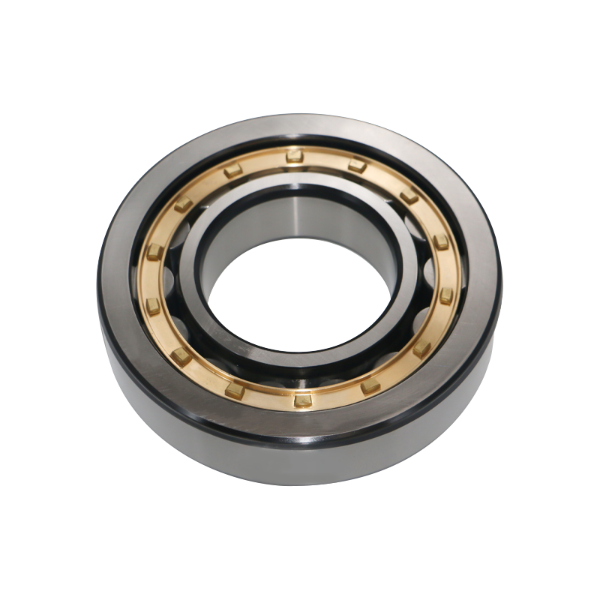
The defining characteristic of an NU-style bearing is the inner ring completely free of integral flanges. Both flanges are located on the outer ring, guiding the roller and cage assembly. This deliberate design delivers two critical engineering advantages:
1. Unrestricted Axial Movement
The shaft, along with the inner ring, can slide axially within the bearing. This accommodates thermal expansion or contraction of the shaft—a common occurrence in motors and gearboxes during start-up and shut-down cycles—without generating harmful axial forces that would otherwise overload the bearing.
2. Pure Radial Load Support
As a pure floating bearing, the NU 309 cylindrical roller bearing is designed to support only heavy radial loads. It is intentionally not intended for any axial load. This clear load-path definition allows engineers to assign axial load management to a dedicated locating bearing (e.g., a deep groove ball bearing or a NUP-design bearing) at the other end of the shaft, optimizing the total system design.
In practical terms, this means when you specify an NU 309 bearing, you are selecting a component with a single, well-defined purpose: to handle radial forces while accommodating linear shaft growth.
The NU 309 bearing dimensions are standardized at 45mm bore (d) x 100mm outside diameter (D) x 25mm width (B). Within this compact envelope, the bearing delivers significant radial load capacity due to the line contact between the rollers and raceways. For a standard NU 309 ECP bearing design, key performance indicators are:
These values confirm that the NU 309 bearing load rating is exceptionally high for its size, making it suitable for applications with heavy radial loads, such as industrial gearbox high-speed shafts or main drive motors.
Understanding the subtle design differences between single-row cylindrical bearing types is essential for correct application. Use the table below to differentiate the NU 309 from its closest variants:
| Feature | NU 309 (Floating) | NJ 309 (Locating/Floating) | NUP 309 (Locating) |
|---|---|---|---|
| Inner Ring Flanges | None | One integral flange (on one side) | One fixed flange + one loose flange ring |
| Axial Load Capacity | None (pure radial) | Unidirectional (one direction) | Bidirectional (both directions) |
| Primary Function | Accommodates shaft expansion | Light axial location in one direction | Shaft locating (fixed end) |
| Typical Application | Floating bearing in motor or gearbox | Locating bearing with light thrust in one direction | Locating bearing with full bidirectional thrust |
When performing an NU 309 vs NJ 309 analysis, the key decision factor is whether your application requires the bearing to accommodate axial shaft movement (choose NU) or also handle some axial load (choose NJ). The NU 309 bearing interchange or SKF NU 309 equivalent search often focuses on these functional specifications.
The NU 309 for gearbox applications is exceptionally common, specifically on the high-speed input shaft. Here, the shaft heats up rapidly from high rotational speed, creating significant thermal expansion. The NU 309 acts as a free-side or floating bearing, allowing this expansion to occur without causing axial preload that could lead to overheating and seizure. Similarly, the floating bearing electric motor configuration is standard practice for motors over a certain frame size, protecting the drive-end and non-drive-end bearings from thermally induced failure.
Another practical example is the NU 309 for compressor applications. In rotary screw or centrifugal compressors, the rotor shaft expands considerably as the machine reaches operating temperature. An NU 309 on the non-thrust side of the rotor provides the necessary axial freedom, ensuring the critical internal clearances between the rotors are maintained for optimal efficiency.
When specifying an NU 309 bearing, the suffix codes define crucial design details that affect performance. For example:
Equally important is selecting the proper NU 309 bearing clearance. For applications with a high temperature gradient between the inner and outer rings, a C3 (greater than normal) radial internal clearance is often required. Specifying an NU 309 ECP/C3 bearing ensures that even under severe thermal conditions, the bearing does not run into negative clearance, which would drastically reduce its service life.
For engineers with legacy equipment, knowing an NU 309 bearing equivalent or exact NU 309 bearing replacement options is vital. Always match the dimensions, load ratings, design suffix (ECP, ECM, etc.), and internal clearance grade (e.g., C3) to ensure a direct and reliable substitution. Correctly understanding the NU 309 bearing operating temperature range and lubrication requirements is also critical for achieving the calculated L10 lifespan.



Product Categories
Contact Us

Jane@ukl-bearing.com
Jenny@ukl-bearing.com
Andy@ukl-bearing.com
Ivy@ukl-bearing.com

+86-510- 88763239
+86-15371057968

No.1 Hehuan Road, Hudai Town, Binhu District, Wuxi City.
Ready to Begin?
Get in Touch

Now!
UKL BEARING
 English
 Español
 русский
