
Content
To correctly install the 2206 AV Nilos Ring, position it so the convex (open) side points toward the bearing raceway. The ring must seat flush against the bearing outer ring. The 2206 AV Nilos Ring has a design clearance c = 0.3 mm that must remain free from distortion. Use a flat drift or a press with even force around the circumference – never hammer directly on the seal.
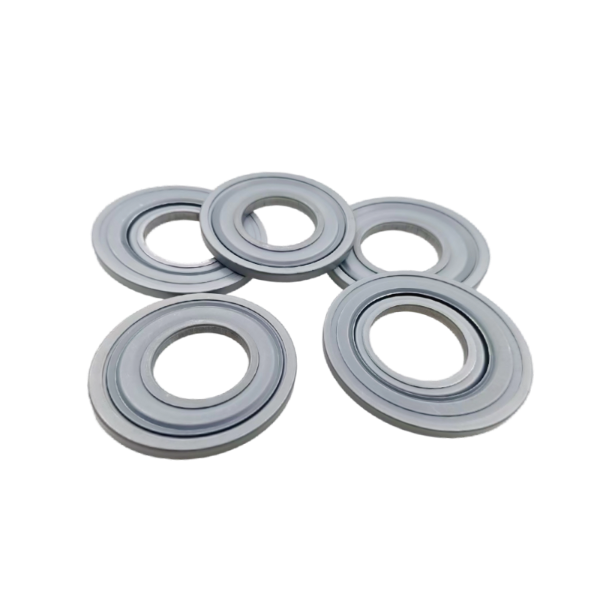
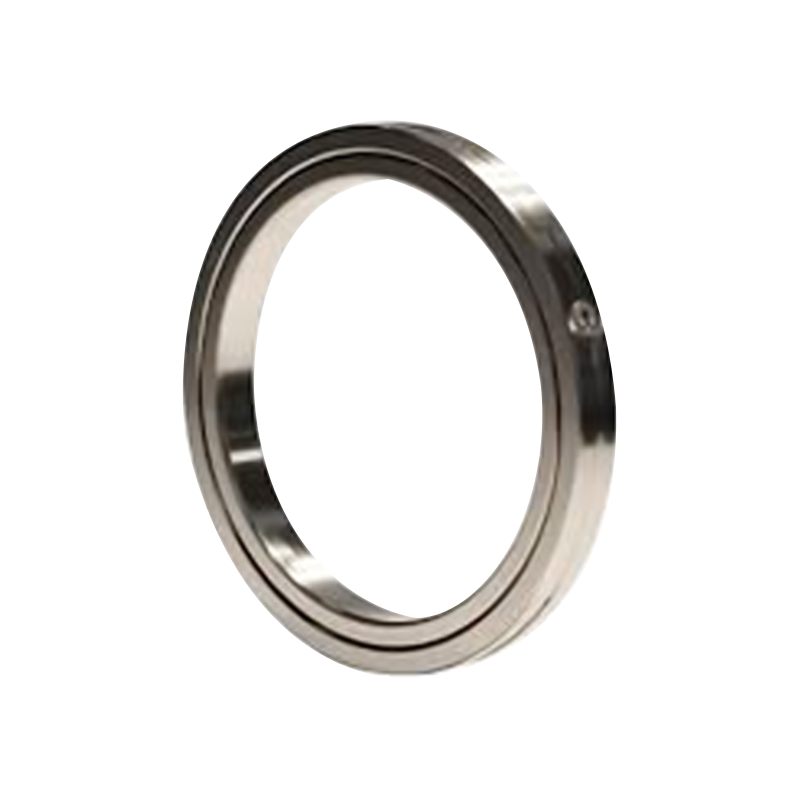
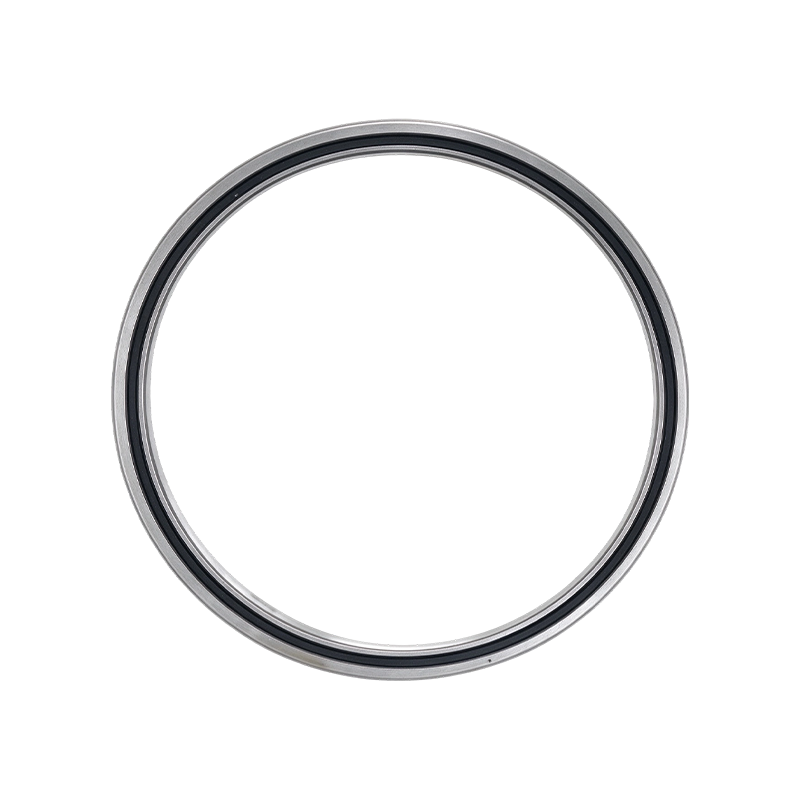
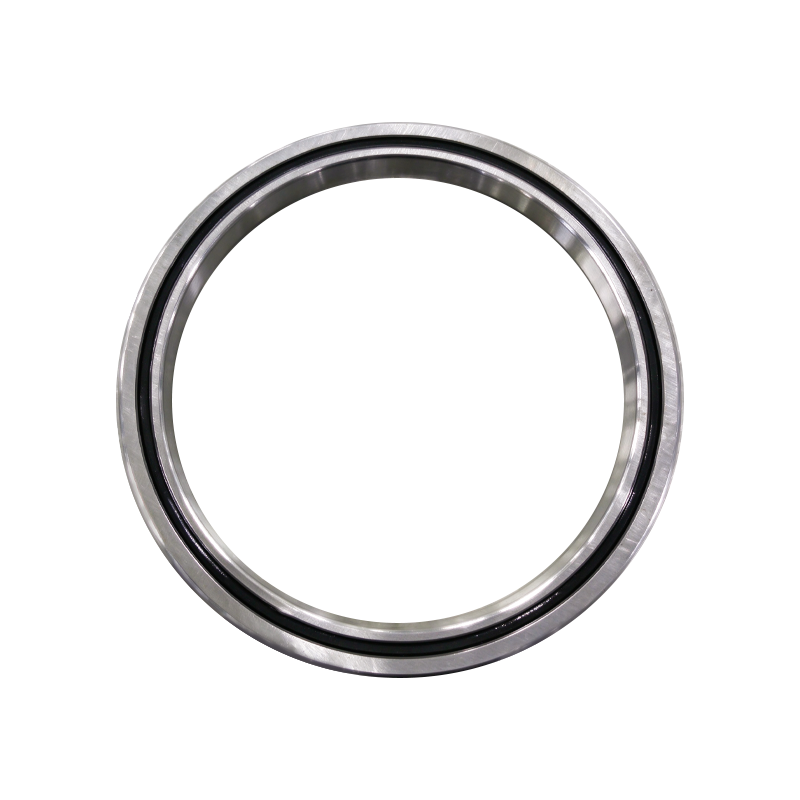
The 2206 AV Nilos Ring is a precision metal labyrinth seal, not a rubber lip seal. It consists of a formed steel ring with specific geometry. According to standard dimensions, this Nilos ring has an inner diameter (d) of 30 mm, outer diameter (D) of 56.2 mm, width (a) of 44 mm, and lip height (i) of 2.5 mm. The steel thickness (c) is 0.3 mm. This rigid design creates a non-contact labyrinth that retains grease while allowing free rotation, unlike rubber seals that create friction and wear.
Before installing the 2206 AV Nilos Ring, verify that the bearing outer ring and housing shoulder are clean, dry, and free of burrs. Any particle larger than 0.05 mm can lift the Nilos ring, destroying the precise 0.3 mm clearance.
Hold the 2206 AV Nilos Ring with the open side (the side with a visible groove or recess) facing the bearing inner ring. The flatter, closed side should face outward. Installing this Nilos ring backward will trap debris against the bearing, causing rapid wear.
Use an arbor press or hydraulic press with a flat sleeve that contacts only the outer rim of the 2206 AV Nilos Ring. The recommended seating force is 1.5 – 3.0 kN. If a press is unavailable, use a soft-faced mallet and a tubular drift that matches the outer diameter (56.2 mm). Tap in a star pattern – 6 to 8 light taps – to prevent tilting.
After seating the 2206 AV Nilos Ring, the radial gap between the ring and the bearing inner ring should be 0.2 – 0.4 mm. Use a feeler gauge at four points (0°, 90°, 180°, 270°). A variation larger than 0.1 mm indicates misalignment. The axial clearance (c) must remain at the designed 0.3 mm – any reduction means the Nilos ring is deformed.
Accurate installation of this Nilos ring depends on matching the seal to the bearing dimensions. Below are the key tolerances:
Deviations beyond these tolerances will either lock the bearing (if the Nilos ring is too tight) or allow contamination ingress (if too loose). Always measure before installation.
Avoid these errors by using a properly sized press tool (contact diameter = 56.2 mm) and double-checking orientation before seating the 2206 AV Nilos Ring.
After pressing the 2206 AV Nilos Ring into the housing, perform two quick verification checks:
If both conditions are met, this Nilos ring provides the intended labyrinth effect – retaining grease and blocking coarse dust (particles <30 µm are generally harmless).
Using proper tools prevents distortion and ensures the 0.3 mm design clearance of the Nilos ring is maintained.
No. The 2206 AV Nilos Ring is a precision-formed metal component that deforms slightly during pressing. Removal almost always changes the c=0.3 mm thickness or creates flat spots on the labyrinth profile. Always use a new Nilos ring for reliable sealing.
The 2206 AV Nilos Ring requires a housing bore of 56.2 mm H7 tolerance (typically 56.2 +0.03 / -0.0 mm). A bore larger than 56.25 mm will not secure the Nilos ring – it may spin or fall out. If the bore is worn, use a retaining compound specified for metal seals or replace the housing.
Lightly oil the housing bore and the outer rim of the 2206 AV Nilos Ring with a thin grease (e.g., NLGI 2). Do not let grease enter the labyrinth groove of the Nilos ring – it may attract abrasive dust. The inner clearance c = 0.3 mm should remain dry to function as a true labyrinth.
Unlike rubber seals that create friction (0.1–0.3 Nm drag torque), the 2206 AV Nilos Ring is a non-contact metal seal – it adds near-zero friction. Rubber seals fail above 100°C while this Nilos ring withstands 200°C+. However, a Nilos ring cannot seal against liquids or very fine dust (<10 µm) as effectively as a contact lip seal. Choose based on your operating conditions.
When the 2206 AV Nilos Ring is installed properly (open side toward bearing, uniform 0.3 mm clearance, no distortion), the bearing will achieve:
Deviations from the installation procedure cause premature bearing failure within 50–200 hours. Always treat the 2206 AV Nilos Ring as a precision component – handle it carefully, install it correctly, and it will protect your bearing for thousands of hours.


Product Categories
Contact Us

Jane@ukl-bearing.com
Jenny@ukl-bearing.com
Andy@ukl-bearing.com
Ivy@ukl-bearing.com

+86-510- 88763239
+86-15371057968

No.1 Hehuan Road, Hudai Town, Binhu District, Wuxi City.
Ready to Begin?
Get in Touch

Now!
UKL BEARING
 English
 Español
 русский
