
Content
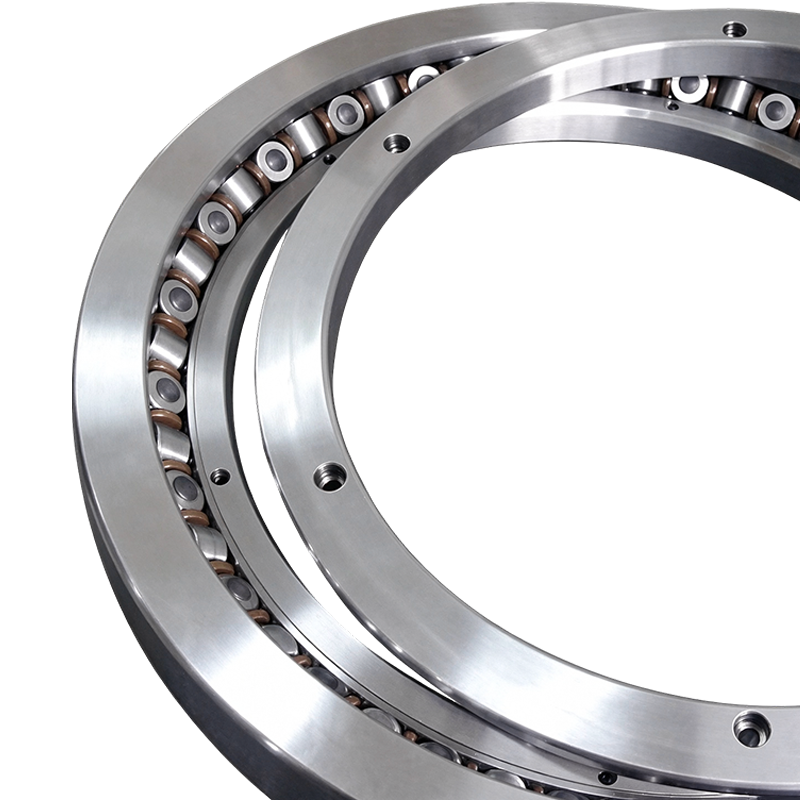
Robot joints keep getting smaller, lighter and more tightly packed. Collaborative arms, humanoid hip and wrist modules, and direct-drive indexing tables all push designers toward thin-section bearings that still have to carry moments, axial loads and tilting forces. Industry estimates put demand for crossed roller bearings in robot joints on a compound annual growth rate of roughly 9 percent through 2032, and the fastest growth is in ultra-thin sizes where space is most limited.
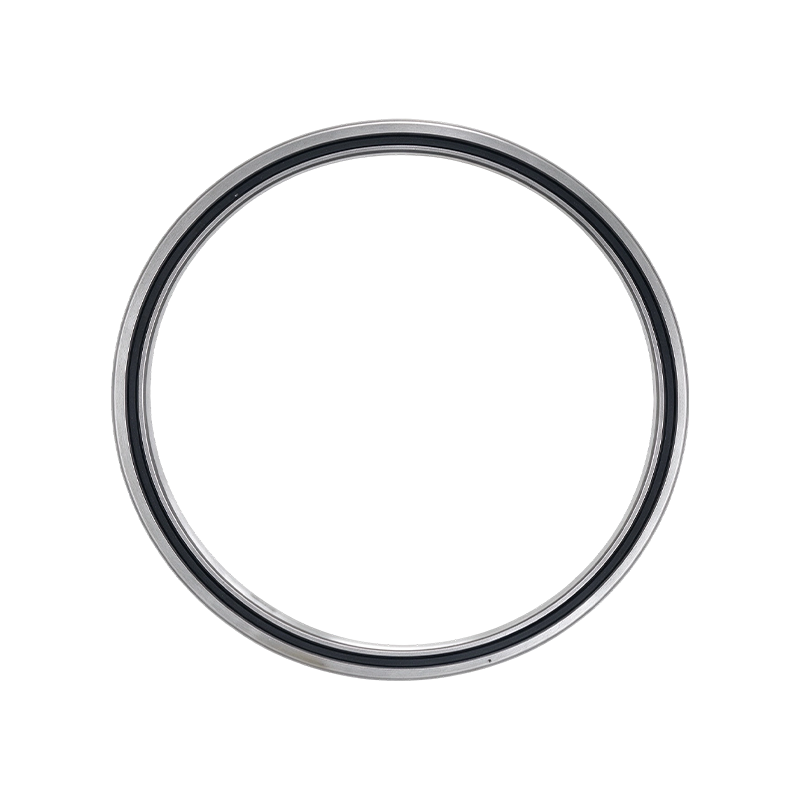
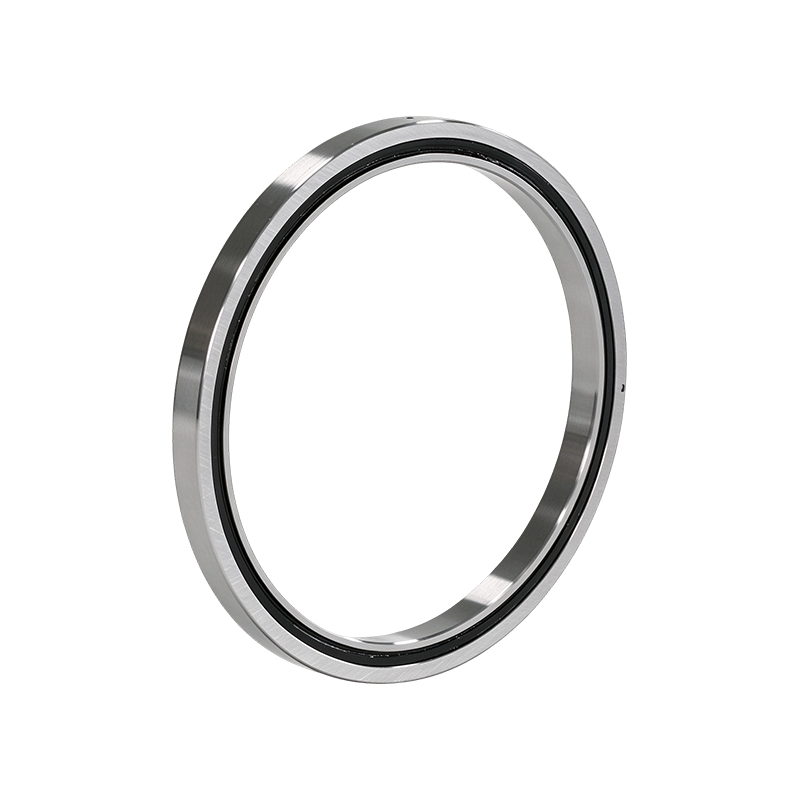
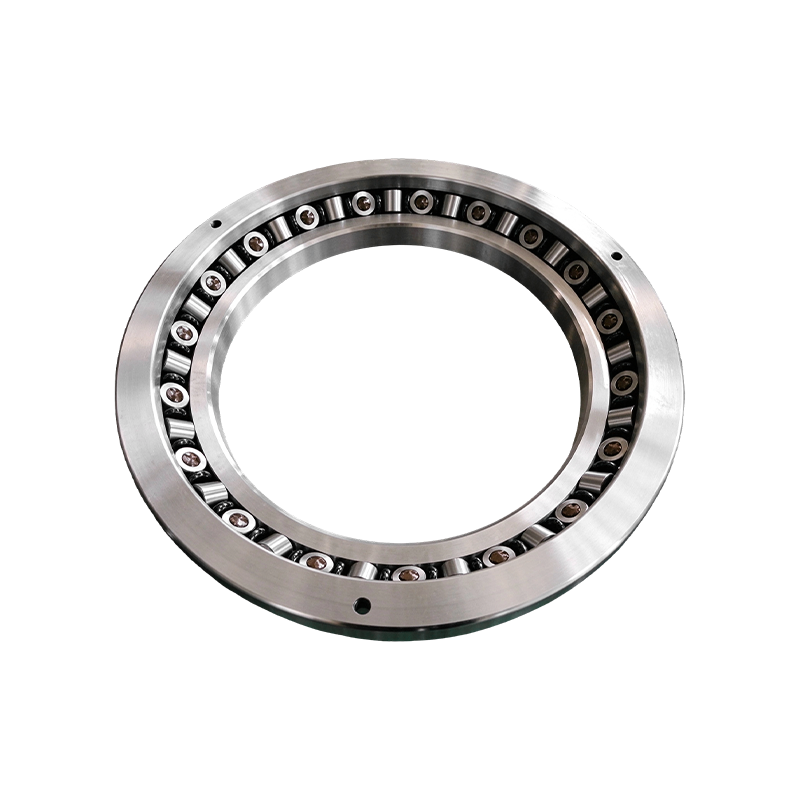
Yet when engineers open a bearing selection guide, the difference between CCO, CC1 and CC2 is often reduced to a single row in a table. The suffix looks like a minor ordering detail, but it decides how the joint behaves under load, at temperature and over its service life. Take the ultra-thin RAU6008-UU-CCO-P4 bearing, an 8 mm section unit with a 60 mm bore, P4 running accuracy and double-sided UU seals. Its zero-preload CCO version is a clear example of a catalog code that is really a statement about the duty cycle the bearing was designed for.
This article explains what the CCO suffix commits a bearing to, where it strengthens robot joint designs and where it creates problems, and how to choose the preload class from operating conditions instead of catalog habit.
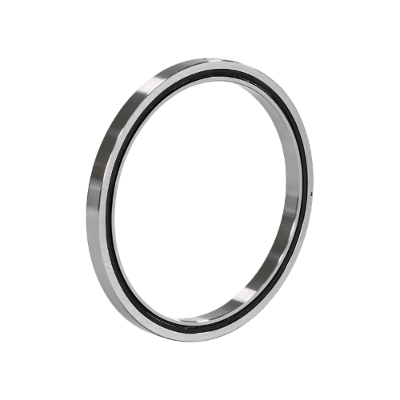
CCO denotes a zero-clearance preload class. Internal clearance between the rollers and the raceways is removed, so the rollers stay in contact with both raceways even without external load. Some suppliers write the same class as CC0, and naming habits differ between manufacturers. Always confirm the internal definition on the supplier drawing rather than trusting the letter alone. CC1 and CC2 belong to clearance groups that leave a small amount of internal play, which is generally acceptable for moderate loads and higher speeds.
The cost is equally real. Eliminating clearance builds friction into the bearing from the start, so starting torque is higher and the heat generated per revolution increases. At higher rotational speed the grease film must carry that heat away, and grease life shortens quickly when the bearing runs warm for long periods. This is why a preload that is ideal for a stationary indexing axis can be wrong for a continuously rotating one.
Preload is not a property of the bearing alone. It interacts with the mounting structure, the stiffness of the housing, the thermal expansion of adjacent parts and the flatness of the mating surfaces. A zero-preload bearing in a well-controlled structure can outperform a looser bearing by a clear margin in positioning accuracy. The same bearing in a poorly controlled structure can bind, drift or fail early, and the failure will often be blamed on the bearing rather than on the design of the interface.
The RAU6008-UU-CCO-P4 is a useful case to study because its specification combines several features that each influence the selection decision. Read together, they describe a bearing designed for a defined operating envelope rather than general-purpose use.
Each element has a direct engineering consequence. The 8 mm cross section reduces the axial envelope of the joint, which matters when every millimeter of stack height is contested. The 60 mm bore sits in a size range common in compact wrist and shoulder modules. The P4 class tightens running accuracy, and the UU seals retain grease and keep contamination out of the raceways. The CCO configuration delivers the rigidity that justifies all of the above.
The product page is explicit about the intended use:
The CCO zero-preload version offers high rigidity. It is not suitable for continuous high-speed rotation and is mainly intended for low-speed rotation, oscillating motion and intermittent indexing.
That sentence is the decision boundary. Much of the third-party content on zero-preload bearings describes CCO as a performance upgrade. The product guidance treats it as an operating envelope, and that is the more useful framing. The rest of this article explains why the boundary exists and how to apply it.
Robot joints vary widely in load case, motion profile and thermal environment, so a single preload recommendation cannot cover them all. The three questions that matter most are how the joint moves, how it is loaded and how much heat it generates. The following examples show how those answers point in different directions.
Preload should be specified from the stiffness and moment requirements of the application, not picked from a catalog default. CCO is not a better bearing in an absolute sense. It is the right bearing under a specific set of conditions, and outside those conditions the same feature that delivers stiffness becomes the source of the problem. Design reviews work best when the preload question is asked before the bearing size is frozen, because changing preload later often forces changes to housings, clamping schemes and lubrication.
The table below summarizes the trade-offs in general terms. Actual values depend on size, load and lubrication, so use it to frame the decision rather than to replace calculation or supplier data.
| Dimension | CCO (zero preload) | CC1 (small clearance) | CC2 (standard clearance) |
|---|---|---|---|
| Rigidity | Highest | Medium | Lower |
| Starting torque | Highest | Medium | Lowest |
| Positioning accuracy | Best, near zero backlash | Good | Fair |
| Suitable speed | Low or intermittent | Low to medium | Medium to high |
| Thermal sensitivity | High | Medium | Low |
| Typical use | Indexing axes, oscillating joints, harmonic outputs | General industrial joints | High-speed spindles, large thermal rise |
The CCO advantage in positioning accuracy only appears when the bearing is paired with P4 or higher running accuracy. At lower precision grades, zero preload exposes manufacturing error instead of hiding it, because the rollers are forced to share load across any irregularity in the raceway geometry. The P4 and CCO combination in the RAU6008-UU-CCO-P4 is a deliberate pairing of precision and preload, not an arbitrary stacking of options.
Most preload problems do not come from the bearing itself. They come from how the bearing is specified, mounted and maintained. Three patterns appear repeatedly in field reviews.
Engineers sometimes specify CCO by default because it sounds more precise and more premium. In continuous rotation this shows up as higher torque, faster temperature rise and grease that breaks down earlier than the maintenance plan assumed. The corrective step is to define the duty cycle first, including the fraction of time spent rotating versus holding and the peak speed, and then choose the preload class. Only after that should the team check whether the application truly needs zero backlash.
A preloaded bearing is far more sensitive to its mounting surfaces than a clearance bearing. Uneven clamping torque on the fasteners changes the preload state directly, and the result often appears as runout out of tolerance after assembly rather than during the design review. Specify flatness on the adjacent parts, tighten the fasteners in a sequence that distributes load evenly, and verify runout again after the first thermal cycle, because the joint settles once it warms.
UU double-sided seals keep grease in and contaminants out, which suits low-speed, high-stiffness positioning joints where relubrication is rare. However, applications that depend on an external lubrication circuit or periodic flushing have fewer options with a sealed bearing. Plan the relubrication method at the design stage rather than discovering later that the seal arrangement blocks it. For joints in dusty or washdown environments, review the sealing choice together with the preload class, since both affect friction and the long-term behavior of the grease.
Before finalizing a CCO specification, work through the following checks in order. Each answer narrows the decision.
CCO is not a marketing label. It is a commitment about operating conditions. It promises zero backlash and high rigidity, and in return it requires low speed, controlled thermal behavior and disciplined installation. The RAU6008-UU-CCO-P4 is one concrete implementation of that commitment in the 8 mm section and 60 mm bore range, suited to robot joints that hold a position after positioning rather than spinning continuously. Full specifications for this configuration are available on the product page of the ultra-thin crossed roller bearing family, and the checklist above is a reliable starting point for matching the preload class to your own duty cycle.
In many catalogs, yes. Both labels describe zero-clearance preload, but the letter used depends on the manufacturer. The drawing or technical datasheet is the reliable source, so confirm the internal definition before ordering a replacement.
Better grease improves the picture but does not remove the core problem. Preload friction generates heat at every revolution, and high-speed operation pushes that heat into the grease faster than it can dissipate. For continuous high-speed motion, a clearance class such as CC1 or CC2 is usually the safer starting point.
Ask whether the joint must hold position with no measurable play under static or slow loads, and whether positioning error directly affects the task. If the answer is yes and the duty cycle is mostly holding or indexing, CCO deserves evaluation. If the joint mostly moves, a clearance class is usually better.
Zero preload forces all rollers to carry load together, so any variation in raceway geometry shows up as runout and local overload. A higher running accuracy grade reduces that variation, which is why P4 is the natural pairing with CCO. At lower precision grades, the preload may expose manufacturing error more than it improves stiffness.


Product Categories
Contact Us

Jane@ukl-bearing.com
Jenny@ukl-bearing.com
Andy@ukl-bearing.com
Ivy@ukl-bearing.com

+86-510- 88763239
+86-15371057968

No.1 Hehuan Road, Hudai Town, Binhu District, Wuxi City.
Ready to Begin?
Get in Touch

Now!
UKL BEARING
 English
 Español
 русский

