
Content
The 61900-2RS bearing is an extra thin deep groove ball bearing with a 10 mm bore, a 22 mm outer diameter and a 6 mm width. Its double-sided contact rubber seals keep dust, moisture and fine debris away from the raceways, which makes it a practical choice for compact equipment that must still rotate reliably in less-than-ideal conditions.
For B2B buyers, this part is more than a catalog entry. It is a thin-section component that has to match a specific installation envelope, load profile and sealing requirement. This article walks through the specifications, the reasoning behind the 2RS configuration, typical applications, the trade-offs against other variants, and how to move from technical confirmation to a supplier quotation with UKL Bearing Manufacturing Co., Ltd.
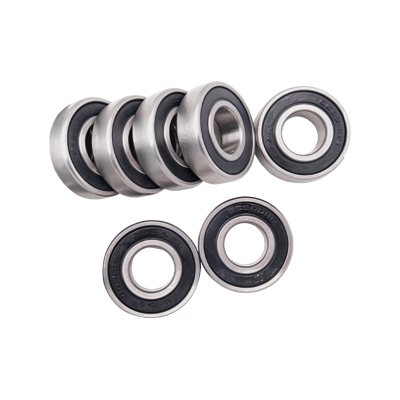
Dimensional confirmation is the first step in almost every bearing selection. Engineers typically scan the bore, outer diameter and width before they look at anything else, because these three values determine whether the part fits the housing and shaft. The table below summarizes the core parameters for this thin-section design.
| Parameter | Specification |
|---|---|
| Bore (d) | 10 mm |
| Outer Diameter (D) | 22 mm |
| Width (B) | 6 mm |
| Seal Type | Double-sided contact rubber (2RS) |
| Cage | Pressed steel |
| Material | GCr15 bearing steel |
| Dynamic Load Rating | Refer to product datasheet |
| Static Load Rating | Refer to product datasheet |
| Weight | Refer to product datasheet |
These 61900-2RS dimensions follow the standard thin-section series, so they are interchangeable with corresponding thin-section bearings where application requirements allow. Engineers who are reviewing a 61900-2RS replacement should still compare the housing tolerance, shaft fit and seal clearance, since a dimensionally matching part can behave differently under contamination or temperature change.
A practical rule for thin-section selection is to verify three things before ordering: the envelope available in the assembly drawing, the radial and axial loads the bearing will see in service, and the environment that determines whether a sealed or open design is appropriate. Skipping any one of these checks is a common cause of premature failure in compact drives.
The 61900 part number identifies the thin-section deep groove series, while the 2RS suffix tells you that both sides carry contact rubber seals. Understanding this suffix is essential, because it is the single feature that changes how the bearing behaves in contaminated or humid environments. The seal lip rides lightly on the inner ring, so it blocks foreign material without the heavy drag that a rigid contact seal would introduce.
A double sealed bearing of this type is designed for applications where an open bearing would collect debris, lose its lubricant or corrode within a short service life. The sealed construction turns the bearing into a self-contained unit, which simplifies assembly and reduces the number of protective measures the machine designer must add elsewhere.
Honest selection requires acknowledging the limitation. Contact seals create friction, which means the 2RS version has a lower limiting speed than the non-contact ZZ version and the open type. In practice, this matters for high-speed spindles or fan drives running near the upper end of their speed range. For most small motors and office mechanisms, where speeds are moderate and protection matters more than peak rpm, the sealed design is the stronger choice.
Temperature also plays a role. Seal elasticity changes with heat, so engineers should confirm that the expected operating temperature sits within the seal material's rated range before finalizing the design.
Thin-section deep groove ball bearings are used wherever radial space is tight but the shaft still needs stable, low-friction support. The 6 mm width is especially valuable in axial-constrained layouts, because it allows the designer to stack components or shorten the overall assembly length. The following application groups represent the most common use cases for this size.
Selection tip: when the application involves intermittent contact with dust, mist or washdown moisture and the speed is moderate, a sealed thin-section design usually delivers a longer and more predictable service interval than an open bearing with external protection.
A structured comparison helps engineers decide whether the sealed configuration is worth the modest speed penalty. The three variants share the same external dimensions, so the decision comes down to the operating environment and the speed requirement.
| Comparison Item | 61900-2RS | 61900-ZZ | 61900 Open |
|---|---|---|---|
| Sealing | Contact rubber, both sides | Non-contact metal shields | None |
| Dust Protection | Strong | Moderate | Low |
| Water Protection | Strong | Limited | None |
| Limiting Speed | Lower | Higher | Highest |
| Relubrication Need | Not required under normal conditions | Generally not required | Required at planned intervals |
If your application runs at high speed in a dry, clean environment, the ZZ version may be the more suitable option. If you need the best dust and water protection for a long service life, the 61900-2RS bearing is the correct choice. Reviewing the environment first, and then the speed, will usually lead to the right variant without unnecessary trial and error.
Procurement teams often receive technical questions from design engineers, and a clear selection path reduces back-and-forth. The flowchart below outlines the sequence we recommend before requesting a quotation for thin-section sealed bearings.
Following this sequence keeps the technical discussion focused and allows the supplier to respond with accurate recommendations rather than generic offers.
UKL Bearing Manufacturing Co., Ltd. is a manufacturer and trader that integrates research and development, production and international distribution. With more than 15 years of OEM and ODM export experience, UKL Bearing supplies deep groove ball bearings, thin-section bearings and custom variants to customers across Europe, Asia, Africa and Russia. This long export history means the team is familiar with the documentation, packaging and delivery requirements that B2B buyers in different markets expect.
The UKL Bearing factory operates production lines covering forging, turning, heat treatment, grinding, assembly and packaging, with a monthly capacity of 10,000 to 50,000 units depending on the specification. For buyers, this means a 61900-2RS bearing order is produced and inspected within one controlled facility rather than sourced from unidentified stock. Traceability from raw material to finished packaging supports consistent quality from batch to batch.
For customers who need stainless steel or ZZ variants, UKL Bearing Manufacturing Co., Ltd. offers flexible OEM and ODM options while maintaining dimensional interchangeability with the standard series. Custom sealing, grease selection and cage configurations can be discussed during the technical review stage, which helps buyers align the bearing with their assembly process before volume production begins.
The fastest route to a reliable supply is a complete inquiry. Suppliers can only recommend the right specification when they know the quantity, the material preference and the delivery timeline. When you contact UKL Bearing, please include the following information so the technical and sales teams can respond with a precise proposal.
UKL Bearing responds to 61900-2RS bearing inquiries within 24 hours on business days. Sample orders and OEM customization are available for engineering validation, so you can confirm fit, sealing performance and assembly behavior before committing to a larger purchase.
Dimensional interchangeability is standard within the thin-section series, so a bearing with the same bore, outer diameter and width can fit the same housing. However, seal type, cage material and internal clearance can differ, so engineers should verify the performance requirements, not only the envelope, before substituting parts.
The 2RS version uses contact rubber seals on both sides, which provide stronger protection against dust and moisture. The ZZ version uses non-contact metal shields that allow higher rotational speed with less friction but offer weaker environmental protection.
Under normal operating conditions, the factory-filled grease is retained by the seals, and routine relubrication is not needed. Extreme temperatures, very high speeds or heavy contamination may change this, so the operating conditions should be reviewed during the design stage.
Yes. UKL Bearing Manufacturing Co., Ltd. offers OEM and ODM options, including stainless steel variants and other customization within the thin-section range. Technical requirements should be submitted during the inquiry so the engineering team can confirm feasibility.
Sample orders are available for engineering validation. Testing samples in the actual assembly helps confirm fit, sealing behavior and operating noise before committing to full production volumes.
A useful request includes the required quantity, the material preference, the target delivery date, the destination country and any technical notes on load, speed or environment. A complete inquiry allows the supplier to provide a more accurate proposal within the first response.


Product Categories
Contact Us

Jane@ukl-bearing.com
Jenny@ukl-bearing.com
Andy@ukl-bearing.com
Ivy@ukl-bearing.com

+86-510- 88763239
+86-15371057968

No.1 Hehuan Road, Hudai Town, Binhu District, Wuxi City.
Ready to Begin?
Get in Touch

Now!
UKL BEARING
 English
 Español
 русский

