
Content
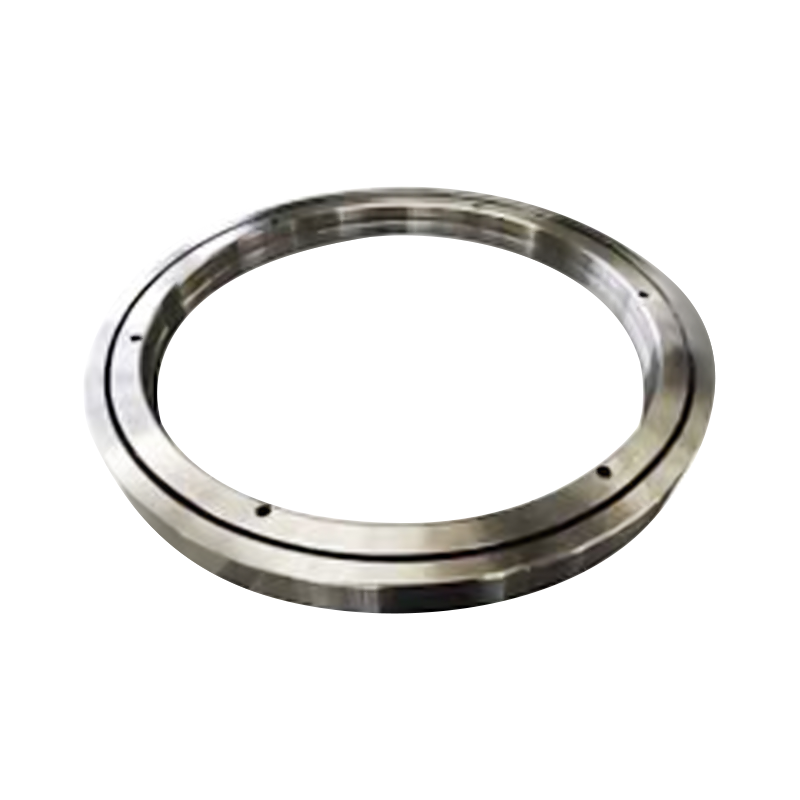
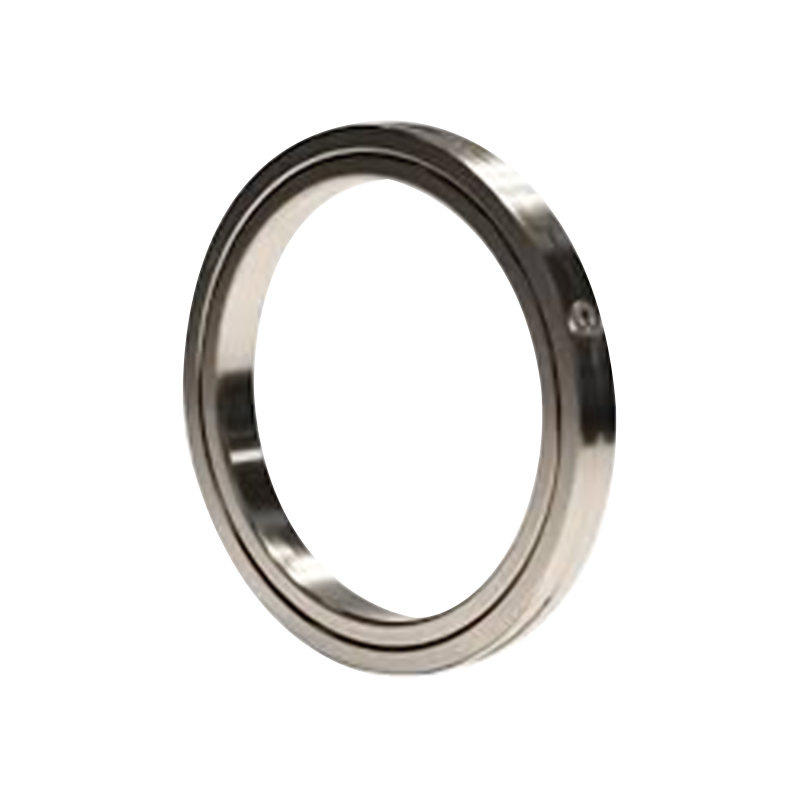
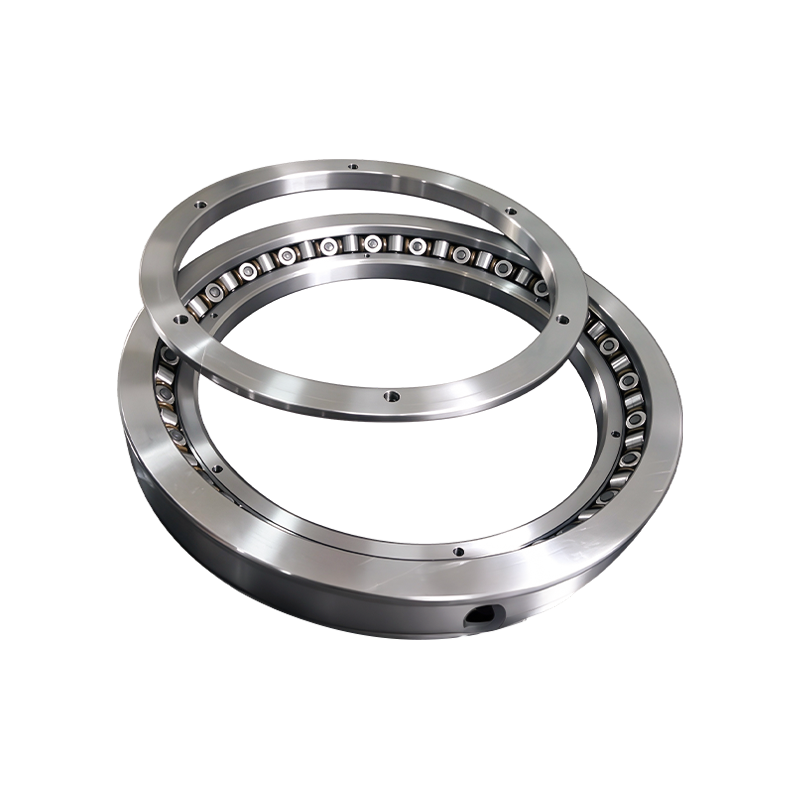
When a mechanism needs an outer ring that turns while the inner ring stays fixed, the choice of bearing shapes everything from assembly sequence to rigidity. The RE5013 bearing is built for exactly this layout. It combines a solid outer ring that rotates with a split inner ring, using a 90-degree crossed roller arrangement to carry radial, axial and tilting moment loads within a compact envelope.
For design teams working on articulated joints, indexing tables and compact positioning stages, the question is rarely whether a crossed roller design is suitable. The real question is whether the dimensions, load ratings and mounting approach will hold up under the actual duty cycle. This guide walks through those points in the order a design review usually raises them.
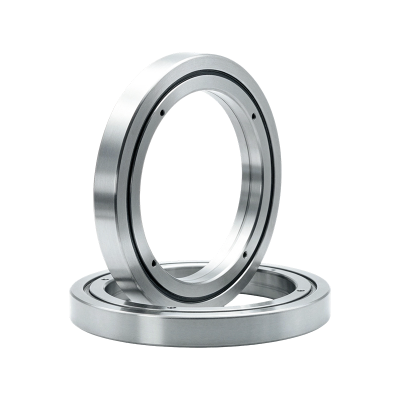
The defining feature of a crossed roller bearing is that the rollers sit at 90 degrees to each other, alternating between raceways. Each roller row takes load in a different direction, so a single bearing can react radial force, axial force and overturning moment at the same time. In many compact mechanisms this removes the need for a separate thrust bearing and a radial bearing working side by side.
In a typical six-axis robot wrist or a rotary table carrying an offset workpiece, the overturning moment can be several times larger than the radial load. A crossed roller layout handles this without the bearing needing to be oversized, which is one reason it appears so often in these positions.
Dimensional data is usually the first filter in a bearing search. The table below summarizes the envelope and the rating figures that matter most when checking a RE5013 bearing against a housing drawing or a load case.
| Parameter | Value | Design Relevance |
|---|---|---|
| Bore diameter (d) | 50 mm | Sets the inner clearance envelope |
| Outer diameter (D) | 80 mm | Defines the housing bore |
| Width (B) | 13 mm | Thin section for compact stacks |
| Pitch circle diameter (Dpw) | 66 mm | Reference for bolt and roller geometry |
| Basic dynamic rating (Cr) | 16.7 kN | Used for fatigue life estimation |
| Basic static rating (Cor) | 20.9 kN | Used for peak load verification |
| Approximate mass | 0.27 kg | Relevant for dynamic inertia |
The dynamic rating supports life calculations under continuous rotation, while the static rating is the reference for shock loads and momentary overloads. Comparing the expected peak moment against the static rating is a quick way to catch an undersized selection early.
Outer-ring rotating crossed roller bearings suit mechanisms where the drive acts on the outside of the bearing and the inner ring anchors to the base. This arrangement is common in the following areas.
Start by mapping the actual load case, including radial force, axial force and the overturning moment at the bearing center. Compare the combined equivalent load against the dynamic rating for life and against the static rating for peak events.
Because the inner ring is split, the clamping sequence matters. Clean both mating faces, check flatness of the housing shoulder, and tighten fasteners in a diagonal pattern. Uneven clamping distorts the raceway and reduces effective life.
Choose a lubricant rated for the operating speed and temperature range. Monitor operating temperature and noise during commissioning; a gradual rise in either is often the first sign of contamination or preload drift.
A bearing that is correctly sized but poorly mounted will underperform a smaller one that is installed with care.
Sourcing teams evaluating a RE5013 bearing supplier typically look beyond the catalog figures. Lead time, batch consistency, and the ability to adjust sealing, preload or accuracy class all affect the final cost of ownership. Requesting a datasheet with full tolerance data and inspection records is a sound first step before committing to volume.
It is generally used where an outer ring must rotate while carrying combined radial, axial and moment loads in a compact space, such as robot joints and rotary tables.
Calculate the equivalent dynamic load for life estimation and compare the peak combined load against the static rating to confirm there is adequate margin for shock events.
The split design simplifies assembly and allows controlled preload adjustment, which helps maintain rigidity and rotational accuracy over the service life.
Verify housing flatness, clean all contact surfaces, and tighten fasteners evenly to avoid distorting the raceways.
Many suppliers offer adjustments to sealing, preload and accuracy class. Requesting a datasheet and a formal quotation is the best way to confirm the options available for a given volume.


Product Categories
Contact Us

Jane@ukl-bearing.com
Jenny@ukl-bearing.com
Andy@ukl-bearing.com
Ivy@ukl-bearing.com

+86-510- 88763239
+86-15371057968

No.1 Hehuan Road, Hudai Town, Binhu District, Wuxi City.
Ready to Begin?
Get in Touch

Now!
UKL BEARING
 English
 Español
 русский

