Content
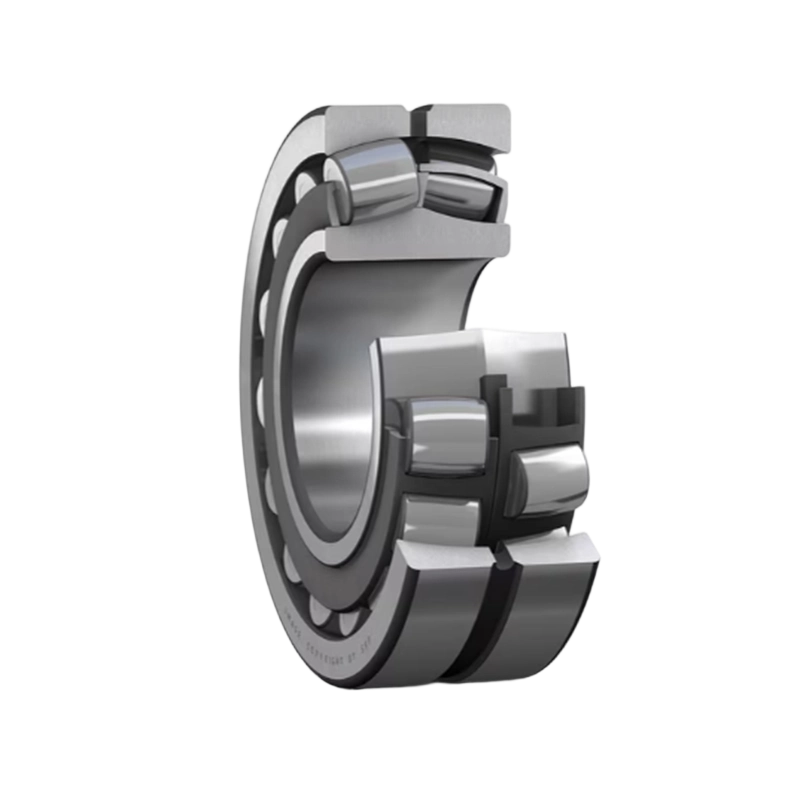
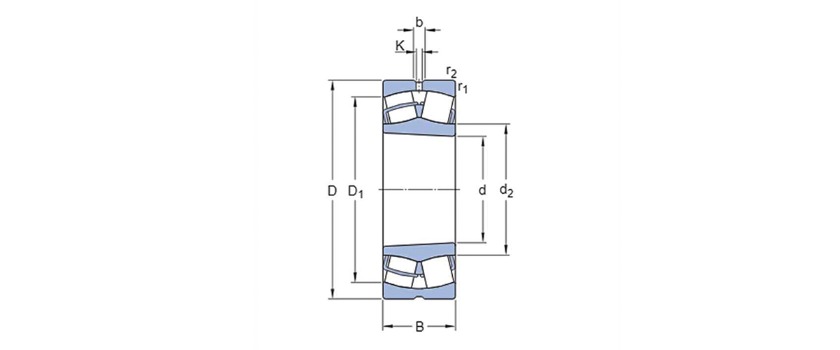
The 22205 E bearing represents a critical component in modern industrial machinery, engineered to handle demanding operational conditions. As a spherical roller bearing variant, it combines robust load-carrying capacity with precision engineering that ensures reliable performance across diverse applications. The "E" designation indicates an enhanced design specification, offering superior performance characteristics compared to standard variants.
Spherical roller bearings have long been the preferred solution in applications requiring high radial load capacity and the ability to accommodate misalignment. The 22205 E extends this capability further through refined material composition and improved cage design, making it indispensable for industries ranging from mining equipment to conveyor systems.
The cylindrical bore design of the 22205 E bearing provides precise contact surfaces that distribute loads evenly across the rolling elements. This geometric precision minimizes stress concentration points and extends bearing life significantly. The bore diameter and roundness tolerances are controlled to exacting standards, ensuring consistent performance across production batches.
The bearing incorporates a sheet metal cage design that balances several critical performance factors. This cage architecture reduces friction during operation while maintaining proper spacing between rolling elements. Unlike solid brass cages, the sheet metal design offers superior performance in applications involving marginal lubrication or elevated temperatures. The cage design directly impacts the bearing's ability to handle high-speed operations while maintaining stability.
The spherical rollers in the 22205 E bearing feature precisely calculated crown profiles that optimize contact stress distribution. Each roller maintains consistent geometry to ensure uniform load sharing. This precision manufacturing approach reduces vibration generation and improves the bearing's operational smoothness across varying speed regimes.
The dynamic load rating of 49.9 kN represents the bearing's capacity to sustain rotating loads under continuous operation for an extended service life. This specification assumes standard operating conditions including proper lubrication, alignment, and installation practices. Understanding this metric proves essential when selecting bearings for specific machinery applications.
Key Performance Insight: The 49.9 kN dynamic load rating provides a safety margin for standard industrial applications. However, engineers must account for shock loads, vibration, and misalignment factors when determining actual load-carrying capacity for specific installations.
The maximum operating speed of 17,000 r/min establishes the upper boundary for continuous rotation. This limitation reflects the bearing's design parameters, including cage design, lubrication film thickness, and centrifugal force constraints. Exceeding this speed threshold risks cage deformation, accelerated wear, and potential bearing failure.
The relationship between speed and load capacity represents a fundamental principle in bearing engineering. As rotational speed increases, the maximum permissible load must decrease to maintain safe operating margins. This inverse relationship requires careful application analysis to avoid combining maximum speed with maximum load simultaneously.
The 22205 E bearing is available in multiple ABEC (Annular Bearing Engineering Committee) tolerance grades. ABEC-1 represents general industrial grade, suitable for most machinery applications. ABEC-5 and higher grades offer progressively tighter tolerances, reducing runout and vibration. Selection depends on application speed, precision requirements, and sensitivity to vibrational characteristics.
Internal clearance refers to the total free movement between rolling elements and races when no load is applied. The C0 clearance grade provides minimal internal clearance, suitable for applications with tight fits and moderate temperature changes. The C3 grade offers increased clearance, accommodating thermal expansion in high-temperature environments or where loose fits are necessary.
| Clearance Grade | Application Profile | Temperature Sensitivity |
|---|---|---|
| C0 (Standard) | Moderate temperature, normal fits | Low to moderate |
| C2 | Slight thermal variations | Moderate |
| C3 | High-temperature or loose-fit applications | High tolerance |
| C4 & C5 | Extreme temperature variations or critical clearance needs | Very high tolerance |
The cylindrical bore and outer diameter dimensions are manufactured within precisely defined tolerance ranges. These tolerances ensure proper interference fits with shafts and housings, preventing slippage while avoiding excessive stress. Tight tolerance control minimizes performance variation between individual bearings, enabling reliable machinery performance.
Gearbox applications represent a primary use case for the 22205 E bearing. These systems generate substantial radial loads while operating at moderate speeds, conditions perfectly suited to spherical roller bearing characteristics. The bearing's ability to accommodate shaft misalignment proves particularly valuable in gearbox installations where housing compliance and thermal expansion create alignment variations.
Conveyor belt systems rely on robust bearing designs to maintain operational reliability across extended duty cycles. The 22205 E bearing excels in these applications, providing dependable support for conveyor pulleys and idler rollers. The bearing's design accommodates the vibration and shock loads inherent to material handling operations.
Mining operations impose severe demands on mechanical components, including bearings. The rugged design of the 22205 E bearing makes it suitable for mining equipment applications such as jaw crushers, vibrating screens, and material conveyors. Its ability to tolerate contamination and marginal lubrication conditions extends service intervals in challenging mining environments.
Proper bearing selection begins with comprehensive load analysis. Engineers must identify peak loads, calculate equivalent dynamic loads accounting for load distribution factors, and apply appropriate safety margins. The bearing's 49.9 kN dynamic rating serves as a reference point, but actual selection requires detailed load calculation that considers duty cycle, shock factor, and maintenance capabilities.
Maximum operating speed represents a critical constraint in bearing selection. Applications approaching 17,000 r/min require careful lubrication strategy and cage design validation. Operating near speed limits demands high-quality lubricants, optimal cooling, and precise alignment to prevent premature bearing failure.
Temperature behavior directly impacts bearing performance and service life. Higher operating temperatures reduce lubricant viscosity, diminish cage strength, and accelerate wear mechanisms. Proper internal clearance selection and lubrication system design prove essential for managing thermal effects in demanding applications. Applications with significant temperature variations necessitate careful attention to clearance selection and material compatibility.
Spherical roller bearings accommodate both radial and angular misalignment more effectively than cylindrical roller bearings. However, tolerance limits exist; excessive misalignment creates stress concentration and accelerates wear. Designers must ensure that shaft deflection and housing compliance remain within acceptable parameters, typically limited to 2-3 degrees for spherical roller bearings.
Understanding how the 22205 E bearing compares to alternative bearing types assists in application-appropriate selection. The following analysis considers cylindrical roller, tapered roller, and deep groove ball bearings across multiple performance dimensions.
| Feature | Spherical Roller | Cylindrical Roller | Tapered Roller |
|---|---|---|---|
| Radial Load Capacity | Very High | High | High |
| Misalignment Tolerance | Excellent | Minimal | Minimal |
| Axial Load Capability | Moderate | Minimal | Excellent |
| Operating Speed Limit | Moderate | Moderate to High | Moderate |
| Friction and Heat Generation | Moderate | Low | Moderate to High |
| Cost Profile | Moderate | Low to Moderate | Moderate to High |
The spherical roller design excels in applications combining high radial loads with misalignment accommodation. This bearing type provides superior shock load absorption compared to cylindrical designs, making it ideal for vibrating machinery. The design's inherent stability reduces machinery vibration and noise generation.
Ultra-high-speed applications may favor cylindrical roller bearings with optimized cage designs. Situations requiring substantial axial load capacity benefit from tapered roller bearing designs. Applications with extremely tight tolerance and minimal misalignment may benefit from cylindrical roller bearings offering lower friction characteristics.
Proper lubrication represents the single most critical factor in bearing reliability and service life. The lubricant must provide adequate film thickness across contact surfaces, reduce friction-generated heat, and prevent bearing failure. Viscosity selection depends on bearing speed, load magnitude, and operating temperature. Higher-speed applications require lower-viscosity lubricants to reduce churning losses and heat generation.
Operating bearing temperature provides valuable insight into bearing condition and lubrication adequacy. Normal operating temperatures typically range from ambient plus 30-50 degrees Celsius for moderate-speed applications. Abnormal temperature rise indicates potential issues including inadequate lubrication, excessive load, misalignment, or incipient bearing wear. Modern condition monitoring systems employ temperature sensors for predictive maintenance strategies.
Environmental contamination represents a significant threat to bearing reliability. Particle contamination accelerates wear mechanisms and reduces service life dramatically. Effective seals, regular lubricant analysis, and environmental cleanliness protocols minimize contamination effects. Applications in dusty or contaminated environments require enhanced sealing arrangements and more frequent maintenance interventions.
Correct interference fits ensure secure bearing mounting while avoiding stress-induced failures. The cylindrical bore requires precise fits with shaft diameters to prevent slippage and misalignment. Oversized fits create excessive hoop stress within the bearing, while undersized fits allow rotational slip that accelerates wear. Standard ISO tolerance guidelines provide detailed fit specifications for various application categories.
Improper installation technique remains a leading cause of premature bearing failure. Mounting forces must be applied only to the inner race, never to the outer race or rolling elements. Thermal or hydraulic mounting methods provide superior control compared to mechanical pressing. Installation equipment must maintain proper alignment to prevent edge loading and premature wear.
Post-installation alignment verification ensures optimal bearing performance. Dial indicators and laser alignment tools provide precise measurement of shaft runout and housing bore concentricity. Typical alignment tolerances require shaft runout within 0.05mm for applications operating at maximum speed and load. Proper alignment extends bearing service life significantly and reduces vibration-related machinery damage.
Accelerated bearing wear typically indicates misalignment, contamination, or inadequate lubrication. Visual inspection of worn rolling elements and races reveals wear patterns that identify root causes. Spalling or pitting on race surfaces suggests insufficient film strength or contamination. Abrasive wear patterns indicate particulate contamination requiring improved filtration and sealing.
Abnormal temperature rise signals bearing distress requiring investigation. Common causes include inadequate lubrication, excessive loads, high-speed operation near speed limits, or bearing preload issues. Temperature monitoring systems should trigger alarm conditions at 80-90 degrees Celsius, initiating shutdown procedures before catastrophic failure occurs.
Bearing damage produces characteristic vibration signatures that enable early fault detection. High-frequency noise indicates spalling or rolling element damage. Low-frequency vibration suggests misalignment or bent shaft conditions. Modern condition monitoring systems analyze vibration signatures across frequency ranges, enabling predictive maintenance before catastrophic failure.
Sheet metal cage damage reduces rolling element spacing and increases friction. Cage damage typically manifests as increased heat generation, vibration, and noise. Cage failure can progress rapidly to bearing seizure if unaddressed. Proper lubrication and alignment minimize cage stress and extend cage service life.
Diagnostic Priority: Address temperature rise and vibration anomalies immediately. Early intervention prevents bearing catastrophic failure and secondary machinery damage. Implementing condition monitoring systems enables predictive maintenance strategies that maximize equipment availability.
The "E" designation indicates an enhanced bearing design offering improved performance characteristics compared to standard variants. This enhancement may involve optimized cage design, material refinement, or improved manufacturing precision. The specific enhancements may vary by manufacturer but generally result in superior performance metrics including better tolerance control, improved load-carrying capacity, or extended service life.
The 49.9 kN rating represents the load level that the bearing can sustain for a nominal service life under standard operating conditions. Actual application design requires applying safety factors typically ranging from 1.5 to 3.0 depending on duty cycle criticality and consequence of failure. Engineers must account for shock loads, thermal effects, and misalignment when translating the rated capacity into actual design margins.
The 17,000 r/min maximum speed represents the upper limit for continuous operation under optimal conditions. This limit reflects cage design constraints, centrifugal force effects, and lubricant film availability. Approaching this speed limit requires enhanced lubrication, precise alignment, and reduced load magnitudes to maintain safe operating margins. Operating beyond rated speed risks cage deformation and bearing seizure.
Clearance selection depends on application temperature range, fit type, and operational requirements. Standard C0 clearance suits moderate-temperature applications with normal fits. Higher-temperature environments or loose-fit configurations require C3 clearance accommodating thermal expansion and fit effects. The wrong clearance selection causes preload variations that accelerate wear or create insufficient load-carrying capacity.
Gearbox bearings typically operate in splash-lubricated oil environments within the gearbox housing. This approach provides cooling and continuous lubricant supply without separate systems. Lubricant viscosity should match manufacturer specifications for the specific gearbox design. Regular oil analysis monitors bearing condition and lubricant degradation, enabling predictive maintenance scheduling.
Shaft runout and housing bore concentricity measurement employs dial indicators or laser alignment systems. Shaft runout tolerance typically limits to 0.05mm for high-speed applications. Measurements should be taken at multiple axial positions along the bearing width. Excessive runout requires shimming, boring operations, or component replacement to achieve acceptable alignment.
Rising operating temperature, increased noise, or vibration growth indicates maintenance urgency. Temperature increases of 20-30 degrees above normal suggest inadequate lubrication requiring relubrication or lubricant change. Audible grinding or clicking sounds indicate rolling element or race damage requiring immediate bearing replacement. Condition monitoring systems provide early warning enabling planned maintenance rather than emergency shutdown.
Procurement evaluation should consider multiple factors including manufacturing quality demonstrated by ABEC rating, dimensional accuracy, material traceability, and supplier reliability. Comparative testing of bearing samples validates performance claims and identifies quality variations. Long-term supplier partnerships enable consistent quality and collaborative problem-solving for application optimization.
The 22205 E bearing represents a mature, well-proven solution for industrial applications combining high radial loads with moderate misalignment tolerance. The bearing's 49.9 kN dynamic rating, 17,000 r/min speed capability, and precision manufacturing establish it as a reliable component for gearbox, conveyor, and mining equipment applications. Success in bearing selection and application requires comprehensive load analysis, proper installation technique, appropriate lubrication strategy, and ongoing condition monitoring.
Engineers and procurement professionals must move beyond catalog specifications to understand the technical details that drive bearing performance. The dimensional tolerances, internal clearance grades, and design features discussed throughout this analysis directly impact real-world bearing reliability and machinery uptime. Implementing systematic selection criteria and maintenance protocols transforms bearing reliability from an operational concern into a competitive advantage.
As machinery demands continue to evolve and operational environments grow more challenging, bearing engineering remains at the forefront of mechanical system innovation. Spherical roller bearing technology continues to advance, incorporating improved materials, optimized cage designs, and enhanced sealing arrangements. Staying informed about these developments enables informed decisions that maximize equipment reliability and operational efficiency across diverse industrial applications.
Product Categories
Contact Us

Jane@ukl-bearing.com
Jenny@ukl-bearing.com
Andy@ukl-bearing.com
Ivy@ukl-bearing.com

+86-510- 88763239
+86-15371057968

No.1 Hehuan Road, Hudai Town, Binhu District, Wuxi City.
Ready to Begin?
Get in Touch

Now!
UKL BEARING
 English
 Español
 русский