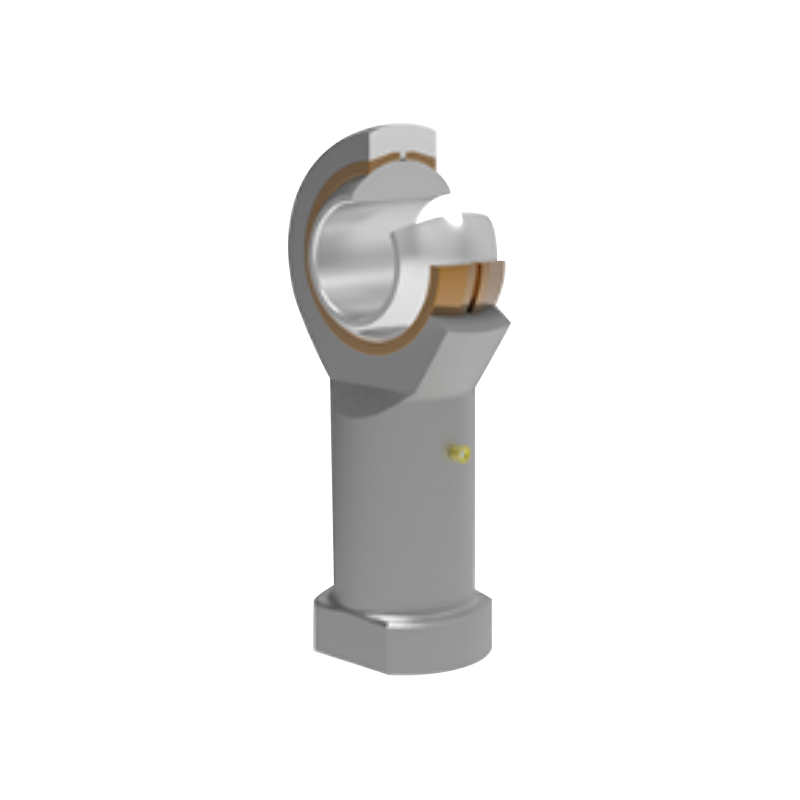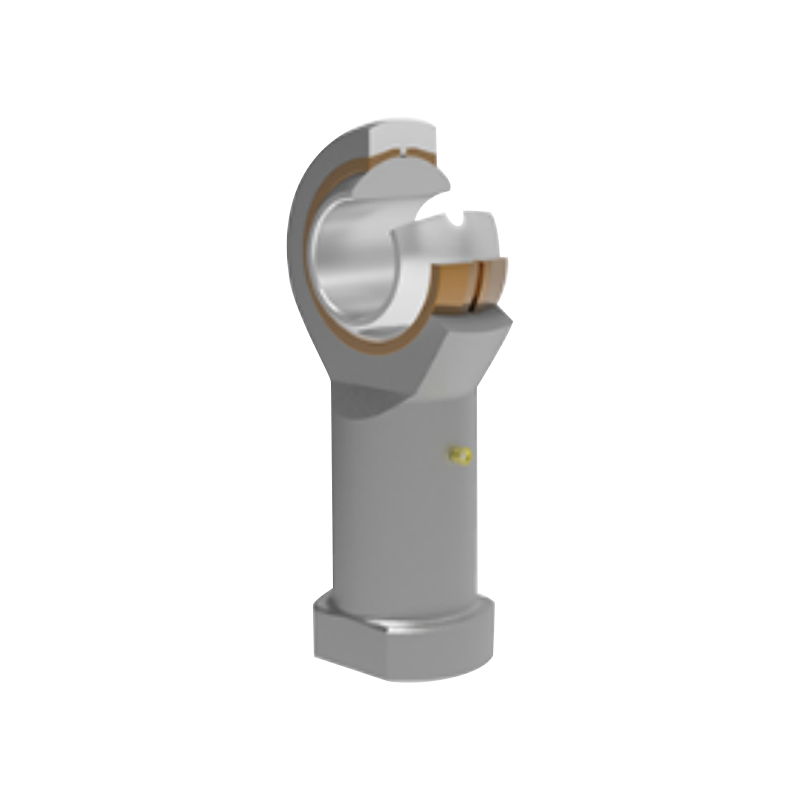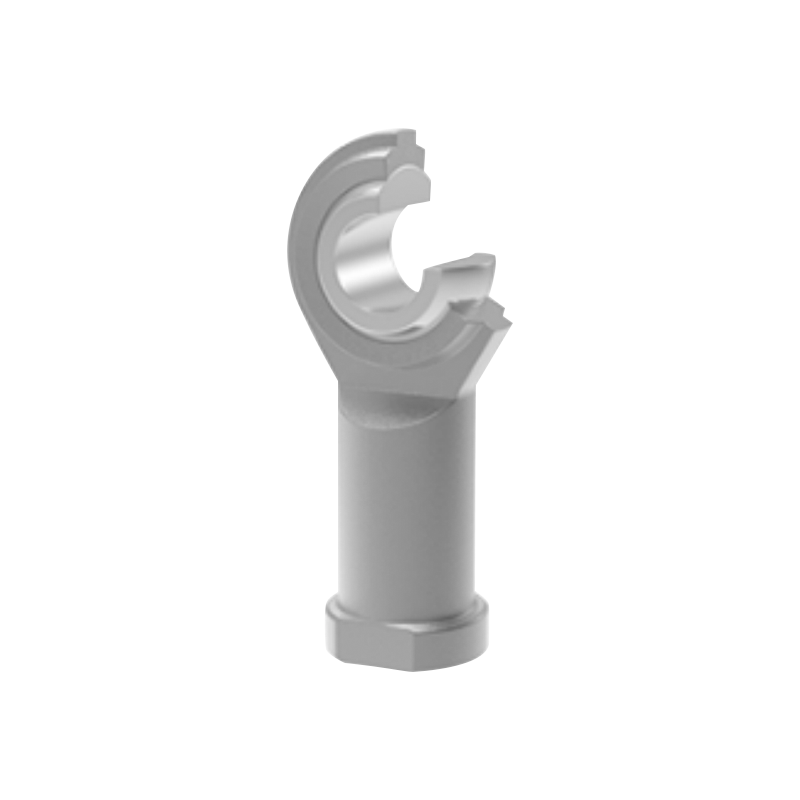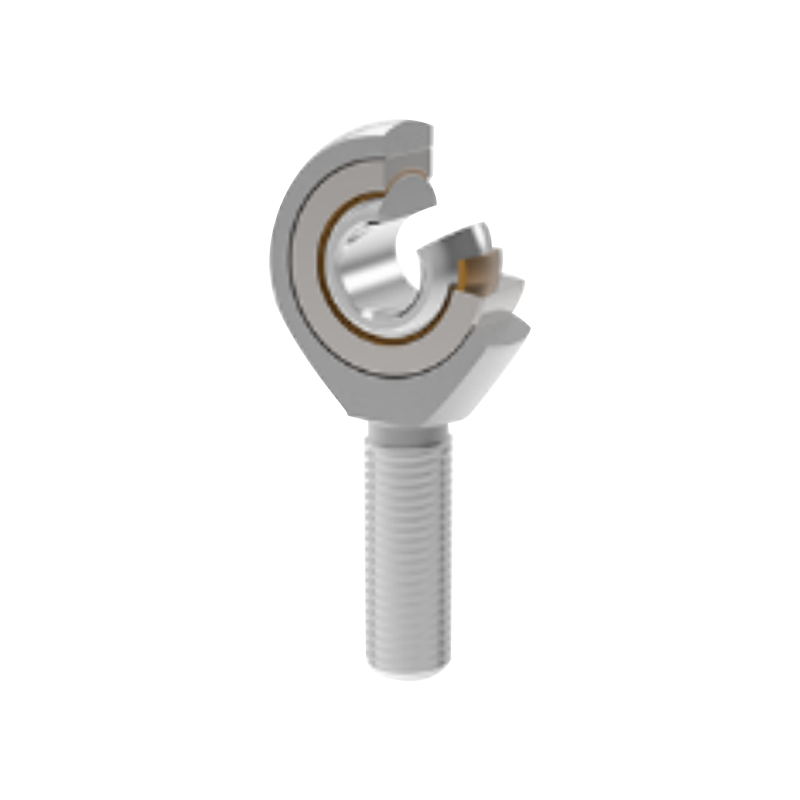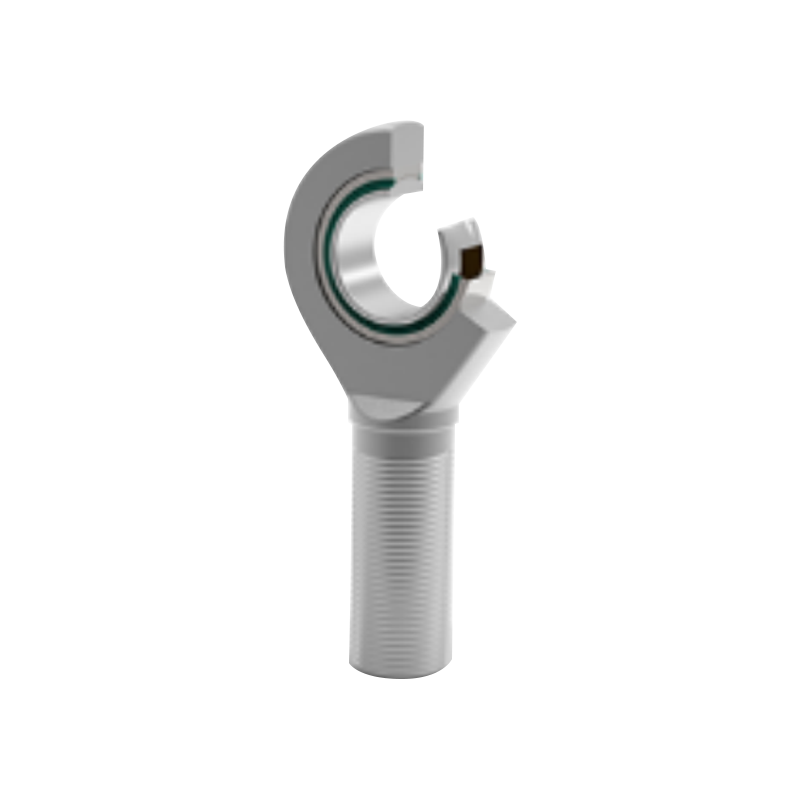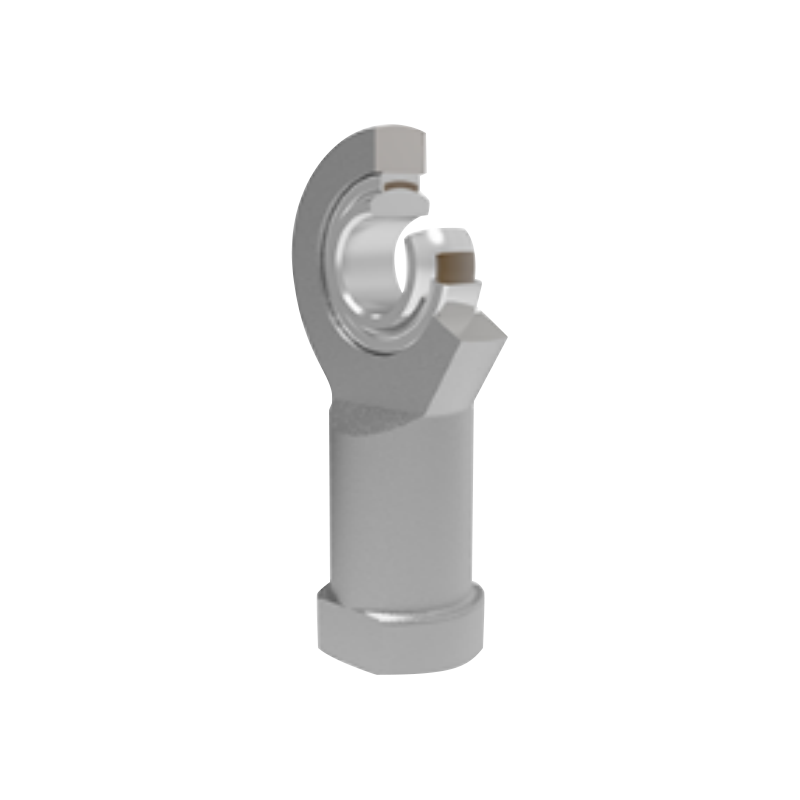
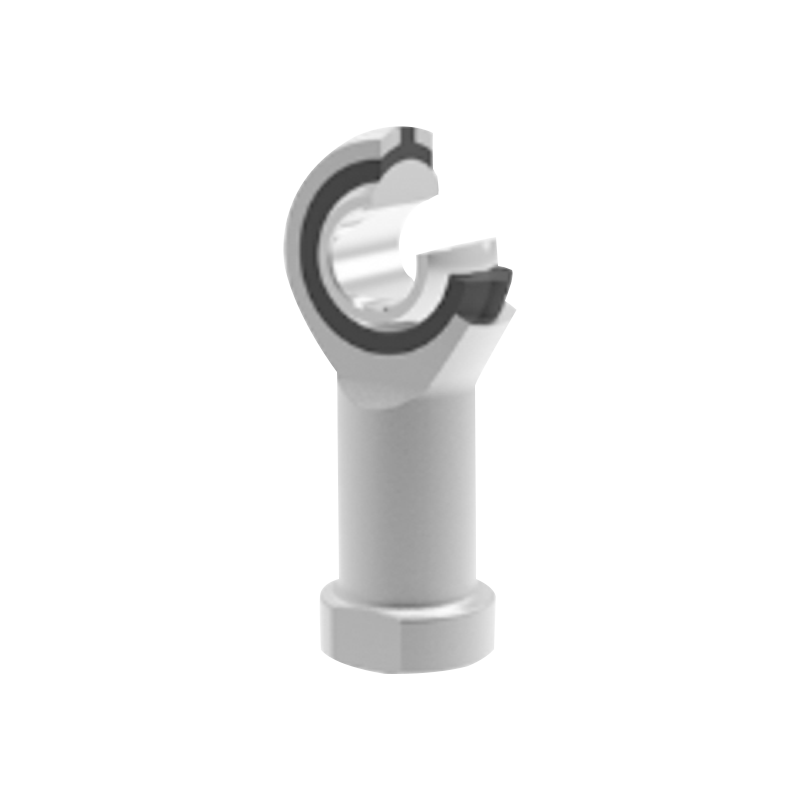
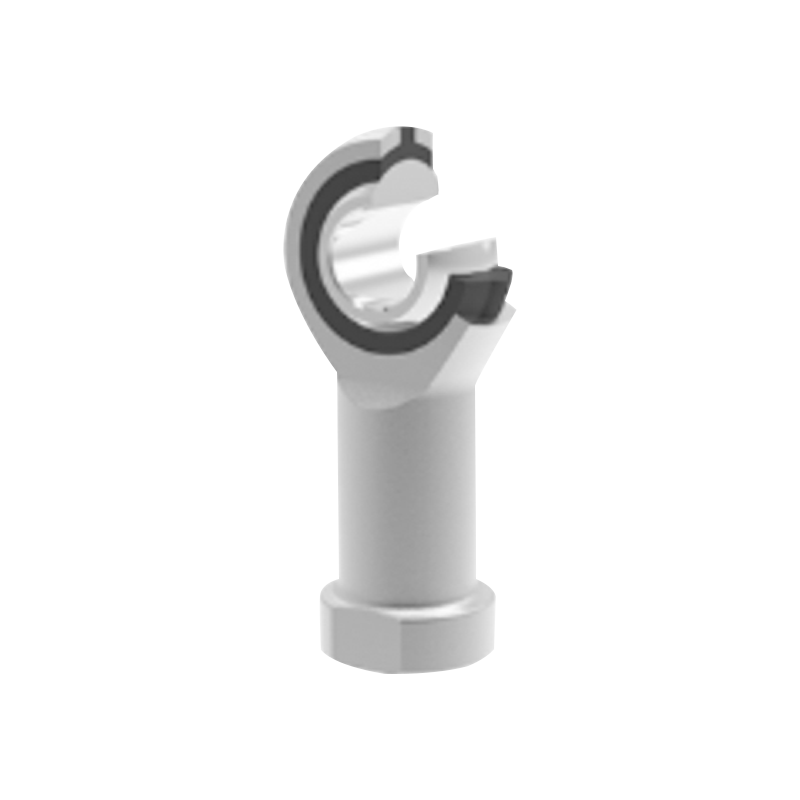
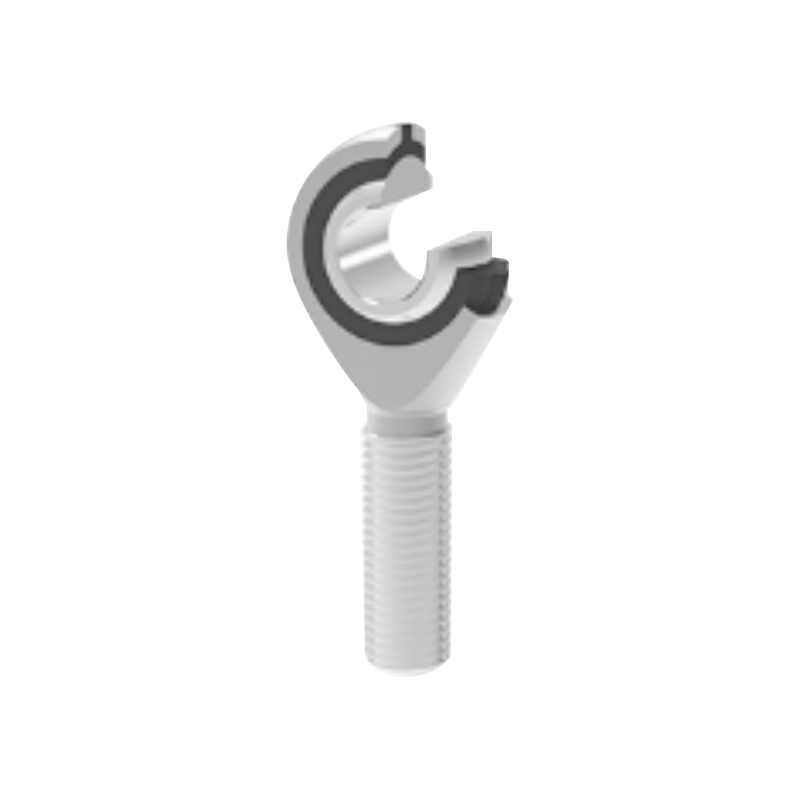
This series consists of compact, self-lubricating rod end spherical bearings, comprising a rod end body, inner ring, and PTFE plastic liner. The rod end body is made of carbon steel with a galvanized surface; the inner ring is made of bearing steel, hardened, and spherically hard chrome plated. Its sliding surface directly mates with the PTFE plastic, achieving lubrication-free operation.
·Product Number:
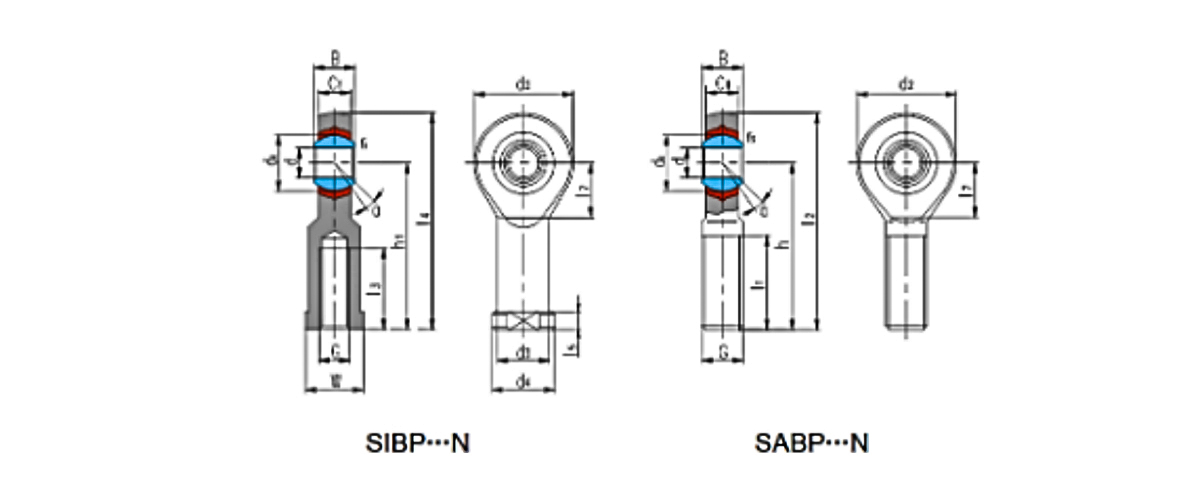
SIBP…N 5~20
SABP…N 5~20
·Sliding Friction Pair: Steel / PTFE Plastic
·Operating Temperature Range: -40℃~+75℃
·Customization Options:
Thread Customization: Customization of non-standard pitch or special thread precision is supported.
Left-hand thread: The model number and thread marking of left-hand threads must include "L" and "left". Example:
Internal thread: SILBP20N M20×1.5 left 6H
External thread: SALBP20N M20×1.5 left 6g
Rod end bearings with different pitches or special thread precision requirements are available.
If it is a left-hand thread, the bearing model and thread mark need to be marked with "L" and "left", for example: SILBP20N M20×1.5 left 6H, SALBP20N M20×1.5 left 6g.
| Bearing number |
Dimensions mm/inch |
Load ratings kN |
Weight ≈kg |
||||||||||||||||
| d | B | dₖ | C₁ max |
d₂ | G 6H |
h₁ | I₃ min |
I₄ | I₅ | I₇ | W | d₃ | d₄ | rₛ min |
α° ≈ |
Dynamic | Static | ||
| SIBP5N | 5 | 8 | 11.112 | 6 | 16 | M5 | 27 | 14 | 35 | 4 | B | 9 | 9 | 11 | 0.3 | 13 | 3.25 | 5.3 | 0.016 |
| SIBP6N | 6 | 9 | 12.7 | 6.75 | 18 | M6 | 30 | 14 | 39 | 5 | 9 | 11 | 10 | 13 | 0.3 | 13 | 4.25 | 6.8 | 0.028 |
| SIBP8N | 8 | 12 | 15.88 | 9 | 22 | M8 | 36 | 17 | 47 | 5 | 11 | 14 | 12.5 | 16 | 0.3 | 14 | 7.1 | 114 | 0.044 |
| SIBP10N | 10 | 14 | 19.05 | 10.5 | 26 | M10 | 43 | 21 | 56 | 6.5 | 13 | 17 | 15 | 19 | 0.3 | 14 | 9.8 | 14.3 | 0.072 |
| SIBP12N | 12 | 16 | 22.23 | 12 | 30 | M12 | 50 | 24 | 65 | 6.5 | 15 | 19 | 17.5 | 22 | 0.3 | 13 | 13.2 | 17 | 0.108 |
| SIBP14N | 14 | 19 | 25.4 | 13.5 | 34 | M14 | 57 | 27 | 74 | 8 | 16 | 22 | 20 | 25 | 0.3 | 16 | 17 | 27.5 | 0.161 |
| SIBP16N | 16 | 21 | 28.58 | 15 | 38 | M16 | 64 | 33 | 83 | 8 | 17.5 | 22 | 22 | 27 | 0.3 | 15 | 21.4 | 34.5 | 0.225 |
| SIBP18N | 18 | 23 | 31.75 | 16.5 | 42 | M18×1.5 | 71 | 36 | 92 | 10 | 19.5 | 27 | 25 | 31 | 0.6 | 15 | 26 | 41.5 | 0.295 |
| SIBP20N | 20 | 25 | 34.93 | 18 | 48 | M20×1.5 | 77 | 40 | 100 | 10 | 21.5 | 30 | 27.5 | 34 | 0.6 | 15 | 31 | 50 | 0.382 |
| Bearing number |
Dimensions mm/inch |
Load ratings KN |
Weight ≈kg |
||||||||||||||||
| d | B | dₖ | C₁ max |
d₂ | G 6g |
h | I₁ min |
I₂ | I₇ | rₛ min |
α° ≈ |
Dynamic | Static | ||||||
| SABP6N | 5 | 8 | 11.112 | 6 | 16 | M5 | 33 | 20 | 41 | - | 0.3 | 13 | 3.25 | 5.3 | 0.016 | ||||
| SABP6N | 6 | 9 | 12.7 | 6.75 | 18 | M6 | 36 | 22 | 45 | - | 0.3 | 13 | 4.25 | 6.8 | 0.026 | ||||
| SABP8N | B | 12 | 15.88 | 9 | 22 | M8 | 42 | 25 | 53 | - | 0.3 | 14 | 7.1 | 10 | 0.044 | ||||
| SABP10N | 10 | 14 | 19.05 | 10.5 | 26 | M10 | 48 | 29 | 61 | - | 0.3 | 14 | 9.8 | 12.5 | 0.072 | ||||
| SABP12N | 12 | 16 | 22.23 | 12 | 30 | M12 | 54 | 33 | 69 | - | 0.3 | 13 | 13.2 | 15 | 0.108 | ||||
| SABP14N | 14 | 19 | 25.4 | 13.5 | 34 | M14 | 80 | 38 | 77 | - | 0.3 | 16 | 17 | 25.5 | 0.161 | ||||
| SABP16N | 16 | 21 | 28.58 | 15 | 38 | M16 | 86 | 40 | 85 | - | 0.3 | 15 | 21.4 | 34.5 | 0.225 | ||||
| SABP18N | 18 | 23 | 31.75 | 16.5 | 42 | M18×1.5 | 72 | 44 | 93 | 23 | 0.6 | 15 | 26 | 41.5 | 0.295 | ||||
| SABP20N | 20 | 25 | 34.93 | 18 | 46 | M20×1.5 | 78 | 47 | 101 | 25 | 0.6 | 15 | 31 | 50 | 0.382 | ||||

0+
years
Industry Experience

0+
Model diversity

0+
Number of Employees

0
$
Annual export value

Why the 22205 e Bearing Matters in Heavy Equipment When engineers specify a double row spherical roller bearing for a demanding drive, the 22205 e bearing often appears near the top of the shortlist....
Engineers comparing 3200 a-2ztn9/mt33 double row angular contact ball bearings against other shaft support options usually start with one question: how do you keep a shaft rigid enough to resist til...
In the realm of precision motion control, the demand for bearings that can simultaneously handle axial, radial, and tilting moments is relentless. The ZKLDF100 bearings represent a specialized class ...
Understanding the XSU080168 Crossed Roller Bearing When precision, rigidity, and moment load capacity converge, the XSU080168 emerges as a critical component in rotating machinery. This thin-walled ...
Product Categories
Contact Us

Jane@ukl-bearing.com
Jenny@ukl-bearing.com
Andy@ukl-bearing.com
Ivy@ukl-bearing.com

+86-510- 88763239
+86-15371057968

No.1 Hehuan Road, Hudai Town, Binhu District, Wuxi City.
Ready to Begin?
Get in Touch

Now!

UKL BEARING
 English
 Español
 русский