Content
Industrial robotics has undergone a profound transformation over the past decade. The industry shift toward collaborative robots and compact robotic arms reflects a fundamental change in manufacturing priorities: smaller footprints, higher payload capacities, and unprecedented precision within spatial constraints. This evolution has placed extraordinary demands on a single component—the bearing system at each joint.
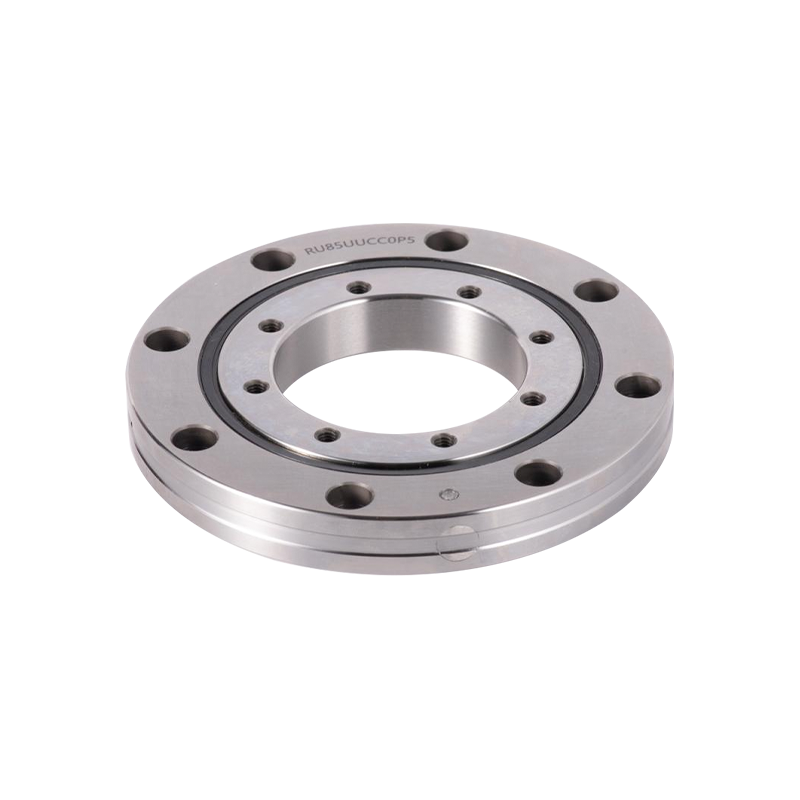
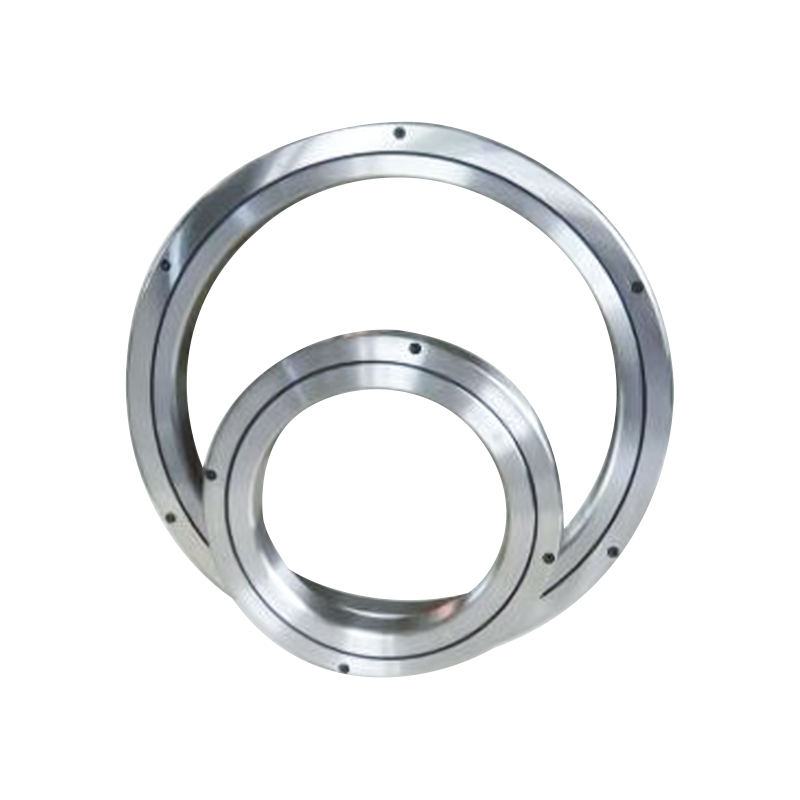
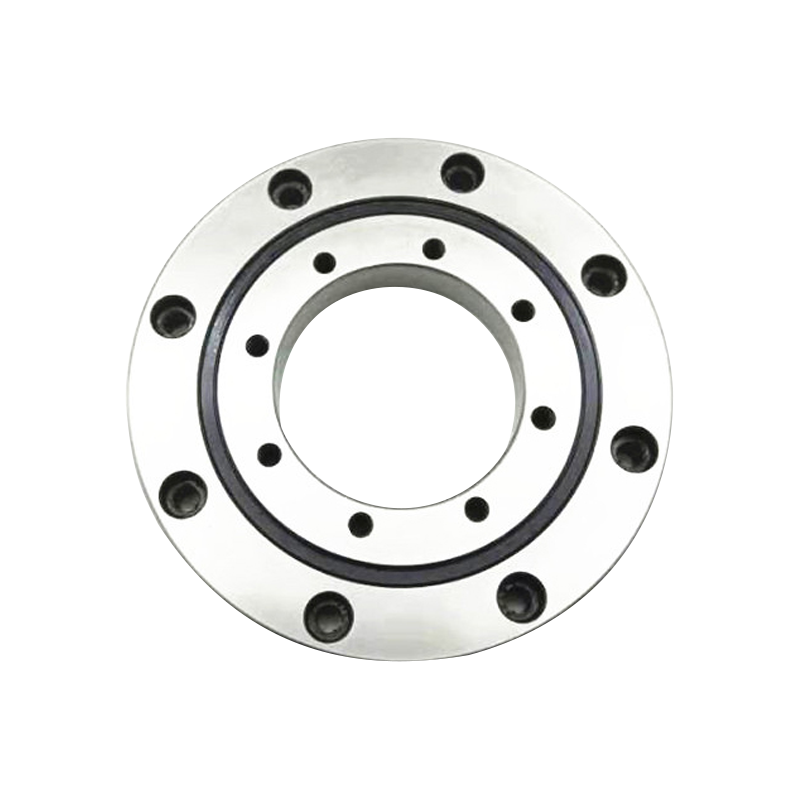
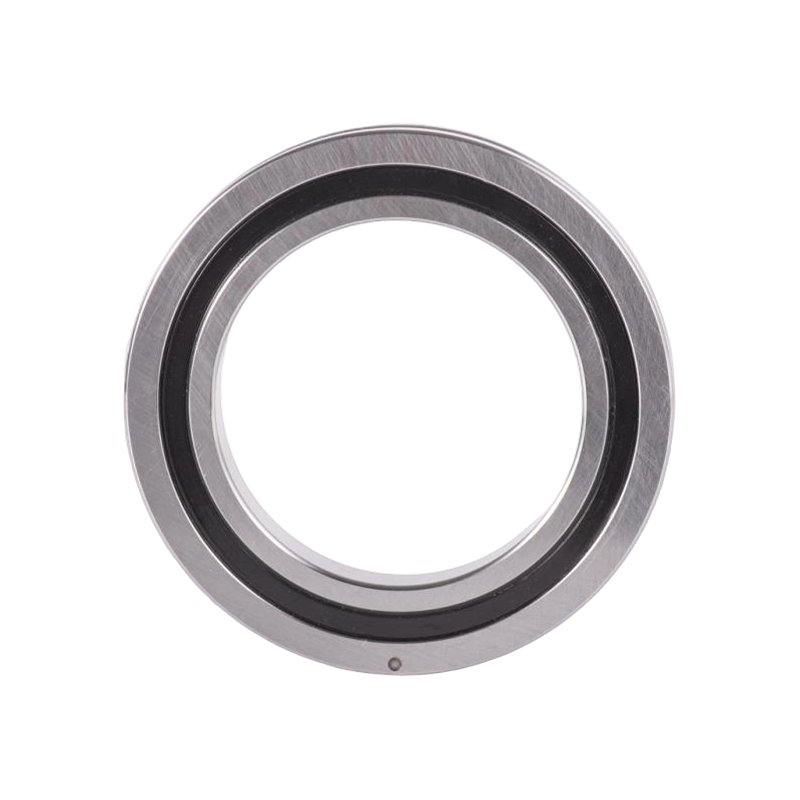
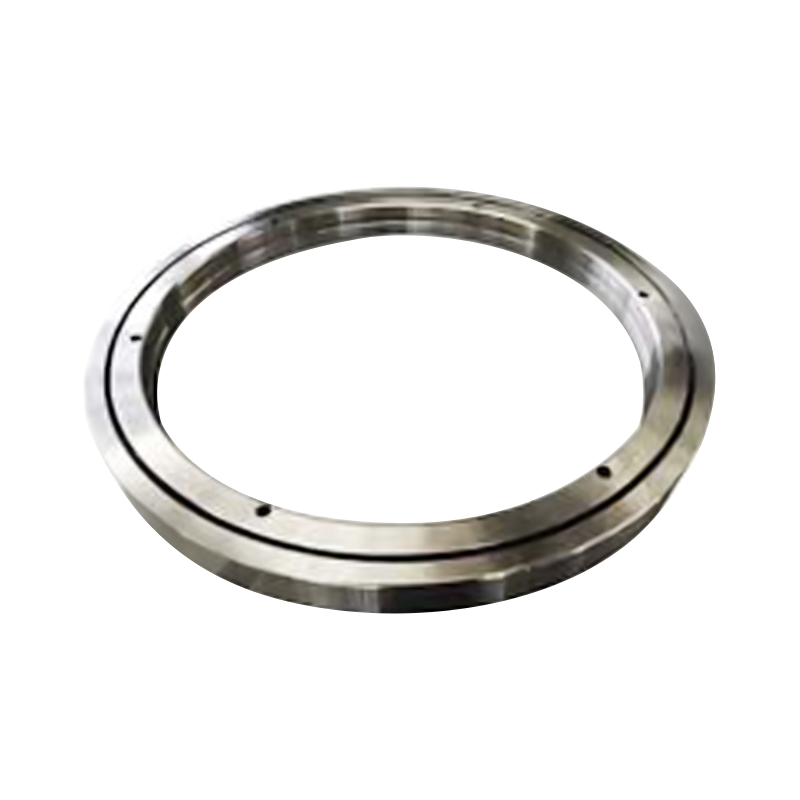
Traditional bearing solutions struggle to meet these competing demands. Standard ball bearings lack the rigidity needed for precise multi-directional loads. Tapered roller bearings consume excessive space. The industry needed an innovation that could deliver combined load capacity—radial, axial, and moment loads simultaneously—while maintaining an ultra-thin profile. This need gave rise to crossed roller bearing technology, and within this category, the RB2508 bearing has emerged as a defining solution for modern robotics.
Collaborative robots operate in shared spaces with human workers, requiring not only compact dimensions but also exceptional stability and repeatability. A slight positional drift in any joint can compromise both safety and task accuracy. These robots typically feature 6 to 7 degrees of freedom, with each joint demanding a bearing solution that combines high stiffness with minimal weight.
Manufacturers increasingly integrate robotic arms into confined environments—assembly lines with space constraints, pick-and-place systems in warehouses, and overhead-mounted applications. Miniaturization is no longer optional; it is a competitive necessity. Engineers must pack the same payload capacity and precision into smaller envelopes, intensifying pressure on component suppliers to innovate.
A decade ago, a 10-kilogram industrial arm might tolerate 3-5mm radial runout at the end effector. Today's precision applications—surgical robotics, precision assembly, semiconductor manufacturing—demand runout under 0.5mm. This translates to bearing solutions that deliver exceptional rigidity despite ultra-compact housing.
Key Market Insight: The global collaborative robotics market is projected to grow at a compound annual rate exceeding 30 percent through 2030, directly driving demand for compact, precision-grade bearing solutions that can operate in constrained spaces while maintaining micron-level accuracy.
The crossed roller design represents a departure from conventional bearing geometry. Rather than identical rolling elements arranged in a single raceway, crossed roller bearings employ rollers oriented at 90-degree angles to one another within the same bearing ring. This configuration enables the bearing to accept loads from multiple directions—radial (X and Y axes), axial (Z axis), and moment loads—using a single, compact component.
For the RB2508 crossed roller bearing, this architecture translates to exceptional performance metrics:
High-quality crossed roller bearings employ through-hardened steel for both the rolling elements and raceways. This material choice ensures consistent hardness throughout the component, preventing subsurface fatigue cracks that plague conventional surface-hardened bearings. Surface treatments typically include precision grinding to achieve roughness values below 0.2 micrometers, essential for minimizing friction and extending service life.
A distinguishing feature of precision-grade crossed roller bearings is the integrated preload system. Unlike standard bearings that operate with some clearance (allowing internal movement), preloaded crossed roller bearings maintain constant contact between rolling elements and raceways. This design eliminates play, dramatically increasing bearing stiffness—a critical requirement for robotic joints.
The preload is typically achieved through:
Traditional ball bearings rely on point contact between rolling elements and raceways. This geometry limits load-carrying capacity and contributes to compliance (springiness) under load. Crossed roller bearings employ line contact, distributing loads across a larger surface area. For the RB2508 bearing, this results in axial rigidity values 5-10 times greater than equivalent-sized ball bearings, with radial rigidity improvements of 3-6 times.
In practical terms, a robotic arm joint equipped with RB2508 bearings exhibits positional repeatability within +/- 0.1mm over extended duty cycles, compared to +/- 0.5mm for systems using conventional bearings.
Robot joints operate under complex, simultaneous loading conditions:
A single RB2508 bearing accommodates all three load types within its design envelope. Alternative solutions typically require multiple bearing sets (perhaps a ball bearing for radial load and a tapered roller bearing for axial load) or complex housing arrangements. The crossed roller design consolidates these functions into one component, reducing assembly complexity, cost, and potential failure points.
Many modern robots employ frameless motors and integrated drive electronics directly within joint housings. Conventional bearing solutions consume excessive radial space, limiting motor diameter or requiring external component arrangement. The RB2508's thin-wall geometry preserves internal space for larger motor magnets and control electronics, directly improving motor torque output and reducing overall joint mass.
Industrial environments present temperature variations from 5 degrees Celsius to 50 degrees Celsius, and specialized applications extend this range further. Thermal expansion creates challenges for bearing clearance. Preloaded crossed roller bearings incorporate spring mechanisms that maintain consistent preload through these temperature excursions, preventing the clearance expansion that would compromise precision in conventional bearings.
The following table illustrates how crossed roller bearings compare to conventional alternatives for a typical robot shoulder joint application:
| Specification | Crossed Roller (RB2508) | Double-Row Ball Bearing | Tapered Roller Set |
|---|---|---|---|
| Radial Rigidity | Very High | Moderate | High |
| Axial Rigidity | Very High | Low | Moderate |
| Moment Load Capacity | Excellent | Poor | Fair |
| Component Count | 1 unit | 2-4 units | 3-6 units |
| Installation Complexity | Low | Moderate | High |
| Outer Diameter (approx.) | 64mm | 68-75mm | 75-90mm |
| Positional Repeatability | +/- 0.1mm | +/- 0.3-0.5mm | +/- 0.2-0.4mm |
This comparison reveals the fundamental advantage: a single RB2508 bearing delivers the combined performance of multiple conventional bearing sets while consuming less radial space and simplifying assembly.
Crossed roller bearings demand precision in housing design. The outer ring typically requires an H7 tolerance fit (a tight fit ensuring no radial movement), while the inner ring bore requires a P5 or better tolerance class to maintain concentricity. Any runout in these dimensions directly reduces the bearing's effective rigidity and can accelerate wear.
Crossed roller bearings operate with minimal internal clearance due to preload. This design generates relatively low friction compared to conventional bearings but creates unique lubrication requirements:
In high-speed applications (>200 RPM), oil-based systems typically extend bearing life by 3-5 times compared to grease, though installation complexity increases.
Preloaded bearings generate slightly more heat than clearance-based designs. For robotic arms operating continuously under full load, ambient temperature control becomes important. Most precision-grade crossed roller bearings maintain specified rigidity up to 80 degrees Celsius, with performance degradation acceleration above 100 degrees Celsius.
Effective thermal management strategies include:
Understanding the precise characteristics of the RB2508 enables engineers to integrate it effectively into joint designs:
| Parameter | Value | Unit | Notes |
|---|---|---|---|
| Bore Diameter (d) | 25 | mm | Typical specification |
| Outer Diameter (D) | 64 | mm | Compact profile |
| Width (B) | 8 | mm | Ultra-thin wall |
| Dynamic Radial Load Rating (Cr) | 3,500 | N | 1 million cycle rating |
| Dynamic Axial Load Rating (Ca) | 1,980 | N | 1 million cycle rating |
| Moment Load Capacity (Cm) | 180 | Nm | At rated speed |
| Preload Force | 400-600 | N | Standard specification |
| Maximum Speed | 500 | RPM | Grease lubrication |
| Operating Temperature | -10 to +80 | degrees C | Standard range |
| Weight | approx. 200 | grams | Compact package |
The dynamic load ratings (Cr for radial and Ca for axial) represent the load at which the bearing will complete one million revolutions before fatigue spalling initiates. For robot joints operating at lower speeds (10-100 RPM typical), actual bearing life can extend 5-10 times beyond these ratings. The moment load capacity represents the maximum bending moment the bearing can sustain without excessive deflection, critical for offset-load scenarios common in robotic applications.
The RB series, including the RB2508, employs preload mechanisms integrated into the outer ring. Wave springs or disc springs apply a consistent compressive force, maintaining contact between inner roller rows and outer raceways. This design offers:
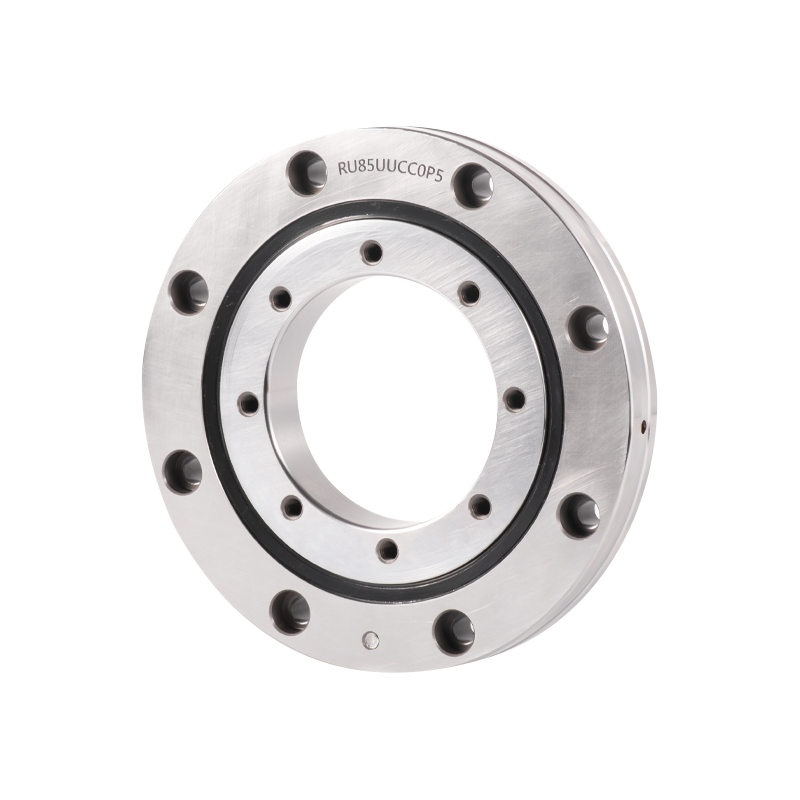
The RU series employs preload springs integrated into the inner ring. This alternative approach provides:
For robot joint applications, RB-series bearings like the RB2508 typically outperform RU-series alternatives due to superior preload stability and rigidity in the radial direction. RU series finds preference in slewing ring applications where outer-ring compactness is paramount. For standard robotic arms, wrist assemblies, and collaborative robot joints, the RB2508 represents the optimal choice.
The performance advantages of crossed roller bearings depend entirely on installation precision. Recommended practices include:
Crossed roller bearings benefit from a controlled run-in period. For new robot arms:
Modern robot platforms increasingly incorporate vibration and temperature sensors around joint bearings. These enable predictive maintenance strategies that extend component life. Key monitoring parameters include:
Crossed roller bearings in well-maintained systems commonly operate 10,000-15,000 hours before requiring replacement. Strategies to maximize service life include:
Collaborative robots typically mount an RB2508 or equivalent crossed roller bearing at the base of the upper arm (shoulder pitch axis). This joint carries the full weight of the distal arm structure plus payload, experiences moment loads from payload offset, and requires exceptional positional repeatability for safe human collaboration. The RB2508's combined load capacity and thin profile enable integration into a compact shoulder housing that maintains industrial aesthetics while delivering precision performance.
Modern robot wrists employ three rotation axes (roll, pitch, yaw) in a compact assembly. Each axis may employ a crossed roller bearing of the RB2508 scale or smaller variants. The minimal radial envelope of these bearings enables three-axis integration within a wrist diameter under 80mm, a specification impossible with conventional bearing solutions. The high moment-load capacity proves critical, as wrist-mounted tools create significant tilting forces despite proximity to the rotation axis.
Selective Compliance Assembly Robot Arm (SCARA) systems frequently employ vertical mounting, with bearings supporting cantilever loads. The RB2508's superior axial rigidity prevents vertical deflection that would compromise part alignment in precision assembly tasks. Applications include circuit board assembly, where component placement accuracy must remain within 0.1mm across an 8-hour shift.
Delta robots employ three parallel kinematic chains, with each joint bearing high dynamic loads as the mechanism accelerates and decelerates at extreme speeds (>2 meters per second). The preload in crossed roller bearings minimizes backlash, critical for trajectory accuracy at these velocities. RB2508-scale bearings enable the compact joint housings that define delta robot geometry.
Begin bearing selection by characterizing the actual joint loading. Create a load profile by:
Once the actual load envelope is established, compare to bearing dynamic load ratings. The RB2508's load envelope suits most 5-15 kilogram collaborative robot arms and many industrial arms up to 20 kilograms.
Robot joints operate at relatively low speeds (typically 10-200 RPM) with duty cycles varying from continuous light loading to intermittent heavy loading. Crossed roller bearings excel across this spectrum. If joint speeds exceed 300 RPM, ensure lubrication system design (oil-air preferred) can support higher-speed operation without excessive temperature rise.
The RB2508's ultra-thin 8mm width distinguishes it from larger crossed roller bearings. If space availability permits, engineers sometimes select larger bearings (such as RB3010 or similar) to accommodate higher dynamic loads. However, for space-constrained applications, the RB2508 often represents the optimal balance between available load capacity and installation envelope.
Applications demanding positional repeatability under 0.2mm (common in precision assembly and surgical robotics) benefit from crossed roller bearings' inherent rigidity advantage. If application requirements allow 0.5mm repeatability, conventional bearing solutions may prove cost-effective alternatives.
Although crossed roller bearings carry higher unit cost than conventional alternatives, total joint cost often favors crossed roller solutions when accounting for housing simplification, reduced bearing count, and extended service life. A joint requiring two ball bearings and one tapered bearing set (three components) costs less to engineer and manufacture than equivalent performance using a single RB2508, yet the single-bearing solution often outperforms the multi-bearing approach in rigidity and repeatability.
Research continues into ceramic-hybrid bearings that reduce density and thermal conductivity concerns in extremely high-speed applications. While current RB2508 implementations employ steel throughout, future variants may incorporate silicon nitride rolling elements, offering lower thermal expansion and extended operating life at temperatures approaching 120 degrees Celsius.
Bearing manufacturers increasingly embed sensors within bearing rings to monitor temperature, vibration, and axial position. These smart bearing concepts, when integrated into RB-series designs, enable real-time condition assessment without additional external instrumentation. A future "smart RB2508" could provide continuous diagnostic data to robot control systems.
Current RB2508 designs employ fixed preload values. Emerging designs explore adjustable preload mechanisms that permit on-site tuning of bearing rigidity to match specific application requirements. This capability could extend single bearing model applicability across a broader load spectrum.
Rather than standardized load ratings, next-generation bearing design tools enable custom optimization for specific load profiles. A joint experiencing primarily radial loading with minimal axial or moment loads can employ bearings optimized for that profile, potentially reducing cost and weight while maintaining performance.
Crossed roller bearings employ line contact geometry compared to the point contact of ball bearings, enabling significantly higher rigidity and the ability to accept combined loads (radial, axial, and moment) simultaneously. A single RB2508 crossed roller bearing can replace multiple conventional bearings while occupying less space and delivering superior positional repeatability. This is particularly valuable in compact robotic arms where space is at a premium.
Preload forces maintain constant contact between rolling elements and raceways, eliminating the clearance that characterizes conventional bearings. This eliminates backlash and dramatically increases bearing stiffness, enabling the precision repeatability demanded by modern robots. The preload remains stable across operating temperature ranges due to integrated spring mechanisms.
In well-maintained systems with appropriate lubrication and contamination control, RB2508 bearings typically operate 10,000 to 15,000 hours before requiring replacement. Life varies significantly based on actual load conditions, speed, temperature, and maintenance rigor. Light-duty applications may see 20,000+ hours, while heavy-duty systems might require replacement after 8,000 hours.
In many cases, yes. The RB2508's compact profile often enables direct substitution if housing tolerances and lubrication systems can be adjusted. However, the superior rigidity may require servo controller tuning to prevent oscillation from the dramatically increased joint stiffness. Compatibility assessment should involve detailed dimensional analysis and dynamic simulation before implementation.
Oil-air lubrication systems are preferred for continuous-duty applications, delivering precise oil droplets at controlled intervals. This approach minimizes drag, maintains consistent preload temperature, and extends bearing life compared to grease lubrication. Grease-lubricated designs suit sealed applications with moderate duty cycles and lower speed requirements.
The RB2508's moment load capacity of approximately 180 Newton-meters significantly exceeds that of tapered roller bearings of equivalent outer diameter. This advantage stems from the crossed roller geometry's ability to accept tilting loads without excessive deflection. For applications with substantial offset payloads, crossed roller bearings often require no additional moment-load support structure.
The outer ring requires H7 tolerance (tight fit) to prevent radial movement and ensure proper load distribution. The inner ring bore demands P5 or better tolerance class to maintain concentricity. Any runout exceeding 0.05mm in the mounting surfaces degrades bearing performance and accelerates wear. Precision machining and inspection are essential before installation.
Yes. Manufacturers offer crossed roller bearing series spanning a wide size range. Smaller variants (RB2006, RB1006) accommodate lighter-duty or space-constrained applications, while larger variants (RB3010, RB3015, RB4015) provide increased load capacity for heavier robotic arms or slewing ring applications. Each variant maintains the crossed roller design's fundamental performance advantages while scaling load and speed capabilities.
Standard RB2508 bearings operate reliably between minus 10 and plus 80 degrees Celsius. Performance degradation accelerates above 80 degrees Celsius as lubricant viscosity decreases and preload spring force diminishes. High-temperature variants designed for operation to 120 degrees Celsius use specialized lubricants and spring materials, increasing cost. Effective thermal management through housing design and cooling systems extends bearing life significantly.
Crossed roller bearings excel in dynamic applications. Their preload and superior rigidity minimize backlash and deflection during acceleration, critical for trajectory accuracy. The line contact geometry distributes impact loads across larger surfaces compared to ball bearings, reducing peak stress concentrations. High-performance robot designs employing extreme acceleration benefit more from crossed roller bearings than low-speed, continuous-motion applications.
Product Categories
Contact Us

Jane@ukl-bearing.com
Jenny@ukl-bearing.com
Andy@ukl-bearing.com
Ivy@ukl-bearing.com

+86-510- 88763239
+86-15371057968

No.1 Hehuan Road, Hudai Town, Binhu District, Wuxi City.
Ready to Begin?
Get in Touch

Now!
UKL BEARING
 English
 Español
 русский