Content
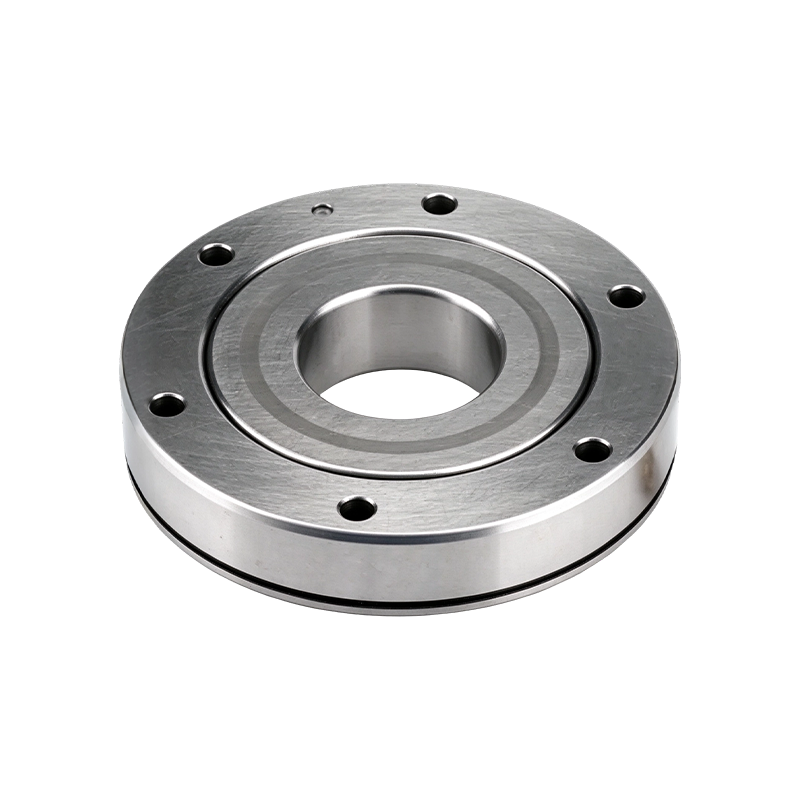
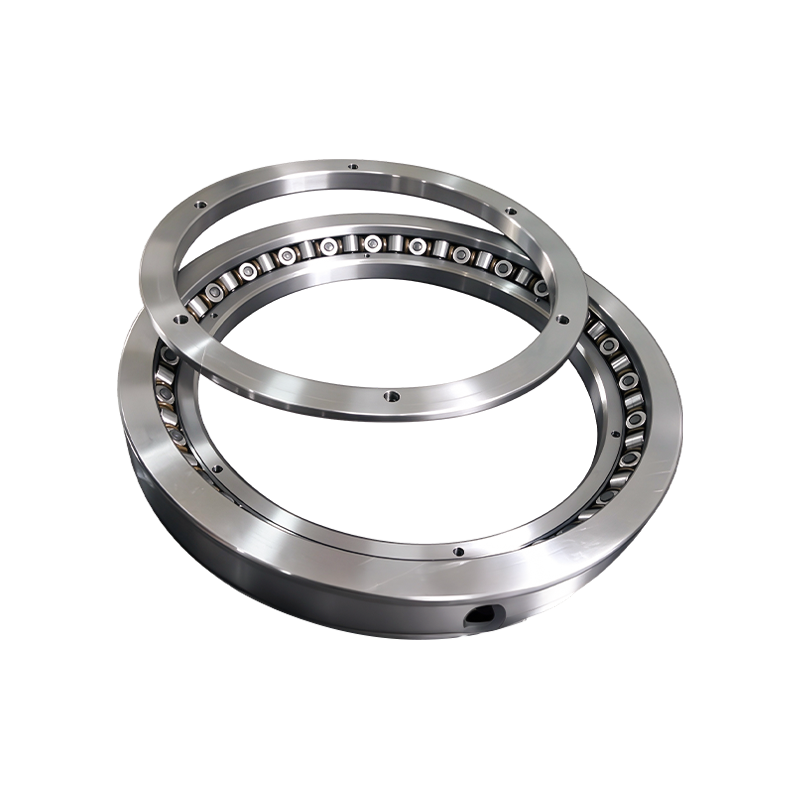
The XSU080168 bearing is a precision toothless cross-roller slewing bearing developed for rotary mechanisms that require compact installation, combined load support and controlled rotational movement. Its integrated inner and outer ring construction, crossed cylindrical roller arrangement and pre-machined mounting holes make it suitable for equipment where structural rigidity and installation accuracy are important design considerations.
Unlike conventional radial bearings that are primarily selected to support loads in a particular direction, a crossed roller configuration allows one bearing assembly to accommodate radial loads, axial loads and overturning moments. This arrangement can simplify the mechanical structure of rotary units, reduce the number of separate supporting components and provide a more integrated bearing solution.
For engineers evaluating an XSU080168 precision toothless cross-roller slewing bearing, the selection process should consider more than nominal dimensions. Load direction, mounting interface, rotational speed, precision requirements, lubrication, sealing and drive configuration all influence whether the bearing is suitable for a particular machine.
This guide examines the structural characteristics, dimensional information, load ratings, installation considerations and application requirements associated with the XSU080168 model. It also explains the technical information that purchasing departments should confirm before placing an order.
For product-specific information, consult the xsu080168 bearing product specification and request the latest engineering drawing when evaluating installation compatibility.
The XSU080168 belongs to the XSU series of crossed roller slewing bearings. It uses an integrated ring structure with mounting holes and an internal crossed roller arrangement. Its design combines several supporting functions within a relatively thin bearing section, making it useful in rotary assemblies where available installation space is limited.
The bearing is gearless, meaning that it does not incorporate an internal or external gear ring for direct transmission of driving torque. Instead, the machine designer can select a separate drive arrangement according to the required positioning accuracy, rotational speed and control strategy.
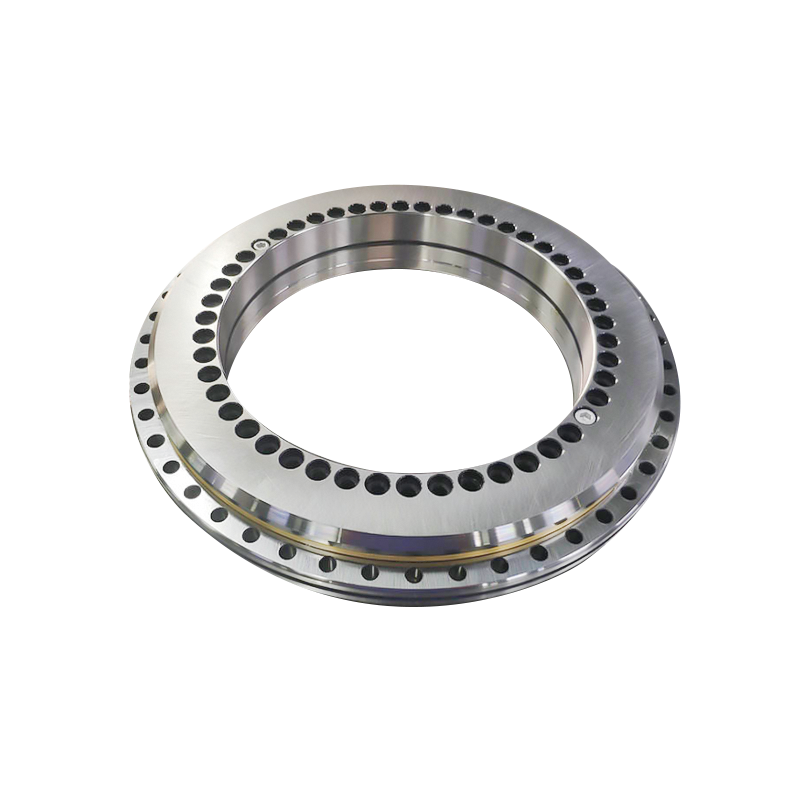
One important feature of the XSU080168 bearing is its integrated inner and outer ring construction. Both rings are designed as part of the bearing assembly, with mounting holes provided for connection to adjacent machine components.
In suitable installations, this arrangement eliminates the need for an additional bearing presser flange or a separate supporting housing. The bearing can be secured directly to prepared mounting surfaces using the specified fasteners. This can reduce the number of structural components and simplify the overall rotary assembly.
The mounting-hole arrangement also helps engineers plan the bearing interface during the early stages of equipment design. Instead of designing an independent bearing seat, they can coordinate the machine base, rotary platform and fastening pattern around the bearing dimensions.
However, integrated mounting holes do not eliminate the need for accurate supporting surfaces. Both connecting components must have adequate rigidity, dimensional accuracy and flatness. Uneven contact, machining errors or excessive bolt tightening can introduce deformation into the bearing rings and affect rotational performance.
The internal rolling elements are arranged in alternating directions, with adjacent cylindrical rollers oriented approximately 90 degrees to one another. The rollers operate between specially formed V-shaped raceways, allowing the bearing to accommodate loads acting in different directions.
In a conventional arrangement using separate radial and axial bearings, several components may be needed to support a rotary platform. A crossed roller structure combines these supporting functions within one assembly. This can reduce axial installation space and simplify the mechanical layout.
The arrangement is particularly relevant when equipment experiences combined radial forces, axial forces and overturning moments. For example, a rotary worktable carrying an offset workpiece may experience a combination of vertical loading and moment loading during positioning or machining.
It is important to distinguish combined load capability from unrestricted load capacity. Actual permissible loading depends on the load direction, operating conditions, mounting stiffness, preload, service life requirements and the manufacturer's calculation method.
A gearless crossed roller slewing bearing does not contain an integrated gear transmission. The bearing provides rotational support, while a separate mechanical or electrical drive system supplies the torque required to move the rotary assembly.
This separation gives equipment designers greater freedom when selecting the transmission arrangement. Depending on the machine architecture, possible configurations include an external gear ring, a direct-drive torque motor or another suitable drive mechanism.
The selected drive system must be evaluated independently of the bearing load ratings. Engineers should verify available torque, acceleration, braking conditions, positioning requirements and the stiffness of the complete transmission assembly.
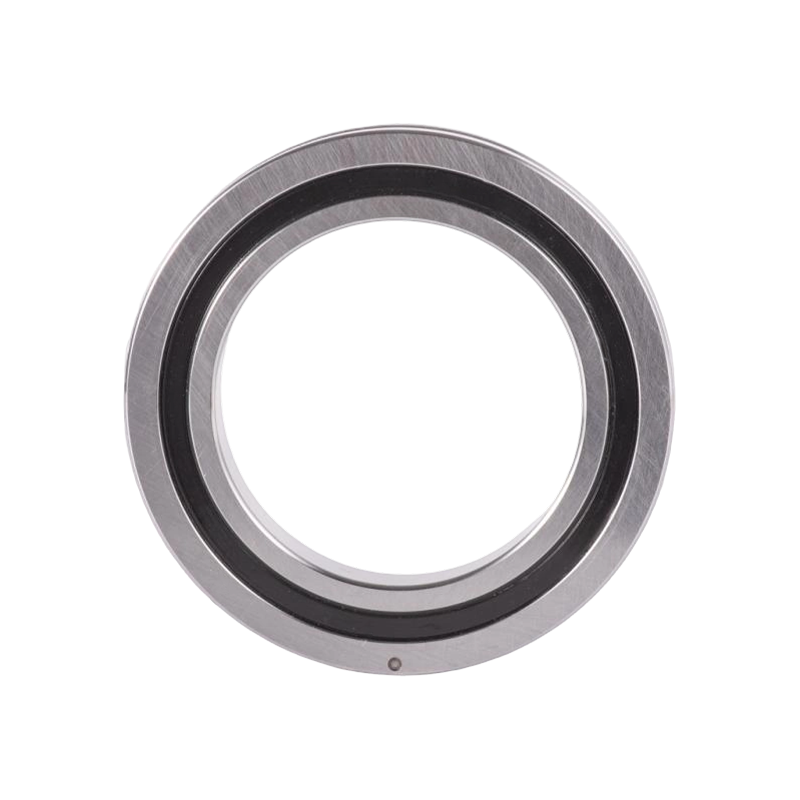
The XSU080168 bearing uses sealing arrangements on both sides to help protect the internal rolling contact area. The seals reduce the direct entry of dust and other external contaminants while helping retain the internal lubricant.
This is relevant in industrial environments where fine particles, machining residues or airborne contaminants may affect rolling contact conditions. Maintaining a suitable internal lubrication condition helps reduce frictional wear and supports stable operation.
Seals should not be interpreted as a guarantee of complete protection against water immersion, aggressive chemicals or high-pressure cleaning. The actual protection level depends on the sealing design, installation orientation, operating environment and maintenance requirements.
Precision requirements vary significantly between industrial rotary equipment. A general-purpose automation platform may tolerate a different positioning error from a semiconductor inspection stage or a precision measuring instrument.
Precision grades such as P5, P4 and P2 are relevant selection options identified for this product configuration. Their availability and exact acceptance criteria should be confirmed with the supplier before ordering. Buyers should also establish whether the requested grade applies to dimensional accuracy, running accuracy, axial runout, radial runout or another defined inspection standard.
A precision grade alone does not determine the accuracy of a complete rotary machine. Bearing installation, support structure deformation, drive control, thermal conditions and assembly tolerances must be considered together.
Correct model identification is essential when purchasing a crossed roller slewing bearing. Similar model numbers may represent different dimensions, mounting interfaces or structural configurations. Therefore, engineers should use the complete bearing designation rather than relying only on a general series description.
Identifies the XSU integrated-ring crossed roller bearing family.
Identifies the relevant structural size series.
Distinguishes this specific model within the series.
Used for the optional Corrotect anti-corrosion coating configuration where specified by the manufacturer.
The designation XSU080168 should always be matched against its engineering drawing. The numerical suffix should not be treated as a substitute for checking the actual bore diameter, outside diameter, bearing width and mounting-hole positions.
For equipment operating in humid or potentially corrosive environments, surface protection may be an important purchasing consideration. The optional RR designation is associated with a Corrotect anti-corrosion coating configuration in the supplied model information.
Before selecting this option, engineers should identify which surfaces require protection and whether the coating is compatible with the intended installation interfaces. Coating thickness, dimensional allowances, contact surfaces and storage requirements should be clarified in the technical specification.
Anti-corrosion treatment does not automatically make a bearing suitable for every chemical environment. The actual protection level should be assessed against the expected humidity, cleaning agents, contaminants and maintenance conditions.
Dimensional compatibility is one of the first checks when evaluating an XSU080168 bearing. The bearing must fit within the available installation envelope while maintaining sufficient space for mounting bolts, surrounding machine components, drive elements and service access.
The following table presents the principal reference dimensions and performance ratings associated with the model. All dimensions are expressed in millimeters unless another unit is specified.
| Parameter | Symbol | Reference Value |
|---|---|---|
| Model | Designation | XSU080168 |
| Inner ring bore diameter | d | 130 mm |
| Outer ring diameter | D | 205 mm |
| Inner ring outer diameter | da | 159 mm |
| Outer ring inner diameter | Da | 174 mm |
| Bearing width | B | 25.4 mm |
| Outer ring mounting pitch circle | La | 190 mm |
| Inner ring mounting pitch circle | Li | 145 mm |
| Outer ring mounting holes | na | 12 |
| Inner ring mounting holes | ni | 12 |
| Minimum chamfer reference | r | 1.1 mm |
| Reference weight | m | 3.3 kg |
The 130 mm inner diameter and 205 mm outer diameter define the main radial installation envelope. The 25.4 mm bearing width is particularly important when designing compact rotary equipment because it determines the axial space occupied by the bearing itself.
The mounting pitch circles describe the locations of the fastening holes relative to the bearing center. The inner and outer rings have separate mounting patterns, so both mating machine components must be designed according to the correct interface dimensions.
Mounting-hole compatibility should be verified before machining the supporting structure. The reference drawing identifies 12 mounting holes on each ring. A commonly listed hole configuration is 12 holes with a 6.8 mm through-hole and an 11 mm counterbore, with a counterbore depth of 6.8 mm.
Hole diameter alone is not sufficient for determining fastener compatibility. Engineers should also inspect counterbore dimensions, bolt-head clearance, fastening direction and the available material thickness in the mating components.
Schematic dimension reference for model identification. Use the manufacturer's approved 2D drawing for production machining and final installation.
The load ratings of a crossed roller bearing provide an initial reference for engineering selection. Axial ratings describe the bearing's rated capacity under axial loading, while radial ratings describe its rated capacity under radial loading.
| Performance Parameter | Symbol | Reference Value |
|---|---|---|
| Basic dynamic axial load rating | Ca | 66 kN |
| Basic static axial load rating | C0a | 240 kN |
| Basic dynamic radial load rating | Cr | 42 kN |
| Basic static radial load rating | C0r | 96 kN |
| Reference limiting speed | n | 227 r/min |
| Maximum permissible radial load against friction lock | Fr | 8.18 kN |
| Reference weight | m | 3.3 kg |
| Operating temperature reference | - | -30 to +80 degrees C |
The dynamic load rating is used when assessing bearing operation under repeated movement. The static load rating is relevant when evaluating stationary or slowly moving conditions, including potential permanent deformation under applied loading.
Neither rating should be interpreted as the maximum permissible load for every application. A bearing exposed to simultaneous axial and radial loads, or a substantial overturning moment, requires an appropriate combined-load assessment. The supporting structure and fastening system must also be evaluated.
The listed 227 r/min limiting speed is a reference value rather than a universal operating target. Actual permissible speed may be affected by preload, lubricant, temperature rise, seal friction, installation accuracy, applied loads and operating duty cycle.
For engineering release, the applicable catalog revision and manufacturer-confirmed performance data should be used. Where different technical documents report different radial ratings, the supplier should provide a written clarification before the values are incorporated into a machine design.
The reference weight of 3.3 kg can be used for preliminary handling and machine mass calculations. However, the total mass of the finished rotary assembly must include mounting plates, drive components, fasteners, workpieces and other attached equipment.
Temperature also influences the operating condition of precision bearings. Changes in temperature can affect clearances, preload, lubricant viscosity and the dimensional relationship between the bearing and its housing. Applications approaching the stated temperature boundaries should receive additional engineering review.
For equipment involving frequent starts and stops, the average rotational speed alone may not adequately describe the operating condition. Acceleration, deceleration, reversing frequency and dwell periods should also be included in the evaluation.
Confirm mounting dimensions, hole details, load ratings and available precision configurations before finalizing your machine design.
Request a 2D drawing, 3D CAD model or detailed technical specification for your application.
The XSU080168 is relevant to equipment that requires a compact rotary support structure with combined load capability. Its suitability depends on the actual mechanical design rather than the industry category alone. The following application areas illustrate where its structural characteristics may be considered during equipment development.
Robot joints and rotary bases frequently operate under changing load directions. A joint may support the weight of downstream mechanisms while experiencing radial forces, axial forces and overturning moments generated by arm movement and payload positioning.
A crossed roller bearing can consolidate several supporting functions within one assembly. Its integrated mounting arrangement may also help simplify joint housing design and reduce the number of separate bearing supports.
For robot joint applications, engineers should evaluate payload, arm length, acceleration, stopping conditions, positioning accuracy and service life. The bearing's nominal load ratings must be assessed against the actual joint loading rather than the robot's payload rating alone.
Machine tool rotary tables require controlled rotation while supporting workpieces, fixtures and cutting-related forces. Radial and axial loading can occur together, while off-center workpieces may generate overturning moments.
The thin-section design of the XSU080168 may be useful where the rotary table has limited vertical installation space. The crossed roller arrangement can provide support in several load directions without requiring multiple separate bearing assemblies.
When evaluating this model for a machine tool rotary table, engineers should pay attention to static stiffness, cutting force direction, table runout, rotational positioning and thermal stability. The mounting plate must also provide adequate rigidity to avoid introducing deformation during operation.
Some medical instruments and diagnostic systems incorporate rotary positioning mechanisms that require smooth movement and repeatable positioning. A compact crossed roller bearing may be considered for such mechanisms when its dimensions and precision characteristics meet the equipment's requirements.
Applications can include rotary positioning platforms, instrument adjustment assemblies and other controlled-motion structures. Equipment developers should separately assess cleanliness requirements, lubricant compatibility, noise, service access and the applicable regulatory requirements of the finished medical device.
The bearing itself should not be assumed to provide medical-device certification. Any compliance requirements must be evaluated for the complete equipment assembly and its materials.
Semiconductor inspection and precision measurement systems often rely on stable mechanical positioning. Even relatively small changes in rotational accuracy or structural deformation may affect measurement repeatability and equipment calibration.
The XSU080168 structure may be evaluated for rotary inspection mechanisms, positioning stages and equipment interfaces where compact dimensions and multi-directional support are needed.
Selection should consider vibration transmission, thermal expansion, cleanliness, lubricant behavior and the accuracy requirements of the complete motion system. A higher bearing precision grade does not automatically compensate for an inadequately designed machine base.
Additional possible applications include solar tracking mechanisms, indexing equipment, automated inspection platforms and selected rotary support assemblies in road machinery or commercial vehicle equipment.
These applications differ considerably in shock loading, contamination exposure, duty cycle and environmental conditions. Therefore, the same bearing model should not be selected solely because its nominal dimensions match an existing assembly.
Choosing a crossed roller slewing bearing requires a coordinated review of mechanical loads, installation geometry, drive requirements and operating conditions. Even when the model dimensions match the available space, the bearing may not be suitable if its performance characteristics do not satisfy the actual equipment requirements.
Precision grade selection should begin with the accuracy requirements of the finished machine. Engineers should identify the allowable radial runout, axial runout, rotational error, positioning repeatability and stiffness requirements before choosing a bearing configuration.
These descriptions are general selection guidance, not a substitute for a manufacturer's grade definition. Buyers should request the applicable tolerance table and inspection report. They should also confirm whether the precision grade is available for the specific XSU080168 configuration.
It is equally important to review the entire machine tolerance chain. The precision of the bearing, mounting plate, drive system and measuring system all contribute to the final positioning result.
Because the XSU080168 has a gearless configuration, the drive system must be designed separately. Engineers should first determine the required torque and rotational behavior, then evaluate the available space for the motor, transmission and associated components.
For a direct-drive arrangement, the motor's torque characteristics, thermal behavior, rotor-stator alignment and control resolution should be considered. For an external gear arrangement, gear geometry, backlash, contact conditions and mounting accuracy require attention.
The bearing and drive components must be coordinated so that transmission forces do not introduce unacceptable additional loading or deformation. The drive system should also provide sufficient clearance for seals, lubrication fittings and maintenance access.
Installation quality has a direct influence on the performance of an integrated-ring crossed roller bearing. The mounting surfaces should be clean, flat and sufficiently rigid. Burrs, chips, raised machining marks and uneven contact areas should be removed before assembly.
Uneven tightening can distort the bearing rings, especially when the supporting structure has insufficient rigidity. A controlled tightening sequence helps distribute clamping forces more consistently.
A common engineering concern is the transfer of mounting errors into the bearing assembly. If the supporting surfaces are not sufficiently accurate, tightening the bolts may force the bearing rings to follow an uneven mounting plane.
This can influence internal contact conditions, rotational torque and running accuracy. In severe cases, it may contribute to abnormal noise, local loading or premature wear.
To reduce these risks, mounting surfaces should be inspected before assembly, and the machine structure should be checked for adequate stiffness. Installation personnel should avoid using the bearing fasteners to compensate for incorrect machining or poor alignment.
Lubrication supports the rolling contact between the cylindrical rollers and raceways. The correct lubricant type and replenishment interval depend on the bearing configuration, operating speed, load, temperature and environmental conditions.
The XSU080168 reference configuration includes sealing on both sides and a lubrication provision in the bearing structure. Engineers should confirm the exact lubrication point, grease specification and maintenance procedure for the supplied configuration.
Excessive lubricant filling may increase friction and operating temperature, while insufficient lubrication can increase wear risk. The manufacturer's lubrication recommendations should therefore be followed.
The supplied reference temperature range is -30 degrees C to +80 degrees C. Engineers should verify this range against the actual bearing specification, including the lubricant and sealing configuration.
Applications involving repeated thermal cycles, high ambient temperatures, chemical exposure or significant moisture require additional assessment. Temperature changes can affect dimensional relationships, preload and lubricant performance.
Where corrosion protection is required, the optional RR coating should be evaluated alongside the sealing arrangement and the surrounding machine materials. The coating should not be treated as a replacement for appropriate environmental protection and maintenance.
Selection should not be based on a single axial or radial rating when the bearing experiences combined loading. For a rotary platform, the load distribution may change according to workpiece position, machine orientation, acceleration and external forces.
Engineers should prepare a load case covering normal operation, maximum working load, acceleration, emergency stopping and relevant static conditions. Any significant overturning moment should be included in the supplier's technical review.
Fastening bolts and mounting plates must also be checked. A bearing may have adequate internal load ratings while the surrounding connection remains the limiting component of the assembly.
Several selection errors can occur when buyers compare crossed roller bearings using only the model designation or outer dimensions. Avoiding these mistakes can reduce redesign work and improve the reliability of the final rotary assembly.
Two bearings may share similar bore and outside diameters while having different widths, mounting patterns, load ratings or internal structures. The complete drawing should be checked before treating another model as an equivalent replacement.
Dynamic and static load ratings describe different operating considerations. A machine operating under repeated movement requires a different assessment from equipment that mainly supports stationary loads. Both conditions may be relevant to a rotary mechanism that frequently stops and starts.
The bearing does not operate independently of the machine frame. A flexible mounting plate can deform under load and affect the bearing's operating condition. Support structure stiffness should be included in the mechanical design review.
Simply requesting P2, P4 or P5 is not always enough. Buyers should define the required running accuracy, inspection standard and documentation. This makes it easier for the supplier to confirm the correct configuration.
The absence of an integrated gear ring means that a separate drive solution must be planned. Buyers should confirm the drive method before finalizing the bearing installation structure. Otherwise, additional machining or structural modifications may be necessary.
Catalog information may vary between suppliers or document revisions. This is particularly important when comparing radial load ratings, limiting speed and special configurations. Always request a current technical drawing and written confirmation of the applicable performance data.
For purchasing departments, selecting an XSU080168 bearing involves both technical compatibility and supply considerations. A suitable supplier should be able to clarify the product configuration, provide engineering documentation and communicate the manufacturing and inspection requirements.
Before placing an order, buyers should obtain the technical documents needed to verify the bearing's suitability. These documents help align engineering, procurement and quality control teams.
OEM and ODM requirements should be discussed in terms of the actual engineering scope. A buyer may require a standard model with different documentation, a specific precision grade, an optional coating or a customized bearing solution.
These requirements should be clearly separated. A standard XSU080168 bearing with an optional treatment is not necessarily the same as a fully customized bearing design. Changes to dimensions, internal structure or performance requirements require a separate technical feasibility assessment.
When discussing a customized configuration, provide the application description, installation drawing, operating loads, speed, temperature and expected service conditions. This allows the engineering team to evaluate the requirements more accurately.
Inspection requirements should correspond to the intended equipment application. Dimensional inspection can verify the main mounting interfaces, while running accuracy measurements help evaluate the relevant rotational characteristics.
Depending on the purchase specification, quality documentation may include dimensional inspection records, material information, running accuracy results and product identification records. For precision applications, acceptance criteria should be agreed before production rather than introduced after delivery.
Purchasers should also clarify packaging, storage and transportation requirements. Bearings should be protected against contamination, moisture and impact during handling and delivery.
The XSU080168 bearing price is influenced by more than its nominal size. Precision requirements, internal configuration, coating options, order quantity and documentation requirements can affect the final quotation.
Buyers seeking a reliable quotation should provide the exact model, required quantity, application, precision grade and any special configuration. This helps reduce uncertainty and makes supplier quotations easier to compare.
Provide your required quantity, precision grade, coating option and application details. The sales and engineering teams can review the configuration and clarify the technical information needed for your purchase.
Contact us for product pricing, technical drawings, delivery information and bulk-order discussions.
The following questions address common technical and purchasing considerations when evaluating an XSU080168 precision toothless cross-roller slewing bearing.
The reference inner diameter of XSU080168 bearing is 130 mm, while its outer diameter is 205 mm. The bearing width is 25.4 mm. The inner ring outer diameter is 159 mm, and the outer ring inner diameter is 174 mm. Buyers should check the complete engineering drawing before designing the shaft, housing or mounting interface.
P5, P4 and P2 are the precision options identified for this selection. Their availability must be confirmed for the required supply configuration. Buyers should also specify the required running accuracy, inspection method and acceptance criteria instead of relying only on the precision grade designation.
No. XSU080168 is a toothless or gearless crossed roller slewing bearing. It provides rotational support without an integrated gear ring. The machine designer can use a compatible external gear arrangement, direct-drive motor or another suitable transmission configuration.
The reference weight is approximately 3.3 kg, and the listed reference limiting speed is 227 r/min. These values should be checked against the current supplier documentation. Actual operating speed depends on loading, lubrication, preload, sealing, temperature and installation conditions.
The reference axial dynamic and static load ratings are 66 kN and 240 kN respectively. The reference radial dynamic and static ratings are 42 kN and 96 kN. Since published catalogs may differ in their radial rating values, buyers should request written confirmation from the supplier before completing a critical engineering calculation.
It can be evaluated for robot joints, rotary bases and machine tool rotary tables where compact installation and combined load support are required. Suitability depends on actual payload, moment loading, operating speed, positioning accuracy, mounting stiffness and expected service life. A complete application assessment is recommended before selection.
OEM and ODM requirements can be discussed according to the required technical scope and manufacturing feasibility. Buyers should provide their application information, drawings, precision requirements, coating requirements and estimated order quantity. The supplier can then confirm which standard or customized configurations are available.
To request an XSU080168 bearing price, provide the model, quantity, required precision grade and any special coating or documentation requirements. You can also submit an installation drawing to help the engineering team review compatibility. The quotation should clarify product configuration, price, lead time and applicable technical documentation.
The integrated inner and outer ring construction includes pre-machined mounting holes, so a separate presser flange or housing may not be necessary in suitable machine designs. However, the bearing still requires rigid and accurately machined supporting surfaces. The final installation arrangement should follow the approved drawing and fastening specifications.
An optional RR Corrotect anti-corrosion coating configuration is identified in the supplied model information. Availability, coating coverage and dimensional requirements should be confirmed before ordering. The appropriate protection level depends on the actual environmental exposure and should not be assumed to provide universal chemical or water resistance.
When sourcing precision crossed roller bearings, buyers need more than a matching model number. Technical communication, product documentation, configuration confirmation and quality requirements are all important parts of the purchasing process.
UKL can support the XSU080168 sourcing process through technical discussions and configuration confirmation. Before an order is finalized, buyers can communicate their application conditions and identify the information required for a suitable product specification.
Discuss bearing dimensions, load conditions, mounting requirements and application suitability with the engineering team.
Confirm the availability and inspection requirements of P5, P4 and P2 precision configurations.
Request dimensional drawings and available CAD documentation for machine design and installation review.
Discuss sealing, lubrication and optional anti-corrosion treatment requirements before ordering.
Clarify inspection records, dimensional acceptance criteria and product traceability requirements.
Discuss order quantities, production arrangements, delivery schedules and long-term supply requirements.
For buyers evaluating an OEM or ODM supplier, it is advisable to submit a complete technical inquiry rather than requesting a price based only on the model number. This helps establish whether the proposed bearing configuration matches the intended machine and whether any special requirements need to be addressed.
Whether you are developing a new rotary mechanism, replacing an existing bearing or planning a bulk procurement project, providing the application details can help accelerate technical evaluation.
Send your inquiry for an XSU080168 bearing quotation, engineering drawing or technical consultation.
The XSU080168 bearing combines an integrated inner and outer ring structure, orthogonally arranged cylindrical rollers, pre-machined mounting holes and a gearless design. These characteristics make it a relevant option for compact rotary mechanisms that require support under combined radial, axial and moment loading.
Its reference dimensions include a 130 mm inner diameter, 205 mm outer diameter and 25.4 mm width. The mounting arrangement uses separate inner and outer ring hole patterns, while the reference weight is approximately 3.3 kg. Axial and radial load ratings, speed and operating temperature should be verified against the technical documentation for the actual supplied configuration.
Successful selection requires more than matching dimensions. Precision grade, drive system, mounting surface accuracy, fastener arrangement, lubrication, sealing and environmental conditions should all be considered. For critical applications, the complete load combination and expected operating life should be reviewed before purchase.
If you are sourcing an XSU080168 bearing for industrial robotics, machine tool rotary tables, semiconductor equipment or other precision rotary systems, contact UKL to discuss your technical requirements. Request the latest product drawing, confirm the available configuration and obtain a quotation based on your application and order quantity.
For detailed product information, refer to the XSU080168 precision crossed roller bearing specifications and submit your inquiry for further technical support.
Product Categories
Contact Us

Jane@ukl-bearing.com
Jenny@ukl-bearing.com
Andy@ukl-bearing.com
Ivy@ukl-bearing.com

+86-510- 88763239
+86-15371057968

No.1 Hehuan Road, Hudai Town, Binhu District, Wuxi City.
Ready to Begin?
Get in Touch

Now!
UKL BEARING
 English
 Español
 русский