Content
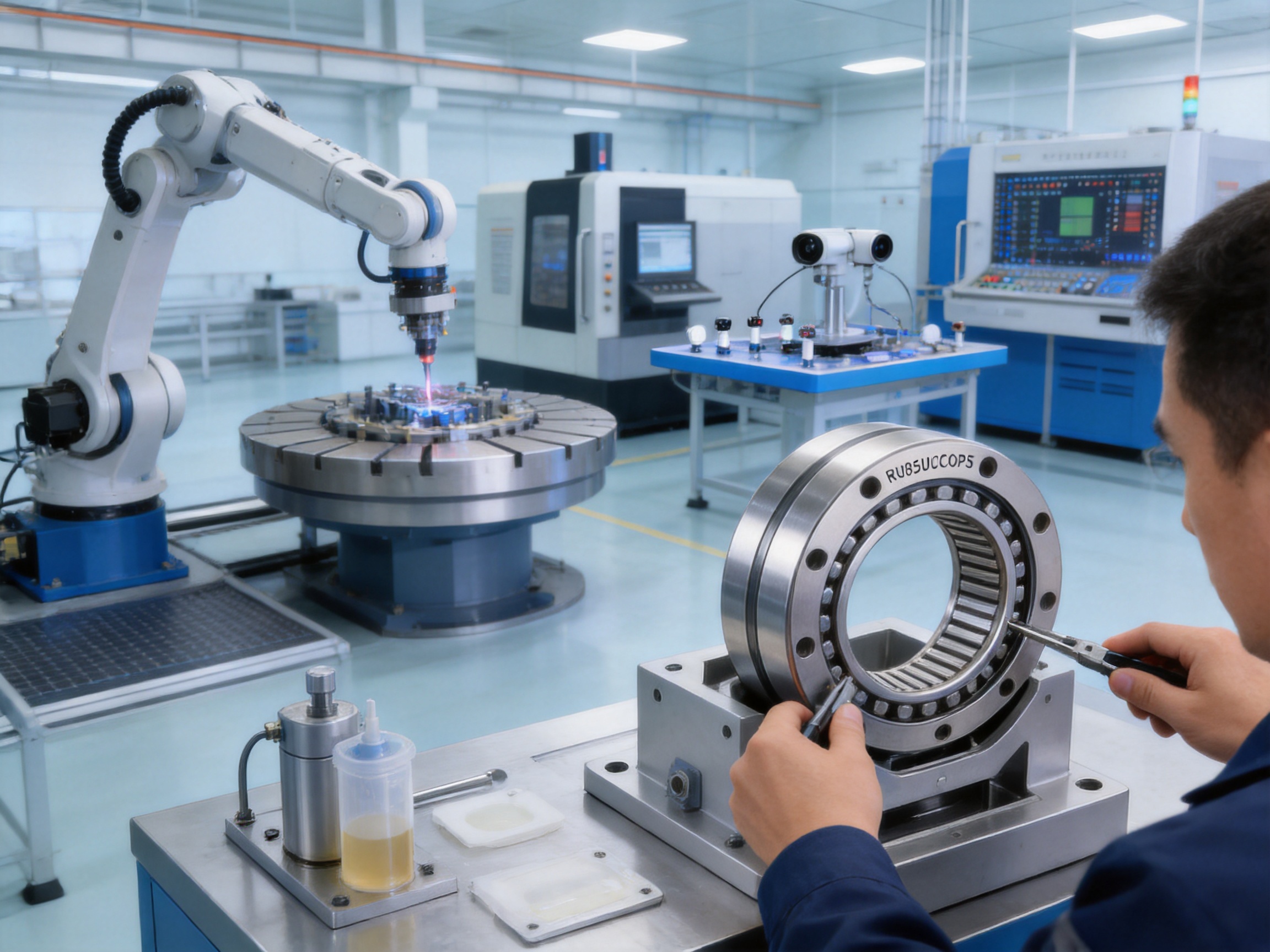
Modern automation systems demand more than simple rotational movement. Robots, indexing tables, semiconductor equipment, inspection machines, and precision production lines must move smoothly, repeatably, and accurately under changing loads. In these applications, the bearing is not merely a supporting component. It directly affects positioning accuracy, angular stiffness, vibration behavior, service life, and the overall productivity of the machine.
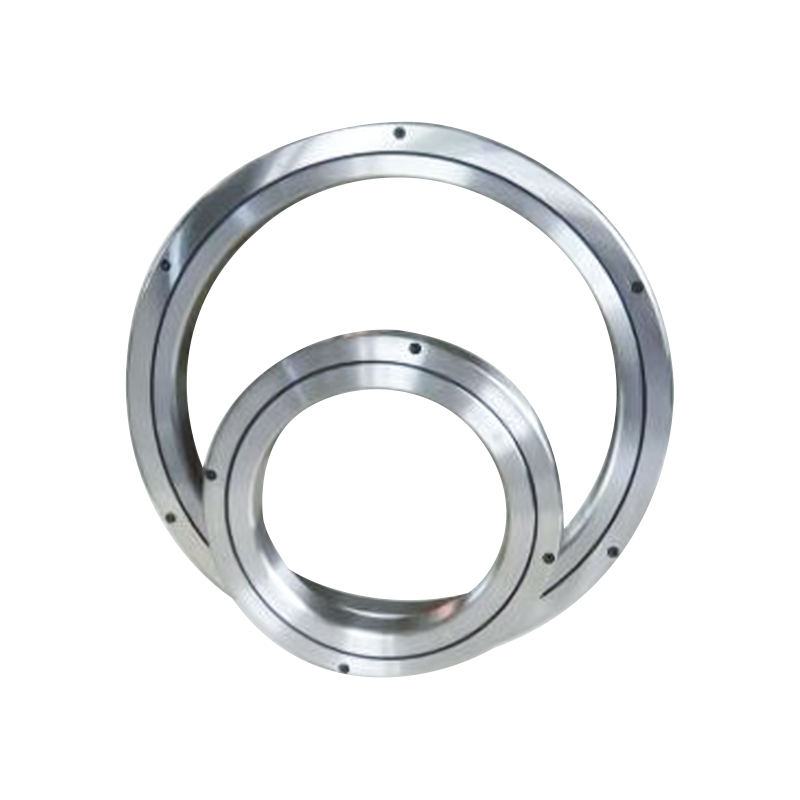
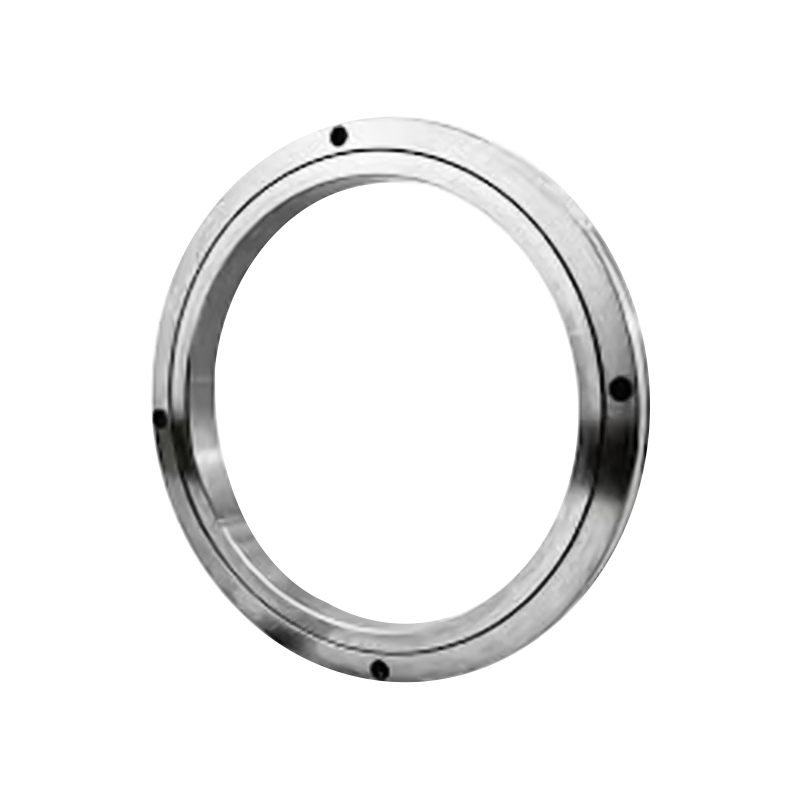
The RB2508 robot crossed roller bearing is designed for applications in which compact construction and high rotational accuracy are essential. As an RB-type crossed roller bearing, it uses a split outer ring and an integrated inner ring. This configuration is particularly suitable when the inner ring must rotate with high precision while the surrounding structure remains compact and rigid. The bearing can be used in rotary sections of indexing tables, robotic joints, machine tools, inspection equipment, and other systems requiring controlled and repeatable motion.
Crossed roller bearings have become an important solution for engineers who need to support radial loads, axial loads, and moment loads with one compact bearing arrangement. Compared with conventional ball bearings, their crossed cylindrical rollers create a larger effective contact area and provide strong resistance to tilting. Compared with many traditional roller-bearing arrangements, they can reduce installation space, simplify the surrounding structure, and improve the accuracy of the complete rotary mechanism.
The RB2508 is manufactured by UKL Bearing Manufacturing Co., Ltd., an integrated bearing manufacturer and trading company focused on precision bearing technology, custom bearing development, and international supply. UKL combines research and development, forging, turning, heat treatment, grinding, assembly, inspection, packaging, and export service within a coordinated manufacturing system. This integrated approach allows the company to control more stages of production and provide technical support for OEM and ODM customers.
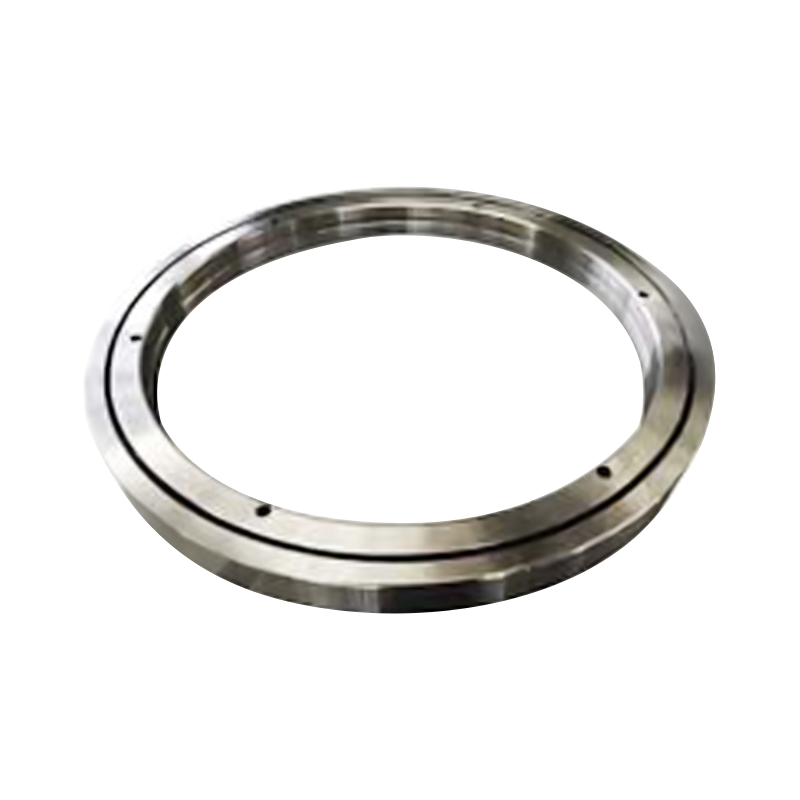
The RB2508 belongs to the basic RB model of crossed roller bearing. Its defining structural feature is a split outer ring combined with an integrated inner ring. The inner ring is formed as one continuous component, making the design especially suitable for applications that require high rotational accuracy of the inner ring. The outer ring is divided to facilitate assembly and integration into the machine housing.
A crossed roller bearing contains cylindrical rollers arranged alternately at right angles to one another. One roller carries load in one direction, while the adjacent roller carries load in the perpendicular direction. This crossed arrangement enables the bearing to handle loads from multiple directions without requiring separate radial and axial bearings in many applications.
The RB2508 is intended for compact rotary mechanisms where precision and stiffness are more important than high-speed operation alone. It is well suited to the rotary sections of indexing tables in machine tools, robotic positioning systems, optical equipment, automated inspection units, and industrial machinery that must repeatedly stop at precise positions.
Because bearing performance depends on the complete system, the RB2508 should be selected together with the appropriate shaft, housing, preload, lubrication, sealing arrangement, mounting method, and operating conditions. Customers should confirm the final dimensional drawing, load requirements, allowable speed, accuracy grade, and installation conditions with the manufacturer before placing an order for a specific machine design.
| Item | Description |
|---|---|
| Product model | RB2508 |
| Bearing type | Robot crossed roller bearing |
| Structural series | RB type |
| Outer ring | Split outer ring |
| Inner ring | Integrated inner ring |
| Primary design purpose | High rotational accuracy and compact rotary support |
| Typical applications | Robots, indexing tables, machine tools, inspection systems, and automation equipment |
| Load capability | Supports combined radial, axial, and moment loads within the selected application limits |
| Customization support | Available subject to engineering review and production requirements |
The performance of the RB2508 begins with its roller arrangement. In a conventional deep-groove ball bearing, spherical balls contact the raceways at relatively small points or elliptical contact areas. This design provides low friction and is highly effective for many general-purpose applications. However, a ball bearing may require additional components when the mechanism must resist substantial overturning moments or maintain very high stiffness.
In a crossed roller bearing, cylindrical rollers are positioned between precision raceways. Adjacent rollers are oriented at 90-degree angles. This arrangement distributes forces in different directions through the bearing raceways. The rollers provide line contact rather than the smaller contact area normally associated with balls, which helps the bearing achieve high load capacity and rigidity within a relatively small radial and axial envelope.
The crossed orientation is particularly valuable when the bearing experiences a moment load. A moment load attempts to tilt the inner ring relative to the outer ring. Because the rollers are distributed around the circumference and are arranged to resist forces in both directions, the bearing can provide strong resistance to this tilting tendency. This is one reason crossed roller bearings are widely used in rotary tables, robotic joints, and precision positioning mechanisms.
The integrated inner ring of the RB type adds another important advantage. When the inner ring rotates, its continuous construction supports stable rotational behavior and helps reduce the influence of split-line discontinuities in the rotating component. This makes the design appropriate for mechanisms in which the inner ring is connected to the rotating table, arm, spindle, or precision platform.
The split outer ring simplifies installation in the machine housing. It can make it easier to position the bearing, insert the roller and spacer assembly, and secure the bearing during the assembly process. Proper clamping and fastening are still essential. The outer ring must be supported evenly, and the housing must meet the required dimensional and geometric tolerances.
High rotational accuracy is one of the most important reasons engineers select an RB-type crossed roller bearing. In an indexing table or robotic rotary axis, even a small amount of runout, wobble, or angular deviation can affect the accuracy of the finished product. The integrated inner ring and precision roller raceways are designed to support smooth and controlled rotation.
Accurate rotation improves the repeatability of positioning operations. It can help a robot place components more consistently, allow a machine tool table to index more precisely, and support optical equipment that must maintain a stable viewing or measuring position. When a bearing is manufactured and installed correctly, it becomes a foundation for the accuracy of the complete mechanism.
It is important to distinguish bearing accuracy from total machine accuracy. The final result also depends on housing geometry, shaft runout, mounting flatness, preload, lubrication, thermal expansion, drive-system error, and control-system performance. Nevertheless, using a precision crossed roller bearing gives the machine designer a strong mechanical basis for achieving demanding positioning targets.
A rotary mechanism may experience more than a simple radial load. A robotic arm can create an overturning moment when it carries an offset payload. An indexing table can experience an eccentric workpiece load. An inspection platform may support a camera, fixture, or measurement head positioned away from the bearing center. These forces can cause tilting and vibration if the bearing arrangement is not sufficiently rigid.
The RB2508 distributes the load through multiple cylindrical rollers arranged in crossed directions. This gives the bearing a strong ability to resist angular displacement. The result is improved rigidity and a more stable relationship between the rotating and stationary components.
High rigidity can improve machining quality, reduce vibration during acceleration and deceleration, and minimize positioning errors caused by deflection. It also helps the control system perform more effectively because the mechanical structure responds more predictably to commanded movement.
Space is often limited in robots and automated equipment. Designers may need to place a motor, encoder, cable passage, reducer, brake, and bearing inside a restricted joint housing. A crossed roller bearing can support several load directions in one compact assembly, reducing the need for multiple conventional bearings.
The RB2508 can help simplify the rotary structure by combining radial, axial, and moment-load support in one bearing position. This may reduce the axial length and radial envelope of the mechanism, depending on the selected design and load conditions. A more compact bearing arrangement can also reduce the weight and inertia of a moving assembly.
Lower moving mass is particularly valuable in robotic applications. A lighter joint may require less motor torque, consume less energy, and achieve faster acceleration. In indexing equipment, a compact structure can allow more stations or devices to be placed within the available machine footprint.
Precision rollers, carefully controlled raceway geometry, and appropriate preload contribute to smooth motion. Smooth rotation is important for equipment that performs repeated indexing, scanning, measurement, or delicate handling. Excessive vibration or inconsistent friction can reduce product quality and accelerate wear in other machine components.
The bearing should be lubricated with a product suitable for the operating speed, load, temperature, and surrounding environment. Correct lubrication reduces friction and helps protect the raceways and rollers. Both insufficient lubrication and excessive lubrication can cause problems, so the lubrication method must be selected according to the application rather than applied generically.
Many machines experience loads in several directions at the same time. For example, a robot joint may carry radial weight, axial force from an attached tool, and a moment caused by the distance between the payload and the bearing center. A traditional bearing arrangement may require separate components to handle these loads.
The crossed roller structure of the RB2508 is designed to support combined loading through its alternating roller orientation. This can reduce the complexity of the surrounding bearing system and make the rotary assembly easier to engineer. The actual load capacity depends on the application, bearing fit, preload, operating speed, lubrication, and mounting conditions. Engineering validation remains necessary for every critical design.
Deep-groove ball bearings are economical, widely available, and suitable for many radial and moderate axial-load applications. They are often a good choice for electric motors, conveyor systems, fans, and general machinery. However, a single deep-groove ball bearing may not provide the same moment rigidity as a crossed roller bearing in a compact rotary joint.
When a mechanism requires high resistance to tilting, the designer may need to use two or more ball bearings separated by a certain distance. This can increase the axial length, add components, complicate preload adjustment, and require more installation space. An RB-type crossed roller bearing may provide a more integrated solution for compact precision mechanisms.
Ball bearings may also be more sensitive to clearance and elastic deflection when exposed to large overturning moments. The RB2508, with its crossed cylindrical rollers and broad load distribution, is designed for applications where stiffness and angular accuracy are key priorities.
Angular contact ball bearings can support combined radial and axial loads and are commonly used in machine-tool spindles, precision shafts, and high-speed equipment. They can offer excellent performance when arranged in matched pairs or sets. However, a system using multiple angular contact bearings may require careful arrangement, preload control, spacing, and adjustment.
The RB2508 offers an alternative for rotary mechanisms where high moment stiffness and compact integration are more important than extremely high spindle speed. Its crossed roller configuration allows it to handle loads from different directions in one bearing body. This may simplify the machine structure and reduce the number of bearing components.
The selection between a crossed roller bearing and an angular contact ball bearing should be based on speed, load, rigidity, accuracy, temperature, lubrication, and expected service life. Neither type is universally superior. The advantage of the RB2508 is its suitability for compact, high-precision rotary positioning rather than unrestricted replacement of every angular contact arrangement.
Tapered roller bearings are strong and effective for heavy radial and axial loads. They are widely used in automotive systems, industrial gearboxes, wheel assemblies, and heavy machinery. Their ability to carry substantial loads makes them valuable in demanding environments.
However, tapered roller bearings may require adjustment of axial clearance or preload, and their structure may be less suitable for compact high-accuracy robotic joints or indexing tables. They can also generate more friction and may require additional space for installation and adjustment.
The RB2508 is aimed at a different performance balance. It prioritizes compactness, rotational accuracy, moment rigidity, and integrated support for precision automation. For heavy-duty, low-speed machinery, a tapered roller bearing may be more appropriate. For compact precision motion, a crossed roller bearing may offer a more efficient solution.
Standard cylindrical roller bearings provide high radial load capacity and good stiffness. They are useful in gearboxes, motors, generators, and industrial machinery. However, they generally require separate components when substantial axial loads or moment loads must be supported.
The crossed roller arrangement expands the directional load capability of the bearing. The RB2508 can therefore provide a more complete solution for rotary axes that experience multidirectional loading. It can help eliminate the need for multiple separate bearings, provided the application remains within its design limits.
Industrial robots require bearings that can withstand repeated acceleration, deceleration, payload changes, and moment loads. A robot joint must remain accurate after many cycles while maintaining smooth movement and low mechanical deflection.
The RB2508 is suitable for rotary sections where a compact bearing must support the combined effects of the robot arm, payload, tooling, and dynamic movement. Its high rigidity can help maintain the relative position between joints, while its integrated inner ring is appropriate for a rotating component that must maintain precise angular alignment.
Applications may include articulated robot joints, handling equipment, welding systems, assembly robots, dispensing machines, and automated positioning arms. The precise bearing configuration should be selected according to joint torque, payload, speed, duty cycle, shock loading, and required service life.
Indexing tables repeatedly rotate to defined positions and stop for machining, assembly, inspection, or transfer operations. The table must resist the moment generated by fixtures and workpieces while maintaining accurate positioning.
The RB2508 is especially suitable for rotary sections of indexing tables in machine tools. Its crossed roller design can provide the stiffness needed during cutting or assembly operations. By supporting combined loads in a compact structure, it may also allow the table designer to optimize the size of the rotary platform and its drive system.
Machine tools require stable and accurate motion. A bearing used in a rotary axis or indexing mechanism must withstand cutting forces, vibration, repeated positioning, and thermal changes. Excessive bearing deflection can affect surface quality and dimensional accuracy.
A crossed roller bearing can support the rigidity of auxiliary rotary axes, tool-positioning mechanisms, fixture systems, and precision indexing units. The RB2508 may be considered where a compact bearing with high rotational accuracy is needed and where the speed and load conditions match the bearing’s intended operating range.
Inspection equipment often uses rotary stages to move cameras, sensors, probes, or samples. These systems require low runout, smooth movement, and stable positioning. Small angular errors can affect measurement repeatability, particularly in optical inspection, coordinate measurement, and precision scanning.
The RB2508 can provide a rigid mechanical support for rotary inspection stages. Its compact structure can help preserve space for optical paths, cables, encoders, and adjustment mechanisms. Proper preload and lubrication are essential because inconsistent friction can affect low-speed scanning and positioning behavior.
Electronic manufacturing equipment often requires clean, repeatable, and precise motion. Wafer handling systems, component placement machines, inspection platforms, and automated assembly equipment may use compact rotary mechanisms with strict limits on vibration and positioning error.
In these applications, the bearing material, lubricant, sealing approach, cleanliness level, and packaging method should be confirmed in advance. The standard bearing design may need to be adapted for cleanroom conditions, vacuum-related equipment, high-temperature environments, or special contamination-control requirements.
Laboratory instruments and medical automation systems use precision rotary mechanisms for sample handling, imaging, analysis, and positioning. These machines may operate continuously with moderate loads but require stable motion and predictable service performance.
The RB2508 can be considered for compact rotary stages and sample-handling mechanisms when the design requires high stiffness and accurate inner-ring rotation. Specific requirements related to sterilization, chemical exposure, low noise, or regulatory compliance should be reviewed with the manufacturer before production.
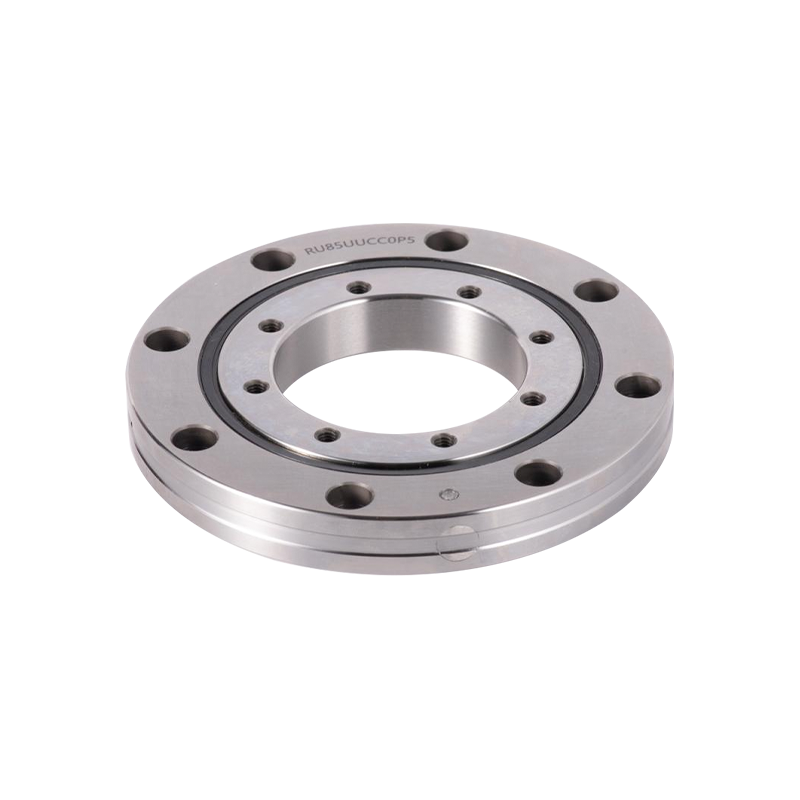
RB2508 Robot Crossed Roller Bearing
The quality of a precision crossed roller bearing depends on more than the final assembly. It is influenced by raw material selection, forging quality, turning accuracy, heat treatment, grinding control, roller production, raceway geometry, cleanliness, preload, and inspection. An integrated manufacturing process gives the producer greater ability to coordinate these stages.
Bearing rings must withstand repeated rolling contact, load variation, and long-term fatigue stress. Suitable bearing steel and controlled forging practices help establish a consistent material structure before machining begins.
Forging can improve material utilization and support the development of a robust ring blank. Process control at this stage helps reduce defects that could later affect dimensional stability, fatigue life, or raceway performance. Material certificates, incoming inspection, and traceability provide additional assurance for industrial customers.
Turning operations establish the primary dimensions and geometry of the bearing rings. The quality of turning affects the amount of material available for heat treatment distortion correction and final grinding.
Modern turning equipment can control diameters, shoulders, grooves, mounting surfaces, and reference features with high consistency. For crossed roller bearings, accurate reference surfaces are particularly important because the ring must be installed correctly in the housing or on the shaft. Consistent turning also improves production efficiency and reduces variation during later processes.
Heat treatment develops the hardness and structural properties required for rolling-contact fatigue resistance. The process must be controlled carefully to achieve the desired balance between hardness, toughness, dimensional stability, and resistance to wear.
Inconsistent heat treatment can lead to excessive distortion, dimensional changes, soft areas, or residual stress. A professional bearing manufacturer therefore monitors furnace conditions, processing time, cooling conditions, and post-treatment inspection. Heat treatment control is particularly important for precision bearings because even small changes may influence final grinding allowances and operating accuracy.
Grinding is one of the most important precision processes in bearing production. Raceway surfaces must have the required geometry, surface finish, roundness, and waviness characteristics. Grinding quality directly influences friction, noise, vibration, load distribution, and service life.
For the RB2508, the raceways must work with the crossed cylindrical rollers in a controlled and consistent manner. The geometry of the raceway, roller diameter, roller length, and spacer arrangement must be coordinated. Advanced grinding equipment and process monitoring help maintain repeatability between production batches.
Final finishing may include additional superfinishing or polishing operations, depending on the product specification and application. These processes can improve surface texture and support smoother rolling contact. The exact process route is selected according to bearing size, accuracy grade, material, and customer requirements.
The cylindrical rollers are critical load-carrying elements. Their diameter, length, roundness, surface finish, and end geometry influence how the bearing distributes load. Rollers must be sorted and matched within controlled tolerances.
Spacers or separator elements help maintain the correct relationship between adjacent rollers. Because the rollers are arranged at alternating right angles, correct assembly orientation is essential. A careful assembly process ensures that the crossed pattern is maintained around the circumference and that the rollers move smoothly during rotation.
Assembly quality has a direct influence on bearing performance. The inner ring, outer ring, roller set, spacers, and retaining components must be cleaned, inspected, and assembled in the correct sequence.
Preload is especially important in precision crossed roller bearings. Appropriate preload can improve rigidity, reduce clearance, and support accurate motion. Excessive preload, however, can increase friction, operating temperature, and wear. Insufficient preload may allow unwanted movement, vibration, or reduced stiffness.
UKL’s engineering team can evaluate preload and fit requirements according to the customer’s operating conditions. Important factors include load direction, speed, temperature, mounting accuracy, housing stiffness, shaft material, and expected duty cycle.
Precision bearings should be inspected at multiple stages rather than only after final assembly. Typical control points may include material verification, dimensional inspection, hardness testing, raceway geometry checks, surface-finish evaluation, rotational torque measurement, runout inspection, and visual cleanliness assessment.
Testing methods should be matched to the product specification. A standard production bearing may require dimensional and rotational checks, while a critical robotic or machine-tool application may require more detailed accuracy verification and traceability documentation.
Inspection data supports process improvement and helps identify variation before products are shipped. It also gives OEM customers confidence that the bearing has been manufactured according to an established quality system.
UKL Bearing Manufacturing Co., Ltd. was established in 2020 and operates as an integrated bearing manufacturer and trader. The company reports a workforce of approximately 201 to 500 employees and more than 15 years of OEM and ODM export experience within its broader operational background.
The company combines research and development, production, and international distribution. Its reported production capacity is approximately 10,000 to 50,000 units per month, depending on product type, configuration, and production planning. This capacity enables the company to support both development projects and repeat industrial orders.
UKL operates production lines covering forging, turning, heat treatment, grinding, assembly, and packaging. Managing these processes within a coordinated manufacturing system can reduce communication delays between departments and improve consistency from raw material to finished bearing.
The company supplies customers in Europe, Asia, Africa, Russia, and other international markets. Reported export destinations include the United States, Italy, Germany, Poland, South Africa, Egypt, and India. This international experience is valuable for customers that require export documentation, multilingual communication, packaging coordination, and technical support across different regions.
UKL also focuses on high-precision cross roller bearings, dual-direction thrust angular contact ball bearings, and other specialized products for CNC machines, robotics, and intelligent automation systems. Its research and development activities are directed toward bearing accuracy, structural optimization, digital production control, and application-specific engineering.
Industrial customers often need more than a catalog item. They may require a bearing adapted to a specific housing, shaft, load, speed, temperature, mounting method, or environmental condition. An experienced engineering team can help evaluate these requirements before production begins.
For the RB2508, technical discussions may include the application layout, rotating member, fixed member, load spectrum, duty cycle, desired accuracy, preload, lubrication, and expected maintenance interval. Early engineering communication helps avoid mismatches between the bearing and the machine structure.
OEM customers may need bearings manufactured according to their drawings or technical standards. ODM customers may require assistance in developing a bearing arrangement from an application concept. UKL’s production and engineering resources are positioned to support both types of cooperation, subject to technical review and order quantity.
Customization may involve dimensions, accuracy, preload, material, lubrication, protective treatment, packaging, or marking. Any customized design should be validated through drawings, samples, testing, and customer approval before mass production.
A bearing is often installed in a machine that operates far from the manufacturing site. Clear communication is therefore an important part of product value. UKL provides multilingual service, technical response, installation guidance, and after-sales support for international customers.
Technical support may include assistance with bearing identification, mounting procedures, lubrication recommendations, failure analysis, replacement planning, and application feedback. Good service can reduce downtime and help customers achieve a longer and more predictable bearing life.
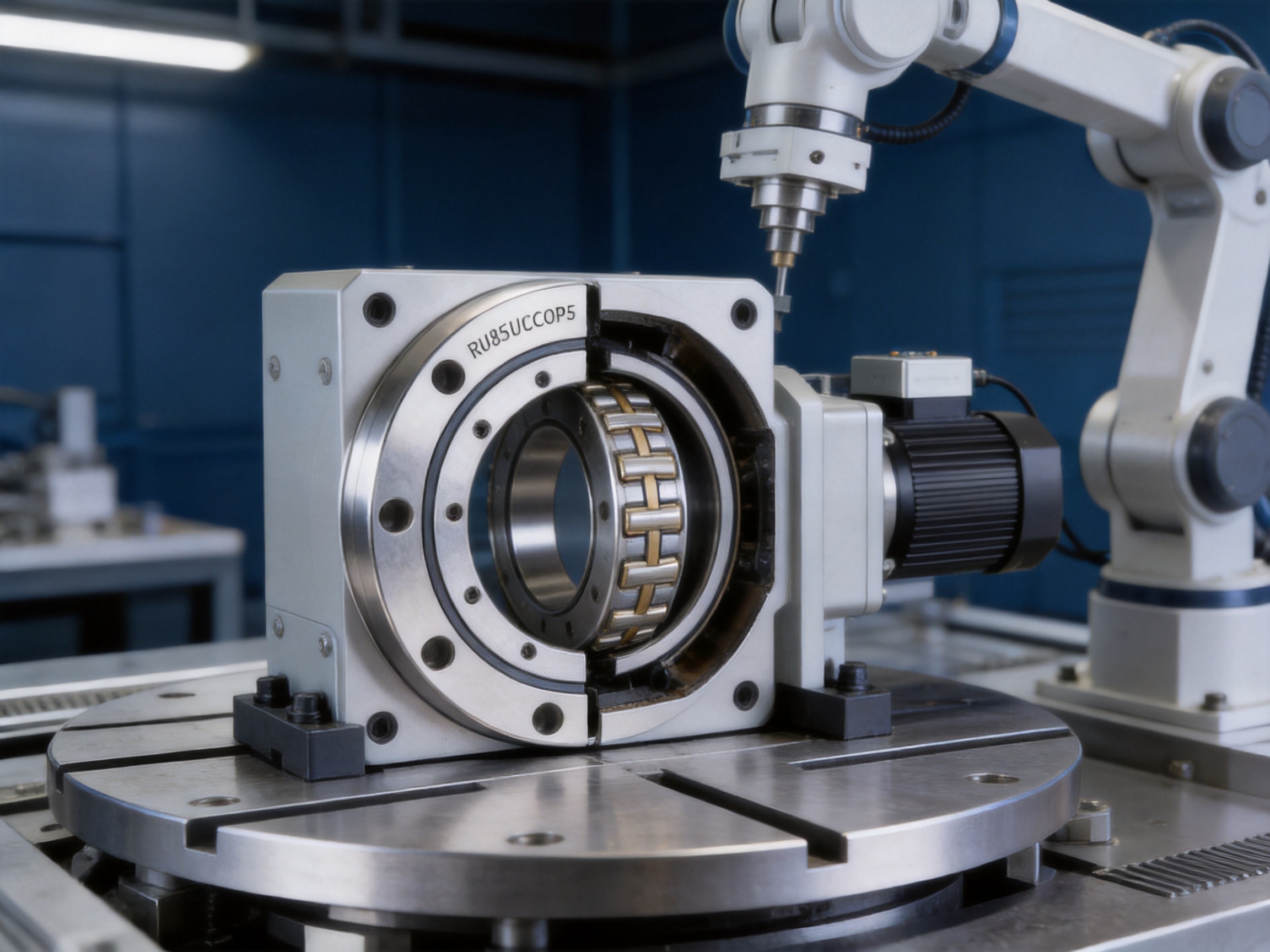
Proper installation is essential for achieving the performance expected from the RB2508. A high-quality bearing may experience premature wear or poor accuracy if the shaft, housing, mounting surfaces, or preload are not correctly controlled.
Before installation, inspect the shaft and housing for burrs, dents, corrosion, contamination, and dimensional deviations. The mounting surfaces should be clean, smooth, and free from raised metal. The housing bore and shaft seat should meet the specified dimensional tolerance and geometric accuracy.
Flatness and perpendicularity are also important. If the housing shoulder is uneven, the outer ring may be distorted when fastened. If the shaft shoulder is not perpendicular to the axis, the integrated inner ring may be forced into an inaccurate position.
Crossed roller bearings contain precision raceways and rollers with very small operating clearances. Dust, metal particles, abrasive residue, and moisture can damage the rolling contact surfaces or increase friction.
Installation should take place in a clean area using clean tools and lint-free materials. The bearing should remain in its original protective packaging until the machine is ready for assembly. Unnecessary handling should be avoided, and components should not be placed directly on dirty work surfaces.
The split outer ring must be secured evenly. Fastening bolts should generally be tightened gradually in a diagonal or alternating sequence rather than fully tightening one bolt at a time. This helps distribute clamping force and reduces the risk of ring distortion.
The recommended torque, bolt grade, fastening sequence, and mounting procedure should be confirmed from the applicable technical documentation. The bearing should be rotated by hand during installation to identify abnormal resistance or uneven movement.
Lubrication must match the operating conditions. Factors include speed, load, temperature, environment, maintenance access, and compatibility with seals or nearby materials. Grease is commonly used in many industrial applications, while oil or specialized lubricants may be required for higher-speed or temperature-sensitive systems.
Too little lubricant can cause metal-to-metal contact, overheating, and accelerated wear. Too much lubricant can increase churning resistance and temperature. Lubricant contamination should also be prevented during installation and maintenance.
After installation, rotate the bearing slowly and check for abnormal noise, roughness, binding, or uneven torque. If the bearing is connected to a motor or reducer, the system should first be operated at low speed and low load.
Temperature, vibration, positioning accuracy, and rotational resistance should be monitored during the initial running period. Any unusual condition should be investigated before the equipment enters full production.
The service life of the RB2508 depends on the applied load, speed, lubrication, contamination, preload, mounting accuracy, temperature, shock, vibration, and duty cycle. A bearing operating under a stable load in a clean environment may achieve a significantly longer service life than one exposed to impact, dust, water, or repeated overload.
Preventive maintenance should include lubricant inspection, fastener checks, temperature monitoring, vibration observation, and review of positioning accuracy. In robotic systems, changes in joint backlash or repeatability may indicate bearing wear or problems elsewhere in the drive train.
In indexing tables, increasing rotational resistance, abnormal noise, or declining stopping accuracy may indicate lubricant degradation, contamination, mounting looseness, or raceway damage. Early detection allows the customer to schedule replacement during planned maintenance rather than waiting for an unexpected failure.
Where equipment is safety-critical or production-critical, customers should establish a replacement strategy based on operating hours, cycle counts, load history, and inspection data. Replacement bearings should be stored in a clean, dry environment and kept in their original packaging until required.
Although the RB2508 is designed for precision rotary applications, the correct selection should always be based on engineering calculations and practical operating information. The following factors should be reviewed before final approval.
Identify the radial load, axial load, moment load, shock load, and load direction. If the load changes during the operating cycle, provide the complete load spectrum rather than only the maximum static value.
Record continuous speed, peak speed, acceleration, deceleration, indexing frequency, and cycle duration. A bearing that performs well at low or moderate speed may require different lubrication or preload at higher speed.
Define the required rotational accuracy, runout, positioning repeatability, angular stiffness, and allowable deflection. These requirements help determine bearing accuracy grade, preload, mounting tolerances, and surrounding structure design.
Consider temperature, humidity, dust, water, corrosive substances, vacuum, cleanroom requirements, and exposure to cutting fluids. Seals, lubricant, material treatment, and packaging may need to be adapted for the environment.
Confirm how the bearing will be mounted, whether the outer ring can be fastened evenly, how lubricant will be supplied, and whether maintenance access is available. A bearing that is technically suitable but difficult to install or maintain may not be the best total solution.
Customers can improve the selection process by providing complete application information. Useful data includes the machine type, drawing or layout, shaft and housing dimensions, load details, operating speed, temperature, required accuracy, lubrication, expected service life, and annual quantity.
For the RB2508, customers should also clarify whether the bearing will be used in a fixed or rotating outer-ring arrangement, what component is attached to the integrated inner ring, whether preload is required, and whether special inspection reports are needed.
If the application involves shock loading, frequent reversing, vibration, high temperature, cleanroom operation, or unusual lubrication, these conditions should be discussed before production. Early disclosure allows the manufacturer to recommend the appropriate configuration and avoid costly redesign after delivery.
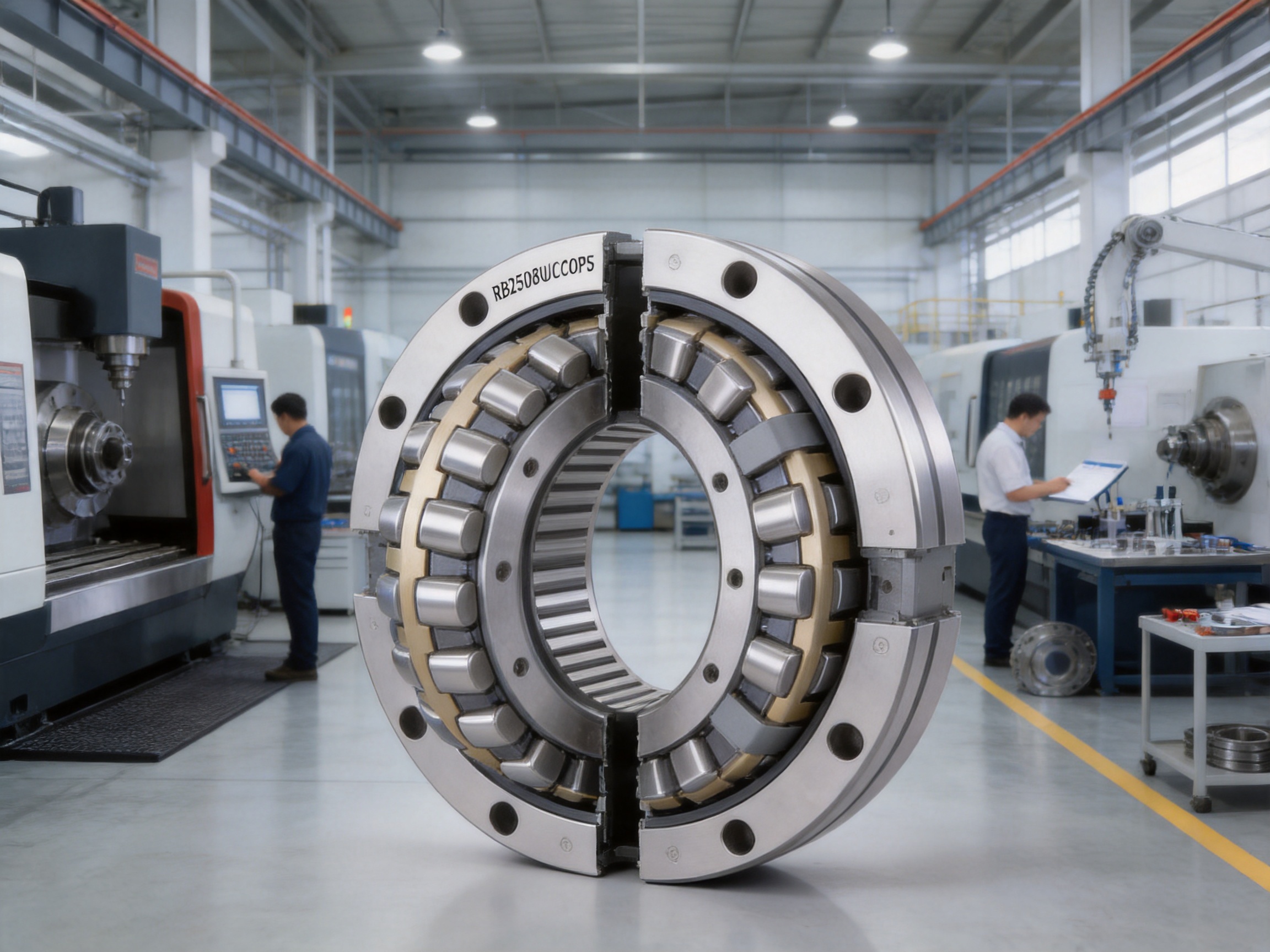
The RB2508 is an RB-type robot crossed roller bearing. It has a split outer ring and an integrated inner ring, making it suitable for compact rotary mechanisms that require high rotational accuracy of the inner ring.
The crossed roller structure supports loads in different directions while providing high rigidity against moment loads. It can combine radial, axial, and moment-load support in a compact bearing arrangement.
The integrated inner ring provides a continuous rotating component and is particularly suitable when accurate inner-ring rotation is important. It can support stable rotational behavior in indexing tables, robotic joints, and precision rotary stages.
Yes. The RB type is especially suitable for rotary sections of indexing tables in machine tools. Its compact structure, high rigidity, and rotational accuracy make it appropriate for applications requiring repeatable positioning and resistance to overturning moments.
No. Bearing selection depends on load, speed, accuracy, temperature, lubrication, installation, and service-life requirements. The RB2508 may provide advantages over a single ball bearing or multiple-bearing arrangement in compact precision rotary applications, but the final selection should be verified by engineering analysis.
It requires careful installation. The shaft, housing, mounting surfaces, fastening sequence, cleanliness, lubrication, and preload must be controlled. Incorrect installation can reduce accuracy, increase friction, and shorten service life.
The lubricant should be selected according to speed, load, temperature, environment, and maintenance conditions. Customers should follow the manufacturer’s recommendation for lubricant type, quantity, replenishment interval, and compatibility.
Customization may be available for dimensions, preload, accuracy, lubrication, materials, packaging, and other technical requirements, subject to engineering review, production capability, and order quantity.
Customers should provide the required model, quantity, machine application, load, speed, accuracy, operating temperature, environment, lubrication, mounting arrangement, delivery destination, and any required inspection or packaging standards.
UKL provides international distribution, multilingual communication, technical response, installation guidance, and after-sales maintenance support. The company serves customers across Europe, Asia, Africa, Russia, and other markets.
Service life can be improved through correct selection, clean installation, suitable preload, proper lubrication, protection from contamination, accurate shaft and housing preparation, avoidance of overload, and regular monitoring of temperature, vibration, noise, and positioning performance.
The RB2508 brings together the fundamental advantages required in many modern rotary mechanisms. Its crossed cylindrical rollers support multidirectional loading, while the split outer ring and integrated inner ring provide a practical configuration for compact systems that prioritize inner-ring rotational accuracy.
Compared with a basic ball-bearing solution, it can provide stronger resistance to moment loads and reduce the need for multiple bearing positions. Compared with heavier or more complex roller-bearing arrangements, it can help reduce machine size and simplify integration. Its value is greatest in applications where precision, rigidity, compactness, and repeatable movement must work together.
The manufacturing capability behind the product is equally important. UKL integrates forging, turning, heat treatment, grinding, assembly, packaging, research and development, and international service. This process coverage supports better control of bearing consistency and provides a foundation for OEM and ODM cooperation.
For robot manufacturers, machine-tool builders, automation companies, and industrial distributors, the RB2508 can serve as a dependable mechanical foundation for precision rotary movement. Correct application engineering remains essential, but the product’s structure and manufacturing background make it a strong candidate for demanding equipment designs.
Precision automation depends on mechanical components that can deliver stable performance over thousands or millions of operating cycles. The bearing must support the load, resist deflection, preserve accuracy, and operate smoothly within the available space. The RB2508 robot crossed roller bearing is designed to meet these requirements through its crossed roller arrangement, split outer ring, and integrated inner ring.
Its key advantages include high rotational accuracy, strong moment rigidity, compact construction, smooth movement, and support for combined radial and axial loads. These characteristics make it suitable for robots, indexing tables, machine tools, inspection equipment, semiconductor machinery, and other advanced automation systems.
UKL Bearing Manufacturing Co., Ltd. strengthens the product with integrated manufacturing processes covering material preparation, forging, turning, heat treatment, grinding, assembly, inspection, and packaging. Its research and development resources, OEM and ODM experience, international service network, and application support allow customers to approach bearing selection as an engineering partnership rather than a simple component purchase.
Before final selection, customers should confirm dimensions, load ratings, speed, accuracy, preload, lubrication, mounting conditions, environmental requirements, and service-life expectations. With proper selection, installation, and maintenance, the RB2508 can help equipment builders create rotary systems that are more accurate, rigid, compact, and reliable.
1. ISO 281, Rolling Bearings — Dynamic Load Ratings and Rating Life.
2. ISO 76, Rolling Bearings — Static Load Ratings.
3. ISO 199, Rolling Bearings — Thrust Bearings — Geometrical Product Specifications and Rated Loads.
4. ISO 492, Rolling Bearings — Radial Bearings — Geometrical Product Specifications and Tolerance Values.
5. ISO 15241, Rolling Bearings — Symbols for Physical Quantities.
6. SKF, Rolling Bearings Catalogue, technical guidance on bearing selection, lubrication, mounting, and maintenance.
7. NSK, Technical Handbook for Rolling Bearings, guidance on bearing accuracy, preload, operating conditions, and service life.
8. Schaeffler, Rolling Bearing Catalogue, engineering information on load capacity, rigidity, lubrication, and installation.
9. Machinery manufacturers’ technical documentation for crossed roller bearings, rotary tables, robot joints, and precision automation systems.
10. UKL Bearing Manufacturing Co., Ltd., product and manufacturing information for RB-series robot crossed roller bearings.
Product Categories
Contact Us

Jane@ukl-bearing.com
Jenny@ukl-bearing.com
Andy@ukl-bearing.com
Ivy@ukl-bearing.com

+86-510- 88763239
+86-15371057968

No.1 Hehuan Road, Hudai Town, Binhu District, Wuxi City.
Ready to Begin?
Get in Touch

Now!
UKL BEARING
 English
 Español
 русский