Content
Rod end bearings are essential mechanical components in systems that require controlled articulation, angular misalignment, compact installation, and reliable load transmission. They are widely used in linkages, actuator assemblies, robotic joints, medical mechanisms, measuring equipment, and aerospace structures. In these applications, a bearing must do more than simply connect two parts. It must support repeated movement, tolerate oscillation, resist wear, maintain dimensional stability, and operate dependably under changing loads and environmental conditions.
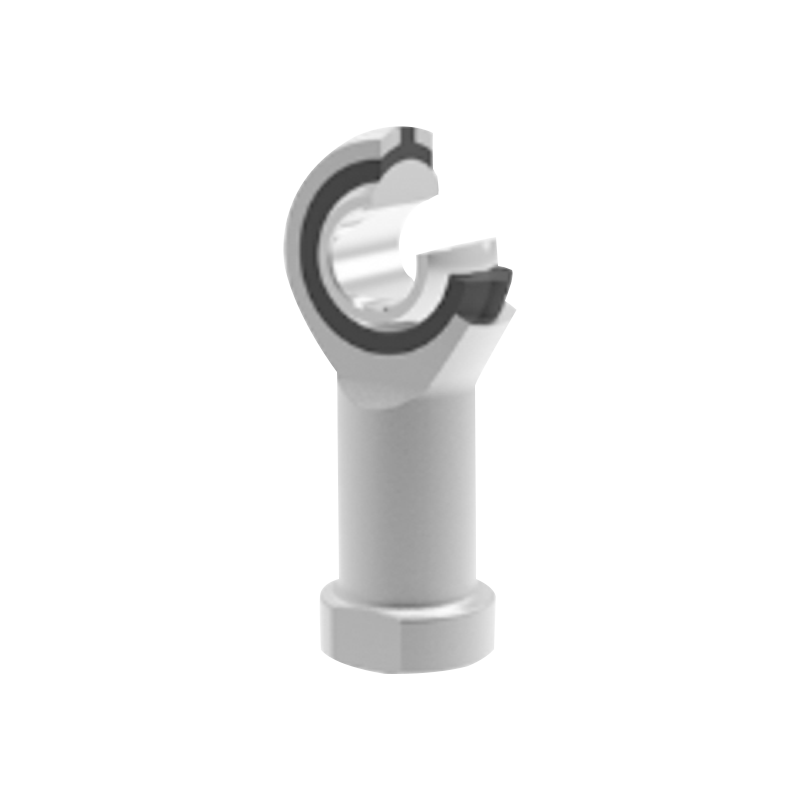
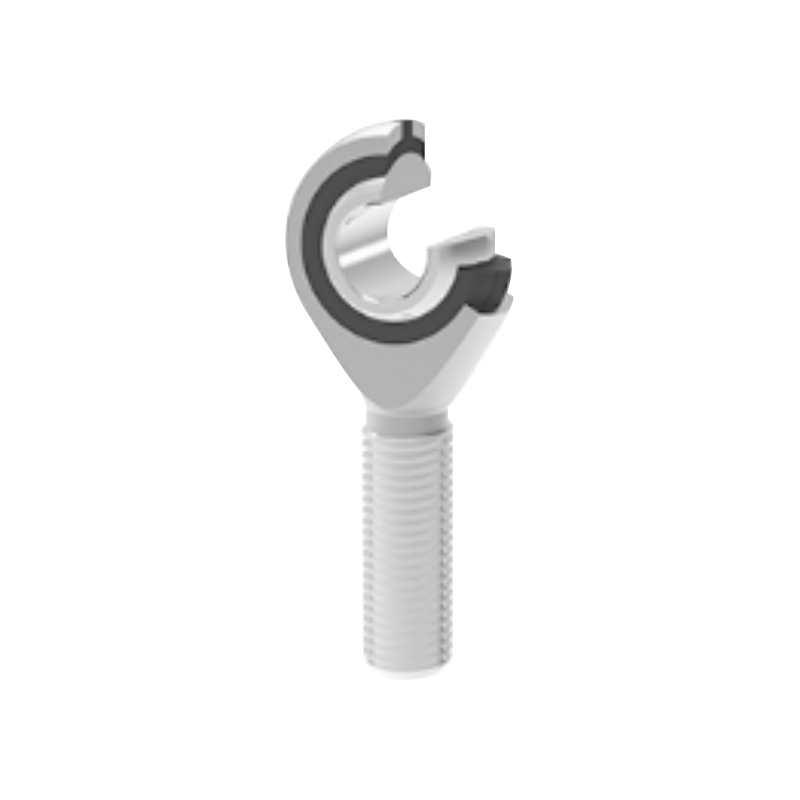
The SIBP series copper lined rod end bearings are designed to address these demanding requirements. They combine a high-quality carbon steel rod end body, a bronze liner in the sliding interface, and a hardened, hard chrome plated bearing-steel inner ring. This material combination gives the series a practical balance of load capacity, wear resistance, corrosion protection, and long-term operating stability.
Unlike ordinary low-cost rod ends that may rely on basic steel-on-steel contact or less durable surface treatments, the SIBP series uses a copper-based sliding liner to improve the working interface. The result is a robust spherical plain bearing solution for applications where high loads, precision movement, and compact dimensions must be handled at the same time.
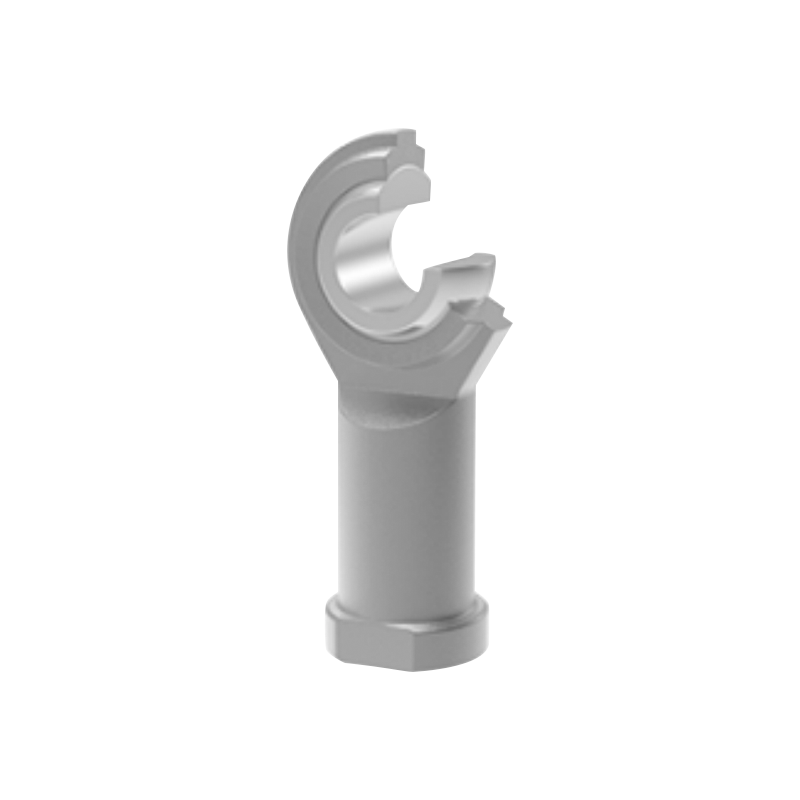
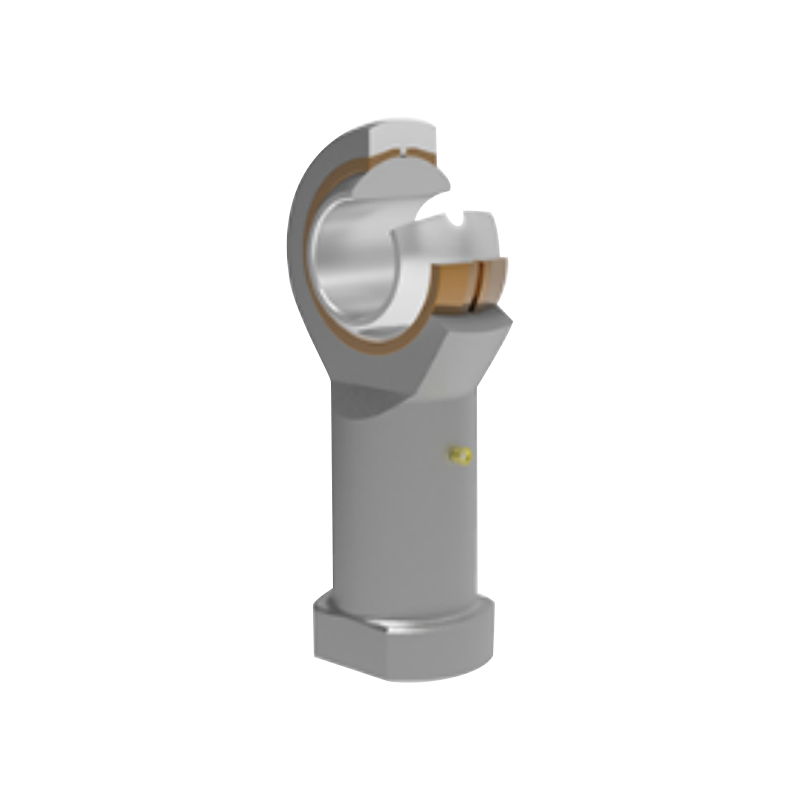
The SIBP series is a family of rod end spherical plain bearings with an internally integrated sliding system. The rod end body provides structural support and threaded connection capability, while the spherical inner ring permits angular movement between connected components. The bronze liner is embedded in the sliding surface, helping distribute contact pressure and reduce direct friction between the primary steel components.
The bearing body is manufactured from carbon steel and finished with a galvanized surface. Galvanizing provides a protective layer that improves resistance to atmospheric corrosion and helps preserve the external appearance and functional integrity of the rod end. For demanding environments, the rod end body and inner ring can also be supplied in stainless steel. Stainless steel versions are identified by the suffix “X,” such as SIBP…S/X.
The inner ring is made from bearing steel. It is hardened and hard chrome plated to create a durable contact surface with high resistance to wear, scoring, and repeated sliding stress. The hardened inner ring also supports stable geometry under load, which is important in precision linkages and controlled-motion equipment.
The series includes bore sizes from 5 mm to 30 mm in the listed standard range. Metric thread configurations are available, and selected sizes can be produced with fine-pitch thread alternatives. Left-hand thread versions are also available by special specification and are identified with “L” or “left” in the model designation.
The rod end body is the primary structural member of the bearing. It transfers loads from the threaded shaft or stud into the spherical bearing assembly. Carbon steel provides the combination of strength, machinability, and economic efficiency required for industrial production. It can be accurately formed, turned, drilled, threaded, surface treated, and inspected through a controlled manufacturing process.
The galvanized finish adds a protective barrier against moisture and general atmospheric exposure. This is particularly valuable in equipment that may be exposed to workshop humidity, intermittent condensation, storage conditions, or normal industrial contaminants. While the exact level of protection depends on the surrounding environment and maintenance practices, the galvanized body provides a practical improvement over untreated carbon steel.
The bronze liner is one of the defining features of the SIBP series. Bronze is widely used in sliding applications because it offers favorable friction and wear characteristics, good compatibility with hardened steel, and strong resistance to seizure when the contact is properly designed and lubricated.
By embedding bronze in the sliding surface, the bearing creates a controlled material pairing between the liner and the hardened chrome-plated inner ring. This arrangement helps reduce direct steel-to-steel contact and improves the bearing’s ability to handle oscillating movement. It also helps distribute local contact pressure across the working surface, reducing the risk of premature surface damage.
Compared with a basic unlined steel rod end, a copper-lined design can offer improved wear behavior in applications where the motion is repetitive, slow, oscillating, or subject to frequent changes in direction. These characteristics are common in robot arms, control linkages, actuators, and adjustable mechanical assemblies.
The inner ring must withstand repeated contact with the liner while maintaining a smooth and accurately formed spherical surface. For this reason, the SIBP inner ring is manufactured from bearing steel, hardened, and hard chrome plated.
Hardening increases the surface and subsurface strength of the ring. It helps the component withstand contact pressure and reduces deformation under working loads. Hard chrome plating further improves surface hardness, wear resistance, and resistance to sliding damage. It also produces a durable surface that works effectively with the bronze liner when suitable lubrication and operating conditions are provided.
The inner ring’s spherical geometry permits angular displacement while maintaining a broad contact area. This is important when connected shafts are not perfectly aligned or when a linkage must articulate through a defined angle. The listed angular values are approximately 0.3 degrees for the smaller sizes and approximately 0.6 degrees for the larger sizes, according to the product data.
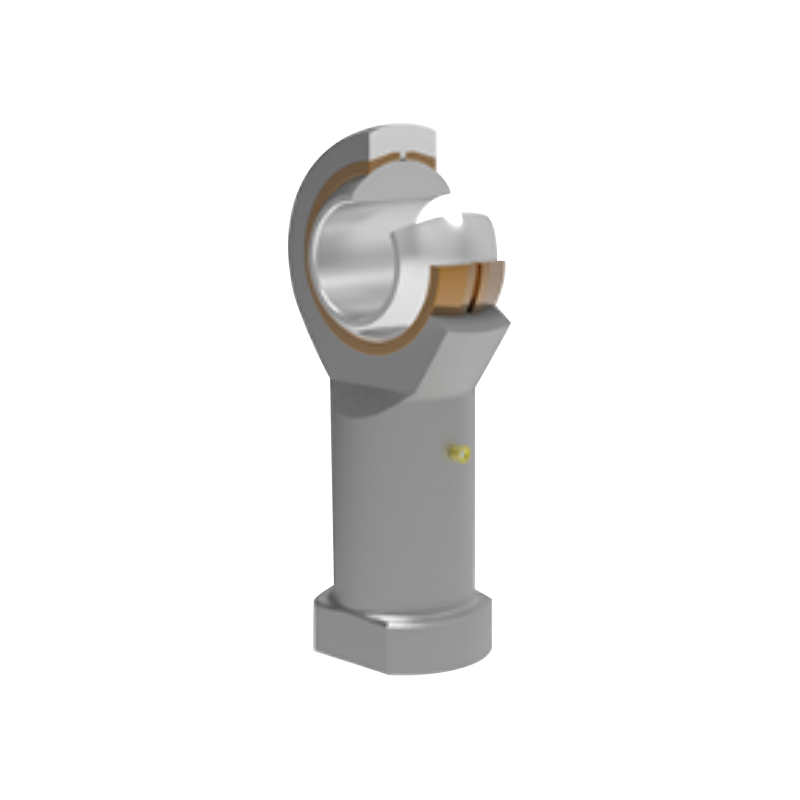
SIBP Series Copper Lined Rod End Bearings
Many conventional rod end bearings use relatively simple material combinations. A basic steel body and untreated or lightly finished steel inner ring may be sufficient for low-demand applications, but such a configuration can be more vulnerable to friction, wear, and surface damage when exposed to repeated oscillation or high contact pressure.
The bronze liner in the SIBP series provides a more engineered sliding interface. It reduces direct contact between the hardened inner ring and the body, supports smoother articulation, and helps control wear. This makes the product more suitable for equipment in which movement is repeated over a long operating cycle.
The combination of a strong carbon steel body, a bronze support liner, and a hardened bearing-steel inner ring is intended for high-load service. The product data lists dynamic load ratings from 3.3 kN to 17 kN and static load ratings from 4.1 kN to 86 kN across the listed models.
Static load rating is especially important when a mechanism remains under load without frequent movement. It indicates the bearing’s ability to resist permanent deformation or unacceptable damage under stationary or slowly applied loading conditions. Dynamic load rating is relevant to repeated movement and operating cycles. Actual bearing life depends on load direction, oscillation angle, speed, lubrication, contamination, installation accuracy, and other factors, so the ratings should be used as part of a complete engineering calculation.
Rod end bearings often work in conditions that are more difficult than continuous rotary motion. A linkage may move through only a small angle, reverse direction frequently, and remain under load throughout the cycle. Such oscillating movement can create concentrated wear zones if the sliding materials are not properly matched.
The hardened and hard chrome plated inner ring is designed to resist surface deterioration, while the bronze liner provides a compatible sliding material. This configuration can help extend service life compared with unprotected or poorly matched contact surfaces. It is especially suitable for mechanisms in which replacement access is limited or where unexpected play can affect system accuracy.
The galvanized carbon steel body gives the standard version useful resistance against general corrosion. For harsh environments involving moisture, chemical exposure, salt-laden air, or strict hygiene requirements, stainless steel options are available. The stainless steel upgrade extends the product’s potential application range without requiring a completely different bearing architecture.
Stainless steel does not eliminate the need for correct material selection, cleaning, lubrication, and environmental evaluation. However, it provides an important option for equipment designers who need improved corrosion resistance or a more suitable material for demanding service environments.
A rod end bearing integrates a spherical bearing into a threaded housing. This allows it to replace several separate parts that might otherwise include a clevis, bushing, spacer, and alignment element. The integrated design saves space and simplifies assembly.
The SIBP series includes metric thread sizes such as M5, M6, M8, M10, M12, M14, M16, M18×1.5, M20×1.5, M22×1.5, M24×2, M27×2, and M30×2 in the standard listed configuration. Fine-pitch alternatives are available for selected models, including SIBP10S/B1 with M10×1.25, SIBP12S/B2 with M12×1.25, SIBP14S/B1 with M14×1.5, and SIBP16S/B1 with M16×1.5.
Thread direction can be important in adjustment mechanisms, turnbuckles, tensioning systems, and assemblies that require opposing thread directions. The SIBP series supports left-hand thread customization. The model must be marked with “L” or “left” to avoid ambiguity, for example, a specification may identify a version as SILBP20S M20×1.5 left 6H.
Thread precision can also be customized to suit particular industry requirements. This flexibility helps engineers integrate the bearing into assemblies that require controlled adjustment, accurate positioning, or compatibility with an existing threaded component.
The following table summarizes the main dimensional and load data supplied for the SIBP series. Dimensions are expressed in millimeters unless otherwise indicated. Load ratings are expressed in kilonewtons, and approximate weight is expressed in kilograms.
| Bearing number | Bore d | Width B | Spherical diameter dₖ | Overall length C₁ max | Thread | Dynamic load | Static load | Approx. weight |
|---|---|---|---|---|---|---|---|---|
| SIBP5S | 5 | 8 | 11.112 | 27 | M5 | 3.3 | 4.1 | 0.016 |
| SIBP6S | 6 | 9 | 12.7 | 30 | M6 | 4.3 | 5.3 | 0.026 |
| SIBP8S | 8 | 12 | 15.88 | 36 | M8 | 6.8 | 8.5 | 0.044 |
| SIBP10S | 10 | 14 | 19.05 | 43 | M10 | 10 | 11 | 0.072 |
| SIBP12S | 12 | 16 | 22.23 | 50 | M12 | 13 | 14 | 0.108 |
| SIBP14S | 14 | 19 | 25.4 | 57 | M14 | 17 | 20 | 0.161 |
| SIBP16S | 16 | 21 | 28.58 | 64 | M16 | 21 | 25 | 0.225 |
| SIBP18S | 18 | 23 | 31.75 | 71 | M18×1.5 | 26 | 30 | 0.285 |
| SIBP20S | 20 | 25 | 34.93 | 77 | M20×1.5 | 31 | 35 | 0.382 |
| SIBP22S | 22 | 28 | 38.1 | 84 | M22×1.5 | 38 | 43 | 0.488 |
| SIBP25S | 25 | 31 | 42.86 | 94 | M24×2 | 47 | 65 | 0.749 |
| SIBP28S | 28 | 35 | 47.83 | 103 | M27×2 | 59 | 77 | 0.949 |
| SIBP30S | 30 | 37 | 50.8 | 110 | M30×2 | 63 | 86 | 1.13 |
Additional dimensions in the supplied technical data include d₂, G6H, h₁, l₃ min, l₄, l₅, l₇, W, d₃, d₄, minimum radius rₛ min, and approximate angular movement α. These dimensions should be checked against the latest technical drawing before production tooling, final installation, or interchangeability decisions are made.
Lubrication is an important factor in the performance of any sliding spherical plain bearing. SIBP models with a bore diameter greater than 6.35 mm can be lubricated through an oil cup. This provides a practical way to introduce lubricant during commissioning or scheduled maintenance and can help extend operating life.
Models with a bore diameter less than 6.35 mm do not provide a lubrication option. Because the smaller versions cannot be lubricated through an oil cup, engineers should pay particular attention to the initial lubrication condition, operating environment, expected movement, and maintenance accessibility.
The lubricant should be compatible with the bronze liner, hard chrome plated inner ring, seals or adjacent components, and the expected operating temperature. A lubricant intended for oscillating plain-bearing applications is generally preferable to a product selected only for high-speed rolling bearings.
Excessive lubricant can attract dust and abrasive particles, while insufficient lubricant can increase friction and accelerate liner wear. The correct quantity and relubrication interval depend on the load, movement frequency, angular amplitude, contamination level, temperature, and surrounding equipment design.
Routine inspections should check for excessive radial or axial play, abnormal noise, increasing operating resistance, corrosion, thread damage, liner deterioration, and deformation of the rod end body. Changes in articulation feel can indicate wear even when the bearing appears visually intact.
In precision equipment, bearing clearance should be monitored as part of the overall maintenance program. Unexpected clearance may affect the repeatability of a robot joint, the positioning accuracy of a measuring mechanism, or the stability of an actuator linkage.
When a bearing is replaced, the mating shaft or threaded component should also be inspected. A damaged shaft, incorrect fit, contamination, or misalignment can cause premature failure in a new bearing and may conceal the original cause of the problem.
The supplied product information specifies an operating temperature range from 50°C to +150°C. Because the lower limit is presented in a compressed format, the exact lower-limit notation should be confirmed with the manufacturer for a specific order or application. Temperature evaluation should include the bearing, lubricant, surrounding structure, and any protective coating.
At elevated temperatures, lubricant viscosity, surface hardness, clearance, and material expansion may change. Continuous operation near the upper limit should therefore be evaluated carefully. Short-term exposure and continuous exposure may have different effects on service life.
In cold conditions, lubricant flow and material contraction should be considered. A bearing that works satisfactorily at room temperature may require a different lubricant or a revised maintenance interval in a low-temperature environment.
For corrosive or wet environments, the stainless steel “X” version may be more appropriate than the standard galvanized carbon steel configuration. The choice should consider the actual medium, exposure duration, cleaning chemicals, humidity, salt spray, and the possibility of galvanic interaction with neighboring components.
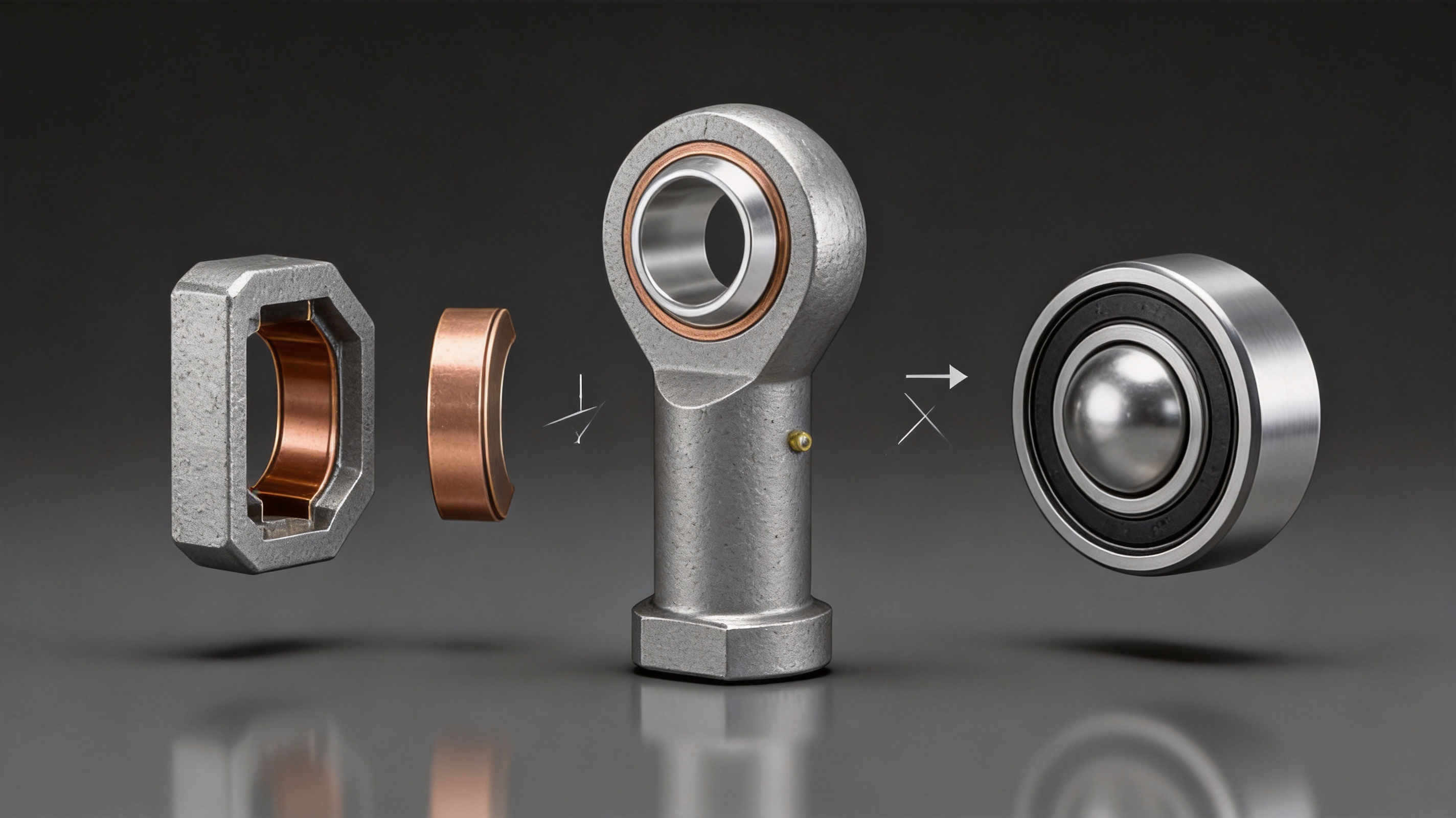
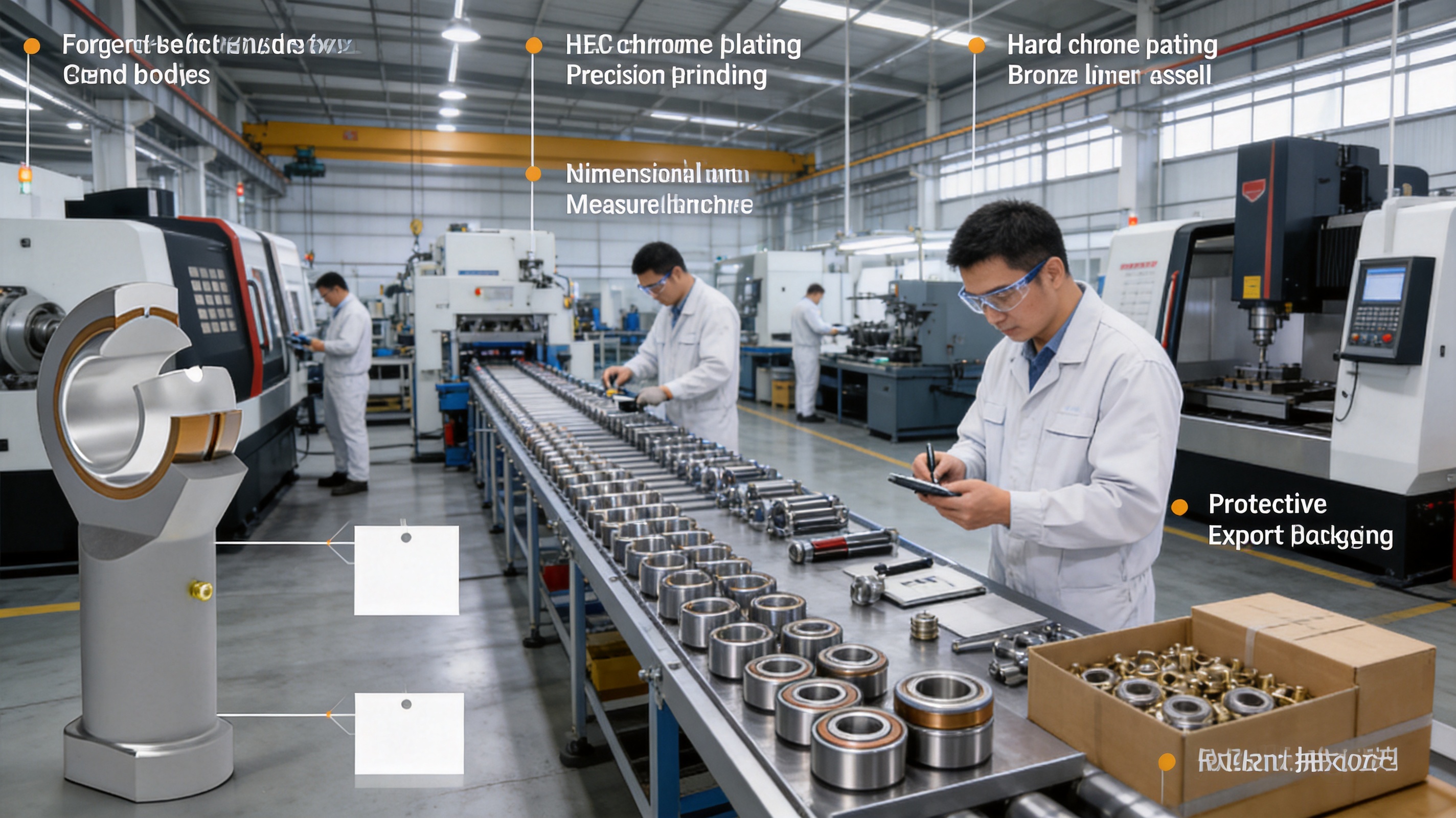
UKL Bearing Manufacturing Co., Ltd. integrates research and development, production, and international distribution. Its manufacturing structure includes multiple production lines covering forging, turning, heat treatment, grinding, assembly, and packaging. This integrated approach provides greater control over critical process stages than a supply chain that depends entirely on unrelated external processors.
Control over the manufacturing sequence is particularly valuable for rod end bearings because the final performance depends on the relationship between multiple parts. The carbon steel body must have suitable geometry and thread accuracy. The bronze liner must be securely integrated and correctly formed. The inner ring must maintain its spherical profile after hardening and plating. Assembly must preserve the designed contact condition and movement characteristics.
Forging can improve the structural integrity of the rod end body by shaping the material before precision machining. A properly controlled forging process helps establish a sound base for subsequent turning, drilling, threading, and finishing operations.
Material preparation is an important part of manufacturing consistency. Steel grade, cleanliness, heat-treatment response, and dimensional stability all affect the finished component. By managing the early stages of production, the manufacturer can reduce variation before the parts reach final machining and assembly.
Turning operations establish the primary external dimensions, bore-related features, shoulders, and other surfaces of the rod end body. Precision turning is necessary for maintaining concentricity and consistent geometry, especially where the threaded section must align correctly with the spherical bearing center.
Thread production must meet the specified dimensional and precision requirements. This is important for installation torque, adjustment, axial positioning, and compatibility with mating nuts or shafts. The availability of standard metric threads, selected fine-pitch alternatives, and left-hand thread customization demonstrates the product’s suitability for a broad range of mechanical designs.
The inner ring is hardened to improve resistance against contact stress and sliding wear. Heat treatment must be carefully controlled to achieve the desired hardness without creating excessive distortion, cracking, or dimensional instability.
After heat treatment, the inner ring may require additional grinding or finishing to restore the correct spherical geometry. A controlled sequence of heat treatment and precision finishing is essential for producing a smooth and accurately shaped working surface.
Grinding improves dimensional accuracy and surface quality on critical bearing components. For the inner ring, grinding helps create the spherical profile required for consistent contact with the bronze liner. It can also reduce surface irregularities that would otherwise increase friction or accelerate wear.
The hard chrome plating process adds another functional surface treatment. It is not merely decorative. When properly applied and controlled, hard chrome improves surface hardness, wear resistance, and resistance to sliding damage. Plating thickness, adhesion, surface uniformity, and post-plating finishing are all factors that influence the final product.
Assembly brings together the rod end body, bronze liner, inner ring, and related features. Accurate assembly is required to ensure that the inner ring can articulate as intended without excessive looseness or binding. Cleanliness during assembly is also essential because abrasive contamination can damage the sliding interface.
Packaging protects the product from impact, moisture, contamination, and thread damage during storage and transportation. This is particularly important for precision components supplied to overseas customers. Proper packaging helps ensure that the bearing reaches the customer in the same condition in which it passed final inspection.
A rod end bearing should be evaluated as a complete assembly rather than as a collection of individual dimensions. Quality control should include inspection of raw materials, body geometry, thread accuracy, spherical inner ring dimensions, surface condition, plating quality, liner integration, movement, and overall appearance.
UKL’s stated production capacity is between 10,000 and 50,000 units per month. This capacity supports both regular industrial demand and larger OEM programs. Production scale can improve supply continuity when it is supported by process control, inspection systems, production planning, and traceability.
The company also reports a dedicated research and development capability focused on high-precision bearings and products for CNC machines, robotics, and intelligent automation systems. This technical orientation is relevant to the SIBP series because rod end bearings used in automation must often balance compactness, movement accuracy, load capacity, and service life.
Engineering support can be valuable when a standard model does not fully match an application. Questions about thread direction, stainless steel material, lubrication access, operating temperature, mounting arrangement, load direction, and expected motion should be reviewed before final selection. A manufacturer with design and production capabilities can help identify a suitable configuration rather than treating the bearing as a generic catalog item.
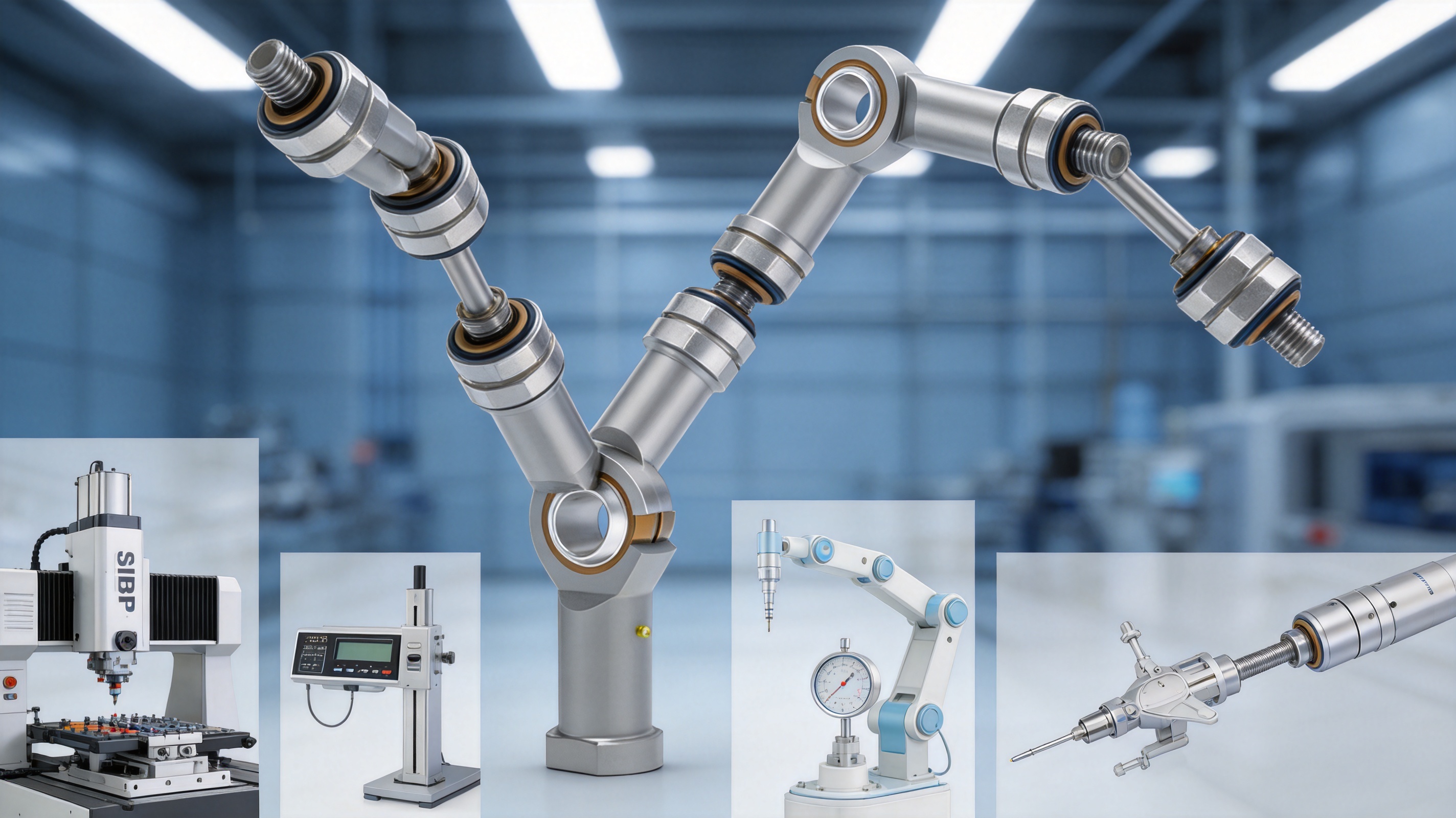
Industrial robots use multiple articulated joints and linkage systems. Rod end bearings may be installed in grippers, end-effectors, linkage arms, actuator connections, and auxiliary positioning mechanisms. These applications often require compact components that can accommodate angular misalignment without adding unnecessary structure.
The SIBP series is suitable for such applications because its spherical inner ring supports angular movement and its bronze liner is intended for repeated sliding contact. The choice of bearing size must be based on the robot’s actual load spectrum, acceleration, vibration, duty cycle, and required positioning accuracy.
Medical mechanisms may require controlled movement, low maintenance, corrosion resistance, and stable operation over long periods. Rod end bearings can be used in adjustable supports, imaging equipment, surgical positioning systems, rehabilitation mechanisms, and laboratory devices.
For medical equipment, the material and surface treatment must be evaluated against cleaning agents, sterilization processes, humidity, and regulatory requirements. The stainless steel version may be considered when enhanced corrosion resistance is needed, but the complete equipment validation remains the responsibility of the system designer.
Measuring instruments and inspection systems can be sensitive to play, vibration, and alignment errors. A worn or poorly fitted rod end bearing may introduce unwanted movement into a positioning linkage and affect measurement repeatability.
The hardened inner ring and controlled bronze sliding interface can help support stable articulation when the bearing is correctly installed and maintained. Designers should consider whether the application requires very low friction, minimal clearance, high stiffness, or frequent adjustment, since these requirements influence the appropriate bearing selection and preload strategy.
Aerospace mechanisms place strong demands on weight, reliability, temperature performance, corrosion resistance, and traceability. Rod end bearings may be used in control linkages, actuation systems, access mechanisms, and adjustable structural assemblies.
For aerospace use, the standard product data is only a starting point. Additional requirements may include special material certificates, qualification testing, strict inspection records, non-destructive testing, specialized lubrication, and compliance with customer or industry standards. The stainless steel option and customized thread specifications may support particular designs, subject to formal validation.
Automatic production lines, packaging machines, material handling systems, conveyors, and assembly equipment often contain linkages that move repeatedly under moderate or high loads. Rod end bearings simplify the connection of cylinders, actuator rods, guide mechanisms, and pivoting arms.
In these environments, the SIBP series can provide a practical combination of load support, compact installation, and serviceability. The availability of multiple bore sizes allows engineers to select a bearing suited to the required strength and connection size instead of oversizing every assembly.
Begin by identifying the maximum dynamic and static loads applied to the bearing. The load should be resolved into the correct direction, and shock loads should be included where applicable. If the bearing experiences alternating loads, vibration, or impact, the calculation should use the most severe realistic operating condition rather than only the nominal load.
Dynamic and static ratings should not be treated as interchangeable. A bearing may experience a high static load while stationary and a lower load during movement, or the reverse. Both conditions must be checked.
The bore diameter must match the pin, shaft, or mounting stud. The threaded portion must match the mating component in diameter, pitch, direction, and precision. Fine-pitch threads can provide greater adjustment control or improved locking behavior in selected applications.
Thread engagement length, tightening method, locking hardware, and access for installation should also be considered. A correctly sized bearing can still perform poorly if it is installed with insufficient thread engagement or if the mating component is misaligned.
Confirm that the required articulation angle falls within the bearing’s permissible range. The supplied product data lists approximate angular values of 0.3 degrees or 0.6 degrees depending on size. The actual movement in the mechanism should be checked throughout the entire operating cycle, including installation tolerances and deflection under load.
If the mechanism requires movement beyond the available angular capacity, the bearing may bind or impose excessive loads on the liner and inner ring. In such cases, the design may require a different bearing type, a modified housing, or an additional alignment feature.
For bore sizes above 6.35 mm, determine whether the oil cup can be accessed after installation. If the bearing will be enclosed or installed in a location that cannot be reached during maintenance, the lubrication plan should be established before the equipment is built.
For bore sizes below 6.35 mm, the absence of a lubrication option requires additional care. The designer should consider the initial lubricant, operating cycle, environmental contamination, and expected replacement interval.
The galvanized standard version is suitable for many general industrial conditions. Stainless steel construction should be considered for wet environments, outdoor equipment, marine-related exposure, chemical processing, food or laboratory areas, and applications where corrosion could compromise function or cleanliness.
Environmental selection should be based on actual exposure rather than a general assumption. Condensation, salt, cleaning chemicals, and dissimilar metals can create conditions more severe than ordinary indoor service.
Before installation, verify the model number, thread direction, bore size, dimensional configuration, and surface condition. Confirm that the bearing has not been damaged during transport and that the spherical inner ring moves smoothly without abnormal resistance.
The mating shaft or pin should be clean, correctly sized, and free from burrs. A damaged or undersized pin can create localized stress and increase clearance. An oversized component can interfere with assembly or deform the inner ring.
Threaded connections should be tightened using a suitable method and torque appropriate to the assembly design. The bearing should not be forced into alignment by excessive tightening. If the rod end is installed at an angle, the mechanism may generate bending loads that are much higher than the calculated axial or radial load.
Alignment should be checked after installation. The connected components should move through their full operating range without binding, overtravel, or contact with adjacent parts. Where necessary, use suitable spacers, lock nuts, washers, or alignment features to prevent unintended side loading.
During commissioning, observe the bearing under actual operating conditions. Check for abnormal noise, heat generation, excessive friction, or unexpected movement. Early inspection can identify installation problems before they become permanent damage.
For industrial customers, the value of a bearing is determined not only by its catalog dimensions. Consistency between batches, reliable delivery, engineering response, and the ability to customize the product can be equally important.
An integrated manufacturer can coordinate material preparation, machining, heat treatment, grinding, plating, assembly, and packaging within a structured production system. This can simplify communication and reduce the uncertainty associated with managing several unrelated suppliers.
UKL has experience serving customers in Europe, Asia, Africa, Russia, the United States, Italy, Germany, Poland, South Africa, Egypt, India, and other markets. Its international distribution experience supports export packaging, customer communication, and supply coordination for OEM and replacement applications.
The company reports 201–500 employees and more than 15 years of OEM and ODM export experience. Its stated capabilities include custom bearing production, research and development, and technical support. These resources are useful for customers who require more than a standard catalog transaction.
OEM and ODM projects may involve custom thread directions, stainless steel materials, dimensional modifications, special packaging, labeling, production quantities, inspection documentation, or application-specific testing. The feasibility of each request must be reviewed individually, but the manufacturer’s integrated structure provides a foundation for this type of cooperation.
| Bearing type | Primary movement | Typical advantage | Consideration compared with the SIBP rod end |
|---|---|---|---|
| SIBP copper lined rod end bearing | Oscillating and angular movement | Integrated threaded connection, compact design, bronze sliding liner | Requires correct angular alignment, load evaluation, and lubrication management |
| Rolling-element bearing | Continuous rotary movement | Low friction at suitable speeds | May be less suitable for heavily oscillating movement or direct threaded linkage connection |
| Plain steel bushing | Sliding or pivoting movement | Simple structure and low initial cost | Usually requires a separate housing and shaft arrangement and may offer less alignment flexibility |
| Plastic-lined rod end | Oscillating and angular movement | Low maintenance and possible corrosion resistance | Temperature, load, creep, and chemical compatibility must be reviewed carefully |
| Standard unlined rod end | Basic angular movement | Simple construction | May have lower wear resistance under high-load repeated oscillation |
This comparison is general and does not replace application testing. The best bearing depends on load, speed, movement pattern, temperature, contamination, accuracy, maintenance access, and cost requirements. The main benefit of the SIBP design is its combination of a threaded rod end format with a copper-lined, hardened sliding interface.
Bearing life is influenced by more than the rated load. Oscillation angle is particularly important because small-angle movement can repeatedly load the same region of the sliding interface. Reversing motion can also affect lubricant distribution and wear patterns.
Surface pressure should be considered together with movement frequency and duration. A bearing carrying a high load for a short cycle may behave differently from a bearing carrying a moderate load continuously. Shock, vibration, and sudden changes in direction may also increase the effective load.
Contamination is another major factor. Dust, metal particles, moisture, and chemical residues can enter the sliding interface and accelerate wear. Protective covers, suitable seals, clean assembly procedures, and planned inspection can improve reliability.
Clearance should be selected carefully. Excessive clearance can reduce positioning accuracy and increase impact during load reversal. Insufficient clearance can cause binding, especially when temperature changes or structural deflection are present. The correct condition depends on the bearing specification and the complete mechanism.
Where the bearing is used in a safety-critical or highly precise system, prototype testing is recommended. Testing should reproduce the expected load, temperature, movement, lubrication, contamination, and duty cycle. Inspection after testing can reveal wear patterns and help confirm the selected bearing size.
Modern bearing manufacturing must address both performance and environmental responsibility. UKL states that it adopts environmentally responsible processes, promotes material recycling, and optimizes energy usage to reduce its environmental footprint.
Longer component life can also support sustainability by reducing replacement frequency, production consumption, packaging waste, and equipment downtime. A bearing that maintains its function under demanding conditions can contribute to a more efficient total operating cycle.
Sustainable manufacturing should be evaluated across the entire product life cycle. Material selection, process energy, plating practices, packaging design, transport efficiency, service life, and end-of-life recycling all influence the overall environmental impact. These issues can be discussed with the supplier when a project includes environmental reporting or responsible procurement requirements.
When requesting the SIBP series, customers should provide the complete model number and identify any special requirements. Important details include bore diameter, thread size, thread pitch, right-hand or left-hand direction, standard or stainless steel material, lubrication requirements, quantity, packaging, and inspection documentation.
For left-hand threads, the designation should explicitly include “L” or “left.” For stainless steel, the “X” suffix should be specified. Clear identification helps prevent incorrect production and reduces delays during order confirmation.
Application information is also useful. Customers should state the working load, direction of loading, movement type, movement angle, operating temperature, speed or cycle frequency, environmental exposure, and available maintenance access. These details help the manufacturer assess whether a standard model is suitable or whether a customized configuration should be considered.
Dimensional drawings should be reviewed before final approval. Product tables provide essential selection information, but critical installation dimensions, tolerances, thread classes, lubrication details, and material requirements should be confirmed against the current drawing and quotation.
The bronze liner creates a controlled sliding interface between the rod end body and the hardened inner ring. It helps reduce direct steel-to-steel contact, supports wear resistance, and improves suitability for repeated oscillating movement.
The rod end body is made from carbon steel with a galvanized surface. The sliding liner is bronze, and the inner ring is made from bearing steel that is hardened and hard chrome plated.
Yes. The rod end body and inner ring can be produced in stainless steel for harsher environments. Stainless steel versions are identified by the suffix “X,” such as SIBP…S/X.
Models with a bore diameter greater than 6.35 mm can be lubricated through an oil cup. Models with a bore diameter below 6.35 mm do not offer a lubrication option, so their initial lubrication and service conditions require special attention.
Yes. Left-hand thread versions can be customized. The model number should be marked with “L” or “left” so that the required thread direction is clearly identified.
Typical applications include industrial robots, automation equipment, medical devices, precision measuring instruments, aerospace equipment, actuator linkages, and other machinery requiring compact angular movement and durable load support.
The supplied product information specifies a range from 50°C to +150°C. Because the lower limit is written in a compressed format, customers should confirm the exact lower-temperature notation and application limitations with the manufacturer before final selection.
Select the size by checking the required bore, thread, dynamic load, static load, angular movement, installation space, temperature, lubrication access, and environmental conditions. The largest expected load and the complete duty cycle should be considered rather than only the average load.
The series supports customization of thread precision, thread direction, and material options. Other OEM requirements, such as packaging, labeling, inspection records, and special dimensions, should be discussed with the manufacturer for technical review.
A rod end bearing is designed for angular and oscillating movement and includes an integrated threaded connection. A standard rolling bearing is generally optimized for rotary motion using rolling elements. The correct choice depends on the movement pattern and the mechanical connection required.
Hard chrome plating improves surface hardness and resistance to sliding wear. It helps the inner ring work with the bronze liner under repeated articulation and contributes to stable performance when the bearing is properly lubricated and installed.
Maintenance inspections should look for excessive play, rough movement, abnormal noise, corrosion, thread damage, liner wear, deformation, contamination, and changes in operating temperature. The mating shaft and mounting structure should also be checked.
The SIBP series copper lined rod end bearings provide a technically balanced solution for high-load and precision linkage applications. Their design combines a galvanized carbon steel rod end body, a bronze sliding liner, and a hardened, hard chrome plated bearing-steel inner ring. This combination offers advantages over simpler rod end constructions by improving sliding contact, wear resistance, corrosion protection, and long-term operating stability.
The product range covers multiple bore and thread sizes, includes selected fine-pitch alternatives, and supports left-hand thread customization. Stainless steel versions extend the range into more demanding environments. Lubrication access is available for larger bore sizes, while smaller models require careful attention to initial lubrication and service planning.
Behind the product, UKL Bearing Manufacturing Co., Ltd. provides integrated capabilities covering research and development, forging, turning, heat treatment, grinding, assembly, packaging, and international distribution. Its stated production capacity, OEM and ODM experience, technical team, and export network support both standard catalog requirements and customized industrial projects.
For designers and purchasing teams, the SIBP series is most valuable when selected as part of a complete engineering evaluation. Load, movement, alignment, temperature, contamination, lubrication, corrosion, and maintenance access should all be considered. When these factors are properly addressed, the copper lined rod end design can provide a dependable and compact connection for robotics, automation, medical equipment, measuring instruments, aerospace systems, and general industrial machinery.
1. SIBP Series Copper Lined Rod End Bearings, manufacturer-supplied product description and dimensional data.
2. General engineering principles for spherical plain bearings, rod end bearings, and oscillating sliding contacts.
3. General reference information on carbon steel, bronze bearing liners, bearing steel, hardening, grinding, galvanizing, and hard chrome plating.
4. General industrial guidance for bearing lubrication, installation, inspection, load rating, and maintenance planning.
5. Manufacturer-supplied information regarding production capacity, OEM and ODM services, research and development, export experience, and integrated bearing manufacturing processes.
6. General machinery design practices for robotic joints, actuator linkages, precision instruments, medical mechanisms, automation equipment, and aerospace assemblies.
Product Categories
Contact Us

Jane@ukl-bearing.com
Jenny@ukl-bearing.com
Andy@ukl-bearing.com
Ivy@ukl-bearing.com

+86-510- 88763239
+86-15371057968

No.1 Hehuan Road, Hudai Town, Binhu District, Wuxi City.
Ready to Begin?
Get in Touch

Now!
UKL BEARING
 English
 Español
 русский