Content
Rod end bearings are compact but highly important mechanical components used wherever a moving linkage, actuator, control rod, or articulated connection must transfer load while accommodating angular misalignment. Their performance directly influences the smoothness, accuracy, service life, and safety of the complete machine. In automation equipment, robotics, agricultural machinery, construction systems, packaging lines, and general industrial mechanisms, the right rod end bearing can reduce friction, simplify installation, and improve reliability under repeated oscillating motion.
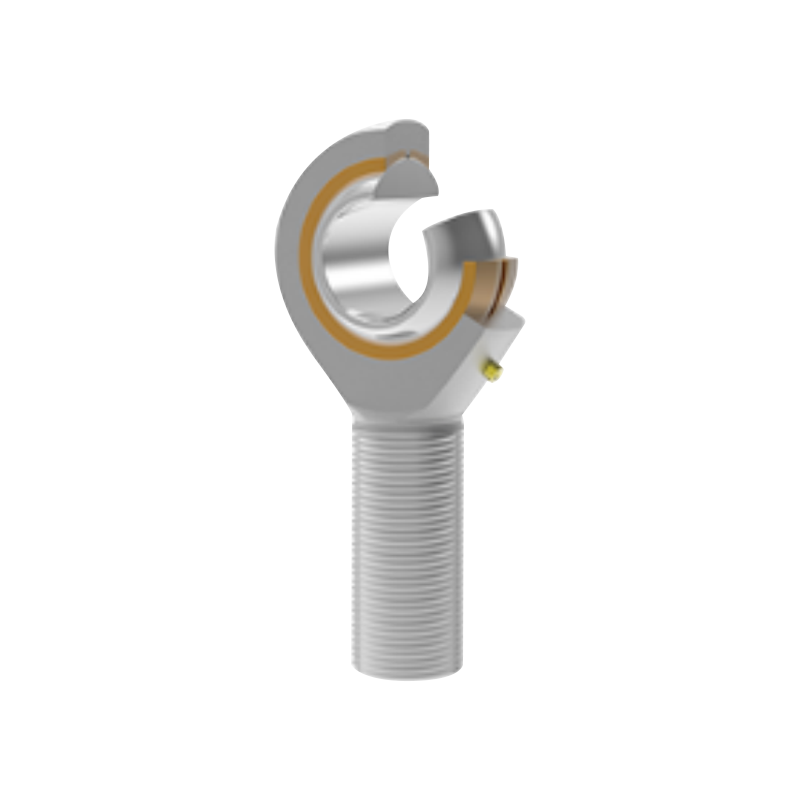
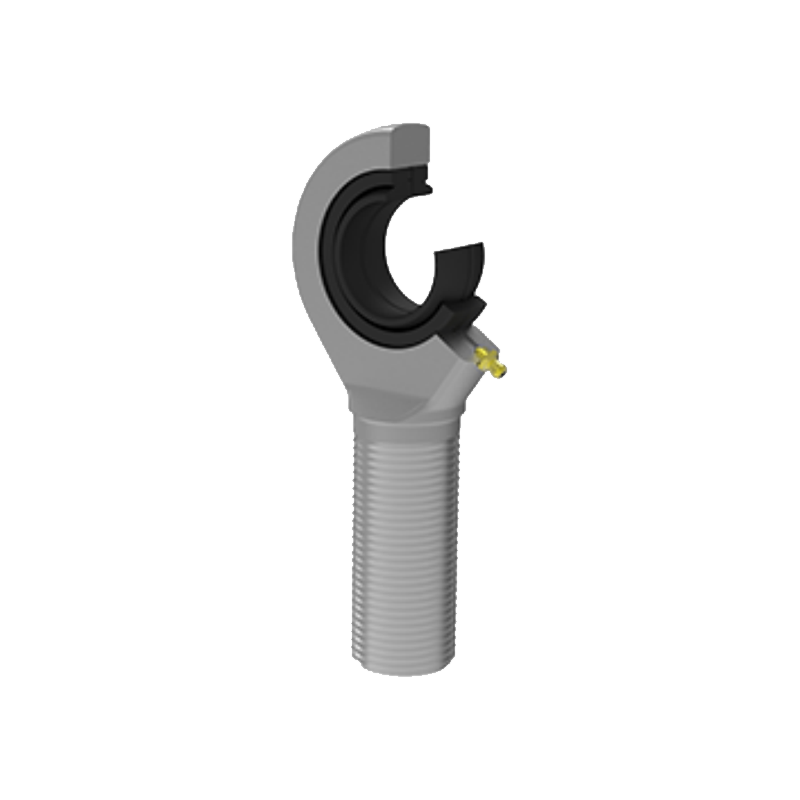
The SA Zinc Coated Steel Rod End Bearing is an externally threaded, assembled rod end bearing designed for demanding industrial applications. Its rod end body is manufactured from carbon steel and protected with a galvanized finish. The body is combined with a standard radial spherical plain bearing from the GE…E or GE…ES family. This combination provides a practical balance of strength, corrosion resistance, articulation, load-carrying ability, and service flexibility.
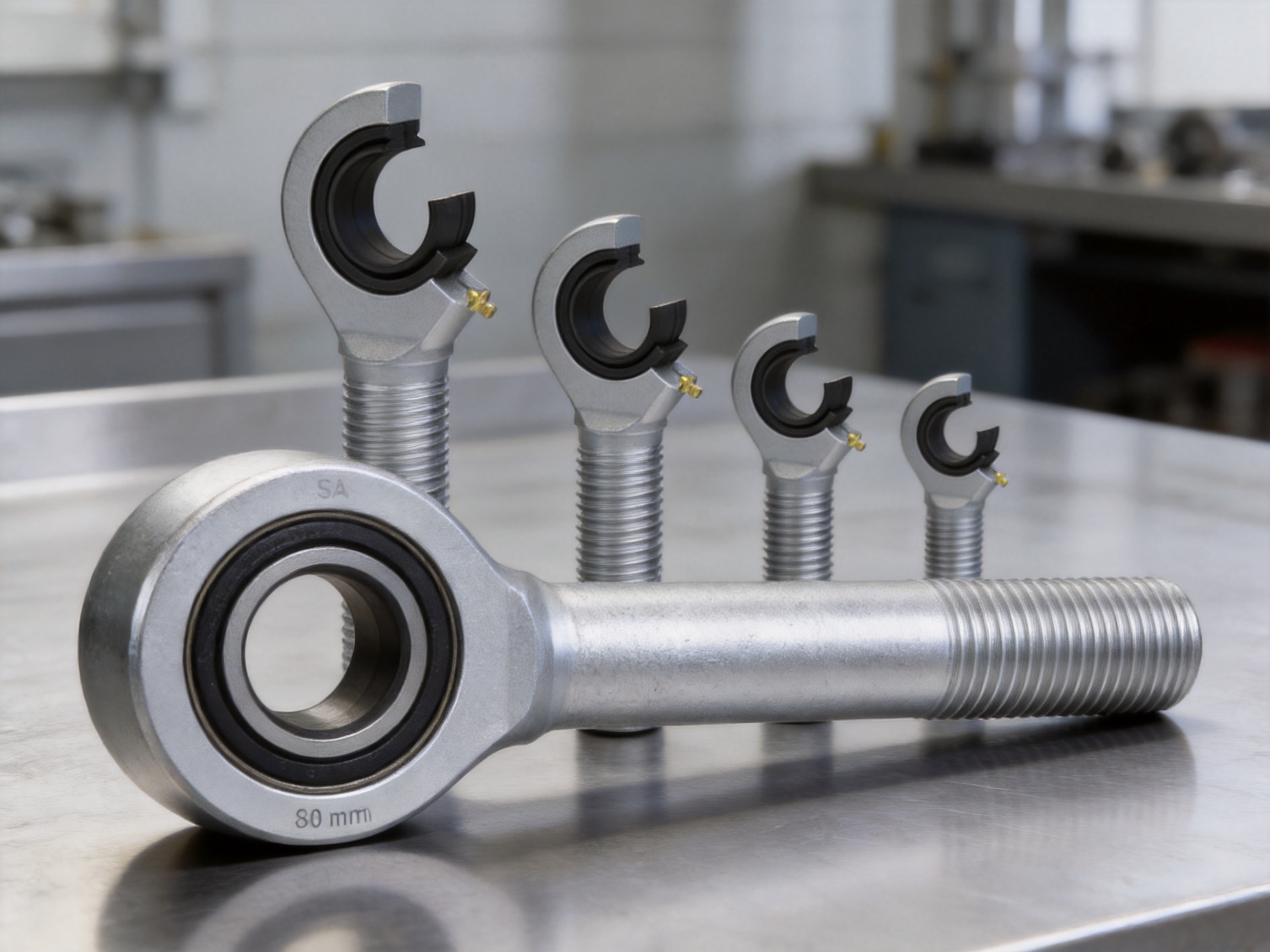
The product family covers bore sizes from 5 mm to 80 mm. Smaller models are suitable for compact linkages and light mechanisms, while larger versions support high-load applications requiring substantial static and dynamic capacity. The range also includes standard right-hand thread configurations, optional left-hand thread versions, and the possibility of customized thread pitch or thread precision for special equipment.
Manufactured by UKL Bearing Manufacturing Co., Ltd., the series benefits from integrated research and development, production, quality control, assembly, packaging, and international distribution capabilities. UKL combines modernized production lines with OEM and ODM engineering experience, enabling the company to supply both standard products and application-specific bearing solutions.
This article examines the construction, technical features, advantages, operating characteristics, manufacturing processes, selection criteria, installation requirements, maintenance practices, and application value of the SA Zinc-Coated Steel Rod End Bearing.
SA Zinc Coated Steel Rod End Bearing
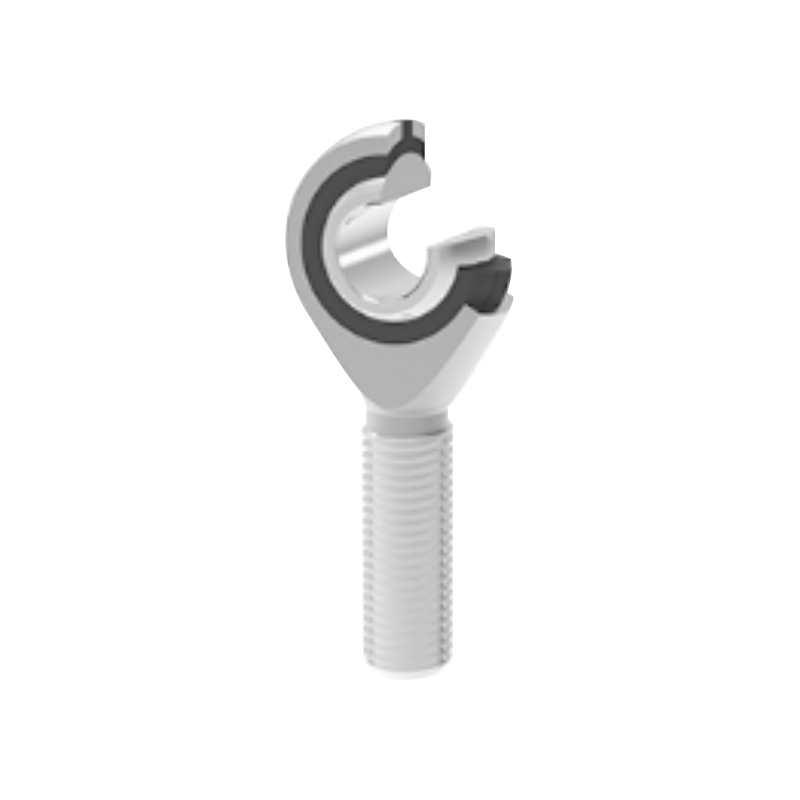
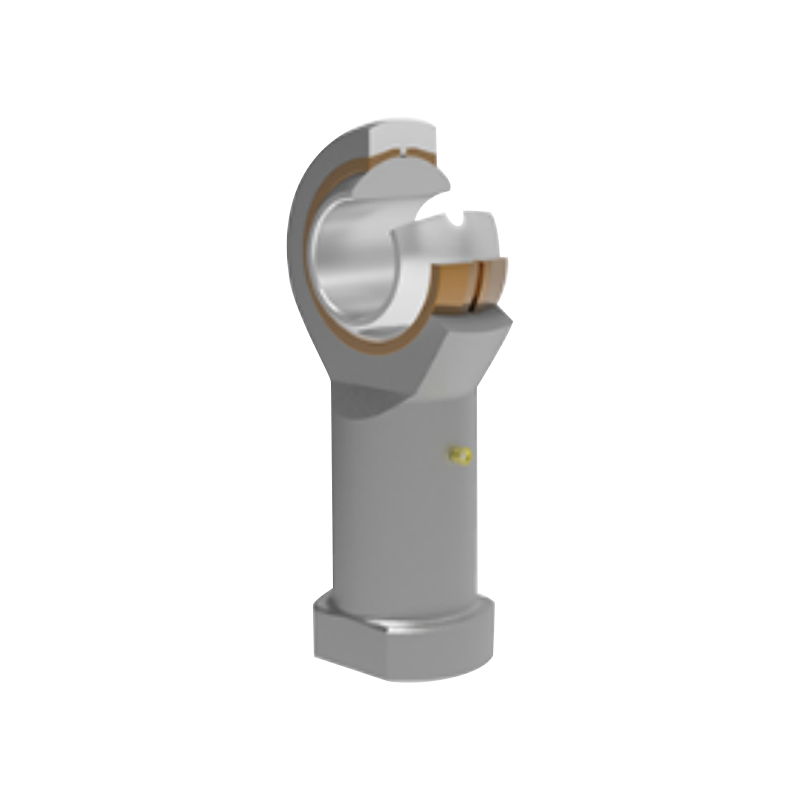
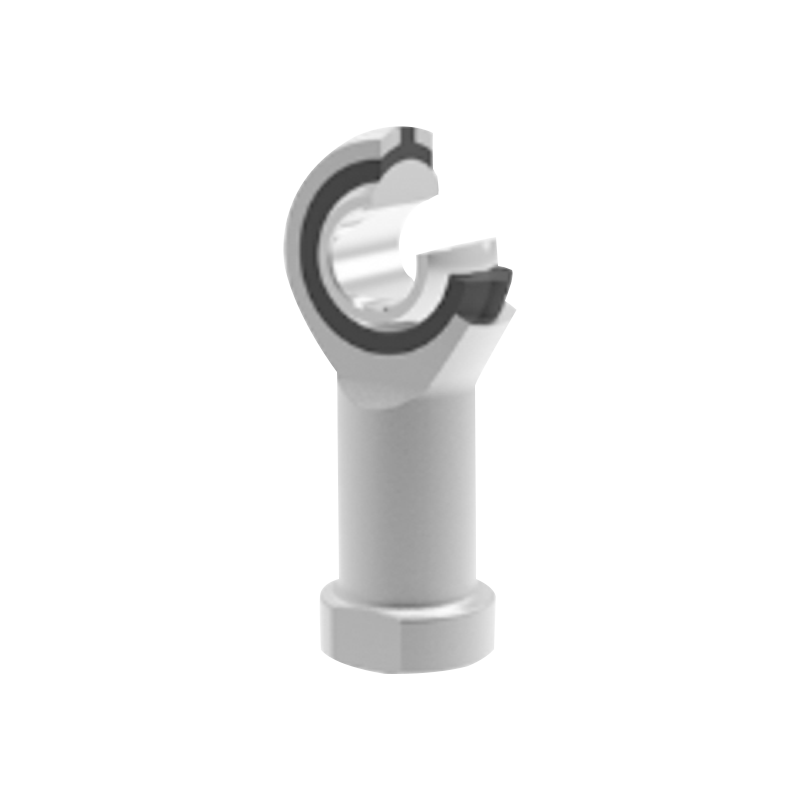
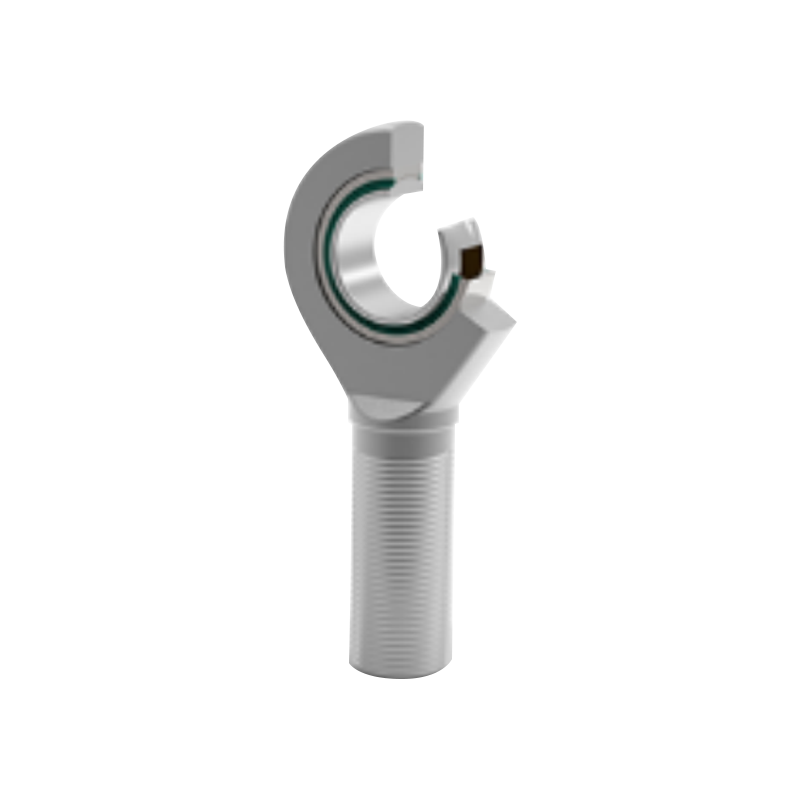
A rod end bearing consists of a bearing eye and an externally threaded shank. The eye contains a spherical plain bearing that allows the inner ring to rotate and tilt relative to the housing. The threaded shank enables the bearing to be screwed into a machine component, clevis, adjustment nut, actuator, or connecting rod. This design makes the bearing particularly useful where a shaft or pin must articulate through changing angles during operation.
The SA series uses a carbon steel rod end body. Carbon steel provides the structural strength required for threaded connections and load transfer. It also offers good machinability, allowing the body to be formed with accurate external threads, bearing seats, shoulders, wrench flats, and other functional surfaces. After forming and machining, the body receives a galvanized finish that improves resistance to environmental exposure compared with untreated carbon steel.
At the center of the rod end is a radial spherical plain bearing. The spherical geometry enables angular movement and helps compensate for misalignment between connected machine elements. Unlike a conventional deep groove ball bearing, a spherical plain bearing is intended for oscillating, tilting, and relatively low-speed movements rather than continuous high-speed rotation.
The standard bearing combinations are identified by the suffix used in the model designation. Models with the “E” suffix are lubrication-free versions. Models with the “ES” suffix provide an oil cup or rod end eyelet lubrication path, allowing grease or oil to be supplied during scheduled maintenance. This distinction enables users to select the appropriate configuration according to accessibility, load, operating environment, and maintenance policy.
The external thread creates a simple and versatile mounting method. It can be installed into a threaded bracket, rod, actuator body, or adjustment assembly. Threaded installation also permits axial adjustment during machine setup. When a left-hand thread is required, the model designation and thread marking include the appropriate left-hand indication, such as “L” and “left.”
The principal construction features of the SA series include a carbon steel rod end body, galvanized surface protection, a radial spherical plain bearing, an externally threaded shank, compact overall geometry, and selectable lubrication arrangements. Together, these features make the bearing suitable for linkages that need controlled angular movement without the complexity of a separate housing and spherical bearing assembly.
The assembled configuration also reduces the number of individual components that must be specified and installed. Instead of designing a separate bearing housing, threaded adapter, and spherical insert, the machine builder can use a complete rod end unit. This can simplify the bill of materials, reduce assembly time, and create a more consistent interface between the bearing and the connected mechanism.
The SA Zinc-Coated Steel Rod End Bearing range extends from SA5E and SA6E sizes through large SA80ES and SAS80ES configurations. Depending on the model, bore diameter, body width, thread size, overall length, load rating, and weight vary considerably. This broad range allows the same basic product concept to be used in miniature mechanisms, medium-duty equipment, and heavy industrial assemblies.
The stated operating temperature range is from 50°C to +150°C. The supplied product information presents the lower limit as 50°C; users should confirm the intended lower operating limit and application conditions with the manufacturer before selecting the bearing for sub-zero service. The upper limit of +150°C should also be evaluated together with lubricant type, surrounding seals, adjacent materials, load, and duty cycle.
The sliding friction pair is steel/steel. This pairing is designed for robust load transfer and is often selected for applications involving high static load, oscillating movement, shock, and intermittent motion. Proper lubrication, surface condition, alignment, and contamination control remain essential to obtaining reliable service life from a steel-on-steel plain bearing.
| Model | Bore d (mm) | Body width B (mm) | Thread | Dynamic load rating (kN) | Static load rating (kN) | Approx. weight (kg) |
| SA5E | 5 | 6 | M5 | 3.4 | 3.9 | 0.015 |
| SA6E | 6 | 6 | M6 | 3.4 | 5.5 | 0.016 |
| SA8E | 8 | 8 | M8 | 5.5 | 10 | 0.028 |
| SA10E | 10 | 9 | M10 | 8.1 | 16 | 0.050 |
| SA12E | 12 | 10 | M12 | 10 | 23 | 0.088 |
| SA15ES | 15 | 12 | M14 | 16 | 32 | 0.120 |
| SA20ES | 20 | 16 | M20×1.5 | 30 | 60 | 0.300 |
| SA25ES | 25 | 20 | M24×2 | 48 | 83 | 0.555 |
| SA30ES | 30 | 22 | M30×2 | 62 | 110 | 0.875 |
| SA40ES | 40 | 28 | M39×3 | 99 | 180 | 1.850 |
| SA50ES | 50 | 35 | M45×3 | 156 | 290 | 3.580 |
| SA60ES | 60 | 44 | M80×4 | 245 | 450 | 8.790 |
| SA70ES | 70 | 49 | M58×4 | 313 | 610 | 8.510 |
| SA80ES | 80 | 55 | M64×4 | 400 | 750 | 12.300 |
The values above are representative of the supplied product data. Selection should always be based on the latest certified dimensional drawings, load calculations, tolerances, thread details, and application conditions. Dynamic and static load ratings are not a substitute for a complete service-life analysis. Oscillation angle, frequency, lubrication, shock loading, contamination, temperature, and installation accuracy can all influence actual performance.
One of the main advantages of the SA series is its integrated structure. A conventional linkage may require a separate spherical plain bearing, housing, threaded adapter, retaining arrangement, and adjustment component. The assembled rod end combines these functions into a single standardized unit. This can reduce part count and simplify procurement, assembly, replacement, and inventory management.
Compared with improvised threaded connections using ordinary bolts or bushings, a dedicated rod end bearing provides a defined spherical articulation point. It is better suited to controlled angular movement and can reduce binding caused by misalignment. The result is often smoother motion and lower stress on adjacent shafts, brackets, and actuators.
The galvanized finish provides an additional barrier against moisture and atmospheric exposure. While the exact corrosion performance depends on coating thickness, surface preparation, environment, and maintenance, zinc protection is generally more suitable than bare carbon steel for general industrial conditions. It can be valuable in equipment exposed to humidity, intermittent condensation, storage environments, and workshop contamination.
The finish also improves the visual consistency of the product and helps protect the rod end body during handling, transport, and installation. For severe chemical, marine, or highly abrasive environments, users should request confirmation of coating specifications and consider whether an alternative material or additional protection is necessary.
Steel/steel spherical plain bearing pairs are capable of supporting substantial loads in compact dimensions. The SA range includes static load ratings from several kilonewtons in the smallest models to hundreds of kilonewtons in the largest models. This makes the design suitable for mechanisms where loads may be stationary, slowly oscillating, or subject to short-duration shock.
The strong carbon steel body is also advantageous where the external thread must withstand tightening, adjustment, vibration, and repeated load transfer. Properly designed thread engagement distributes force through the connected component while maintaining a compact assembly.
The availability of both “E” and “ES” configurations gives users a choice between lubrication-free service and relubricatable operation. Lubrication-free models can be useful where access is limited, contamination from lubricant is undesirable, or the duty cycle is relatively light. ES models are better suited to applications where regular maintenance is practical or where load, oscillation, and operating conditions require replenishment of lubricant.
Many competing product ranges offer only one lubrication arrangement within a particular size family. The two configuration options in the SA series make it easier to match the bearing to the maintenance strategy of the machine.
The range from 5 mm to 80 mm bore diameter allows a machine designer to standardize on one product family across multiple equipment platforms. Small models can be used for sensor linkages, compact actuators, and light control mechanisms. Medium models can support conveyors, packaging equipment, and automation modules. Large models can be applied to heavy actuators, construction mechanisms, industrial control linkages, and high-load assemblies.
A broad size family can reduce engineering time because the same design principles, installation practices, and replacement procedures can be applied across different machine sizes. It also helps distributors and maintenance departments organize stock more efficiently.
Non-standard thread pitch and thread precision can be provided upon request. This is particularly useful when the rod end must interface with an existing actuator, imported machine, specialized adjustment mechanism, or legacy assembly. Left-hand thread versions can also be specified when paired adjustment or opposing-thread arrangements are required.
Thread customization is a practical advantage over off-the-shelf products that are limited to standard pitches. It can eliminate the need for adapters, reduce stack-up dimensions, and make it easier to achieve accurate mechanical adjustment.
The reliability of a rod end bearing depends not only on its design but also on the consistency of its manufacturing process. Dimensional accuracy, thread quality, bearing fit, heat treatment, surface protection, lubrication paths, and assembly cleanliness all influence the service behavior of the finished product.
UKL Bearing Manufacturing Co., Ltd. integrates research and development, production, and international distribution. The company operates multiple production lines covering forging, turning, heat treatment, grinding, assembly, and packaging. This integrated structure provides greater control over process coordination than a fragmented supply chain in which each manufacturing stage is outsourced to a different supplier.
Where applicable to the selected component design, forging helps create a strong and efficient material structure for the rod end body. The process can improve material utilization and provide a solid starting geometry before machining. Consistent raw material preparation is essential because variations in chemical composition, cleanliness, or internal defects may influence fatigue resistance and dimensional stability.
Production control begins with material verification and incoming inspection. The manufacturer can evaluate material documentation, dimensions, surface condition, and other defined acceptance criteria before the material enters subsequent operations. This establishes traceability and reduces the risk of process variation later in production.
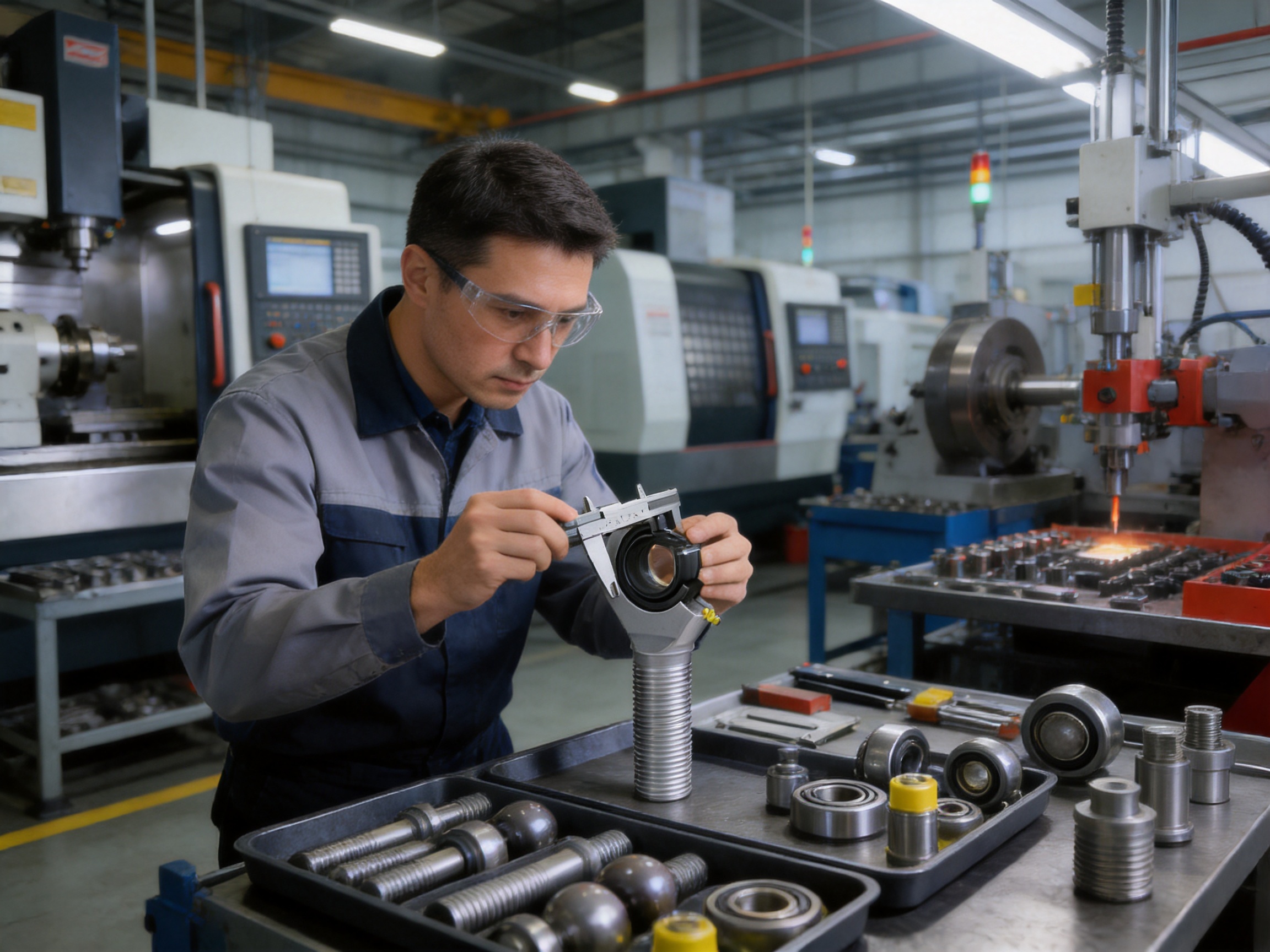
Turning operations create the external profile of the rod end, including the shank, shoulders, wrench flats, bearing housing, and other critical surfaces. Modern CNC turning equipment can maintain repeatable dimensions while supporting different thread diameters and body geometries throughout the SA family.
Accurate turning is important for several reasons. The bearing seat must maintain the correct fit, the thread must engage properly with the mating component, and the spherical bearing must remain correctly positioned in the rod end body. Excessive dimensional variation can create installation difficulty, looseness, distortion, or premature wear.
The external thread is a functional feature rather than a cosmetic detail. It must provide sufficient engagement, adjustment capability, resistance to loosening, and reliable load transfer. Standard thread configurations such as M5, M6, M8, M10, M12, M20×1.5, M24×2, M30×2, M42×3, M45×3, M58×4, M64×4, and other specified sizes are available across the product family.
Thread inspection may include checks of major diameter, pitch diameter, pitch, flank condition, thread gauge acceptance, and overall engagement. For customized threads, engineering review is especially important because the pitch, tolerance class, engagement length, and mating material must be coordinated with the customer’s assembly.
Left-hand threads are useful in tensioning systems and adjustable linkages where opposing threads allow length adjustment without removing the rod end. Correct identification is essential during production, packaging, and installation to prevent the wrong-hand component from being supplied or fitted.
Heat treatment can be used to improve the hardness, strength, wear resistance, and dimensional stability of applicable steel components. The exact process depends on the material, component geometry, and required performance. Controlled heating and cooling reduce the risk of excessive distortion while helping the body withstand repeated mechanical loads.
For rod end bearings, heat treatment must be balanced carefully. Excessive hardness may increase brittleness, while insufficient hardness may reduce resistance to wear or thread deformation. Process records, hardness inspection, and dimensional checks after treatment help ensure that components remain within the intended specification.
Grinding and finishing processes are used to achieve accurate surfaces and controlled roughness where required. The spherical bearing elements and mating surfaces must operate with appropriate contact geometry. Surface quality affects friction, lubricant retention, wear, and the ability of the bearing to accommodate oscillating movement.
Consistent finishing is also important for the bearing seat in the rod end body. The seat must retain the spherical plain bearing securely without causing distortion. A controlled interference or retention condition helps maintain assembly integrity throughout the service life of the product.
The zinc coating is applied to the carbon steel rod end body to improve protection against general atmospheric corrosion. Surface preparation before coating is critical because oil, scale, oxidation, or contamination can reduce coating adhesion and coverage.
After coating, the product should be inspected for consistent appearance, coverage, thread usability, and damage caused by handling. Threads may require appropriate protection during coating and post-coating inspection to ensure that the mating component can be installed without excessive force or galling.
Assembly connects the rod end body with the spherical plain bearing and, in ES versions, incorporates the oil cup or lubrication passage. Correct assembly force and alignment are essential. Excessive force can damage the bearing or distort the body, while insufficient retention may permit movement between the bearing and housing.
Clean assembly conditions reduce the risk that abrasive particles, metal chips, coating debris, or other contaminants will enter the sliding contact. For industrial bearings, cleanliness is one of the most cost-effective ways to support predictable performance. Packaging must then protect the finished products against impact, moisture, and contamination during storage and shipment.
UKL’s product development activities include high-precision cross roller bearings, dual-direction thrust angular contact ball bearings, and other products used in CNC machines, robotics, and intelligent automation systems. This wider technical background is relevant to rod end bearing development because it reflects experience with precision geometry, controlled friction, load analysis, and demanding industrial motion.
Customer requirements may differ significantly from standard catalog conditions. A machine builder may need a special thread, modified shank length, altered body geometry, different bearing clearance, special lubrication arrangements, or packaging suited to automated assembly. A manufacturer with internal engineering capability can evaluate these requirements more efficiently than a trading-only supplier.
OEM and ODM cooperation also requires attention to repeatability. A prototype that performs well is not sufficient if production batches vary in dimensions or materials. Engineering drawings, approved samples, process specifications, inspection plans, and change-control procedures help ensure that customized products remain consistent over time.
UKL reports more than 15 years of OEM and ODM export experience and a monthly production capacity of approximately 10,000 to 50,000 units. This combination of technical development and manufacturing scale supports both smaller trial orders and ongoing production programs. The company’s stated export markets include the United States, Italy, Germany, Poland, South Africa, Egypt, India, and other regions.
Rod end bearings are widely used in pneumatic and electric actuator linkages, gripper mechanisms, indexing systems, adjustment assemblies, and compact automation modules. The spherical articulation allows the linkage to accommodate angular changes as an actuator extends or retracts.
In automated machinery, repeatability and low maintenance are important. An E-type lubrication-free bearing may be appropriate for a clean mechanism with moderate load, while an ES-type bearing can be selected when the assembly is accessible and scheduled relubrication is preferred.
Robotic mechanisms often require compact joints with controlled movement and limited installation space. Rod ends can be used in auxiliary linkages, end-effector adjustments, safety mechanisms, and articulated support systems. The galvanized steel body is useful in general factory environments, while the spherical plain bearing accommodates angular misalignment between connected parts.
For high-precision robotic axes operating at high speed, a rod end bearing may not replace a dedicated rolling bearing or cross roller bearing. However, for oscillating support connections and mechanical linkages, it can provide a practical and economical solution.
Packaging machines contain numerous reciprocating and oscillating mechanisms. Rod ends may connect cams, levers, pneumatic cylinders, guide systems, and adjustable transfer components. Their threaded design simplifies length adjustment during setup, and their compact form helps reduce the overall size of the mechanism.
Where frequent cleaning, dust, or packaging material contamination is present, users should protect the sliding contact and select lubrication practices carefully. An ES model may be beneficial if maintenance personnel can access the lubrication path without interrupting production for extended periods.
Agricultural equipment and mobile machinery are exposed to vibration, shock, moisture, dust, and changing temperatures. The steel body and galvanized surface provide a useful level of protection for general service conditions. Correct sealing, cleaning, lubrication, and inspection remain necessary in highly contaminated environments.
Because mobile machinery can experience substantial shock loads, the static load rating, thread engagement, mounting strength, and connection geometry should be evaluated together. The largest available bearing is not automatically the best selection; load direction and installation conditions are equally important.
Construction equipment, lifting mechanisms, industrial valves, material-handling systems, and heavy-duty adjustment mechanisms may use rod end bearings where slow angular motion and high load are present. Larger SA models provide significantly higher load ratings than compact versions and can support robust connection designs.
Heavy machinery designers should account for impact factors, misalignment, bending moments, corrosion exposure, and maintenance access. A bearing operating under combined radial and axial loads may require additional analysis because catalog load ratings are generally based on defined test and loading assumptions.
Selection should begin with the bore diameter and the mating pin or shaft size. The bore must provide adequate clearance for installation and movement without excessive looseness. The pin material, surface hardness, finish, and lubrication compatibility also influence performance.
The next consideration is load. Dynamic load rating is relevant to moving or oscillating conditions, while static load rating is particularly important for stationary, impact, or slowly moving loads. Users should not simply match the applied load to the rating. A suitable safety factor must be applied according to the duty cycle, consequences of failure, shock level, and applicable industry requirements.
Angular movement must also be evaluated. The rod end should be mounted so that the required angle does not force the housing, shank, or connected component into interference. The supplied dimensional data includes an angular value identified as α. This value should be reviewed against the machine’s maximum articulation angle and any additional movement caused by installation tolerances.
Thread size and thread direction are essential. The selected external thread must match the mating component in diameter, pitch, tolerance, and engagement length. If adjustment is performed by rotating the rod end while installed, a left-hand thread or paired right-hand/left-hand arrangement may be required.
Users should choose between E and ES configurations based on maintenance conditions. E models are lubrication-free according to the product information. ES models provide a lubrication path through an oil cup or rod end eyelet. In high-load oscillating service, the ES design may provide a longer practical service interval when relubrication can be performed correctly.
Environmental conditions should be reviewed before final selection. Relevant factors include humidity, water exposure, salt, chemicals, abrasive dust, cleaning agents, temperature, electrical potential, and outdoor storage. Galvanized carbon steel is suitable for many general environments, but unusual exposure may require special coatings, stainless materials, seals, or additional protection.
Finally, the available space and total weight should be checked. The dimensional table includes body width, spherical diameter, overall lengths, thread dimensions, radii, angular values, and approximate weight. These dimensions should be compared with the surrounding bracket, actuator, pin, locknut, tool access, and required movement envelope.
Confirm the bore diameter and mating pin size.
Calculate radial, axial, and combined loads.
Consider shock loads and the required safety factor.
Check the required angular movement and possible interference.
Match the external thread diameter, pitch, and tolerance.
Determine whether a right-hand or left-hand thread is needed.
Select E or ES according to the lubrication and maintenance plan.
Verify temperature, corrosion, contamination, and cleaning conditions.
Confirm available space, overall length, body width, and weight.
Request current drawings and technical confirmation for customized models.
Before installation, inspect the bearing, thread, bore, mating pin, bracket, and surrounding components. Remove dirt, chips, rust, and damaged coating from the mating surfaces. Do not install a bearing with a visibly damaged thread, distorted body, rough bore, or contaminated sliding contact.
The mating thread should be clean and accurately aligned. Cross-threading can permanently damage both the rod end and the mating component. Start the thread by hand whenever possible, then tighten using the appropriate wrench flats or approved installation method. Force should not be applied through the spherical bearing in a way that could damage the internal assembly.
The rod end should be supported close to the threaded connection. Excessive unsupported length can create a bending moment on the shank. If a locknut is used for adjustment, ensure that the rod end is correctly positioned before tightening the locknut against the mating component or bracket.
The pin passing through the spherical bearing should be properly sized and secured. It should not rotate excessively within the bore unless the application specifically requires that movement. In many designs, the spherical inner ring articulates around a fixed or controlled pin. The pin should have an appropriate surface finish and should be protected against loosening through a suitable retention method.
Alignment is critical. The two connected components should be positioned so that the bearing operates within its intended angular range. Misalignment that exceeds the design angle may cause edge loading, increased friction, premature wear, or bending of the rod end shank.
For ES models, verify that the oil cup or lubrication path is accessible after installation. A lubrication fitting that faces a bracket, guard, or machine wall cannot provide practical maintenance value. Plan the fitting orientation during design and use a lubricant compatible with the steel/steel sliding pair and the operating temperature.
After installation, move the mechanism slowly through its full range. Check for binding, excessive play, interference, unusual noise, and contact between the rod end body and adjacent parts. Recheck the threaded connection and locking arrangement after the initial operating period, especially in machinery exposed to vibration.
Lubrication-free E models are intended to operate without regular lubrication under suitable conditions. “Lubrication-free” does not mean that the bearing is immune to contamination, overload, misalignment, or wear. The operating environment must still be controlled, and the bearing should be inspected for looseness, corrosion, unusual friction, and surface damage.
ES models allow oil or grease to be supplied through an oil cup or eyelet lubrication path. The correct lubricant quantity depends on bearing size, oscillation frequency, load, temperature, contamination, and service interval. Excessive lubrication can attract dust or create unwanted resistance, while insufficient lubrication can increase friction and wear.
Maintenance personnel should clean the area around the lubrication point before applying lubricant. This prevents dirt from being pushed into the bearing. Use a clean applicator and avoid mixing incompatible grease types. If the lubricant is changed, the compatibility of the base oil, thickener, additives, and operating temperature range should be confirmed.
Inspection intervals should be established according to operating hours and risk. A basic inspection may include checking the tightness of the threaded connection, condition of the zinc coating, evidence of corrosion, movement smoothness, bearing clearance, and the condition of the connected pin. In critical equipment, vibration, temperature, and movement resistance can be monitored as part of a preventive maintenance program.
Replacement is recommended when the bearing develops excessive radial play, visible cracks, severe corrosion, brinelling-like damage, thread deformation, persistent noise, or abnormal friction. Continued operation with a worn rod end can impose additional loads on the actuator, shaft, bracket, and machine frame.
For international customers, product quality is only one part of the purchasing decision. Consistent documentation, responsive communication, packaging quality, delivery coordination, and after-sales support also affect total ownership cost. UKL states that it serves customers across Europe, Asia, Africa, Russia, and other markets through a multilingual service team.
An integrated manufacturing and trading structure can support different purchasing models. Standard catalog items can be supplied for maintenance and distribution inventories, while OEM customers can request technical review, samples, customization, and production planning. This flexibility is valuable when a customer needs both immediate replacement parts and longer-term design support.
Production capacity of approximately 10,000 to 50,000 units per month supports scalable supply. The appropriate capacity allocation depends on model, customization, material, coating, inspection requirements, and order schedule. Customers should confirm lead times and quality documentation for each project rather than relying only on general capacity figures.
Packaging should protect the galvanized surface and bearing interfaces from impact, moisture, and contamination. Correct labeling is especially important for similar models with different bore sizes, thread pitches, thread directions, or lubrication arrangements. For OEM programs, barcode labels, batch identification, special cartons, and customized documentation may be arranged according to the customer’s requirements.
Technical support should include dimensional confirmation, load and application discussion, thread interpretation, lubrication guidance, installation recommendations, and replacement identification. A clear exchange of drawings and operating conditions helps prevent incorrect substitutions.
UKL identifies sustainability as a long-term commitment and reports the use of environmentally responsible processes, material recycling, and energy optimization. Bearing manufacturing involves metal preparation, machining, heat treatment, grinding, coating, cleaning, and packaging. Improvements in material utilization, coolant management, energy efficiency, and recycling can reduce the environmental impact of these processes.
The galvanized carbon steel construction can also support long service life in suitable environments. Extending component life reduces replacement frequency, waste, emergency maintenance, and the energy associated with producing and transporting replacement parts. However, environmental suitability must be evaluated carefully, particularly in coastal, chemical, or highly corrosive conditions.
When bearings reach the end of their service life, steel components can generally enter established metal recycling streams, subject to local procedures and contamination controls. Lubricants and contaminated packaging should be handled in accordance with applicable environmental requirements.
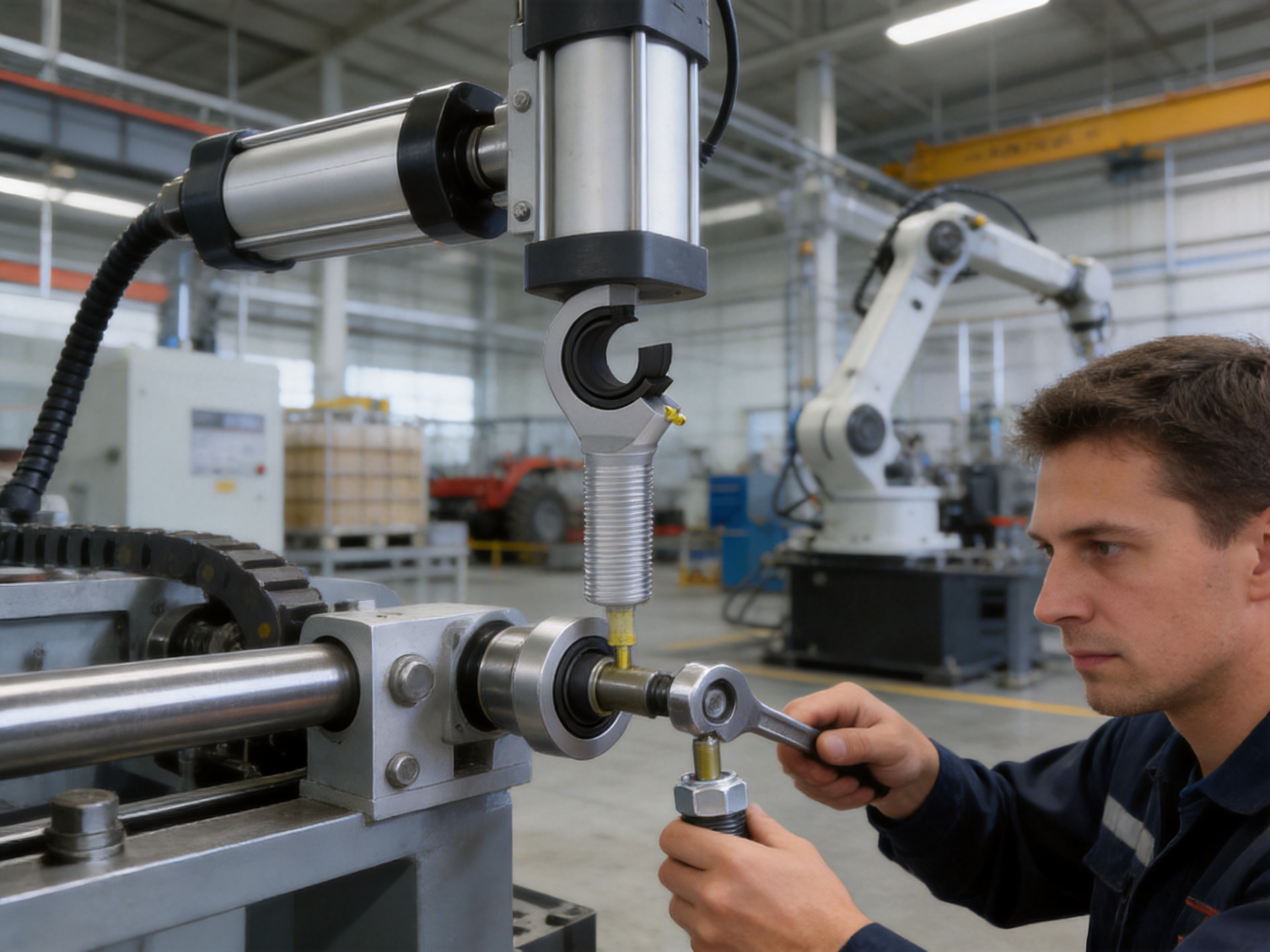
Compared with a simple plain bushing, the SA rod end provides angular articulation through a spherical bearing. A bushing may be economical for straight, well-aligned sliding motion, but it can bind when the connected shaft changes angle. The rod end is therefore advantageous in linkages where misalignment is inherent in the mechanism.
Compared with a standard rigid threaded joint, the SA bearing accommodates movement instead of forcing the connected parts to remain on one fixed axis. This can reduce secondary bending loads and make the mechanism more tolerant of assembly variation.
Compared with a separate housing-mounted spherical plain bearing, the rod end is more compact and easier to connect to a threaded actuator or rod. The separate housing arrangement may offer greater flexibility in some structures, but it often requires more space and additional components.
Compared with a rolling-element bearing, the spherical plain bearing is generally more appropriate for oscillating motion, angular misalignment, high static load, and compact linkage applications. Rolling bearings may be preferable for continuous high-speed rotation or very low friction requirements. The correct choice depends on motion type, load, speed, life target, contamination, and maintenance requirements.
Compared with an untreated steel rod end, the galvanized version provides improved general corrosion protection. Compared with some premium corrosion-resistant materials, carbon steel with zinc coating may offer a more economical solution where the environment does not require full stainless-steel performance.
The SA series therefore occupies a practical position between basic mechanical joints and highly specialized precision bearing assemblies. Its major value is the combination of standardized spherical articulation, threaded installation, steel construction, galvanized protection, selectable lubrication, and customization potential.
The most reliable installation is one in which the bearing is loaded primarily in the intended direction. Radial load should be distributed through the spherical contact rather than concentrated at an edge. Large bending moments on the shank should be minimized through proper bracket spacing and support geometry.
The connected pin should be aligned with the bearing bore. If the pin is angled during installation, the inner ring may contact unevenly, creating high local pressure. The bracket faces should also be parallel where required, and spacers should be used to prevent the rod end from being clamped in a way that restricts its necessary articulation.
Oscillating movement requires special attention because the contact zone may remain within a limited area. Unlike continuous rotation, oscillation may not distribute lubricant and wear evenly around the entire sliding surface. Small oscillation angles, high loads, and frequent reversals can therefore require more frequent inspection and relubrication.
Vibration can loosen threaded connections even when the bearing itself remains undamaged. Locknuts, thread-locking methods, mechanical retainers, or other approved practices should be selected according to the machine design. The locking method must not interfere with adjustment or introduce harmful stress into the rod end body.
Corrosion protection should be maintained after installation. Scratches or exposed steel areas can become initiation points for corrosion. Damaged surfaces should be cleaned and treated using a compatible protective method. In outdoor machinery, shields or boots may help reduce direct water and abrasive exposure.
It is used for threaded linkage connections that require angular movement, radial load support, and compensation for misalignment. Common applications include actuator linkages, robotics, automation equipment, packaging machinery, agricultural equipment, construction machinery, and industrial adjustment mechanisms.
The rod end body is made from carbon steel and has a galvanized finish for improved resistance to general atmospheric corrosion.
The product is combined with a standard radial spherical plain bearing from the GE…E or GE…ES series. The spherical bearing allows relative angular movement between the inner ring and the rod end body.
E models are lubrication-free configurations. ES models include an oil cup or rod end eyelet lubrication path, allowing lubricant to be supplied during maintenance.
The sliding friction pair is steel/steel. Lubrication, alignment, load, contamination, and operating motion must be considered when determining service life.
The supplied product information states an operating temperature range from 50°C to +150°C. The exact suitability of a specific model should be confirmed according to lubricant, load, environment, and the manufacturer’s latest technical documentation.
Yes. Left-hand thread versions can be specified by adding the appropriate “L” and “left” indications after the model number and thread marking. They are useful for paired adjustment systems and tensioning mechanisms.
Non-standard thread pitch or thread precision can be provided upon request. Customers should provide the mating component details, thread standard, tolerance, engagement length, and application requirements.
The product family covers bore sizes from 5 mm to 80 mm. The available model, body dimensions, thread, load ratings, and weight vary by size.
They are primarily intended for oscillating, articulating, and low-speed movement. A dedicated rolling-element bearing may be more appropriate for continuous high-speed rotation. Application conditions should be reviewed with the manufacturer.
E models are intended for lubrication-free service under suitable conditions. ES models can be lubricated through the oil cup or eyelet path. The lubricant type and service interval should be selected according to load, speed, oscillation, temperature, contamination, and manufacturer guidance.
The zinc coating provides a protective barrier over the carbon steel body, improving resistance to general moisture and atmospheric exposure compared with untreated steel. Severe chemical or marine environments may require additional assessment.
Check the bore, mating pin, external thread, thread pitch, thread direction, mounting space, load direction, angular movement, lubrication access, and condition of the galvanized surface. The bearing should be clean and free of damage.
Customers can provide the desired model, bore size, thread requirements, load, movement, temperature, environment, lubrication preference, quantity, and application drawing. UKL Bearing Manufacturing Co., Ltd. can then review the standard or customized requirement and provide appropriate technical and commercial information.
The SA Zinc-Coated Steel Rod End Bearing is a versatile solution for industrial linkages that require compact construction, threaded installation, spherical articulation, and reliable load transfer. Its carbon steel body provides mechanical strength, while the galvanized finish offers improved protection for general industrial environments. The use of GE…E or GE…ES radial spherical plain bearings gives the product flexibility for lubrication-free or relubricatable applications.
Its principal advantages over basic joints, plain bushings, and separate bearing arrangements include integrated construction, easier installation, broad size availability, high static load capability, angular misalignment accommodation, selectable lubrication, and customizable thread options. The range from 5 mm to 80 mm bore diameter supports applications ranging from compact automation mechanisms to heavy industrial equipment.
Product performance is supported by UKL’s integrated manufacturing capabilities, including forging, turning, heat treatment, grinding, assembly, packaging, research and development, and international technical service. The company’s OEM and ODM experience, production capacity, and focus on precision engineering provide a foundation for both standard supply and customized bearing programs.
For best results, the bearing must be selected according to load, motion, angular movement, thread requirements, environment, lubrication, and installation geometry. With correct engineering and maintenance, the SA series can provide a durable and economical connection for automation, robotics, material handling, mobile machinery, construction equipment, and many other industrial applications.
1. UKL Bearing Manufacturing Co., Ltd., SA Zinc-Coated Steel Rod End Bearing Product Information and Dimensional Data.
2. General principles of spherical plain bearing design, load capacity, oscillating motion, and lubrication.
3. Industrial engineering practices for threaded mechanical joints, locknut installation, and alignment control.
4. Manufacturer guidance for steel/steel sliding contact pairs and relubrication procedures.
5. General manufacturing principles covering forging, CNC turning, heat treatment, grinding, galvanizing, assembly, and inspection.
6. Industrial maintenance practices for corrosion prevention, bearing inspection, contamination control, and component replacement.
Product Categories
Contact Us

Jane@ukl-bearing.com
Jenny@ukl-bearing.com
Andy@ukl-bearing.com
Ivy@ukl-bearing.com

+86-510- 88763239
+86-15371057968

No.1 Hehuan Road, Hudai Town, Binhu District, Wuxi City.
Ready to Begin?
Get in Touch

Now!
UKL BEARING
 English
 Español
 русский