Content
Small precision machines often force a difficult trade-off. They need a bearing that carries radial load, axial load and tipping moment at the same time, yet the available radial space may be only a few millimeters. The rb2508 bearing was designed for exactly this situation. Its 25 x 41 x 8 section keeps the envelope small while still delivering high rotational rigidity from a single unit.
This guide walks through how the RB2508 is built, what its specifications mean in real designs, which sealing and preload choices matter, where it performs best, and which installation mistakes to avoid. The goal is to help you judge whether this bearing fits your mechanism before you commit to drawings and prototypes.
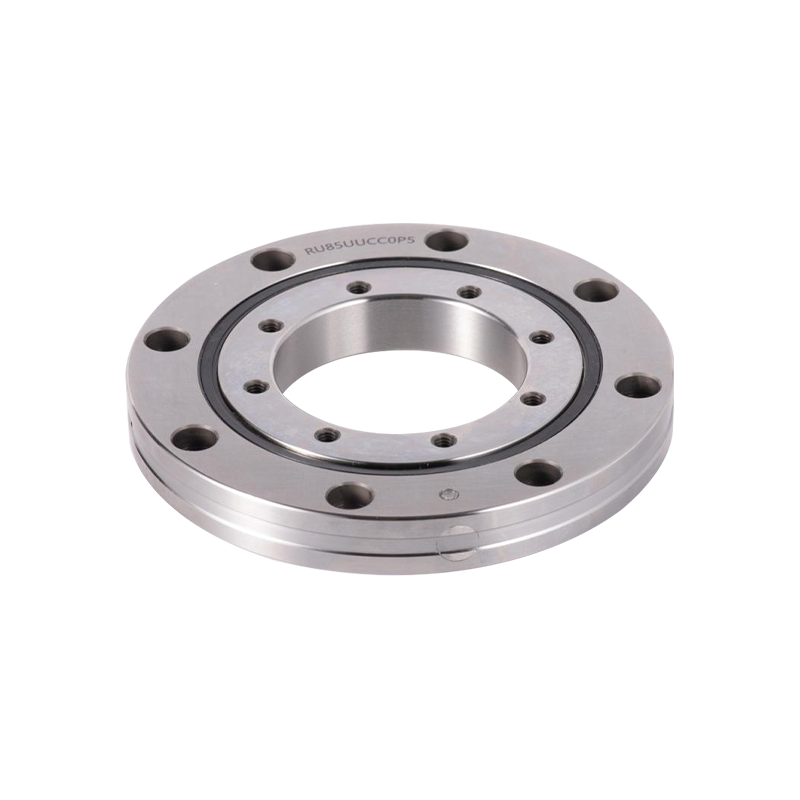
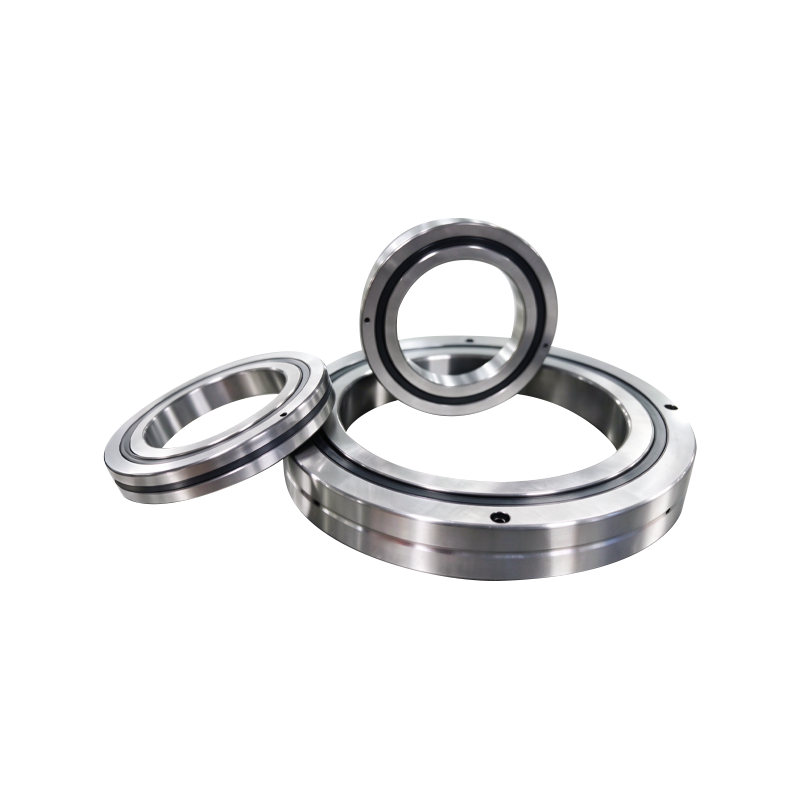
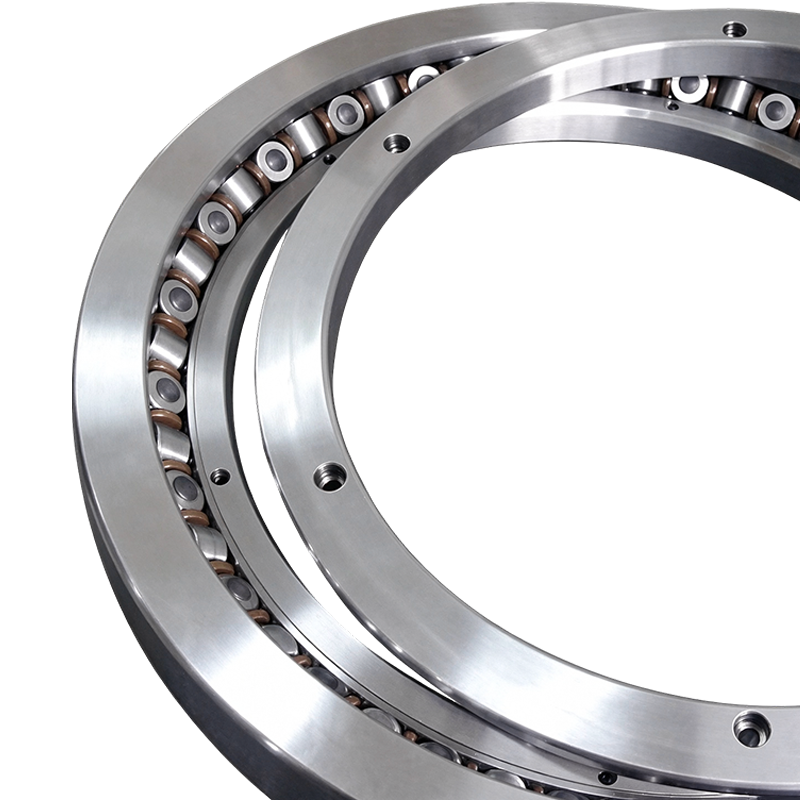
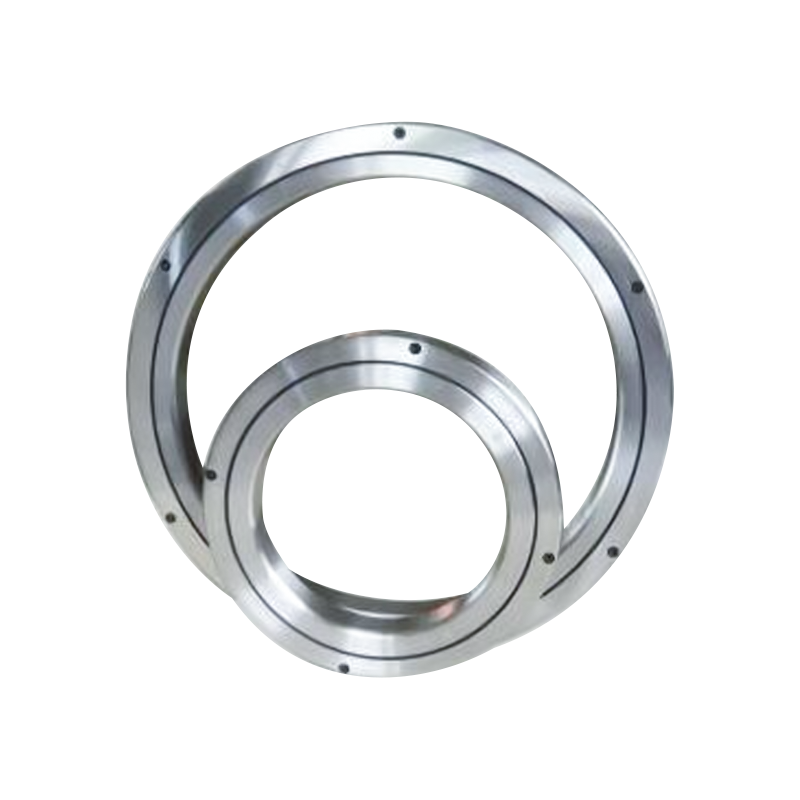
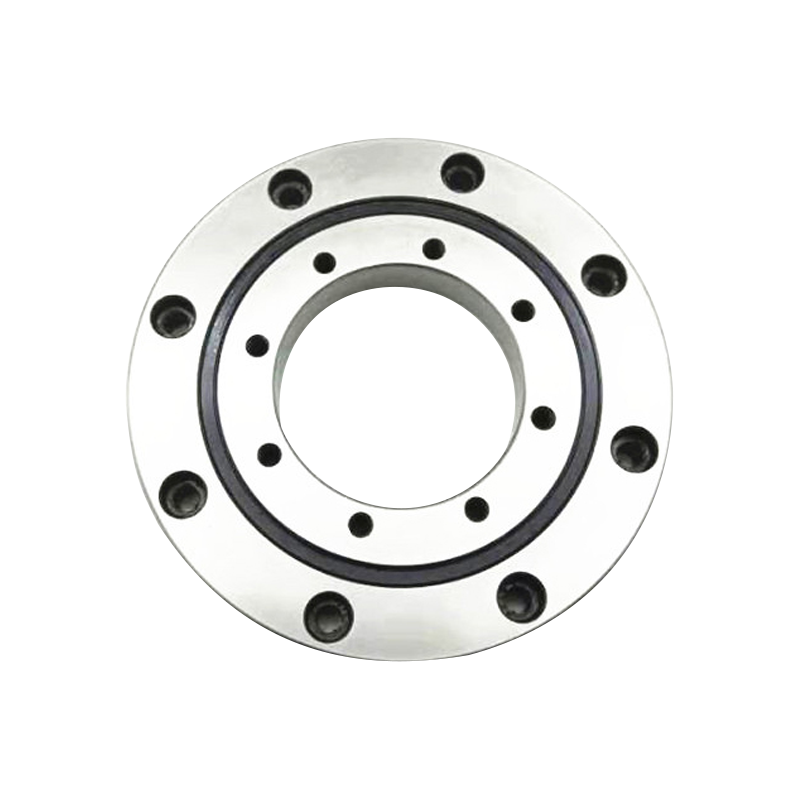
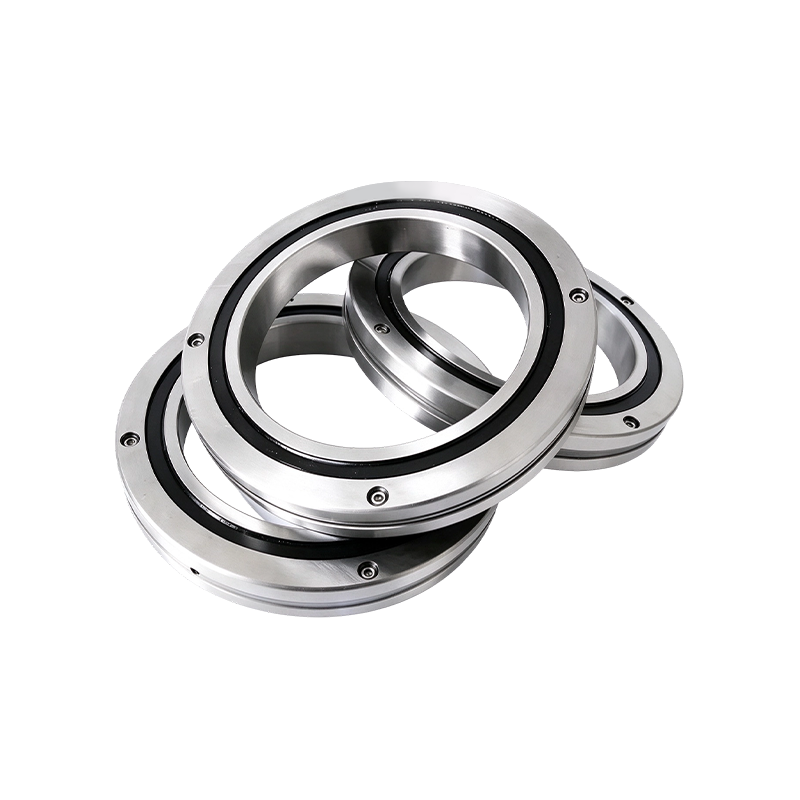
The RB2508 belongs to the RB family, a split outer ring design in which the outer ring is divided into two halves while the inner ring remains one complete piece. Instead of balls, the bearing uses cylindrical rollers arranged at 90 degrees. Adjacent rollers sit perpendicular to each other, so one rb2508 crossed roller bearing can react loads from several directions at once without a second bearing in the assembly.
Three structural points define the design:
The split outer ring is the feature engineers value most. During assembly the two halves are tightened together, which removes internal play and creates a controlled preload. The result is higher rotational stiffness and smaller deflection under load. Because the inner ring is continuous, it is the side that should turn. That is why the RB type suits joints, reducer outputs and rotary stages where the shaft drives the motion.
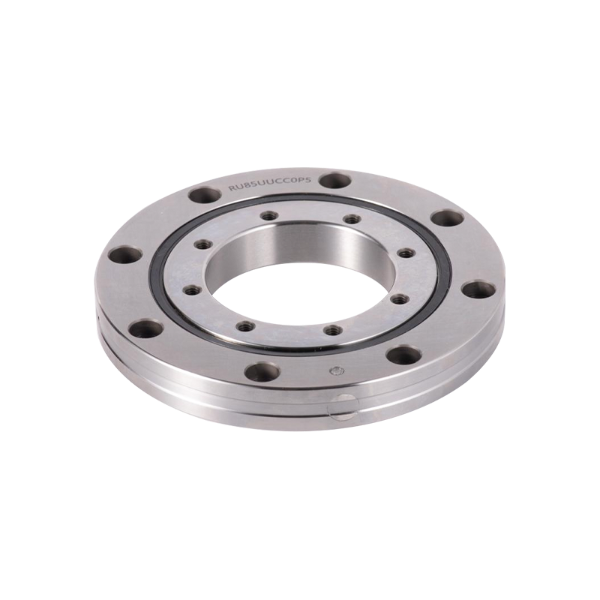
Most designs start with the envelope. Available radial space, shaft diameter and mounting shoulder height decide whether a bearing can be installed at all, so the core parameters below should be checked early.
| Parameter | Value |
|---|---|
| Model | RB2508 (sealed version: RB2508-UU) |
| Bore diameter d | 25 mm |
| Outside diameter D | 41 mm |
| Thickness B | 8 mm |
| Roller pitch circle diameter dp | 32 mm |
| Minimum fillet radius r min | 0.5 mm |
| Dynamic rated load Cr | 3.63 kN |
| Static rated load C0r | 3.83 kN |
| Weight | 0.05 kg |
| Mounting shoulder ds max | 28.5 mm |
| Mounting shoulder Dh min | 35.5 mm |
| Material | GCr15 bearing steel |
| Precision grade | P0 / P6 / P5 / P4 (optional) |
| Clearance grade | C1, C0, CCO (preload) |
| Working temperature | Minus 20 to 80 degrees Celsius |
| Lubrication | Grease, with 4 built-in grease fittings |
| Cage | Spacer blocks keep rollers from touching |
The rings and rollers are made from GCr15 chrome bearing steel, a material chosen for hardness, wear resistance and fatigue life under repeated contact stress. The dynamic rating of 3.63 kN describes the load level associated with rated service life under rotation. The static rating of 3.83 kN is the limit for stationary or very slow contact, which matters when a joint holds position under a heavy tipping moment.
Precision grades P0, P6, P5 and P4 describe runout, radial accuracy and rotational smoothness, with P4 being the most demanding. Clearance grades C1 and C0 describe internal play, while CCO is a slight preload setting used when stiffness and low backlash are more important than free rotation. A deeper treatment of CCO preload is covered in a separate technical guide.
Choosing between the open and sealed versions is largely an environmental decision. Both share the same geometry, load ratings and roller layout, so the choice does not change the mounting envelope.
| Feature | Open RB2508 | RB2508-UU |
|---|---|---|
| Seal | None | Double-lip rubber seal on both sides |
| Best environment | Clean rooms, optical stations | General industry, splash zones |
| Contamination protection | Relies on external guarding | Blocks dust and light splash |
| Relubrication | Through grease fittings | Through grease fittings |
The open RB2508 suits environments where particles must be avoided altogether, such as optical inspection or wafer handling areas. The rb2508-uu version adds double-lip seals on both sides, making it a practical choice for ordinary factory conditions where dust and coolant spray are present. Both versions include four grease fittings, so the lubricant can be topped up during scheduled maintenance without disassembly.
Each advantage below matters because small machines leave little room for error. Together they explain why a single compact unit can replace a more complex arrangement of separate bearings.
A 25 x 41 x 8 envelope frees radial space for motors, sensors and cabling in small machines.
One bearing handles radial, bidirectional axial and tipping moment loads, which reduces part count.
Clamping the split outer ring sets preload, raising rotational stiffness and limiting deflection.
P4 and P5 grades keep runout low and rotational torque stable over the working range.
Spacer blocks stop rollers from rubbing, which lowers wear and smooths torque variation.
Built-in grease fittings allow relubrication, and the inner ring gives a simple mounting reference.
Low friction deserves particular attention. In a conventional roller arrangement, adjacent rollers can slide against each other, generating heat and torque ripple. The spacer blocks in the RB2508 cage keep each roller separated, so the bearing runs more smoothly and its torque remains predictable across the service life.
The RB2508 is most useful where space is tight and rotation must be precise. The following scenarios are where engineers most often specify it.
Across these applications the common thread is a need for stiffness without bulk. Engineers can often reduce the number of bearings in a rotary axis from two or three down to one, which simplifies housings and shortens assembly time.
Robot joints Harmonic reducer output Optical rotary stage Wafer inspection DD motor support
Most performance problems with crossed roller bearings come from installation rather than from the bearing itself. The points below help protect the precision and service life that the specifications promise.
Operating caution: Running a preloaded bearing at high speed or under shock load can raise heat and accelerate wear. Verify speed and load conditions before selecting a preload setting.
Model codes condense the key choices into a short string. The example RB2508-UU-CC0-P5 breaks down as follows.
Reading the code this way makes it easier to confirm that the seal, preload and precision choices match the operating environment before the order is placed.
The RB and RE series mirror each other, so the choice comes down to which ring rotates. A short comparison is shown below, and a detailed selection guide is available separately.
| Feature | RB2508 | RE2508 |
|---|---|---|
| Outer ring | Split into two halves | One integral piece |
| Inner ring | One integral piece | Split into two halves |
| Rotating element | Inner ring | Outer ring |
| Typical use | Joints, reducer output, rotary stages | Outer-driven rotation and drum-style motion |
| Quick rule | Choose when the inner ring turns | Choose when the outer ring turns |
The RB2508 is a compact, high rigidity crossed roller bearing for designs where the inner ring rotates and space is limited. Its 25 x 41 x 8 section, multi-directional load capacity and optional precision grades make it a practical candidate for robot joints, optical rotary stages and semiconductor automation.
Before finalizing a design, confirm the rotating side, choose the seal that matches the environment, select a precision grade and preload setting suited to the speed, and check that the shaft and housing are machined to match. If your project requires a particular precision grade, sealed version or preload setting, the engineering team can support drawing checks, load verification and quotation requests.
The RB2508 is designed for inner ring rotation. The outer ring is split and clamped to the housing, while the inner ring is one continuous piece that carries the motion. If your design needs the outer ring to rotate, the RE series is the better match.
Choose RB2508-UU when dust, debris or coolant spray is present in the working area. The double-lip seals protect the rollers and grease. The open version is better suited to clean environments where sealing would add unnecessary friction or where contamination must be avoided by other means.
CCO preload is intended for low to medium speed precision rotation, where stiffness and low backlash matter. It is not recommended for high speed continuous operation or heavy impact loads, because the added internal load raises heat and wear.
Refill lithium grease through the four grease fittings on a planned schedule, keep the shaft and housing within their intended machining tolerances, and avoid running the bearing without lubrication. Regular checks of torque and runout will show early signs of wear before they affect the machine.
Product Categories
Contact Us

Jane@ukl-bearing.com
Jenny@ukl-bearing.com
Andy@ukl-bearing.com
Ivy@ukl-bearing.com

+86-510- 88763239
+86-15371057968

No.1 Hehuan Road, Hudai Town, Binhu District, Wuxi City.
Ready to Begin?
Get in Touch

Now!
UKL BEARING
 English
 Español
 русский