Content
On a bench covered in fine dust, a small fan motor begins to whine after only a few weeks of operation. The housing looks sound, the wiring checks out, and the controller is within specification. The real cause is often a component no larger than a fingertip. In compact, fast-moving equipment, the 628-2Z bearing is one of the parts that quietly decides whether a product runs smoothly for years or returns for repair.
This guide is written for engineers, purchasing teams and maintenance planners who need practical answers rather than a catalogue listing. You will find out what the designation means, how the sealing choice changes real-world behavior, how fits and lubrication affect service life, and what to verify before placing an order.
Key takeaway: a 628-2Z bearing is a compact, low-friction component that performs well in clean, high-speed, moderate-temperature environments. Its metal shields keep out coarse dust but not liquids, so the surrounding design, fit and lubrication matter as much as the bearing itself.
Miniature bearings operate under conditions that large industrial bearings rarely face. Rotational speeds are high, the grease volume is very small, and the rolling elements are so compact that a modest amount of contamination, misalignment or vibration can cause measurable damage within a short period.
In many field reports on small motors, early failures are linked more often to contamination and installation errors than to a bearing being undersized for its load. This is a useful perspective for designers: when a bearing fails early, the first questions should concern the environment and the assembly process before the rated capacity.
| Symptom | Likely cause | First check |
|---|---|---|
| Noise increases after a few weeks | Contamination or grease breakdown | Inspect the shield edges and grease condition |
| Housing feels warm during operation | Preload from a tight press fit | Measure shaft and housing fit dimensions |
| Rough rotation when turned by hand | Brinelling from shock or impact | Examine the raceways for dents |
| Grinding sound at operating speed | Insufficient or incorrect grease | Confirm grease type and fill quantity |
A practical rule for compact designs is that most premature failures come from installation and operating environment rather than from a shortage of catalogue load capacity. Protecting the bearing from the start is usually cheaper than replacing it later.
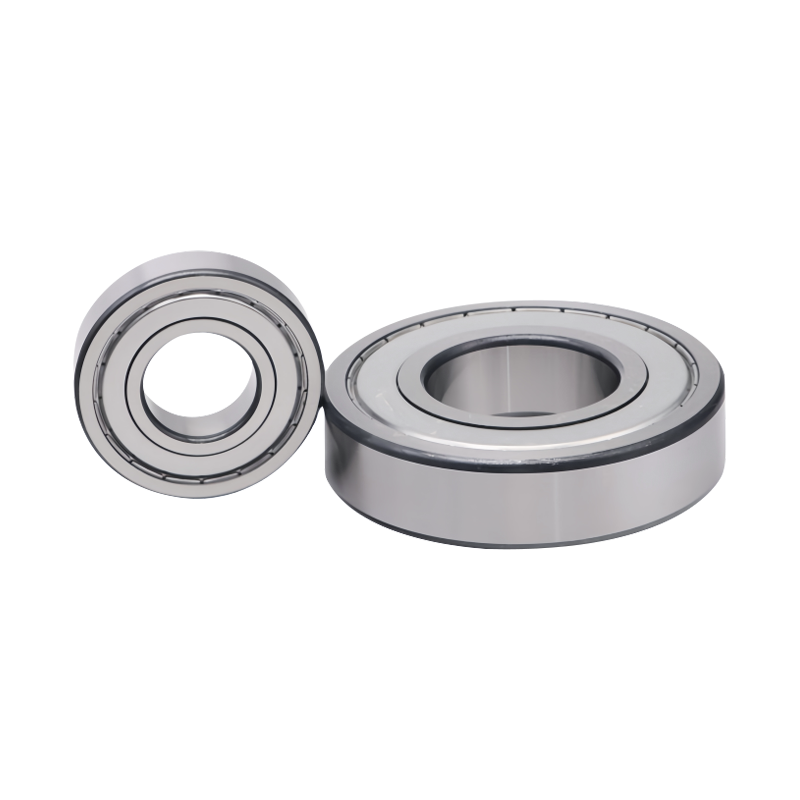
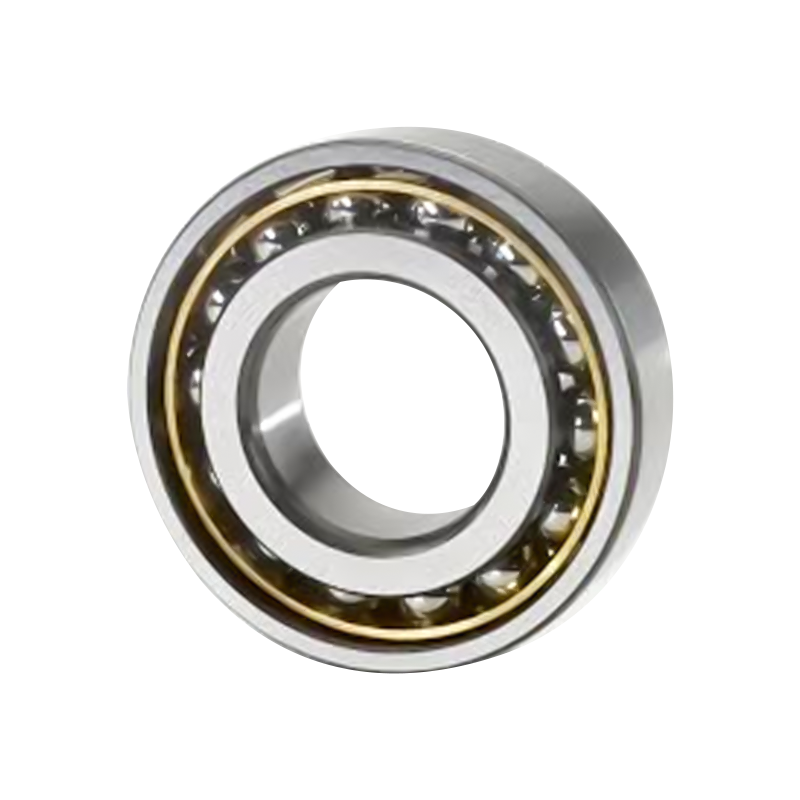
The designation itself carries useful information. The 628 identifies a deep groove ball bearing in a compact series with an 8 mm bore. The suffix 2Z indicates that metal shields are fitted on both sides of the bearing. Many catalogues list the same product as 628ZZ, so buyers should confirm the exact dimensions and seal type rather than relying on the name alone.
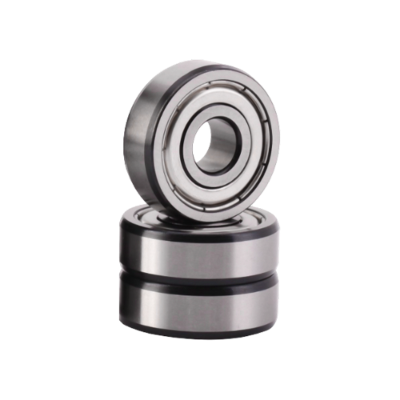
Because the shields do not touch the inner ring, the bearing keeps the low drag that makes it suitable for fast rotation. The trade-off is that a non-contact barrier can only block particles of a certain size, which is why the operating environment must be considered alongside the bearing choice.
Specification values vary slightly between manufacturers, clearance grades and cage materials. The figures below represent typical values for a standard P0 grade bearing with CN internal clearance. Always confirm the final values against the datasheet supplied with the product.
| Parameter | Typical value | Practical meaning |
|---|---|---|
| Dynamic load rating | About 1.6 kN | Basis for life estimation under rotation |
| Static load rating | About 0.6 kN | Limit for stationary or very slow loads |
| Limiting speed | 20,000 to 30,000 rpm | Depends on grease, clearance and cage |
| Operating temperature | -20 to 120 degrees Celsius | Standard grease limits the upper range |
| Cage material | Pressed steel or polyamide | Polyamide runs quieter at high speed |
| Bearing steel | GCr15 chrome steel | Common choice for hardness and fatigue resistance |
| Precision grade | P0 standard, P6 or P5 optional | Higher grades reduce runout and vibration |
| Internal clearance | CN standard, C3 optional | C3 suits warmer running conditions |
Speed ratings deserve particular attention. A limiting speed is not a guarantee of long life at that speed. Heat generation, lubricant behavior and the fit in the housing all reduce the practical speed a bearing can sustain over time, so designers often operate well below the published maximum.
The suffix in a bearing designation tells you how the interior is protected. Choosing the right seal is one of the most consequential decisions in a compact design because it affects dust resistance, friction, moisture tolerance and maximum speed all at once.
| Design | Dust protection | Friction | Speed capability | Moisture resistance |
|---|---|---|---|---|
| Open | Low | Lowest | Highest | Poor |
| Z (one shield) | Moderate | Very low | High | Limited |
| 2Z (two shields) | Good | Very low | High | Limited, not waterproof |
| 2RS (rubber seals) | Very good | Moderate | Somewhat lower | Better for splashes |
The 2Z design is a strong match for clean indoor equipment where dust is the main concern and speed is important. It does not provide a liquid barrier, so exposure to splashing water, condensation cycles or washdown cleaning calls for a rubber sealed version instead. The 2RS option accepts more friction and a lower speed ceiling in exchange for better protection against moisture.
When a designer is unsure which seal to choose, a useful question is whether the bearing will ever be wetted during service or cleaning. If the answer is yes, the speed gain from a shielded design rarely justifies the risk of corrosion and grease washout.
The bearing is most often specified in products that combine high rotational speed with limited space and modest radial loads. The following applications show the pattern clearly.
In each case, the bearing performs best when the designer understands its limits. A miniature deep groove ball bearing handles radial load well and tolerates a small amount of axial load in either direction, but it is not intended for heavy shock or high moment loads. Designers who expect those conditions should consider a larger or differently configured bearing.
The fit between the bearing and its surrounding parts often determines whether the performance on paper is achieved in the finished product. Both rings need appropriate support, but the rotating ring and the stationary ring have different requirements.
| Ring or feature | Operating role | General fit guidance |
|---|---|---|
| Inner ring | Rotates with the shaft | Snug transition or light interference, often a j5 class for light loads |
| Outer ring | Stationary in the housing | Slight clearance, commonly an H7 or J7 class |
| Shaft shoulder | Axial support for the inner ring | Diameter kept below the datasheet maximum to avoid rubbing the shield |
| Housing shoulder | Axial support for the outer ring | Diameter checked against the outer ring face clearance |
Shaft shoulders deserve special attention in miniature designs. A shoulder that is too large can touch the metal shield, creating friction, heat and eventually debris. Conversely, a shoulder that is too small may not provide enough support against axial movement. The shoulder dimensions specified in the datasheet should be used as the design limit.
Fit tolerances should be selected with the actual loading in mind. A rotating inner ring under heavier load needs a firmer fit to prevent creep, while a light load allows a looser fit that eases assembly. Any tolerance class chosen should be checked against the bearing supplier documentation and the requirements of the wider design standard.
Installation is where many otherwise sound bearings are damaged. The sequence below reflects a common approach used in maintenance and assembly work for compact bearings.
Many assemblers find it helpful to fit the bearing into the housing first and then install the shaft, or the reverse, depending on the design. The aim is to keep the load path away from the rolling elements at every step.
Most 2Z bearings are supplied with grease sealed inside and are not designed for user re-greasing, because the metal shields are not intended to be removed. This means the grease selection at the factory is central to service life. Designers should consider the expected temperature range and speed when specifying the bearing.
Watch for early warning signs during service. A gradual rise in noise, a change in rotational feel, slight housing warmth beyond normal, or visible grease discoloration all indicate that the lubricant is aging or that contamination has entered. Replacing a bearing at the first sign is generally less costly than allowing damage to spread to the shaft or housing.
For equipment that runs continuously or in dusty environments, scheduled inspection of the bearing position is more useful than waiting for a failure. Recording noise and temperature at each service visit makes trends easier to spot.
When sourcing miniature bearings, buyers benefit from asking for specific documentation rather than relying on a product name. Requesting the following items helps ensure that the parts received match the design requirements.
Sample testing deserves particular emphasis. A bearing that runs well on a bench may behave differently once mounted in its final housing with the real shaft, lubricant and speed profile. Running a small trial batch in the actual product is the most reliable way to confirm suitability.
Selecting a supplier is about more than price per unit. Buyers should look for a manufacturer that can explain its materials, grades and inspection steps in plain terms, support sample requests, and handle custom requirements such as clearance changes or packaging needs. These factors often matter more over the life of a product than the initial quotation.
UKL Bearing Manufacturing Co., Ltd. is a bearing manufacturer based in Wuxi, China, with a focus on miniature and deep groove ball bearings for international customers. Its standard construction uses GCr15 bearing steel, and the product range covers standard P0 grade bearings as well as upgraded P6 and P5 options. Customers can also request CN and C3 internal clearance, and the company supports both bulk orders and sample quantities, along with OEM and ODM arrangements for customers with specific design needs.
When comparing any suppliers, ask for the documents listed earlier, request samples tested in your own assembly, and confirm how the supplier handles changes to clearance, grade or packaging before production begins. A clear and specific response to these questions is a good sign of a dependable partner.
The 2Z version uses metal shields that limit dust entry without contacting the inner ring, which keeps friction low and allows higher speeds. The 2RS version uses rubber seals that contact the ring, offering better protection against moisture and splashing but adding friction and reducing the speed ceiling.
Typical limiting speeds fall in the range of 20,000 to 30,000 rpm, depending on grease type, internal clearance and cage material. Designers should confirm the value in the datasheet and consider operating well below the maximum to extend service life.
The metal shields are not a liquid barrier. In environments with splashing water, condensation cycles or washdown cleaning, a rubber sealed design is generally a better choice because moisture can wash out grease and cause corrosion in the raceways.
Most 2Z bearings are sealed with factory-filled grease and are not designed for user re-greasing. Service planning should assume replacement when grease breakdown or noise becomes evident, particularly in continuous or high-temperature operation.
Check the shaft and housing dimensions against the datasheet, clean the seating surfaces, remove burrs and confirm that shoulder diameters do not interfere with the shields. Apply press force only to the ring being fitted and verify smooth rotation after assembly.
The 628-2Z bearing is a practical solution for compact, high-speed equipment that works in clean, moderate-temperature conditions. Its value depends on matching the seal, precision grade, clearance and fit to the real operating environment. Teams that treat the bearing as part of a complete system, rather than as an isolated catalogue item, tend to see fewer early failures and more predictable performance over the life of the product.
Product Categories
Contact Us

Jane@ukl-bearing.com
Jenny@ukl-bearing.com
Andy@ukl-bearing.com
Ivy@ukl-bearing.com

+86-510- 88763239
+86-15371057968

No.1 Hehuan Road, Hudai Town, Binhu District, Wuxi City.
Ready to Begin?
Get in Touch

Now!
UKL BEARING
 English
 Español
 русский