Content
Flange Cartridge Bearing Units are practical, robust, and adaptable mounted bearing assemblies designed to simplify shaft support in a wide range of industrial machines. By combining a rigid cast iron housing, a piloted flange cartridge, and a wider inner ring bearing insert, these units provide a dependable solution where accurate positioning, easy installation, and reliable operation are important.
Unlike a loose bearing that must be installed inside a separately manufactured housing, a flange cartridge bearing unit is supplied as an integrated assembly. This design reduces the number of components required during installation and helps maintenance teams replace worn bearing units quickly. The result is a cost-effective support arrangement for conveyors, agricultural equipment, processing machinery, packaging lines, fans, material-handling systems, and general industrial equipment.
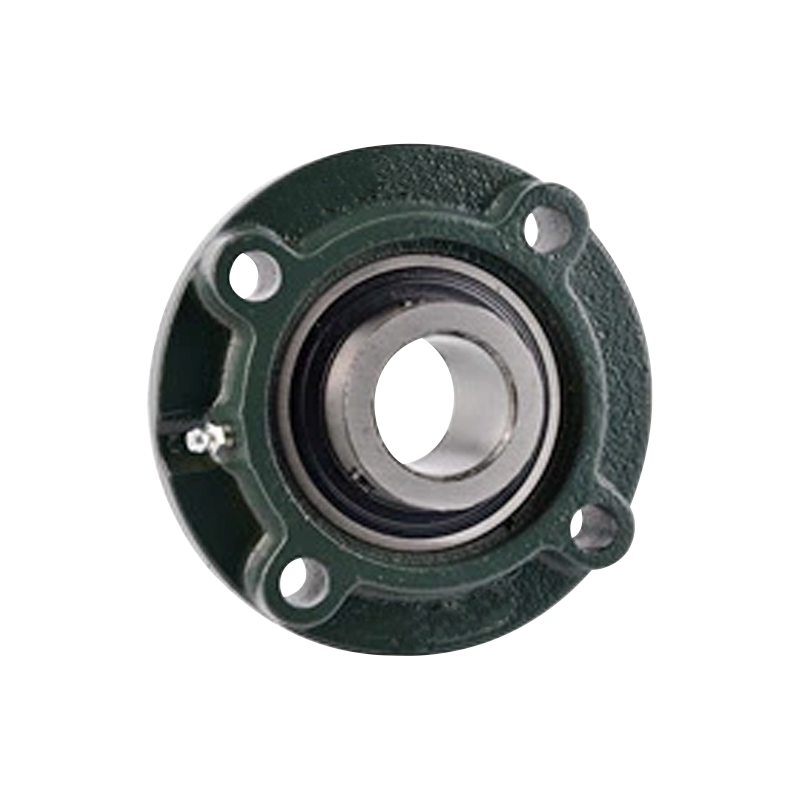
The UCFC series is a standard-duty flange cartridge bearing unit featuring a wider inner ring bearing, setscrew locking, and a cast gray iron housing. Its self-aligning bearing insert can accommodate slight static shaft misalignment, while the housing provides strength and dimensional stability. Additional options include different locking arrangements, sealing systems, end caps, housing strengths, surface finishes, and grease types.
For companies purchasing mounted bearings in demanding production environments, product consistency is as important as basic load capacity. A bearing unit must be manufactured with controlled dimensions, suitable materials, accurate heat treatment, clean assembly conditions, reliable lubrication, and effective inspection procedures. An integrated manufacturing approach supports these requirements and allows the manufacturer to control more stages of the product life cycle.
Flange Cartridge Bearing Units
A flange cartridge bearing unit is a mounted bearing assembly used to support a rotating shaft while maintaining the shaft’s position relative to a machine frame or structural panel. The housing usually contains a cartridge-shaped bearing insert and includes a flange or pilot that helps position the unit in the mounting structure.
The housing is generally made from rigid cast iron for industrial applications. Cast iron provides good compressive strength, vibration resistance, dimensional stability, and durability in environments where a polymer or light-duty stamped housing may not be sufficient. The housing also provides a stable surface for mounting bolts and helps protect the bearing insert from mechanical damage.
The bearing insert is commonly a spherical outer-ring bearing mounted inside the housing. The spherical geometry allows the insert to compensate for a limited amount of misalignment between the shaft and the housing. This feature is especially useful when a machine frame is not perfectly aligned, when shafts are installed over a long distance, or when small static installation errors occur.
A wider inner ring extends beyond the standard bearing width and supports a larger contact area around the shaft. This design can improve shaft support and provide space for locking features. In the UCFC standard configuration, setscrews are used to secure the bearing insert to the shaft. Other locking methods can be selected for specific installation or operating requirements.
Because the housing and bearing insert are supplied as one unit, the assembly can be installed directly onto a prepared machine structure. This simplifies procurement, reduces assembly steps, and helps minimize the possibility of selecting incompatible bearing and housing dimensions.
The housing is the structural foundation of the assembly. A properly designed cast iron housing must provide sufficient stiffness to resist deformation under radial loads, mounting forces, and vibration. The mounting faces and bolt holes must be manufactured accurately so that the unit sits correctly on the machine frame.
Cast gray iron is widely used for standard-duty mounted bearing housings because it offers a practical balance between strength, machinability, vibration damping, and cost. It is also suitable for painting and protective finishing. The standard green coating provides a recognizable industrial appearance, while other colors can be supplied for equipment identification, customer preference, or branding requirements.
Housing geometry is important because the flange, pilot, bearing seat, and mounting surfaces must work together. A correctly produced housing keeps the bearing insert properly supported while allowing the outer spherical surface to provide its self-aligning function. Poor dimensional control in any of these areas can create excessive stress, uneven loading, or premature wear.
The piloted flange helps locate the bearing unit accurately in the machine structure. Instead of relying only on mounting bolts to position the unit, the pilot engages with a corresponding opening or locating surface. This can improve repeatability during installation and reduce movement under operating loads.
For equipment manufacturers, the piloted design can make the bearing unit easier to integrate into a standardized machine panel. It also helps maintain the intended shaft centerline when the mounting arrangement has been designed with suitable tolerances.
The wider inner ring is designed to provide dependable shaft support and a practical locking area. It can distribute shaft contact over a broader region than a narrow inner ring, depending on the selected size and application. A wider ring can also help improve the stability of the mounted bearing when the shaft is exposed to vibration or moderate axial movement.
The bearing insert is typically manufactured with hardened raceways and rolling elements selected for the required load and speed conditions. The internal clearance, seal configuration, material quality, and grease type should be specified according to the operating environment rather than selected solely by nominal shaft diameter.
Setscrew locking is a simple and widely used method for securing the inner ring to the shaft. After the bearing unit is positioned, the setscrews are tightened against the shaft surface. This creates a mechanical connection that allows the shaft to rotate with the inner ring.
The locking process should be performed carefully. The shaft should have suitable surface quality and dimensional accuracy, and the setscrews should be tightened progressively and evenly. Excessive tightening can damage the setscrew, deform the inner ring, or create an undesirable stress concentration. Insufficient tightening may allow shaft creep, fretting, or relative movement during operation.
End caps made from pressed steel can be used to provide additional protection against external pollution, dust, and accidental contact. They are particularly helpful in applications where the unused side of the bearing unit is exposed to airborne particles or where operators require a physical guard around rotating components.
End caps should be selected according to the application. They can improve protection, but they do not replace proper machine guarding, shaft sealing, or environmental control. In areas with heavy water exposure, abrasive particles, corrosive chemicals, or frequent washdown, a specialized sealing and protection arrangement may be required.
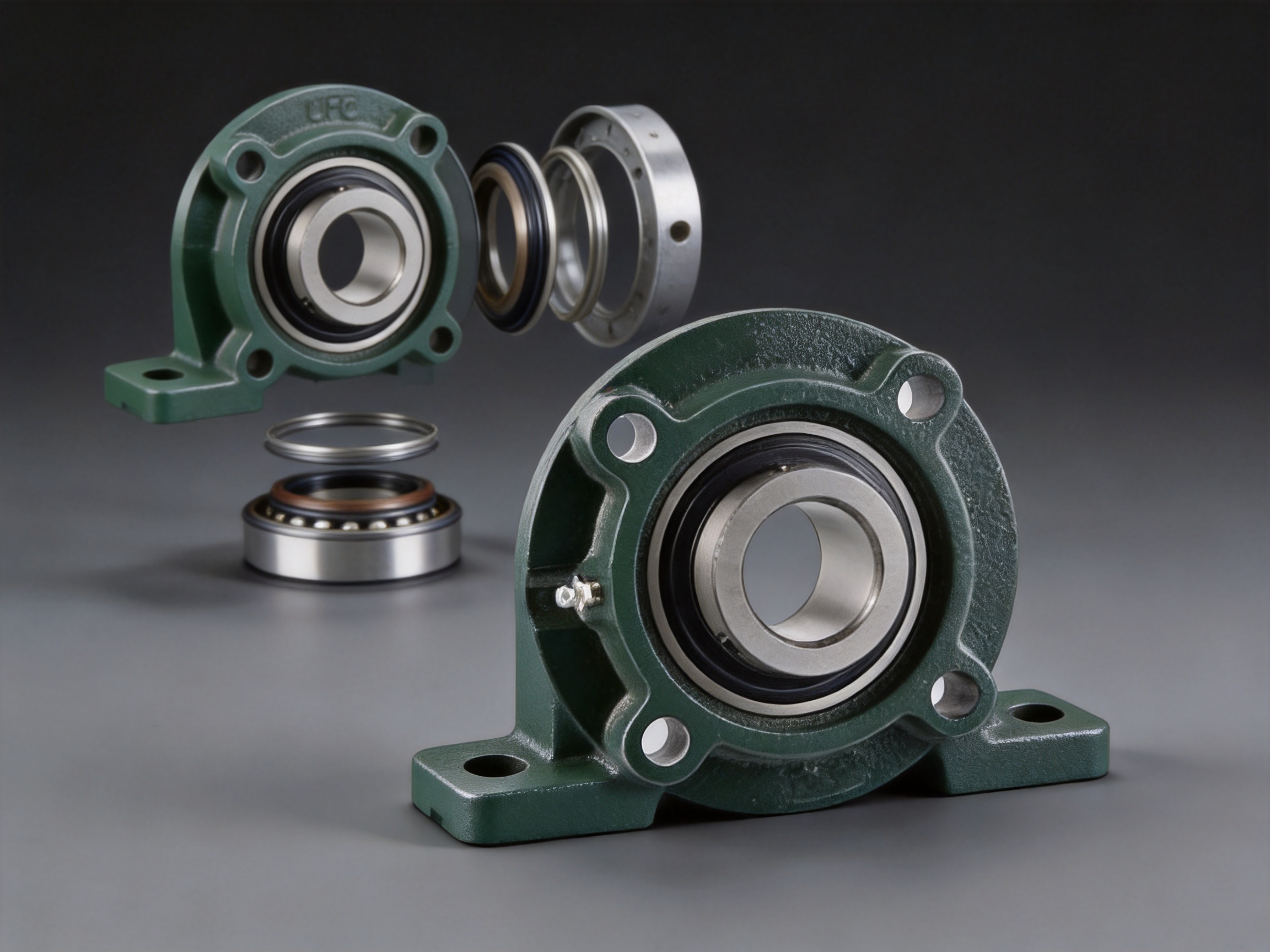
One of the primary advantages of a flange cartridge bearing unit is its integrated construction. A separate bearing, housing, locating ring, and locking arrangement may require more engineering and assembly time. The mounted unit combines these elements into a coordinated product, allowing the user to install a complete support assembly with fewer individual parts.
This can reduce the risk of dimensional mismatch between the bearing and housing. It can also make replacement planning easier because maintenance personnel can order a complete unit based on the shaft diameter, housing configuration, and required duty rating.
The spherical outer surface of the bearing insert allows the insert to adjust within the housing. This self-aligning ability can compensate for slight static misalignment between the shaft and the housing. Such misalignment may result from fabrication tolerances, frame distortion, long shaft arrangements, or small installation errors.
Self-alignment is not intended to compensate for major shaft bending, severe dynamic misalignment, or incorrectly designed machinery. However, within its permissible range, it can reduce edge loading on the rolling elements and raceways. This makes the bearing unit more forgiving than a rigid bearing arrangement in applications where perfect alignment is difficult to achieve.
The UCFC standard-duty configuration is appropriate for many general-purpose applications involving moderate radial loads, ordinary industrial speeds, and normal ambient conditions. Typical examples include conveyor rollers, fans, pumps, agricultural machinery, food-processing conveyors, packaging equipment, textile machinery, and material-handling systems.
Where operating loads are higher or the machine experiences stronger shock and vibration, a medium-duty housing such as the FCX configuration can be considered. Selecting the correct housing class is important because the housing, bearing insert, locking arrangement, and mounting structure must operate as a complete system.
Although setscrew locking is a common standard, different applications may benefit from other shaft-locking systems. Eccentric locking collars can provide a secure arrangement for certain rotating applications. Adapter sleeves may be used where installation flexibility or a particular shaft and bearing combination is required. Concentric locking collars can help maintain balanced positioning and may be preferred where reduced eccentricity is important.
The availability of several locking arrangements allows equipment designers to select a bearing unit that matches the shaft design, installation method, rotational direction, maintenance requirements, and available space.
Lubrication has a direct effect on bearing life, operating temperature, friction, and resistance to contamination. Standard grease is suitable for many ordinary industrial environments. Low-temperature grease can support operation in cold storage, outdoor, or low-ambient-temperature applications. High-temperature grease may be used in equipment exposed to elevated operating temperatures, provided that the bearing seals, clearances, and surrounding components are also suitable.
Food-grade grease is available for equipment used in food processing and related industries. The correct grease should be selected according to the applicable operating requirements and hygiene regulations. Food-grade lubrication does not automatically make the entire bearing unit suitable for every hygienic or washdown application; housing material, seals, surface finish, and cleaning procedures must also be considered.
The standard green coating offers protection for normal industrial service and gives the bearing unit a clean, identifiable finish. Other colors can be provided when customers require visual differentiation between production lines, equipment groups, or application areas.
A protective coating should be regarded as one part of the corrosion-control strategy. Environmental exposure, storage conditions, chemical contact, humidity, and cleaning methods all influence the required protection level. For aggressive environments, customers should discuss suitable coatings, stainless-steel alternatives, specialized seals, or other corrosion-resistant configurations.
| Feature | Flange Cartridge Bearing Unit | Loose Bearing in Separate Housing | Stamped or Polymer Housing | Rigid Non-Self-Aligning Arrangement |
|---|---|---|---|---|
| Installation | Integrated assembly with coordinated components | Requires separate selection and assembly | Generally simple, depending on design | May require accurate alignment during installation |
| Housing strength | High for cast iron standard and medium-duty designs | Depends on selected housing | Often intended for lighter loads | Depends on housing material and construction |
| Misalignment compensation | Available through spherical bearing insert | Depends on bearing and housing design | Depends on the mounted insert | Usually limited |
| Locking choices | Setscrew, eccentric collar, adapter sleeve, and concentric collar options | Selected separately | Often more limited | Depends on the bearing arrangement |
| Maintenance convenience | Complete unit replacement is straightforward | More components may need inspection | Often convenient for light-duty equipment | Can require careful alignment checks |
| Typical application range | General industrial, conveying, processing, and automation equipment | Specialized or highly engineered machinery | Light to moderate-duty equipment | Applications requiring controlled alignment |
The main advantage of a flange cartridge unit over a loose bearing and separate housing is system simplicity. A loose arrangement can be highly customizable and may be preferred for specialized machines, but it requires careful component matching. The flange cartridge format offers a standardized alternative that is easier to specify and replace.
Compared with stamped or polymer housings, a cast iron flange cartridge unit generally provides greater rigidity and resistance to deformation. Light-duty housings may still be suitable where loads, speeds, and environmental conditions are modest, but they may not provide the same structural reserve for heavier industrial service.
Compared with a rigid non-self-aligning bearing arrangement, the spherical insert can provide greater tolerance to minor static alignment errors. This does not eliminate the need for good machine design, but it can reduce the effect of small deviations that would otherwise increase edge loading and vibration.
Reliable bearing performance begins with controlled manufacturing. A mounted bearing unit is not simply a cast housing with a purchased insert. Its performance depends on the interaction between housing accuracy, bearing geometry, locking components, lubrication, seals, finishing, and final assembly.
Product development begins with an evaluation of the application requirements. Shaft diameter, radial load, axial load, speed, temperature, contamination, installation space, maintenance access, and expected operating life all influence the final configuration.
Engineering teams analyze the housing profile, pilot dimensions, mounting bolt pattern, bearing seat, flange thickness, and load paths. The objective is to create a housing that is rigid enough for the intended duty while remaining practical to manufacture and install.
For customized orders, engineering may also review special shaft sizes, alternative locking methods, non-standard paint colors, end-cap requirements, grease selection, packaging, and dimensional tolerances. A clear technical specification at the beginning of the project helps prevent later changes and supports consistent production.
Where forged components are required, controlled forging processes improve material density and structural consistency. Forging can refine the grain structure of selected steel components and provide a sound starting point for rings, collars, or other parts requiring high mechanical performance.
Raw materials should be accompanied by appropriate documentation and subjected to incoming inspection. Chemical composition, hardness, dimensional condition, and surface quality are important considerations. Consistent raw material control helps reduce variation in later turning, heat treatment, grinding, and assembly processes.
Turning operations establish the basic geometry of bearing rings, sleeves, collars, and other machined components. Computer-controlled equipment can produce repeatable diameters, shoulders, grooves, and reference surfaces. Dimensional control during turning is important because later grinding allowances must remain within the specified range.
For housing components, machining establishes the bearing seat, pilot, mounting surfaces, and bolt holes. These features must be positioned correctly relative to one another. The quality of the housing machining influences mounting accuracy and the ability of the bearing insert to operate without unwanted stress.
Heat treatment gives bearing steel the hardness and internal structure needed to withstand repeated rolling contact. The selected process depends on the material, component geometry, required hardness, and performance target.
Controlled heating, soaking, quenching, and tempering help produce a balanced combination of hardness, toughness, and dimensional stability. Poorly controlled heat treatment can result in excessive distortion, cracking, insufficient hardness, or undesirable residual stress. For this reason, heat-treatment parameters and post-treatment inspection are essential parts of bearing production.
Grinding is used to achieve the precise geometry and surface finish required for bearing raceways and other functional surfaces. The raceway profile, roundness, waviness, and roughness all influence rolling contact, friction, noise, and service life.
Grinding equipment must be managed carefully to prevent burn marks, excessive residual stress, or geometric errors. Measurement systems verify critical dimensions after grinding. Depending on the product specification, additional finishing operations may be used to improve surface quality and support smooth operation.
Cast gray iron housings are produced with controlled molds and suitable metal composition. The casting process must manage filling, cooling, shrinkage, and internal soundness. After casting, housings are cleaned, inspected, and machined to create accurate bearing seats, pilots, mounting faces, and holes.
Visual inspection can identify surface defects, incomplete filling, cracks, or other casting irregularities. Dimensional inspection confirms that the housing meets the drawing requirements. Proper machining also helps ensure that the housing supports the bearing insert uniformly without excessive interference or looseness.
Assembly should take place in a clean and controlled area. Bearing rings, rolling elements, cages, seals, housings, locking components, and end caps must be handled carefully to avoid contamination or impact damage.
Lubricant is filled according to the specified quantity and grease type. Too little grease may result in inadequate separation between contacting surfaces, while too much grease can increase temperature and churning resistance. The correct fill quantity depends on the bearing design, speed, operating temperature, and seal arrangement.
During final assembly, the bearing insert is positioned correctly inside the spherical housing seat. Locking components are checked for fit and function. End caps, where specified, are installed without distortion. The completed unit is then inspected for rotation smoothness, appearance, marking, and packaging condition.
A comprehensive quality program may include incoming material inspection, in-process dimensional checks, hardness testing, surface-finish measurement, visual inspection, noise and vibration evaluation, rotational torque checks, and final sampling.
Critical characteristics include bore diameter, outer spherical diameter, housing pilot dimensions, mounting-hole position, raceway geometry, radial internal clearance, seal condition, setscrew quality, and grease filling. Inspection records provide traceability and help identify process trends before they become product problems.
Quality control is most effective when it is integrated into every production stage rather than limited to the final inspection area. Early detection reduces rework, protects delivery schedules, and supports stable product performance over repeated production batches.
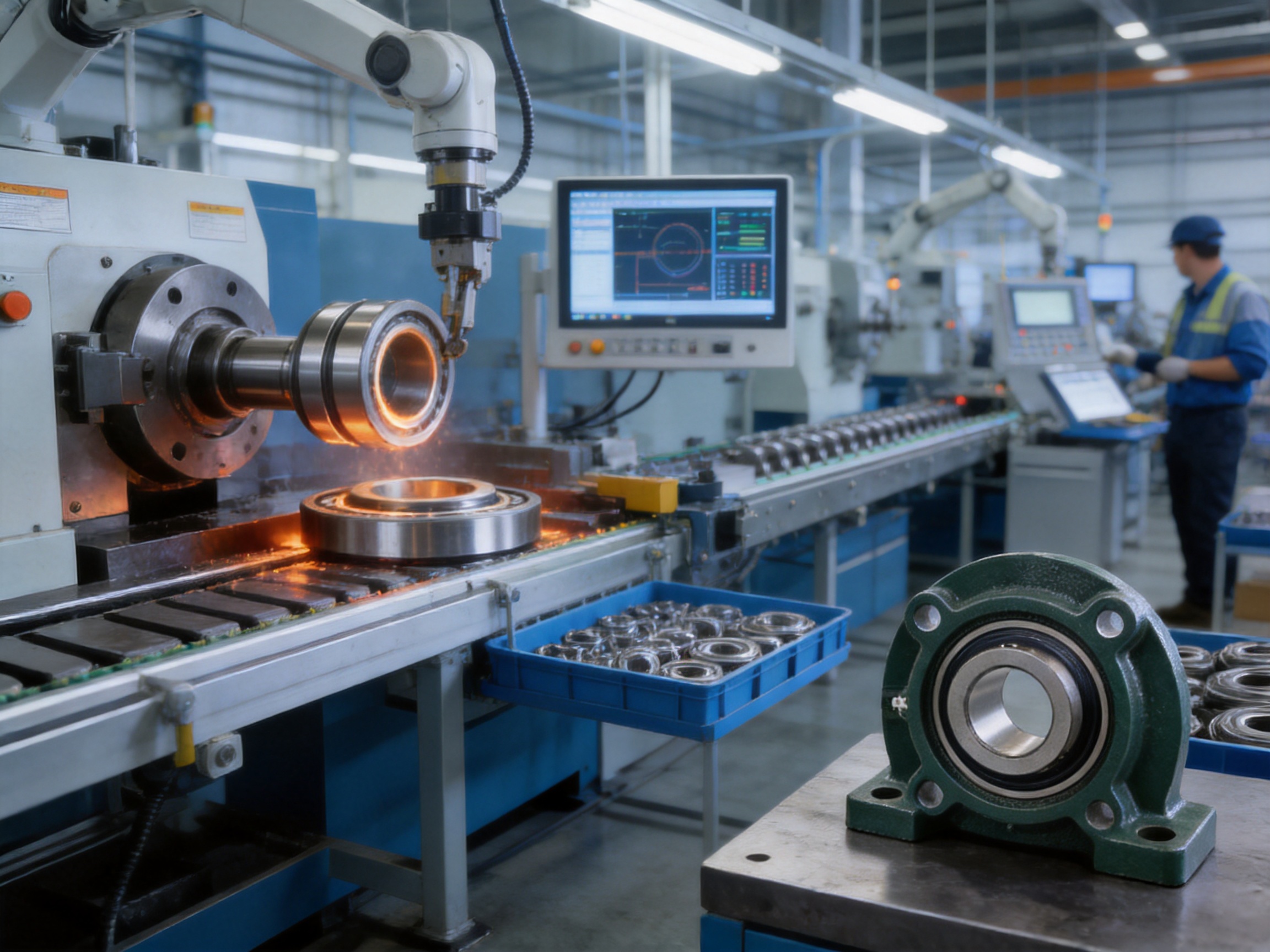
The manufacturer behind these flange cartridge bearing units operates as an integrated bearing producer and international supplier. Its capabilities include research and development, production, assembly, packaging, and global distribution. This structure allows customers to communicate technical requirements directly with a bearing-focused organization rather than coordinating several unrelated suppliers.
The company maintains multiple production lines covering forging, turning, heat treatment, grinding, assembly, and packaging. Control over these major operations supports consistency from raw material preparation through finished product delivery. It also provides a stronger foundation for customized bearing programs and original equipment manufacturing projects.
Monthly production capacity of approximately 10,000 to 50,000 units supports both regular distribution orders and larger industrial requirements. Capacity alone does not guarantee quality, but a suitable production scale can improve scheduling flexibility, component availability, and the ability to maintain dedicated processes for recurring customer programs.
The organization employs between 201 and 500 people and has more than 15 years of OEM and ODM export experience. This experience is valuable for customers who require technical drawings, product labeling, customized packaging, export documentation, inspection reports, and communication across different markets.
Products are supplied to customers in North America, Europe, Asia, Africa, and Russia, including markets such as the United States, Italy, Germany, Poland, South Africa, Egypt, and India. International distribution requires attention to packaging strength, moisture protection, product traceability, customs documentation, and consistent communication. These requirements are particularly important for bearings because improper storage or transport can affect precision components before installation.
Research and development is an important strength for a manufacturer serving both standard and customized bearing applications. The company’s technical work includes high-precision cross roller bearings, dual-direction thrust angular contact ball bearings, and other products used in CNC machines, robotics, and intelligent automation systems.
Although flange cartridge bearing units are commonly used in general industrial equipment, the same engineering discipline applied to precision bearing products can benefit mounted bearing production. Accurate geometric analysis, digital production control, process monitoring, and application-based design help improve consistency across different bearing categories.
R&D support is particularly useful when customers need a bearing unit adapted to unusual space limitations, special loads, non-standard shaft dimensions, different grease requirements, or a particular mounting arrangement. The manufacturer can evaluate whether a standard unit is suitable or whether a modified design should be developed.
Application engineering should consider the complete operating system. A bearing that appears suitable based only on static load may not perform correctly if the shaft is bent, the housing is flexible, the speed is too high, the grease is incompatible, or contamination enters through inadequate sealing. Technical review helps identify these risks before production.
Conveyors often use multiple shaft supports exposed to vibration, dust, material impact, and continuous operating cycles. Flange cartridge bearing units provide a standardized support arrangement that can be installed on side frames or machine panels.
The self-aligning insert is useful where long conveyor frames or multiple mounting points create small alignment differences. End caps and suitable seals can provide additional protection in dusty environments, although the final configuration should reflect the actual contamination level.
Packaging lines require compact, maintainable, and repeatable mechanical components. Mounted bearing units can support rollers, shafts, guide mechanisms, and auxiliary drives. Their replaceable integrated design helps reduce service time during scheduled maintenance.
Where packaging equipment operates near food or pharmaceutical products, grease selection and contamination control must be reviewed carefully. Food-grade grease may be available, but the machine designer must also consider cleanability, sealing, housing finish, and applicable regulatory requirements.
Agricultural machinery is often exposed to dust, moisture, vibration, shock loads, and seasonal storage. Cast iron housings provide a robust support structure, while suitable seals and end caps can help reduce exposure to external contaminants.
Maintenance practices are especially important in agricultural environments. Operators should inspect the bearing units regularly, remove accumulated material, check shaft locking, and replenish lubricant where a relubrication system is provided. Storage conditions should be dry and protected from condensation.
Fans and blowers can impose continuous radial loads and may operate at moderate to high speeds. The bearing unit must be selected according to the fan speed, rotor balance, shaft diameter, belt tension, temperature, and expected vibration level.
Correct alignment and balanced rotating components are essential. A self-aligning bearing insert can accommodate limited static error, but it cannot correct an unbalanced rotor or excessive belt tension. Proper installation remains necessary for long service life.
Material-handling systems often require durable bearing supports that can tolerate repeated starts, stops, vibration, and changing loads. Flange cartridge units can be used in rollers, transfer mechanisms, lift equipment, and other support points where a compact mounted assembly is beneficial.
Medium-duty housings may be appropriate where shock loads or structural forces exceed the practical range of standard-duty designs. The selection should be based on calculated loads and actual operating conditions rather than on housing appearance alone.
Automation equipment commonly uses rotating shafts, guide rollers, indexing mechanisms, and auxiliary drive systems. Mounted bearing units can simplify machine construction and support modular equipment layouts.
For automated lines, predictable replacement is important. Standardized bearing units can reduce the variety of spare parts held in inventory and make maintenance instructions easier to prepare. Where automation requires very low friction, high precision, or stringent runout control, the product specification should be reviewed with the manufacturer before selection.
The first selection factor is the shaft diameter. The bearing bore, inner ring width, locking components, and housing size must match the shaft. The shaft should also meet requirements for roundness, surface finish, straightness, and hardness at the locking location.
Radial and axial loads should be identified separately. Radial load may come from belt tension, chain forces, product weight, rotor weight, or shaft-mounted components. Axial load may result from helical gears, inclined conveyors, thermal expansion, or external thrust forces.
Shock and vibration should be included in the calculation. A bearing operating under a smooth, steady load may have a very different life expectation from one exposed to impact or frequent load changes.
Rotational speed affects grease behavior, operating temperature, cage performance, and seal friction. The selected bearing unit should have a suitable speed capability for the application. Temperature also affects grease viscosity, internal clearance, housing expansion, and seal performance.
Low-temperature grease may be required for cold environments, while high-temperature grease may be appropriate for elevated operating temperatures. These choices should be made together with the manufacturer because changing the grease type may affect other product characteristics.
Dust, water, abrasive particles, chemical vapors, and cleaning fluids can reduce bearing life. End caps, seals, shields, and protective covers should be considered according to the contamination level.
A normal industrial seal may be sufficient for clean indoor machinery, while dusty or wet applications may require additional protection. If the machine is frequently washed down, the complete housing and sealing design should be evaluated rather than relying only on a standard painted cast iron unit.
Standard-duty FC200 housings are suitable for many general applications. Medium-duty FCX housings can be selected where higher structural strength or increased resistance to mechanical stress is required.
The choice should account for mounting stiffness. Even a strong bearing housing may perform poorly if it is installed on a thin, flexible, or distorted machine panel. The mounting structure should be capable of supporting the expected loads without excessive deflection.
Setscrew locking is convenient and economical for many applications. Eccentric collars, adapter sleeves, and concentric collars may offer advantages in specific installations. The correct method depends on shaft design, rotational direction, available clearance, balancing requirements, and maintenance preferences.
Measure the available space around the flange, shaft, mounting bolts, end cap, and locking screws. Maintenance access is also important. A bearing unit that fits during initial assembly may be difficult to service if the setscrews cannot be reached after the machine is installed.
Before installation, confirm the bearing designation, shaft size, housing configuration, grease type, and locking arrangement. Inspect the shaft and mounting surface for burrs, corrosion, dirt, or damage. The machine frame should be clean, flat, and strong enough to support the unit.
Slide the bearing unit onto the shaft without using excessive force. Never strike the housing or bearing rings directly with a hammer. If the unit is tight, identify the cause rather than forcing it into position. Excessive impact can damage raceways, seals, or internal rolling elements.
Align the housing with the mounting surface and install the bolts using suitable washers and tightening procedures. If a pilot is provided, ensure that it seats correctly in the locating opening. Tighten the mounting bolts evenly so that the housing is not distorted.
After positioning the shaft, rotate it by hand if possible. The movement should be smooth and free from binding. Once the alignment is confirmed, tighten the setscrews or install the selected locking collar according to the recommended procedure. Tighten setscrews progressively and alternate between them when multiple screws are used.
After locking, rotate the shaft again and check for abnormal resistance. During the initial operating period, monitor temperature, noise, vibration, and signs of shaft creep. A moderate temperature increase may occur as grease distributes, but rapid heating or unusual noise requires investigation.
Routine maintenance should include visual inspection, temperature monitoring, vibration observation, shaft-locking checks, and inspection for contamination. Maintenance intervals should be based on operating speed, load, environment, duty cycle, and manufacturer recommendations.
Relubrication must use a compatible grease and an appropriate quantity. Mixing incompatible greases can cause separation, hardening, softening, or loss of lubrication performance. If the machine uses food-grade grease, the replacement lubricant should meet the required food-contact classification.
Inspect the housing for cracks, corrosion, loose mounting bolts, and coating damage. Check the shaft for fretting marks or wear near the locking screws. Shaft creep can indicate inadequate locking, incorrect shaft dimensions, excessive vibration, or improper installation.
Unusual noise may result from contamination, insufficient lubrication, excessive grease, raceway damage, incorrect alignment, or a worn seal. Vibration analysis can help distinguish bearing-related problems from imbalance, looseness, belt issues, or other machine faults.
When replacement is required, replacing the complete mounted unit is often efficient. The new unit should be checked against the original specification, and the shaft and mounting surface should be inspected before installation. Replacing only one component may be possible in certain engineered arrangements, but a complete unit replacement simplifies compatibility and reduces assembly uncertainty.
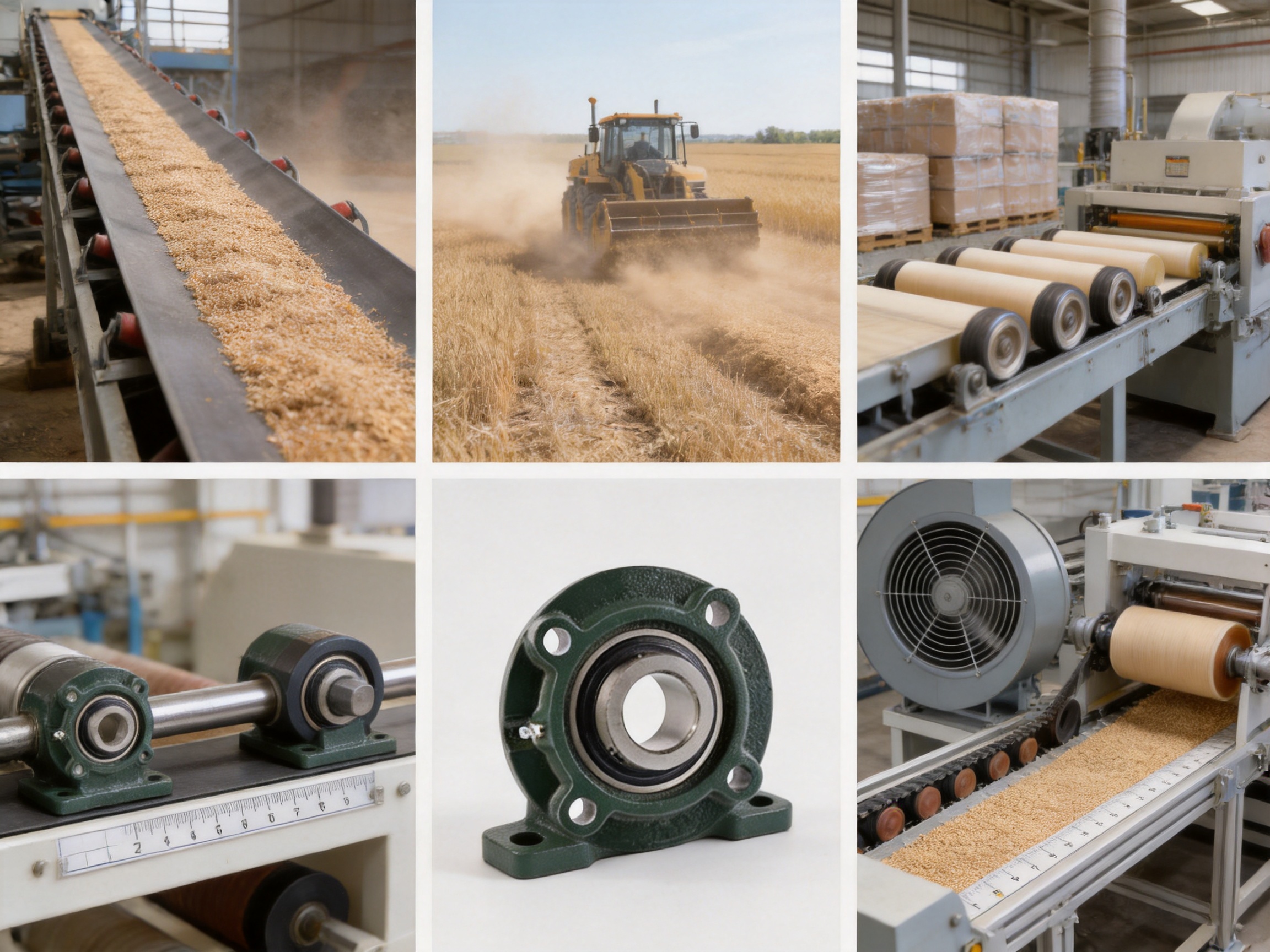
Bearings are precision products and require suitable packaging throughout storage and transportation. Packaging should protect the unit from impact, moisture, dust, and corrosion. Individual identification and batch traceability help customers manage inventory and connect delivered products with inspection documentation.
For international customers, export experience is an important practical advantage. Documentation, labeling, packing lists, commercial invoices, and shipment coordination must be handled accurately. Delays or damage during transportation can affect production schedules even when the product itself has been manufactured correctly.
A multilingual technical service team can support product selection, installation guidance, after-sales maintenance, and troubleshooting. This is especially valuable when customers operate equipment in multiple countries or when a bearing unit is being integrated into a new machine design.
Technical support may include dimensional drawings, product specifications, housing information, locking instructions, grease recommendations, inspection records, and customized packaging requirements. Early communication helps ensure that the supplied product matches both the mechanical and logistical needs of the project.
Modern bearing manufacturing must consider not only product performance but also resource use, emissions, waste management, and long-term operating efficiency. Responsible production can include material recycling, improved energy management, process optimization, and reduction of unnecessary packaging materials.
Longer-lasting bearing units can also support sustainability by reducing replacement frequency, machine downtime, discarded components, and maintenance-related transport. Product life depends on correct selection and installation, but robust housing design, controlled manufacturing, reliable lubrication, and effective sealing all contribute to service durability.
Environmental responsibility also extends to workforce development. Technical training and educational initiatives help develop engineers, maintenance specialists, quality professionals, and production personnel. A skilled workforce improves process reliability and supports continued innovation in bearing technology.
Working with an integrated manufacturer can provide advantages over purchasing disconnected components from multiple sources. Design communication is more direct, product compatibility is easier to manage, and production feedback can be incorporated into future improvements.
An integrated supplier can coordinate material preparation, machining, heat treatment, grinding, assembly, inspection, and packaging. This reduces dependence on external handoffs and allows quality data to be reviewed across the complete manufacturing chain.
For OEM customers, this approach supports product standardization. The manufacturer can supply recurring batches with consistent dimensions, packaging, markings, and documentation. It can also assist with modifications when a machine design changes or a new market requires a different configuration.
The combination of production capacity, export experience, engineering resources, and application support makes the product suitable for distributors, equipment manufacturers, maintenance companies, and industrial end users.
Its main purpose is to support and locate a rotating shaft using an integrated bearing and housing assembly. The flange or pilot helps position the unit on a machine structure, while the bearing insert supports rotation and accommodates limited static misalignment.
The standard housing is made from cast gray iron. This material provides good rigidity, vibration damping, machinability, and durability for many industrial applications. Standard-duty FC200 and medium-duty FCX housing options are available for different service requirements.
Self-aligning means that the spherical outer surface of the bearing insert allows limited angular adjustment inside the housing. This can compensate for slight static misalignment between the shaft and the housing. It does not correct severe shaft bending, major frame distortion, or excessive dynamic misalignment.
The standard UCFC configuration uses setscrews in the wider inner ring. The screws are tightened against the shaft after the bearing unit has been positioned. Eccentric collars, adapter sleeves, and concentric locking collars may also be available for specific requirements.
Yes. Standard grease, low-temperature grease, high-temperature grease, and food-grade grease can be selected according to the application. The operating temperature, speed, contamination, sealing system, and industry requirements should all be considered before choosing the lubricant.
Pressed-steel end caps are available to provide additional protection against external pollution and dust. Whether they are included as standard depends on the product configuration and customer specification. The required protection level should be confirmed before ordering.
Typical applications include conveyor systems, fans, blowers, agricultural machinery, packaging equipment, material-handling systems, processing machinery, textile equipment, and general industrial automation. The final selection depends on load, speed, temperature, contamination, and installation conditions.
A medium-duty housing should be considered when the application involves higher loads, stronger vibration, greater structural stress, or more demanding operating conditions than a standard-duty housing can reasonably support. Load calculations and machine structure should be reviewed before selection.
The standard finish is green, and other colors may be available. Color customization can assist with equipment identification, customer specifications, or production-line organization. The required color and coating should be agreed upon before production.
Useful information includes shaft diameter, bearing unit designation if known, radial and axial loads, rotational speed, operating temperature, environment, required grease, locking method, end-cap requirement, housing duty, quantity, packaging needs, and delivery destination.
Premature failure can often be reduced through correct product selection, clean installation, suitable shaft dimensions, accurate housing mounting, proper locking, compatible lubrication, effective contamination control, and regular condition monitoring. Excessive tightening, impact during installation, misalignment, and over-lubrication should be avoided.
Flange Cartridge Bearing Units offer a practical combination of structural strength, installation convenience, self-alignment, flexible shaft locking, and adaptable lubrication. The cast iron housing provides a durable mounting foundation, while the wider inner ring bearing insert delivers dependable shaft support. The piloted flange improves positioning, and optional end caps can provide additional protection against dust and external pollution.
Compared with loose bearing and housing arrangements, the integrated design simplifies selection, installation, replacement, and inventory management. Compared with lighter stamped or polymer housings, the cast iron construction offers a stronger solution for many industrial duties. Compared with rigid non-self-aligning arrangements, the spherical insert provides useful tolerance for slight static misalignment.
Product performance depends on more than the visible housing and bearing. Controlled raw materials, precision turning, heat treatment, grinding, casting, machining, clean assembly, accurate lubrication, inspection, and protective packaging are all essential. An integrated manufacturer with R&D capability, modern production lines, international export experience, and technical support can provide greater confidence for OEM and industrial customers.
For the best result, users should select the unit according to actual load, speed, temperature, contamination, shaft condition, housing duty, locking method, and maintenance requirements. When these factors are evaluated carefully, flange cartridge bearing units can provide reliable and economical shaft support across a broad range of industrial equipment.
1. ISO 281, Rolling Bearings — Dynamic Load Ratings and Rating Life.
2. ISO 76, Rolling Bearings — Static Load Ratings.
3. ISO 492, Rolling Bearings — Radial Bearings — Geometrical Product Specifications and Tolerance Values.
4. ISO 15243, Rolling Bearings — Damage and Failures — Terms, Characteristics, and Causes.
5. ISO 16269, Statistical Interpretation of Data — Accuracy of Estimation and Test Procedures.
6. Machinery Lubrication Principles, industrial bearing lubrication and contamination-control practices.
7. Industrial Bearing Maintenance Guidelines, installation, relubrication, inspection, and condition-monitoring procedures.
8. Manufacturer product information for UCFC flange cartridge bearing units, FC200 standard-duty housings, and FCX medium-duty housings.
Product Categories
Contact Us

Jane@ukl-bearing.com
Jenny@ukl-bearing.com
Andy@ukl-bearing.com
Ivy@ukl-bearing.com

+86-510- 88763239
+86-15371057968

No.1 Hehuan Road, Hudai Town, Binhu District, Wuxi City.
Ready to Begin?
Get in Touch

Now!
UKL BEARING
 English
 Español
 русский