
Content
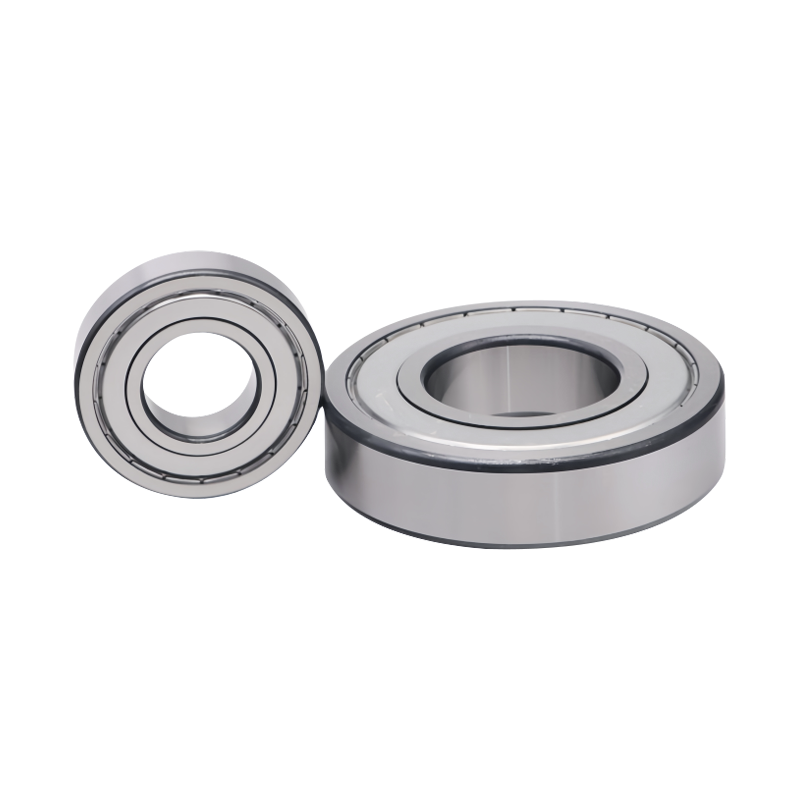
A 6224 bearing represents a fundamental component in modern industrial machinery. Single-row deep groove ball bearings are among the most versatile and widely used bearing types across manufacturing, automotive, and energy sectors. These bearings support radial loads and moderate axial loads through a simple yet effective design featuring steel balls housed in grooved rings.
The deep groove design creates a continuous load path around the bearing, distributing stress evenly across all rolling elements. This architecture enables smooth rotation under demanding conditions while maintaining high operational reliability. The 6224 single row deep groove ball bearing designation follows international ISO standards, indicating specific dimensional and performance characteristics that engineers can depend upon across global supply chains.
Deep groove ball bearings incorporate several critical design elements that contribute to their widespread adoption in industrial environments.
The precision manufacturing of these components ensures minimal vibration and noise during operation. Surface finish quality on raceway grooves directly influences bearing lifespan and operational smoothness. Modern production techniques maintain tolerances within micrometers, enabling bearings to achieve rotating speeds exceeding 10,000 RPM in many applications.
Unlike other bearing types, deep groove bearings excel at managing combined load scenarios. The geometry allows balls to carry both radial loads perpendicular to the shaft and modest axial loads parallel to the shaft direction. This dual-capacity characteristic eliminates the need for multiple bearing types in many applications, reducing design complexity and system cost.
Understanding the dimensional and performance specifications helps engineers select appropriate bearings for specific applications.
| Parameter | Value | Unit |
|---|---|---|
| Bore Diameter (d) | 120 | mm |
| Outer Diameter (D) | 215 | mm |
| Width (B) | 40 | mm |
| Minimum Fillet Radius (r) | 2.1 | mm |
| Weight | 5.27 | kg |
| Bore Type | Cylindrical Bore | - |
| Rolling Element | Steel Ball, Single Row | - |
| Performance Metric | Rating |
|---|---|
| Basic Dynamic Load Rating (Cr) | 146 kN |
| Basic Static Load Rating (Cor) | 118 kN |
| Oil Lubrication Speed Limit | 6300 RPM |
| Grease Lubrication Speed Limit | 4000 RPM |
| Operating Temperature Range | -30 to +120 degrees Celsius |
| Tolerance Classification | C0 Standard, upgradable to C3/C4 |
The 6224 bearing comes in multiple configurations to suit different operating environments:
Deep groove bearings deliver exceptional performance across multiple operational dimensions. Their simple geometry enables lower friction compared to complex bearing designs, translating to reduced energy consumption in industrial systems. The contact angle of zero degrees between balls and raceways allows these bearings to handle shock loads effectively, absorbing sudden force spikes without premature failure.
Thermal stability represents another significant advantage. Steel construction materials maintain consistent mechanical properties across the specified temperature range, ensuring predictable performance in both cryogenic and elevated-temperature applications. The distributed load path prevents localized stress concentrations that could initiate fatigue failures.
Engineers appreciate the standardization built into deep groove bearing design. Universal shaft sizing and standardized mounting interfaces simplify equipment development. This versatility enables deep groove ball bearing for electric motor applications across diverse industries without requiring custom adaptations. The cylindrical bore design accommodates both solid shafts and tapered sleeves through appropriate mounting hardware.
Deep groove bearings serve as fundamental components in industrial machinery spanning multiple sectors. Their adaptability to various load conditions and speed ranges makes them suitable for an exceptionally broad range of applications.
Electric Motors and Rotating Equipment: Central to motor design, these bearings support shaft rotation in fractional horsepower motors through large industrial motors exceeding 1000 horsepower. The sealed variants provide protection in environments with dust, moisture, or chemical exposure.
Material Handling Equipment: Conveyor systems, hoists, and lifting mechanisms depend on deep groove bearings for reliable load support. The radial load capacity accommodates heavy material transfer operations in mining, construction, and manufacturing facilities.
Compressors and Pumps: Reciprocating and rotary compressor designs incorporate these bearings to maintain precise shaft positioning under dynamic pressure variations. Pump applications benefit from the sealed bearing variants that resist water ingress and prevent internal corrosion.
Agricultural Machinery: Farm equipment from grain handling systems to crop processing machinery utilize deep groove bearings in both primary drive systems and auxiliary components. Environmental exposure to dust, moisture, and organic residues necessitates sealed or shielded variants.
Textile and Paper Processing: High-speed spindle applications and web-handling equipment rely on deep groove bearings for consistent performance. Temperature variations in processing environments remain within the bearing's operational range.
Operating conditions determine the appropriate seal type and lubrication method. High-speed applications approaching 6000 RPM typically employ oil lubrication to minimize friction heating. Medium-speed operations in the 2000 to 4000 RPM range work effectively with grease lubrication, requiring less frequent maintenance intervention. Low-speed heavy-load scenarios benefit from sealed bearings that trap lubrication and exclude environmental contaminants.
Applications exceeding ambient temperature ranges or operating in corrosive environments require bearing materials beyond standard steel. Stainless steel rolling elements and races resist oxidation and chemical attack, extending service life in marine or chemical processing applications.

Proper bearing selection ensures optimal equipment performance and operational longevity. Engineers must evaluate several critical parameters before specifying a particular bearing model.
Load Analysis: Calculate radial and axial loads expected during normal operation and during startup/shutdown transients. Compare these calculated loads against the bearing's basic load ratings. Safety margins of 1.5 to 2.0 times the basic load rating are standard practice for extended bearing life.
Speed Requirements: Identify the expected operating speed range and peak rotational velocity. Reference the bearing's lubrication speed limits to determine whether oil or grease lubrication better suits the application. High-speed applications may require bearings with optimized cage designs to minimize centrifugal effects on rolling elements.
Environmental Factors: Assess contamination exposure, moisture presence, temperature extremes, and chemical exposure. Sealed bearing variants protect against dust and moisture ingress but limit grease replenishment. Open bearings permit continuous fresh lubrication supply but require effective external sealing at the machine housing level.
Mounting Configuration: Determine whether shaft or housing mounting suits the application geometry. Consider tolerance requirements and establish mounting methods that properly support both radial and axial loads during operation.
Proper lubrication represents the single most important factor in extending bearing service life. Grease-lubricated bearings require periodic replenishment to replace degraded lubricant and maintain protective film between rolling elements and raceways. Oil lubrication permits continuous cooling and contamination extraction through filtration systems, ideal for high-speed applications.
Excessive lubrication generates heat through mechanical churning and should be avoided. Under-lubrication accelerates wear and initiates seizure, destroying the bearing within hours of operation. Application-specific recommendations balance these competing concerns.
Regular inspections identify developing problems before catastrophic failure occurs. Elevated temperature readings indicate inadequate lubrication or excessive load. Unusual noise or vibration suggests contamination ingress or rolling element surface spalling. Systematic monitoring enables predictive maintenance planning that minimizes unexpected equipment downtime.
Sealed bearing designs contain lubricant and exclude contamination, reducing maintenance frequency. Open bearings require external sealing at the machine housing interface. Flexible seals and labyrinth designs protect bearing internals while permitting controlled lubrication circulation. Equipment operating in dusty or wet environments benefits substantially from enhanced sealing measures.
When evaluating bearing technologies for industrial applications, engineers compare deep groove designs against alternative approaches including tapered roller bearings, cylindrical roller bearings, and magnetic bearings.
| Bearing Type | Radial Capacity | Axial Capacity | Speed Range | Cost Level |
|---|---|---|---|---|
| Deep Groove Ball | Good | Moderate | High | Low |
| Tapered Roller | Excellent | Excellent | Moderate | High |
| Cylindrical Roller | Excellent | Limited | High | Moderate |
| Magnetic Bearings | Specialized | Specialized | Very High | Very High |
Deep groove bearings represent the optimal choice for general-purpose applications combining moderate loads, variable speeds, and cost sensitivity. Specialized bearing types deliver superior performance in specific scenarios but at substantially higher acquisition and operational cost.
Deep groove ball bearings conform to strict international dimensional and performance standards, primarily ISO 6 for general design specifications and ISO 286 for tolerance classification. These standards ensure interchangeability across global supply chains and enable engineers to confidently specify components from multiple suppliers.
Quality certification systems including ISO 9001 manufacturing compliance and ISO 20623 bearing quality standards establish consistent production processes. Regular testing validates that bearing components meet specified load ratings, dimensional accuracy, and surface finish requirements.
Modern production facilities employ computer numerical control machining to achieve raceway geometries with surface finishes below 0.05 micrometers. Advanced grinding techniques remove subsurface material imperfections that initiate fatigue failures. In-process quality verification confirms dimensional conformance before bearings leave manufacturing facilities.
Centrifugal purification of steel removes internal inclusions that concentrate stress under operational loads. Heat treatment processes optimize material hardness and toughness, balancing wear resistance against brittleness. These metallurgical advances extend practical bearing service life significantly beyond earlier generation designs.
The bearing industry continues advancing toward enhanced performance, improved sustainability, and adaptation to evolving industrial requirements. Lightweight composite cage designs reduce centrifugal forces at extreme speeds while maintaining structural integrity. Ceramic rolling elements in hybrid bearings reduce mass and friction while maintaining adequate load capacity for many applications.
Solid lubricant coatings enable bearing operation in environments where conventional grease and oil cannot be contained, particularly relevant for aerospace and vacuum applications. Smart bearing designs incorporating embedded sensors enable condition monitoring that predicts maintenance needs before failures occur, optimizing reliability in critical systems.
Sustainability considerations drive development of bearing designs requiring less frequent replacement and utilizing environmentally compatible lubricants. Manufacturers work toward eliminating rare earth elements from permanent magnet cages while maintaining performance standards that modern machinery demands.
Unusual bearing noise typically indicates contamination ingress or inadequate lubrication. Metal particles circulating through the bearing scoring raceway surfaces create recognizable grinding sounds. Systematic flushing with clean lubricant sometimes restores smooth operation if contamination remains minimal. Seized or severely damaged bearings require complete replacement.
Bearing failure before expected service intervals suggests installation errors, excessive loading, or environmental issues. Improper mounting applies eccentric loads concentrating pressure on bearing sections designed for distributed loads. Over-tightening of mounting fits creates internal stresses that accelerate material fatigue. Maintaining specified mounting tolerances prevents these installation-induced failures.
Bearing temperature above normal operating range indicates friction increase from lubrication breakdown or excessive load application. Increasing lubricant quantity or upgrading to grease with higher temperature capability sometimes resolves issues. Load analysis verification confirms whether operational conditions exceed bearing design ratings.
Sealed deep groove bearings contain permanent seals trapping lubricant within the bearing and excluding external contamination. This design reduces maintenance requirements and performs well in dusty or wet environments, but prevents external lubricant replenishment. Open bearings permit continuous lubricant circulation and cooling but require external housing seals to prevent contamination ingress. Application environment and maintenance capability determine the most appropriate configuration.
Bearing selection begins with calculating radial and axial loads acting on the shaft. Reference the bearing manufacturer's load rating tables comparing your calculated loads against published basic load ratings. Select a bearing size where the calculated load remains below 50 to 70 percent of the basic load rating to ensure adequate service life safety margins. Verify that operating speed falls within the bearing's recommended lubrication speed limits.
Deep groove bearings tolerate limited angular misalignment typically around one to three degrees depending on bearing size and load conditions. Excessive misalignment concentrates bearing loads on limited portions of the raceway, accelerating fatigue failure. Mounting procedures emphasizing shaft and housing concentricity prevent misalignment issues. Flexible coupling selection accommodates minor shaft offset that bearings cannot independently accommodate.
High-speed applications approaching the bearing's maximum speed rating benefit from oil lubrication circulating through the bearing at controlled flow rates. Oil removes heat generated by rolling element friction and continuously replaces degraded lubricant. Grease lubrication appropriate for medium speeds generates excessive heat at high speeds, potentially causing bearing seizure. Oil mist or oil-air lubrication systems represent advanced solutions for specialized ultra-high-speed applications.
Factory-sealed bearings typically contain lubrication sufficient for extended service periods, commonly several years under normal operating conditions. Relubrication intervals depend on operating temperature, load conditions, and duty cycle. Manufacturers typically specify lubrication requirements in product documentation. Once sealed bearings exhaust internal lubricant reserves, replacement becomes necessary as direct relubrication is impossible without disassembly.
Bearing preload refers to internal compression applied to rolling elements during mounting. Proper preload eliminates internal play that would otherwise allow raceway skidding and indentation. Excessive preload creates unnecessary friction and heat while insufficient preload permits rolling element slippage. Mounting specifications establish the correct preload through controlled fits between bearing and shaft or bearing and housing bore.
Deep groove bearings handle radial loads effectively but provide limited axial load capacity compared to tapered roller bearings. Automotive wheel bearings require substantial axial load resistance to accommodate braking forces and lateral loading. While deep groove configurations work in certain non-wheel automotive applications, tapered roller designs remain standard for wheel mounting due to superior axial capacity and inherent preload capabilities.
Store sealed bearings in original packaging in dry environments with stable temperature between 16 and 35 degrees Celsius. Protect bearings from moisture, corrosive gases, and extreme temperature fluctuations that degrade lubricant properties. Extended storage potentially thickens grease requiring gentle operation during initial startup. Open bearings require protective covers and dry storage preventing corrosion of raceway surfaces.


Product Categories
Contact Us

Jane@ukl-bearing.com
Jenny@ukl-bearing.com
Andy@ukl-bearing.com
Ivy@ukl-bearing.com

+86-510- 88763239
+86-15371057968

No.1 Hehuan Road, Hudai Town, Binhu District, Wuxi City.
Ready to Begin?
Get in Touch

Now!
UKL BEARING
 English
 Español
 русский
