Content
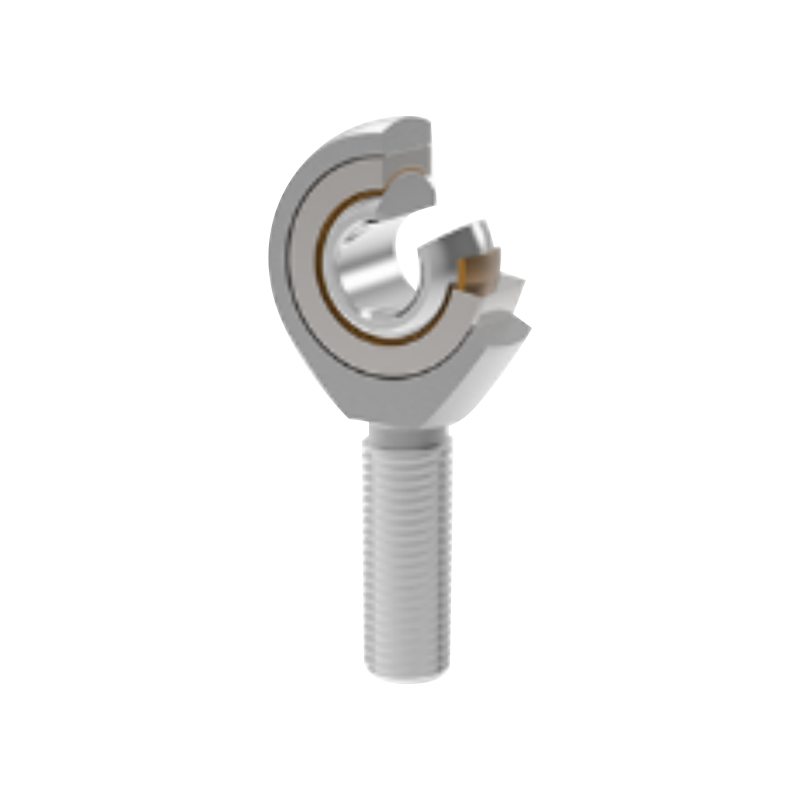
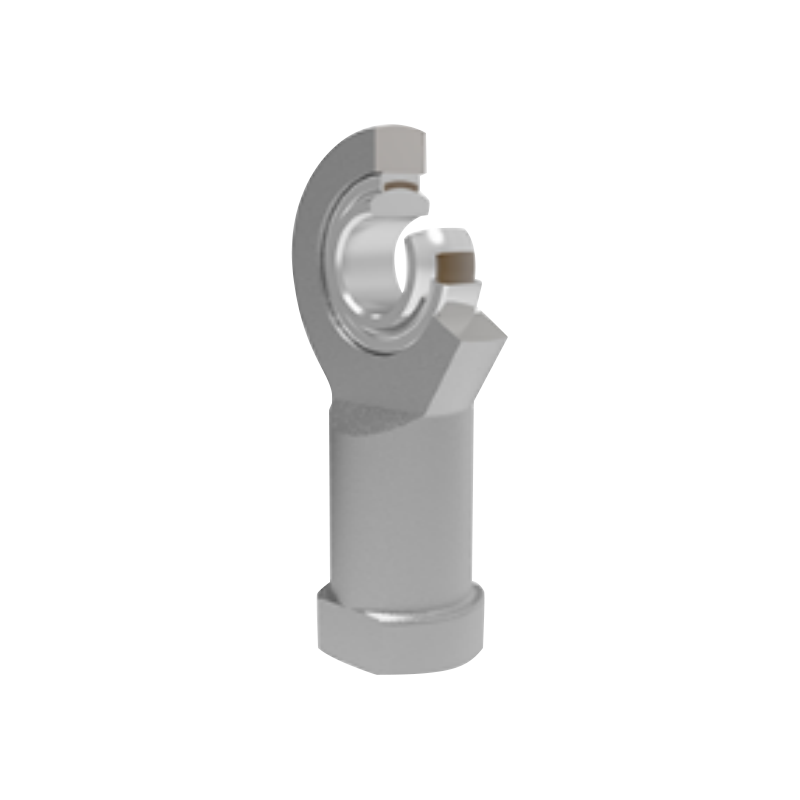
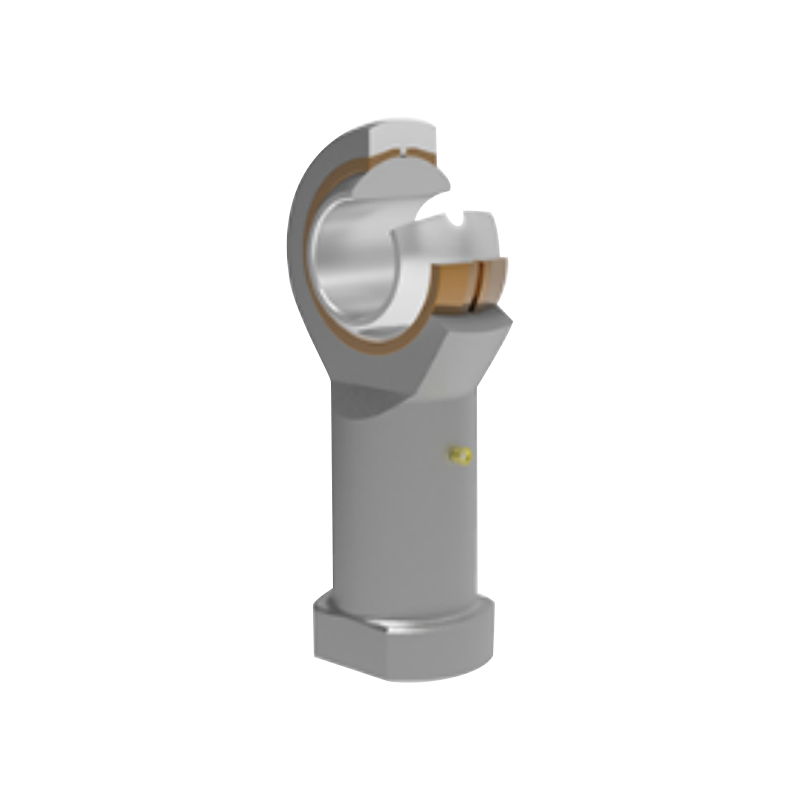
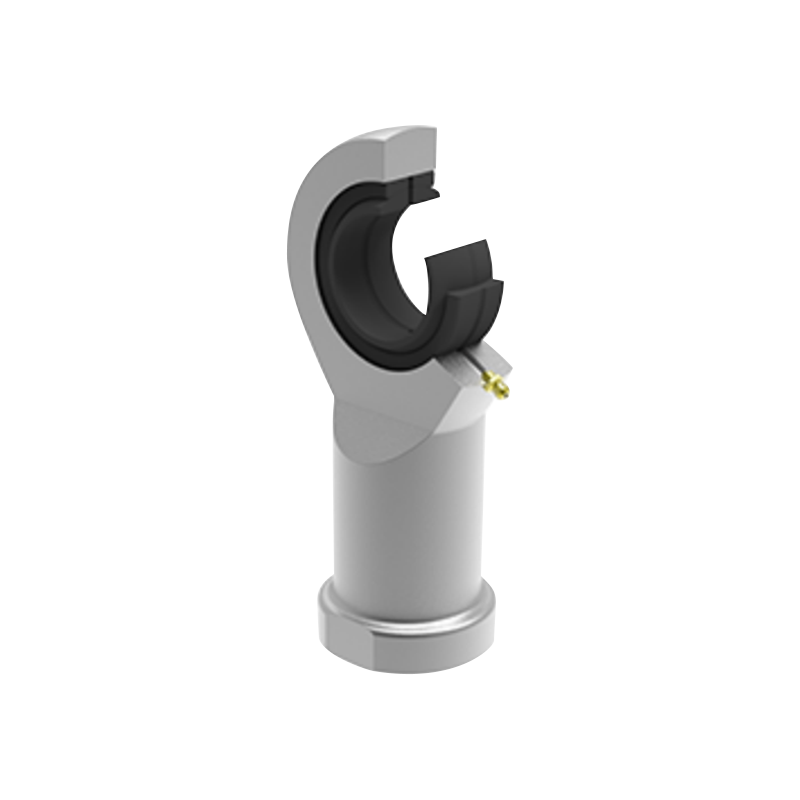
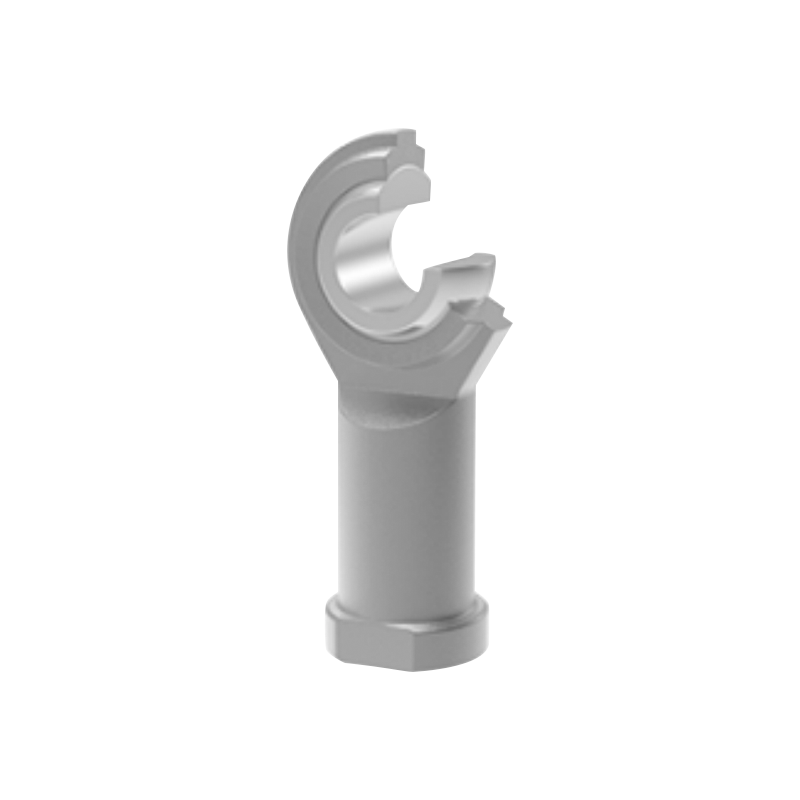
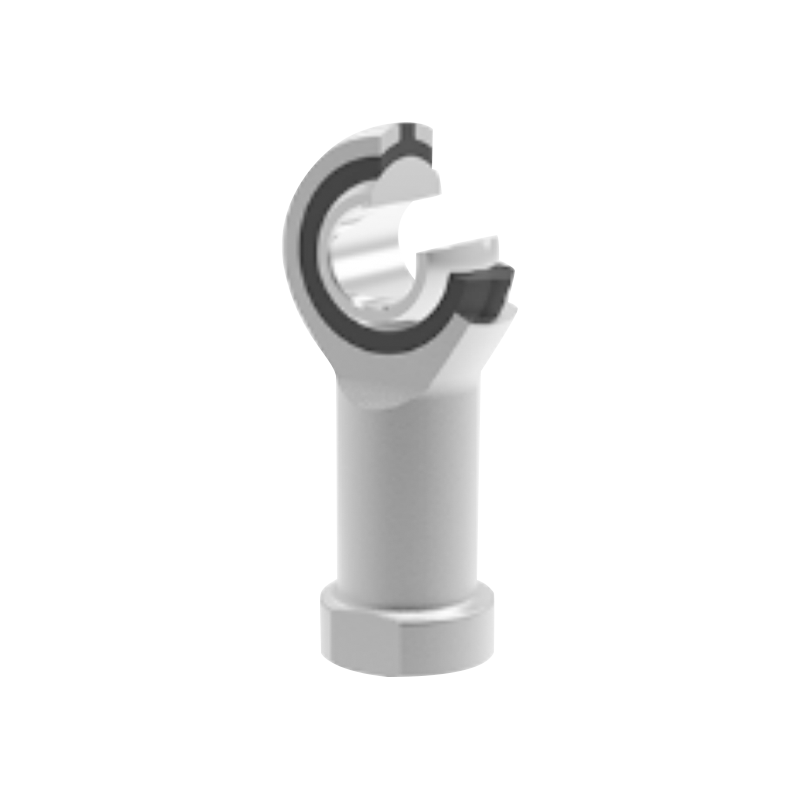
When engineers and procurement specialists search for a compact, self-lubricating rod end that eliminates the need for constant greasing, the SI5TK bearing frequently emerges as the reference point. This miniature rod end belongs to the SI5T/K series, a family of complete self-lubricating spherical plain bearings designed for low-speed oscillating motion. Unlike conventional metal-on-metal joints that require periodic oiling, this unit integrates a PTFE composite liner directly into the spherical raceway. The result is a maintenance-free component that fits into tight assemblies without sacrificing load capability or alignment flexibility.
This article provides a detailed technical breakdown of the SI5TK rod end, including its full dimensional chart, material composition, environmental limits, and application scenarios. Every parameter from the manufacturer datasheet is included so that you can make an informed selection decision without cross-referencing multiple sources.
The dimensional envelope of the SI5TK bearing is defined by its 5 mm bore and M5x0.8 internal thread. These two features dictate how the rod end mounts to mating shafts and threaded rods. The table below lists every critical dimension in millimeters, matching the standard datasheet for the SI5T/K series.
| Parameter | Value |
|---|---|
| Ball bore diameter d | 5 mm |
| Internal thread specification | M5x0.8 (6H precision) |
| Ball width B | 8 mm |
| Spherical race width C1 | 6 mm |
| Ball outer diameter dk | 11.11 mm |
| Rod end outer diameter d2 | 18 mm |
| Rod end total height h | 27 mm |
| Overall total length L4 | 36 mm |
| Wrench flat W | 9 mm |
| Minimum thread length L3 | 10 mm |
| Permissible tilt angle alpha | 13 degrees |
| Dynamic load rating C | 5.7 kN |
| Static load rating C0 | 6.0 kN |
| Weight | Approximately 16 g |
The 13-degree permissible tilt angle is a key figure. It means the SI5TK rod end can compensate for misalignment between the shaft and the housing without binding. The dynamic load rating of 5.7 kN and static rating of 6.0 kN indicate that this bearing is intended for light to moderate loads, consistent with its 16-gram weight and miniature footprint.
The performance of any rod end depends on the materials used in its construction. The SI5TK bearing combines a carbon steel body with a hardened steel ball and a PTFE composite liner. Each layer serves a specific function in wear resistance, corrosion protection, and self-lubrication.
The hard chrome plating on the ball reduces friction and resists corrosion, while the PTFE liner transfers a thin film of polytetrafluoroethylene onto the ball surface during operation. This transfer film is what makes the SI5TK bearing maintenance-free.
These limits are important for design engineers. If an application requires continuous rotation or speeds above a few hundred RPM, a different bearing type should be selected. The SI5TK is optimized for reciprocating or oscillating motion where the joint must self-align under load.
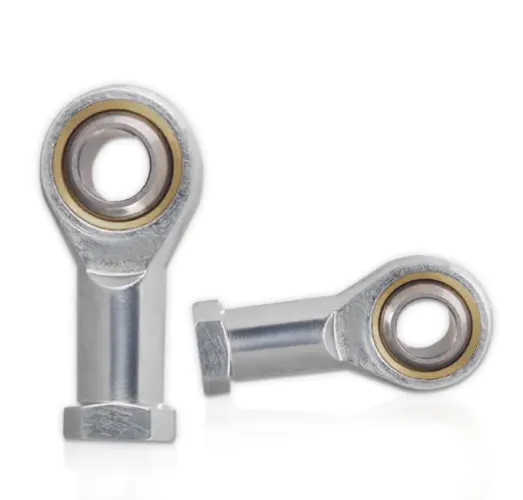
The SI5TK rod end offers several practical advantages that reduce assembly time and long-term maintenance costs. The following list summarizes the primary benefits reported in the technical datasheet.
These advantages come with specific limitations. The SI5TK bearing is not designed for high-speed continuous rotation. The PTFE liner is also not suitable for extremely high pressure or heavily contaminated environments with abrasive dust. Selecting the correct bearing for the operating conditions is essential for long service life.
The SI5TK belongs to the miniature low-load fish-eye joint category, often used in linkages, push rods, and pull mechanisms. The following application areas are typical.
In all these cases, the SI5TK bearing provides a compact pivot point that self-aligns and requires no lubrication. Its M5x0.8 internal thread accepts standard metric threaded rods, making it easy to integrate into existing designs.
The SI5TK bearing is part of the SI5T/K series of complete self-lubricating rod end bearings. The series includes several bore sizes and thread specifications. Understanding the series helps when selecting a different size for a related project.
| Model | Thread Specification |
|---|---|
| SI5T/K | M5x0.8 |
| SI6T/K | M6x1.0 |
| SI8T/K | M8x1.25 |
| SI10T/K | M10x1.5 |
The suffix L indicates a left-hand thread, for example SI5TL/K. Left-hand threads are useful in turnbuckle assemblies where rotating the rod end adjusts the total length. Stainless steel versions are also available with the suffix X for applications requiring higher corrosion resistance. These series options allow designers to standardize on the same self-lubricating rod end technology across a range of machine sizes.
The SI5TK bearing uses an M5x0.8 internal thread with 6H precision. This is a standard metric fine thread that accepts M5 threaded rods and studs.
The standard SI5TK has a right-hand thread. A left-hand thread version is available as SI5TL/K. Using one right-hand and one left-hand rod end in a linkage allows length adjustment by rotating the connecting rod.
No. The SI5TK bearing is a maintenance-free self-lubricating rod end. Its PTFE composite liner eliminates the need for oil or grease. It has no oil nozzle and can be installed and used directly.
The permissible tilt angle is 13 degrees. This allows the bearing to compensate for misalignment between the shaft and the housing without binding or edge loading.
The dynamic load rating is 5.7 kN and the static load rating is 6.0 kN. For continuous operation, it is recommended to keep the working load within one-third of the static rating, approximately 2.0 kN.
No. The SI5TK bearing is designed for low-speed oscillating and tilting motion. It is not suitable for high-speed continuous rotation. The PTFE liner and the design of the spherical pair are optimized for reciprocating motion.
The standard SI5TK bearing operates from -30 degrees C to +80 degrees C, with short-term exposure up to 120 degrees C. Higher temperatures may degrade the PTFE liner and reduce service life.
The rod end body is carbon steel with zinc plating. The inner ball is GC15 bearing steel, quenched to HRC 58-64, with a hard chrome plated spherical surface. The sliding contact is steel plus a PTFE composite liner.
Product Categories
Contact Us

Jane@ukl-bearing.com
Jenny@ukl-bearing.com
Andy@ukl-bearing.com
Ivy@ukl-bearing.com

+86-510- 88763239
+86-15371057968

No.1 Hehuan Road, Hudai Town, Binhu District, Wuxi City.
Ready to Begin?
Get in Touch

Now!
UKL BEARING
 English
 Español
 русский