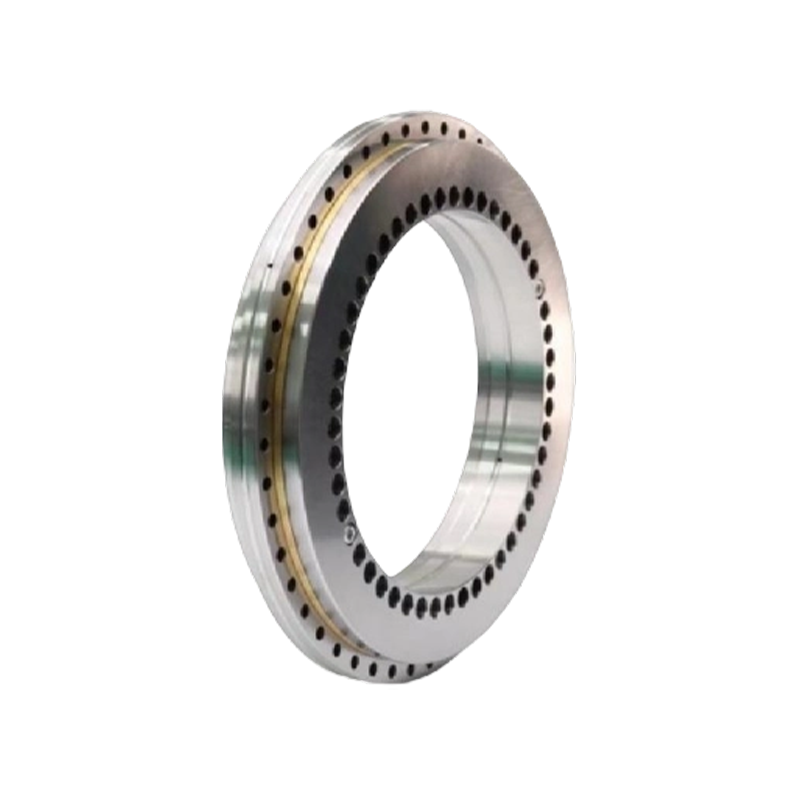
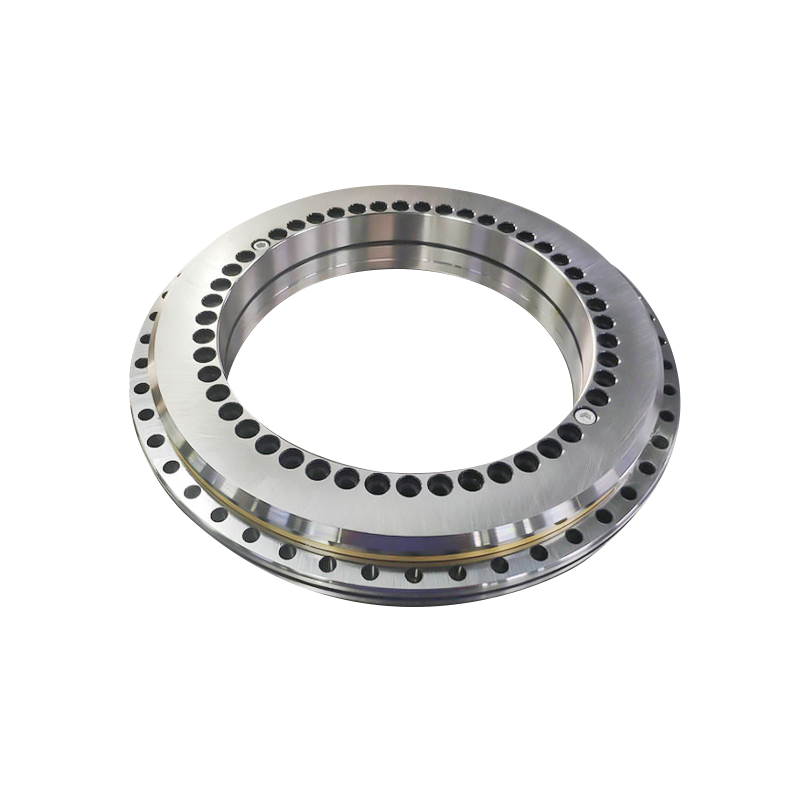
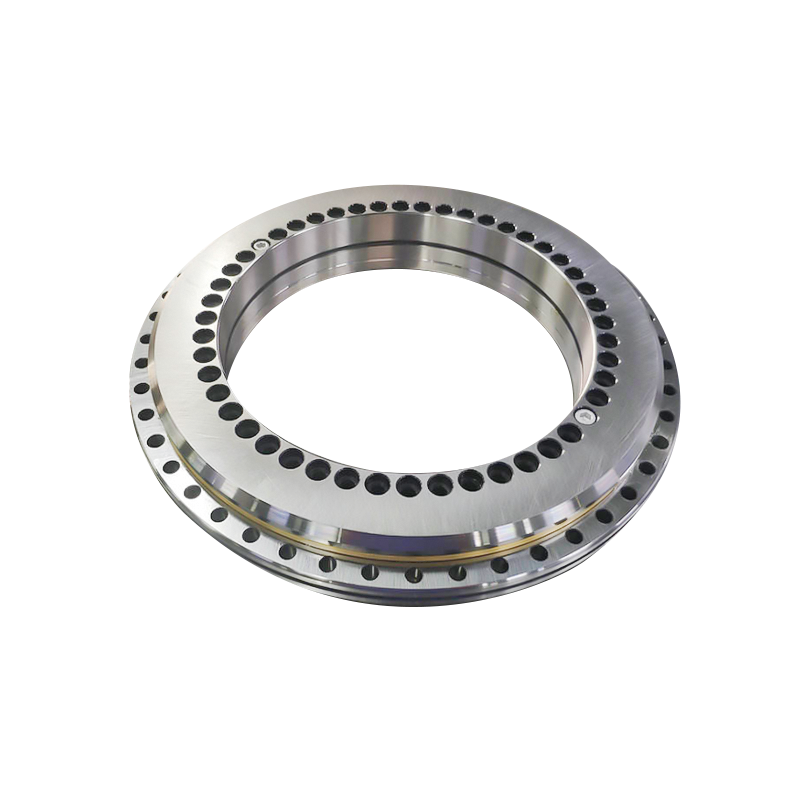
YRTS High-Speed Series: This series features higher speeds than the YRT standard series, with low and uniform friction torque across the entire speed range. While its external dimensions are the same as the YRT series, its internal structure differs. This series is best suited for direct-drive motor applications.
Bearing Features:
1. High Precision: Precision reaches P4 and P2 grades;
2. High Rigidity: All bearings in this series are preloaded;
3. High Load Capacity: Can withstand axial, radial, and overturning loads;
4. High Speed: YRTS series bearings can be used in high-speed applications.
Applications:
Widely used in precision rotary table vertical grinders, indexing heads, gear hobbing machines, gear milling machine workpiece shafts, and other precision devices.
I. Reasons for Decreased Precision of YRTS Rotary Table Bearings (FAQ)
(I) Wear
1. Fault Manifestation: During long-term operation, the bearing's precision gradually decreases due to mechanical wear.
2. Possible Cause: The rolling elements and raceways of the bearing rub against each other continuously during operation, causing surface wear and affecting accuracy.
3. Solutions:
Regular Inspection: Regularly inspect the bearing for wear and promptly identify and address any problems.
Replace Worn Parts: Replace severely worn parts promptly to ensure bearing accuracy.
(II) Insufficient Lubrication
1. Symptoms: Insufficient lubrication during bearing operation leads to decreased accuracy.
2. Possible Cause: Insufficient lubricant or improper lubricant selection increases friction during bearing operation, affecting accuracy.
3. Solutions:
Select a Suitable Lubricant: Choose a suitable lubricant based on the bearing's operating conditions to ensure effective lubrication.
Regular Lubrication: Regularly lubricate the bearing to ensure sufficient lubricant.
(III) Improper Installation
1. Symptoms: After installation, the bearing's accuracy does not meet requirements.
2. Possible Cause: Incorrect bearing installation position during installation leads to uneven stress on the bearing during operation, affecting accuracy.
3. Solutions:
Strictly follow the installation manual: During installation, strictly follow the manufacturer's installation manual to ensure correct installation position.
Use tools: Use installation tools to ensure bearing installation accuracy.
(IV) Environmental Factors
1. Fault Symptoms: Bearing accuracy decreases during operation due to environmental factors.
2. Possible Cause: Dust, impurities, or chemicals in the environment may adhere to the bearing surface, affecting its accuracy.
3. Solutions:
Maintain a clean environment: Regularly clean the environment around the bearing to reduce dust and impurities.
Use protective devices: When necessary, use protective devices, such as sealing covers, to protect the bearing from environmental factors.
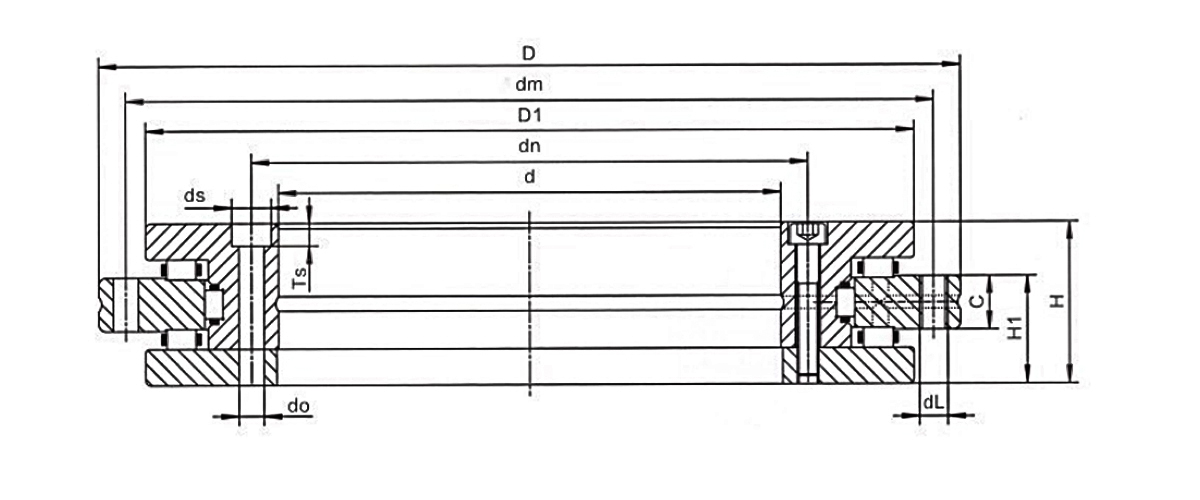
| Bearing type | Overall Dimension | The fixing holes | |||||||||||||
| d | D | H | H1 | H2 | C | D1 | dn | dm | Inner ring | Outside ring | |||||
| Unit: mm | do | ds | Ts | QTY | dL | QTY | |||||||||
| mm | mm | ||||||||||||||
| YRTS200 | 200 | 300 | 45 | 30 | 15 | 15 | 274 | 215 | 285 | 7 | 11 | 6.2 | 46 | 7 | 45 |
| YRTS260 | 260 | 385 | 55 | 36.5 | 18.5 | 18 | 345 | 280 | 365 | 9.3 | 15 | 8.2 | 34 | 9.3 | 33 |
| YRTS325 | 325 | 450 | 60 | 40 | 20 | 20 | 415 | 342 | 430 | 9.3 | 15 | 8.2 | 34 | 9.3 | 33 |
| YRTS395 | 395 | 525 | 65 | 42.5 | 22.5 | 20 | 486 | 415 | 505 | 9.3 | 15 | 8.2 | 46 | 9.3 | 45 |
| YRTS460 | 460 | 600 | 70 | 46 | 24 | 22 | 560 | 482 | 580 | 10 | 15 | 8.2 | 46 | 10 | 45 |
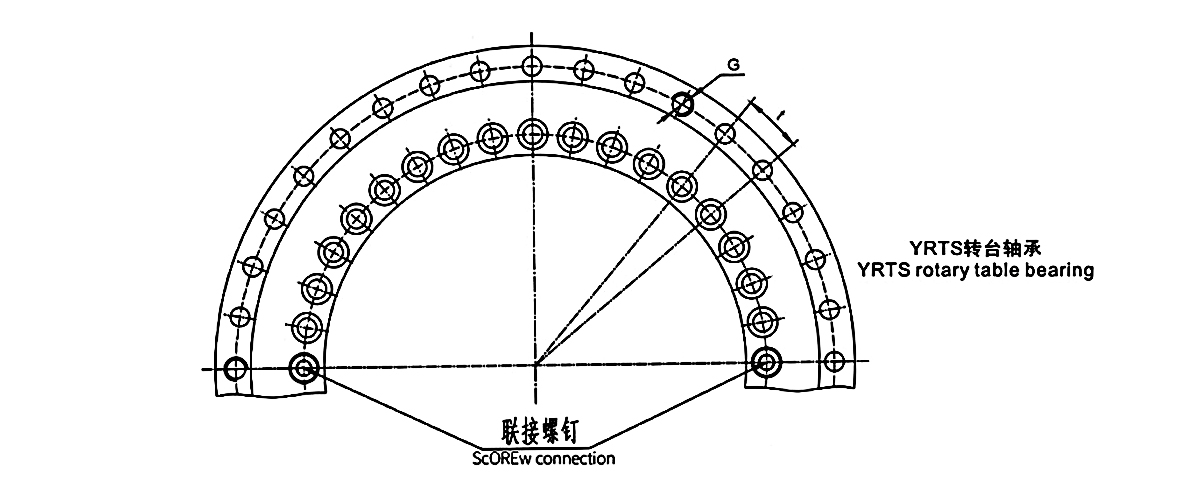
| Screw connection QTY |
Connect screws holes |
Pitch t |
Tightening torque of screw |
Basic rated load | Limited speed | Weight | Bearing type | ||||||
| Axial | radial | ||||||||||||
| Dynamic | Static | Dynamic | Static | ||||||||||
| Ma | Ca | Coa | Cr | Cor | Grease Lubrication | ||||||||
| G | QTY | QTY Xt | Nm | KN | /min | ≈Kg | |||||||
| 2 | M8 | 3 | 48×7.5° | 14 | 105 | 635 | 78 | 202 | 950 | 9.7 | YRTS200 | ||
| 2 | M12 | 3 | 36×10° | 34 | 131 | 840 | 85 | 275 | 800 | 18.3 | YRTS260 | ||
| 2 | M12 | 3 | 36×10° | 34 | 191 | 1260 | 109 | 300 | 680 | 25 | YRTS325 | ||
| 2 | M12 | 3 | 48×7.5° | 34 | 214 | 1540 | 121 | 390 | 600 | 33 | YRTS395 | ||
| 2 | M12 | 3 | 48×7.5° | 34 | 221 | 1690 | 168 | 570 | 500 | 45 | YRTS460 | ||
| Note: ◆ Includes connecting screw holes and threaded removal holes, circumferentially distributed. ◆ Torque values for tightening 12.9-grade bolts. ◆ For fixing holes between shafts and bearing housings, note the pitch and equal spacing of bearing fixing holes. |
|||||||||||||

0+
years
Industry Experience

0+
Model diversity

0+
Number of Employees

0
$
Annual export value

Why the 22205 e Bearing Matters in Heavy Equipment When engineers specify a double row spherical roller bearing for a demanding drive, the 22205 e bearing often appears near the top of the shortlist....
Engineers comparing 3200 a-2ztn9/mt33 double row angular contact ball bearings against other shaft support options usually start with one question: how do you keep a shaft rigid enough to resist til...
In the realm of precision motion control, the demand for bearings that can simultaneously handle axial, radial, and tilting moments is relentless. The ZKLDF100 bearings represent a specialized class ...
Understanding the XSU080168 Crossed Roller Bearing When precision, rigidity, and moment load capacity converge, the XSU080168 emerges as a critical component in rotating machinery. This thin-walled ...
Product Categories
Contact Us

Jane@ukl-bearing.com
Jenny@ukl-bearing.com
Andy@ukl-bearing.com
Ivy@ukl-bearing.com

+86-510- 88763239
+86-15371057968

No.1 Hehuan Road, Hudai Town, Binhu District, Wuxi City.
Ready to Begin?
Get in Touch

Now!

UKL BEARING
 English
 Español
 русский