
 English
 Español
 русский






Cross Roller Bearing Installation Guide: Principles and Best Practices
What are the critical principles and best practices for installing cross roller bearings to ensure optimal performance, precision, and service life in high-demand industrial applications?
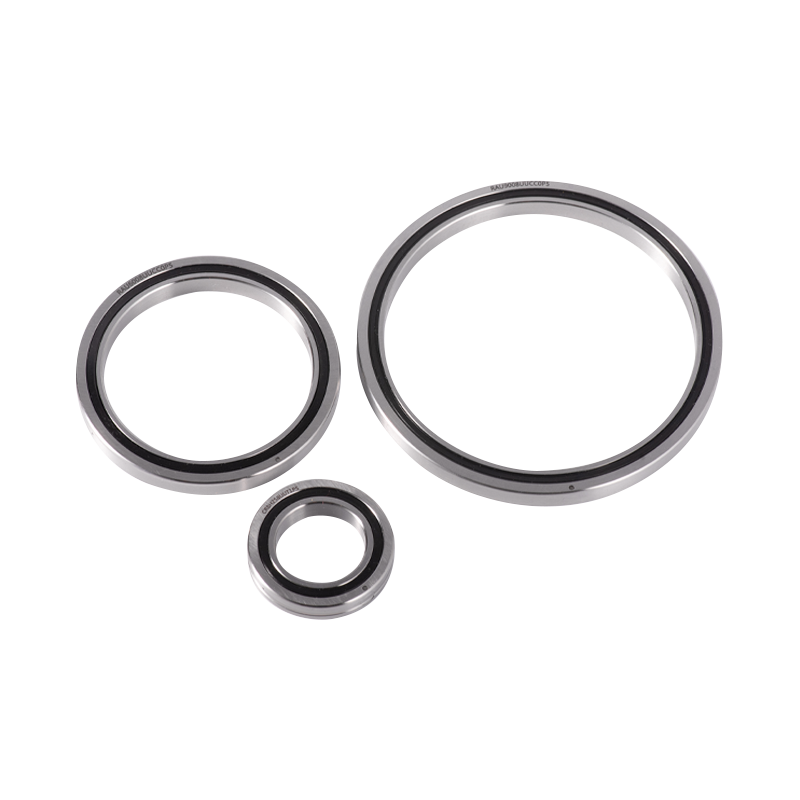
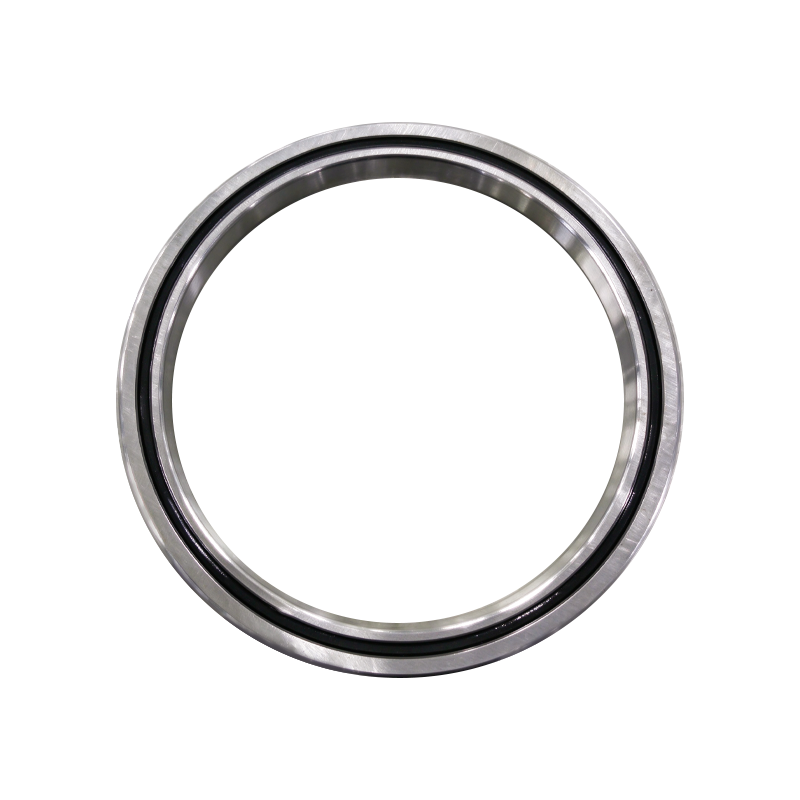
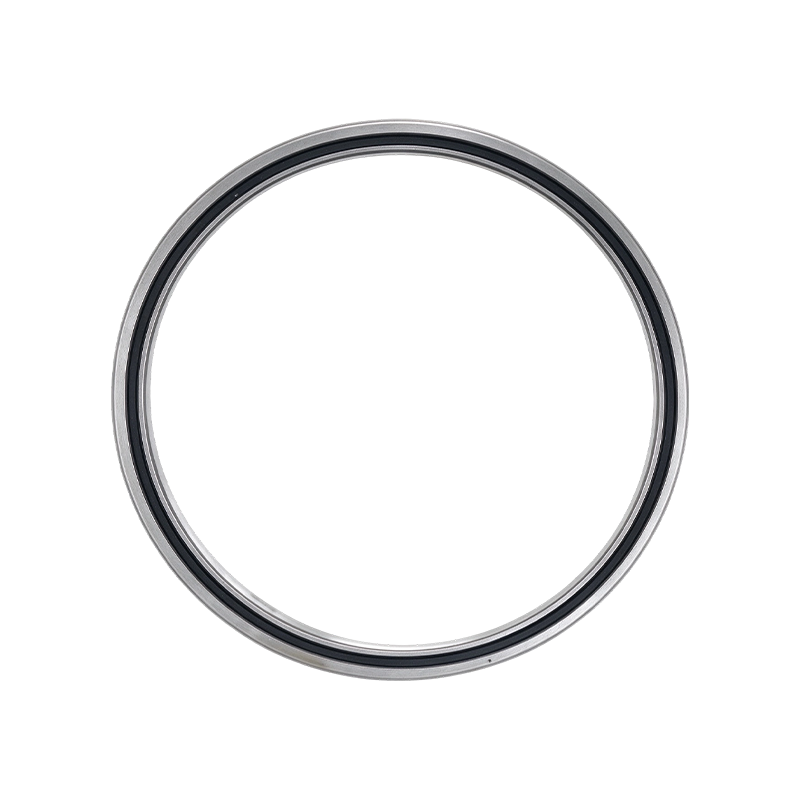
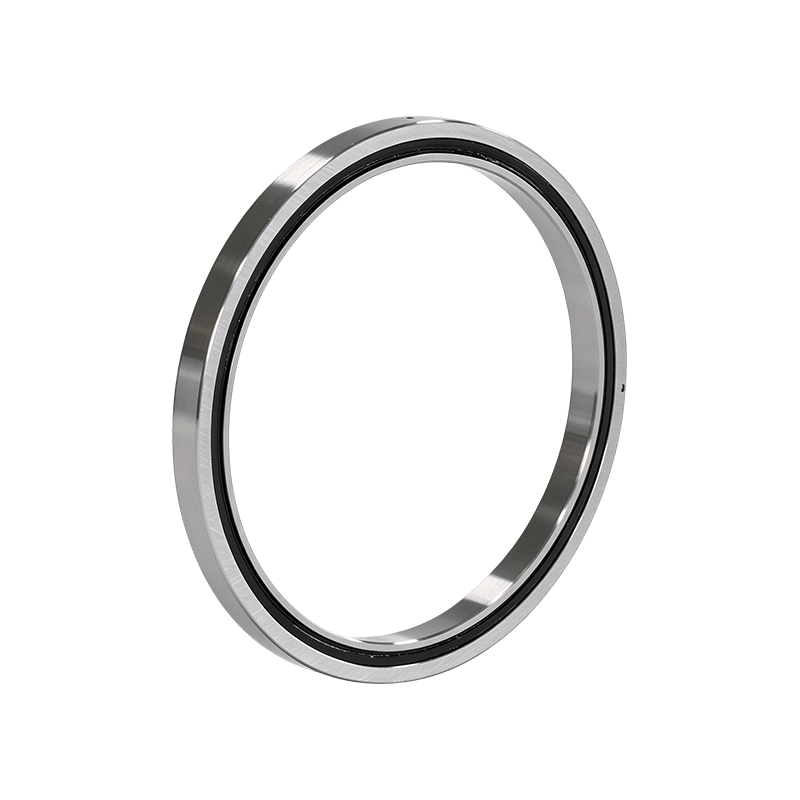
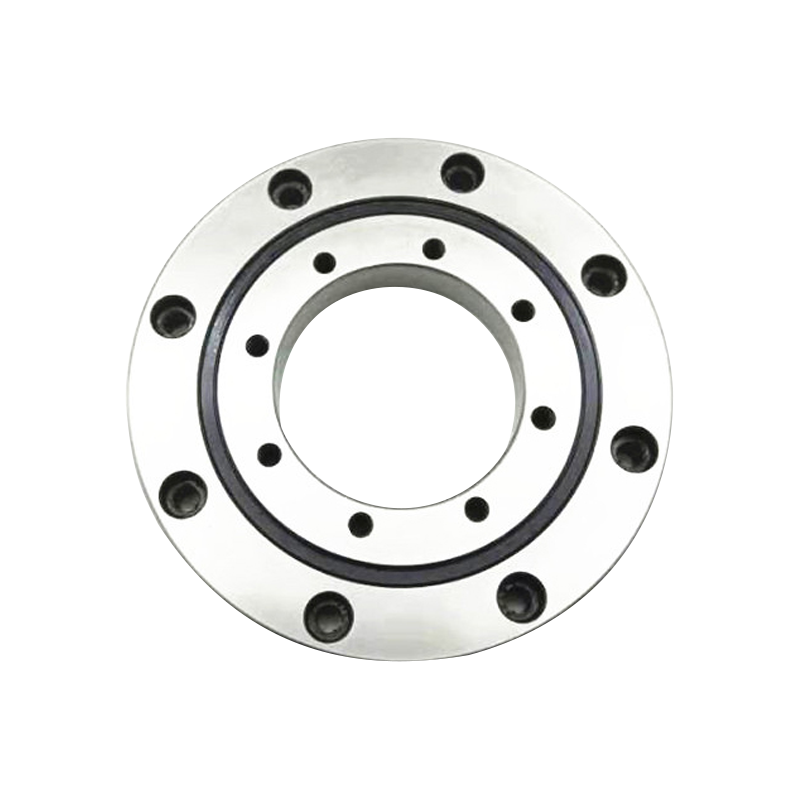
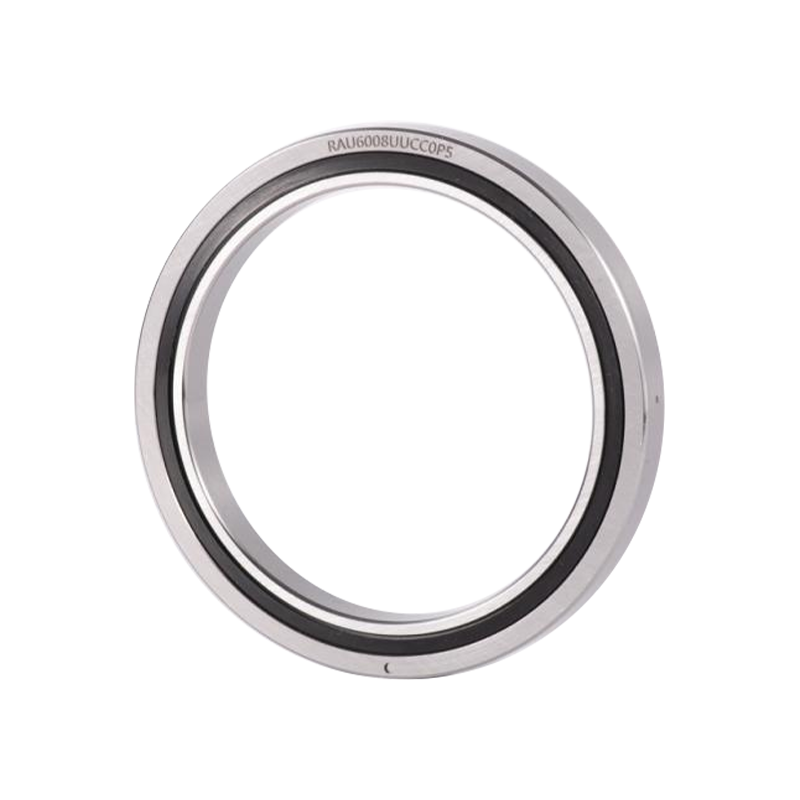
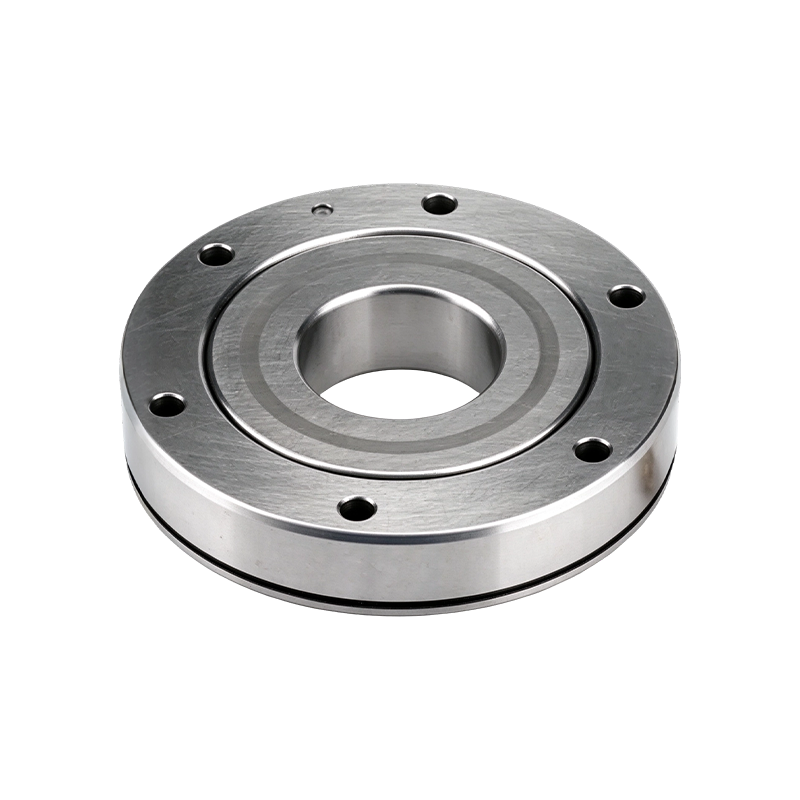
Cross roller bearings represent a distinct class of precision components engineered to accommodate combined radial, axial, and moment loads simultaneously. Their unique configuration—cylindrical rollers arranged with their axes alternately crossed at 90° within V-shaped raceways—enables exceptional rigidity and rotational accuracy in a compact footprint. Among the most widely adopted variants in compact, lightweight applications are the RAU6008 bearing, RAU7008 bearing, and RAU8008 bearing, which belong to the RAU series characterized by ultra-thin cross-sectional geometry.
Proper installation is the single most consequential factor determining whether a cross roller bearing delivers its full performance potential or suffers premature degradation.
Pre-Installation Preparation
Installation must be conducted in a dry, clean environment to prevent contamination. All mating components—bearing housings, shafts, and associated parts—require thorough cleaning to eliminate dirt, oil residue, and metallic burrs. Inspection should verify that machined surfaces meet specified tolerances for flatness, perpendicularity, roundness, and cylindricity, as these geometric attributes directly influence assembly precision and prevent stress concentrations from eccentric loading.
For split-type cross roller bearings, the retaining screws that prevent separation during transport must be loosened before installation. If the split inner or outer ring exhibits circumferential misalignment at the joint, correction using a plastic hammer is recommended prior to insertion.
Installation Procedure
Due to their thin-section construction, cross roller bearings are susceptible to tilting during insertion into housings or onto shafts. To prevent this, the bearing must be maintained in a perfectly horizontal orientation throughout the insertion process. Using a plastic or resin mallet, tap the bearing evenly around its circumference—striking the inner ring when inserting onto a shaft, and the outer ring when inserting into a housing—while advancing it incrementally. Continue until an audible confirmation indicates complete contact with the reference shoulder.
For interference-fit applications with modest interference, a sleeve and hammer may be used to apply uniform pressure across the ring end face. For larger interference, thermal expansion methods—oil bath or induction heating within 80°C to 100°C, not exceeding 120°C—are preferable. Subsequent cooling requires secure fastening with nuts or equivalent means to prevent axial clearance from developing due to contraction.
Flange Mounting and Bolt Torquing
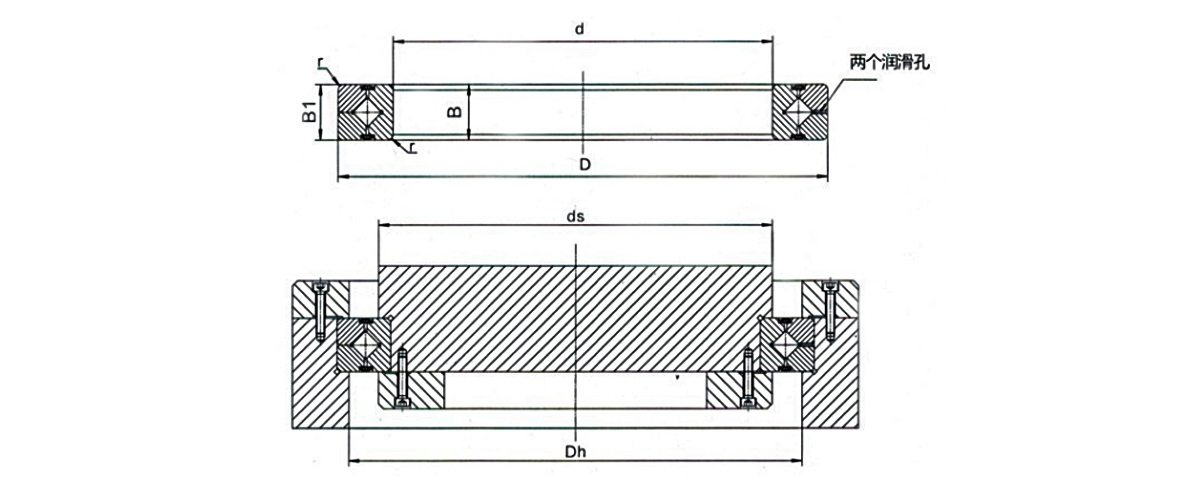
The mounting flange should first be positioned over the bearing and gently rocked to align bolt holes. Insert bolts manually to confirm unobstructed thread engagement. Tightening must proceed in three to four incremental stages, following a diagonal sequence to ensure even load distribution. When securing split inner or outer rings, rotate the integral counterpart approximately 90° between each tightening pass—four to five rotations—to correct any joint misalignment. Use a torque wrench to achieve specified values; for steel housings and flanges, reference standard torque tables based on bolt规格.
Support Structure and Flange Design Considerations
Cross roller bearings are thin-section structures; consequently, the rigidity of support housings and clamping flanges demands careful design consideration. Insufficient rigidity prevents uniform clamping of the split rings, permitting deformation under moment loads and resulting in uneven roller contact—a condition that substantially degrades bearing performance.
As a design benchmark, housing wall thickness should be no less than 60% of the bearing’s cross-sectional height. Flange thickness is typically specified within a range of 0.5 to 1.2 times the bearing width. A clearance of approximately 0.5 mm between flange components is standard. For applications demanding elevated assembly precision, designing the flange with a stepped configuration and adjusting the step height through surface grinding enables precise clamping force control. For steel flanges, an interference of 0.02 to 0.05 mm is generally recommended.
Orientation and Load Zone Positioning
RAU series bearings feature a roller loading hole on the outer ring, sealed with a plug. During installation, ensure this plug position does not coincide with the maximum load zone. Similarly, for bearings with split outer rings, the split joint should be oriented away from the primary load direction. Adherence to these orientation principles minimizes stress concentrations and optimizes load distribution across the roller complement.
Post-Installation Verification
Following assembly, rotate the shaft or housing manually to confirm smooth operation. Proceed to power-driven no-load, low-speed operation, gradually increasing speed and load while monitoring for abnormal noise, vibration, or temperature rise. Any anomalies warrant immediate shutdown and investigation before commissioning.
RAU Series Product Overview
The RAU series represents an ultra-compact variant of cross roller bearings, achieved by minimizing inner and outer ring thickness to the practical limit. This design is optimal for weight-sensitive and space-constrained applications including industrial robot joints, precision rotary tables, direct-drive motors, medical instrumentation, and CNC machining centers. RAU series bearings feature an integrated inner and outer ring structure compatible with both inner and outer ring rotation.
RAU6008, RAU7008, and RAU8008 Bearing Specifications
| Parameter | RAU6008 | RAU7008 | RAU8008 |
|---|---|---|---|
| Bore Diameter (d) | 60 mm | 70 mm | 80 mm |
| Outer Diameter (D) | 76 mm | 86 mm | 96 mm |
| Roller Pitch Circle Diameter (dp) | 67 mm | 77 mm | 87 mm |
| Width (B) | 8 mm | 8 mm | 8 mm |
| Shoulder Height (ds / Dh) | 63.5 mm / 70.5 mm | 73.5 mm / 80.5 mm | 83.5 mm / 90.5 mm |
| Dynamic Load Rating (Cr) | 5.68 kN | 5.98 kN | 6.37 kN |
| Static Load Rating (Cor) | 8.68 kN | 9.80 kN | 11.3 kN |
| Mass | 0.09 kg | 0.10 kg | 0.11 kg |
| Material | GCr15 high-carbon chromium bearing steel (through-hardened) | GCr15 high-carbon chromium bearing steel (through-hardened) | GCr15 high-carbon chromium bearing steel (through-hardened) |
| Accuracy Classes Available | P0, P6, P5, P4 | P0, P6, P5, P4 | P0, P6, P5, P4 |
| Radial Clearance Options | CC0 (preloaded), C0 (slight clearance) | CC0 (preloaded), C0 (slight clearance) | CC0 (preloaded), C0 (slight clearance) |
| Seal Options | Open type (standard); UU (double-lip seal on both sides) | Open type (standard); UU (double-lip seal on both sides) | Open type (standard); UU (double-lip seal on both sides) |
As a professional bearing factory and bearing manufacturing company in China, UKL Bearing Manufacturing Co., Ltd. (Wuxi) specializes in high-performance bearing solutions, providing technical support for global industries with exceptionally high demands for precision and reliability. UKL’s facilities cover the entire manufacturing process—forging, annealing, turning, heat treatment, grinding, and automated assembly—supported by a team of more than 200 skilled professionals. UKL manufactures RAU6008 bearing, RAU7008 bearing, and RAU8008 bearing to precise specifications, with capabilities extending to customized solutions for specialized applications. UKL also offers technical consultation on installation best practices to ensure optimal bearing performance. UKL maintains rigorous quality management throughout production.
FAQ
Q1: What is the most common mistake made when installing cross roller bearings?
Insufficient attention to the thin-section nature of these bearings, leading to tilting during insertion. Always maintain perfect horizontal orientation and use even, gentle tapping with a plastic mallet to advance the bearing incrementally.
Q2: Why is bolt torque sequencing important for RAU series bearing installation?
Diagonal, multi-stage tightening ensures uniform clamping force distribution across the split rings, preventing localized deformation that would compromise rotational accuracy and bearing service life.
Q3: Can RAU6008 bearing, RAU7008 bearing, and RAU8008 bearing be used interchangeably?
No. These bearings have distinct bore diameters (60 mm, 70 mm, and 80 mm respectively) and corresponding outer diameters. Selection must match the specific shaft and housing dimensions of the application.
Q4: What lubrication is recommended for RAU series cross roller bearings?
Grease lubrication is standard for most applications, though oil lubrication is also acceptable. The choice depends on operating speed, temperature, and environmental conditions. Sealed (UU) variants retain lubricant more effectively in contaminated environments.
Q5: How can I verify that a cross roller bearing has been installed correctly?
Perform a manual rotation check followed by no-load, low-speed power operation. Gradually increase speed and load while monitoring for abnormal noise, vibration, or temperature rise. Any irregularities indicate potential installation issues requiring investigation.


