 English
 Español
 русский
Understanding the XSU080168 Crossed Roller Bearing
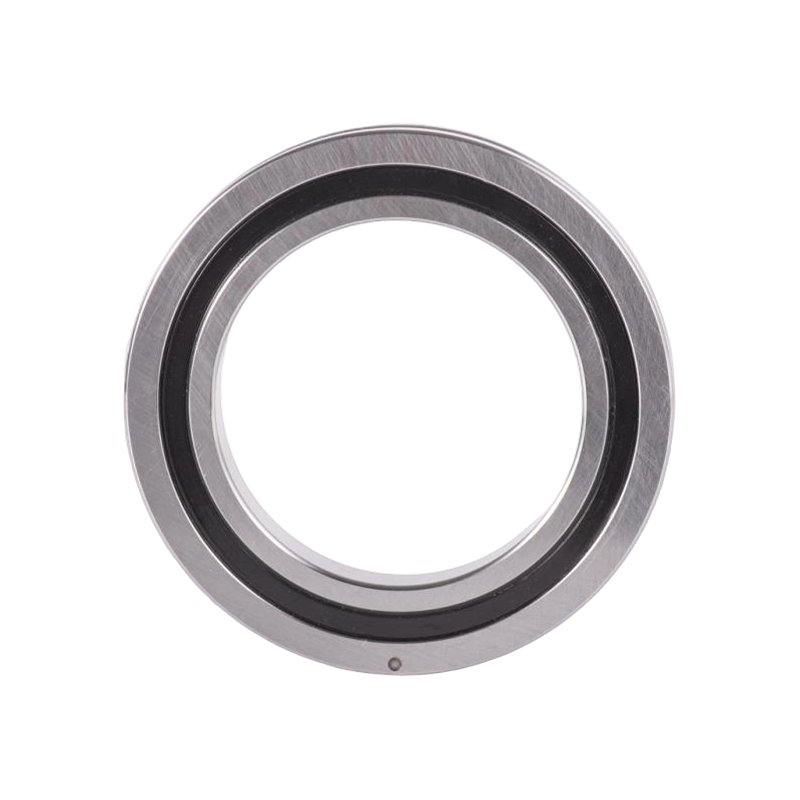
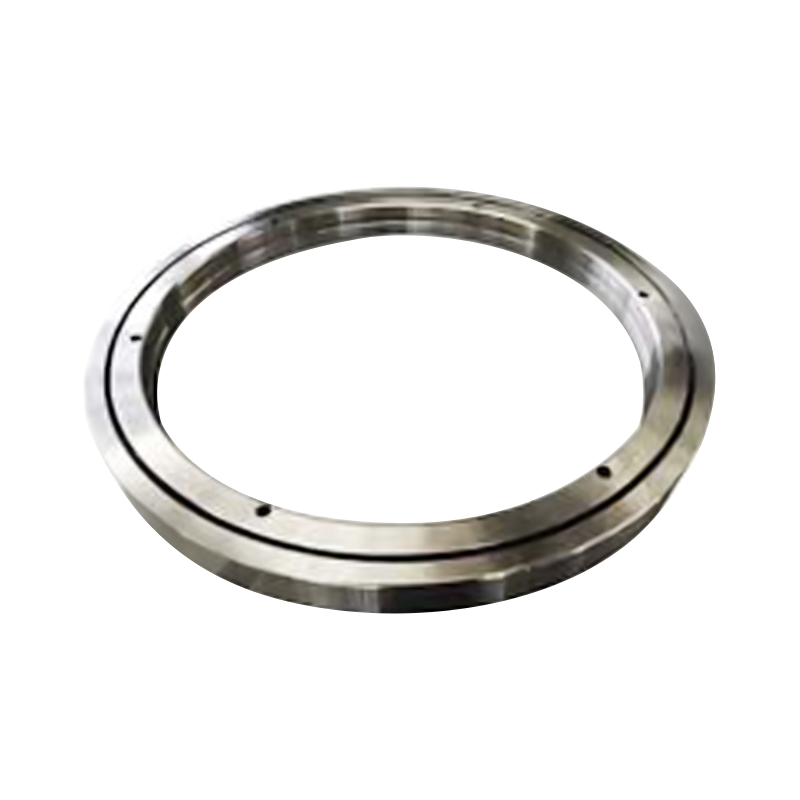
When precision, rigidity, and moment load capacity converge, the XSU080168 emerges as a critical component in rotating machinery. This thin-walled XSU080168 bearings configuration delivers engineering solutions for applications demanding exceptional rotational accuracy and structural support. With an inner diameter of 130 mm and outer diameter of 205 mm, the XSU080168 represents the 08 series standard within its family, purpose-built for applications where conventional bearings fall short.
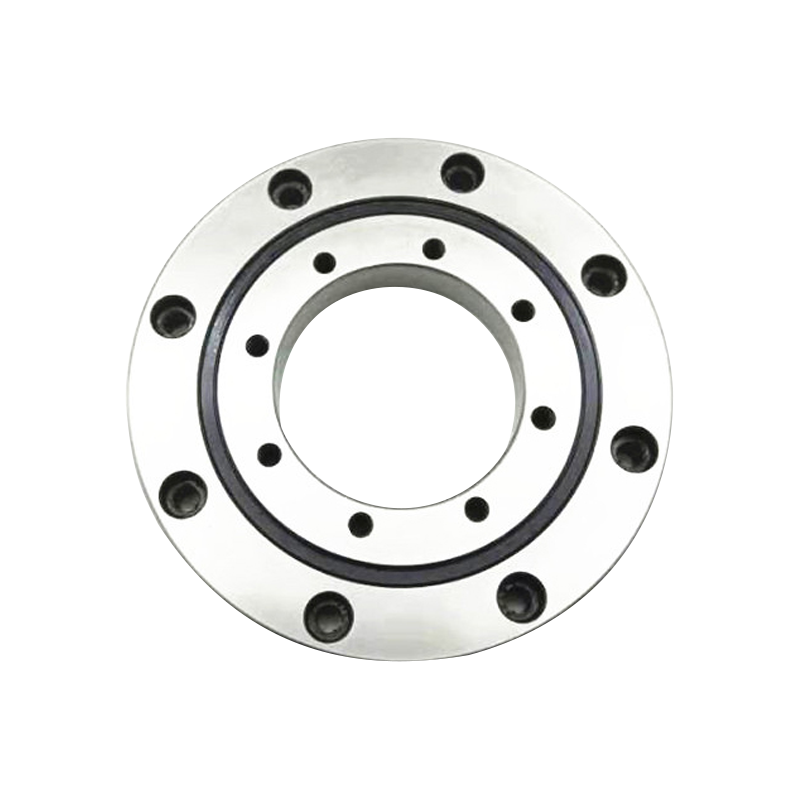
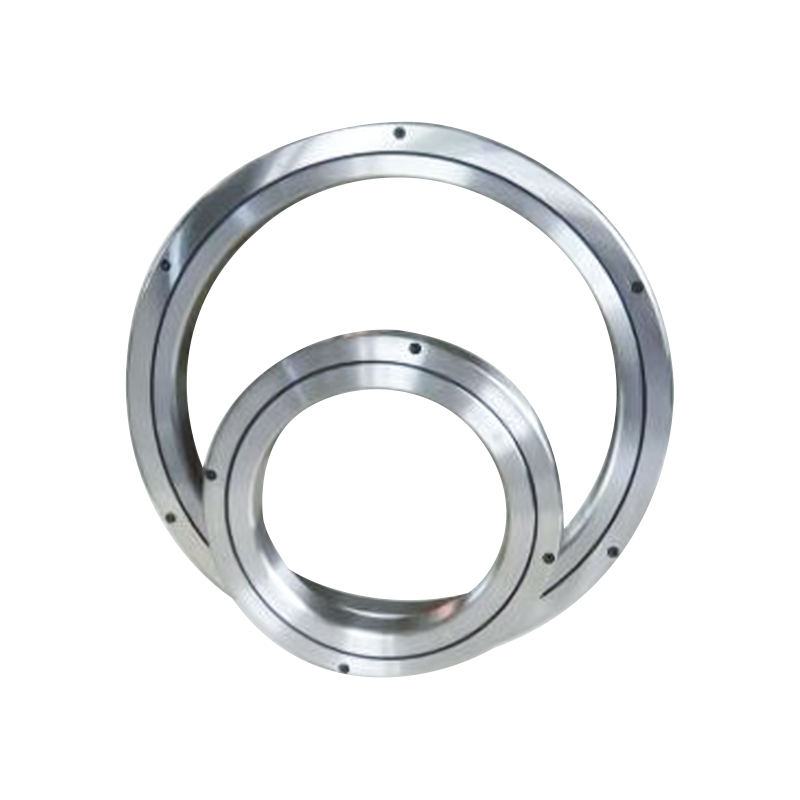
The XSU080168 is a toothless, unsealed crossed roller bearing featuring laminar seals on both sides. Its 25.4 mm width and integrated mounting holes eliminate the need for external flanges or support rings, making installation straightforward while preserving performance integrity. Engineers across robotics, medical devices, and manufacturing systems rely on this bearing type to handle radial, axial, and moment loads simultaneously within a single compact unit.
Technical Specifications and Dimensional Data
Comprehensive specification data ensures proper bearing selection and integration into your mechanical systems. The following table consolidates the critical dimensions, load capacities, and operational parameters of the XSU080168:
| Parameter | Dimension/Value | Unit |
|---|---|---|
| Inner Diameter (d) | 130 | mm |
| Outer Diameter (Da) | 205 | mm |
| Width (H) | 25.4 | mm |
| Outer Ring Inner Diameter (Di) | 174 | mm |
| Inner Ring Outer Diameter (da) | 159 | mm |
| Ring/Flange Width | 24.8 | mm |
| Outer Ring Mounting Hole Circle (La) | 190 | mm |
| Inner Ring Mounting Hole Circle (Li) | 145 | mm |
| Number of Mounting Holes | 12 each ring | pieces |
| Hole Diameter | 6.8 (counterbore 11, depth 6.8) | mm |
| Total Weight | 3.3 | kg |
Load Ratings and Performance Limits
The XSU080168 delivers exceptional load-carrying capacity across multiple directions. Understanding these ratings is essential for bearing selection and system design validation:
| Load Type | Rating | Value |
|---|---|---|
| Basic Dynamic Axial Load (Ca) | 66,000 N | (66 kN) |
| Basic Static Axial Load (C0a) | 240,000 N | (240 kN) |
| Basic Dynamic Radial Load (Cr) | 47,000 N | (47 kN) |
| Basic Static Radial Load (C0r) | 118,000 N | (118 kN) |
| Limit Speed (nG) | 227 | rpm |
| Maximum Moment Load | 8,180 | N |
| Operating Temperature Range | -30 to +80 | Celsius |
These specifications confirm that the XSU080168 excels in applications combining rotational and thrust movements. The moment load capacity of 8,180 N distinguishes this bearing in scenarios where tilting or angular forces occur alongside radial and axial loads.
Design Features and Technical Advantages
90-Degree V-Track Configuration
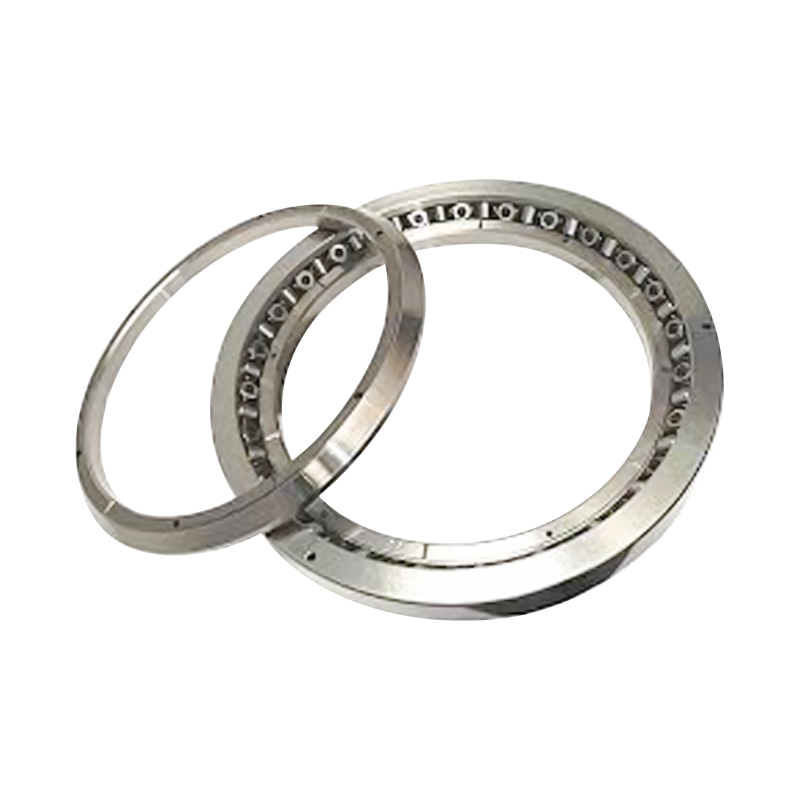
The core innovation of the XSU080168 lies in its perpendicular arrangement of cylindrical rollers within 90-degree V-shaped grooves. Unlike traditional angular contact bearings, this crossed roller design orients rollers at right angles to one another, enabling the bearing to carry radial, axial, and moment loads within a single unit. The line contact between rollers and raceways generates higher stiffness compared to point contact geometries found in ball bearings, translating to improved precision and reduced deflection under load.
Integrated Assembly Design
The XSU080168 integrates inner and outer rings as a complete assembly, with mounting holes pre-machined to exacting tolerances. This design eliminates the need for separate support frames, external flanges, or custom spacers. Installation proceeds directly to your equipment without supplementary components, minimizing assembly variation and preserving bearing performance characteristics. The 12 evenly-spaced mounting holes on each ring provide flexible mounting options for different equipment geometries.
Laminar Seal Protection
Laminar seals on both ring sides provide effective contamination exclusion while permitting excellent rotational characteristics. These seals offer reliable protection against dust and moisture ingress during normal operation, extending service life in industrial environments. The seal design maintains low friction, allowing the bearing to operate at the rated limit speed without thermal degradation.
Precision Grades and Customization
The XSU080168 is available in precision grades P5, P4, and P2, accommodating applications from general industrial use to demanding high-precision environments. This flexibility permits engineers to balance cost and performance according to specific application requirements. Higher precision grades support tighter positional tolerances and smoother rotational characteristics in demanding rotary systems.
Compact Footprint with High Load Capacity
The 25.4 mm width constrains installation envelope while delivering load ratings comparable to significantly larger bearing designs. This dimensional efficiency enables space-constrained applications to achieve high-performance rotary support without redesigning mounting interfaces or enlarging equipment frames.
Typical Applications and Use Cases
The XSU080168 serves critical functions across multiple industrial and commercial sectors. Its unique combination of load capacity, moment handling, and compact geometry makes it indispensable in precision rotary equipment:
Industrial Robotics
Collaborative and industrial robot arms employ crossed roller bearings at joint interfaces where multiple load directions converge. The XSU080168 supports wrist joints and elbow rotations, permitting rapid repositioning while maintaining positional accuracy during operation and under static load conditions. The high moment load capacity prevents joint sagging and deflection during extended reach or payload manipulation.
Precision Rotary Tables
Machine tool rotary tables and precision indexing platforms depend on crossed roller bearings for accurate positioning during multi-axis machining operations. The XSU080168 delivers the rigidity necessary for tight positional tolerance in CNC milling, turning, and grinding processes. Unlike conventional spindle bearings, the crossed roller configuration handles significant thrust loads accompanying radial cutting forces.
Medical Imaging Equipment
Advanced medical devices including computed tomography scanners, magnetic resonance systems, and surgical robotic platforms integrate crossed roller bearings for precise gantry rotation and patient positioning. The bearing supports continuous smooth rotation under strict contamination control, essential for imaging quality and system reliability. The low vibration profile contributes to image clarity and diagnostic accuracy.
Semiconductor Manufacturing
Wafer handling equipment, mask alignment systems, and photolithography stage movements require bearings capable of precise angular positioning. The XSU080168 enables smooth substrate rotation and transfer operations while maintaining nanometer-scale positioning accuracy necessary for modern integrated circuit fabrication.
Rotary Positioning Mechanisms
General-purpose rotary tables, turntables, and indexing mechanisms benefit from the XSU080168's design efficiency. Applications ranging from assembly equipment to inspection systems employ this bearing to achieve reliable, accurate rotation with minimal maintenance requirements.
Machining Center Spindles
Secondary spindle assemblies and rotary cutting tool magazines utilize crossed roller bearings for tool positioning and rotation. The bearing's stiffness supports precise tool angles and smooth speed changes across operational ranges.
Interchangeability and Alternative Considerations
The XSU080168 designation represents a standardized design, enabling cross-supplier compatibility and replacement sourcing. Equipment originally specified with crossed roller bearings meeting XSU080168 dimensional and performance parameters may utilize bearings from multiple manufacturers meeting the same specification standard, providing supply chain flexibility and competitive procurement options.
Standard Interchange Compatibility
Bearings designated as XSU080168 conform to established dimensional standards and load ratings. When sourcing replacement or additional units, verify that dimensional data, load capacities, and mounting hole configurations match the original specification. This standardization permits seamless substitution without equipment modification.
Series Family Expansion
The XSU bearing family includes numerous size variations accommodating different envelope constraints and load requirements. Common related sizes such as XSU080188 and additional XSU series members enable design optimization for applications requiring larger load capacities or different dimensional constraints. Selecting from the same manufacturer family simplifies inventory management and standardizes assembly procedures across multiple equipment types.
Precision Grade Selection
When sourcing replacement bearings, confirm that the precision grade (P5, P4, or P2) matches original equipment specifications. Higher precision grades increase bearing cost but deliver improved rotational smoothness and tighter positional tolerance. Lower grades reduce acquisition cost for applications with moderate precision requirements.
Sealing Options
While the standard XSU080168 features laminar seals, some applications may require modified sealing configurations or open designs. Discuss specific contamination environments and lubrication strategies with suppliers to ensure proper seal selection for your equipment conditions.
Bearing Selection and Procurement Guide
Application Assessment Process
Before committing to bearing acquisition, evaluate your application's specific requirements against the XSU080168 capabilities. This systematic approach prevents costly errors and ensures first-purchase success:
- Calculate or measure radial load components arising from equipment weight, cutting forces, or dynamic movements
- Determine axial thrust loads from equipment operation, including acceleration and deceleration phases
- Assess moment loads from cantilevered loads or multi-directional forces applied through the bearing center
- Verify operating speed requirements against the 227 rpm limit speed
- Confirm environmental conditions including temperature extremes, contamination presence, and lubrication method
- Evaluate precision and smoothness requirements for your specific application
Precision Grade Confirmation
Crossed roller bearings accommodate different precision grades, influencing both performance and cost. Standard P5 grade suits general industrial applications with moderate positioning accuracy requirements. P4 grade supports tighter tolerances and smoother operation in precision equipment. P2 grade, the highest precision level, serves extreme-accuracy applications demanding minimal runout and maximum rigidity. Confirm your equipment's original bearing specification or consult with application engineers to select the appropriate grade.
Quantity and Volume Planning
Procurement pricing typically decreases with larger order quantities. If your operations require multiple bearings across different equipment or anticipate future bearing replacements, consolidating orders into larger volumes achieves better unit pricing. Communicate your anticipated annual consumption or single-order quantity to enable quotations reflecting available volume discounts.
Lead Time and Availability
Standard XSU080168 units from established suppliers typically maintain stock, permitting rapid delivery for maintenance or retrofit applications. However, specialized precision grades or custom sealing configurations may require extended lead times. Planning bearing replacement intervals and ordering in advance prevents production disruptions from bearing unavailability.
Technical Documentation Requirements
Request complete technical datasheets including dimensional drawings, load-life calculations, installation guidelines, and lubrication recommendations. Computer-aided design files in industry-standard formats (STEP, IGES) facilitate equipment integration and prevent installation errors. Some suppliers provide CAD models enabling virtual fit verification before physical installation.
Inquiring for Support
When contacting suppliers, provide detailed information enabling accurate quotations and technical recommendations: application type, equipment specifications, load profile data, environmental conditions, quantity requirements, and delivery timeline. Photographic or drawing documentation of the current bearing installation assists suppliers in confirming proper specification and compatibility.
Frequently Asked Questions About the XSU080168
Q1: What is the primary difference between crossed roller bearings and conventional angular contact bearings?
Crossed roller bearings feature cylindrical rollers arranged at 90-degree angles, enabling simultaneous radial, axial, and moment load capacity within a single bearing unit. Conventional angular contact bearings employ balls or rollers at a single contact angle, limiting their ability to handle moment loads. The line contact geometry of crossed roller bearings delivers superior rigidity and precision compared to point contact designs, making them ideal for applications requiring exceptional stiffness and accuracy.
Q2: Can the XSU080168 bearing be operated at speeds exceeding 227 rpm?
The 227 rpm limit speed represents the maximum safe continuous rotational velocity before thermal issues and accelerated wear occur. Operating above this speed generates excessive friction and heat, degrading lubricant performance and shortening bearing service life. Equipment designed for higher speeds requires larger bearing sizes from the XSU family or alternative bearing types better suited to elevated-speed applications.
Q3: How should the XSU080168 be lubricated, and what maintenance intervals are recommended?
Lubrication method depends on application operating conditions and equipment design. Some applications employ bearing grease applied during assembly with periodic relubrication at extended intervals. High-speed or continuous-operation systems may require oil circulation or oil-mist lubrication for superior heat dissipation. Consult the bearing supplier's lubrication guide specific to your application operating speeds and thermal conditions. Maintenance intervals typically extend 3,000 to 5,000 operating hours with proper lubrication; inadequate lubrication drastically reduces service life.
Q4: What precision grades are available for the XSU080168, and how do they affect performance and cost?
Three precision grades serve different application requirements: P5 (standard) provides adequate accuracy for general industrial use; P4 delivers tighter tolerances and smoother operation for precision equipment; P2 offers the highest accuracy for demanding applications. Precision improvements increase bearing manufacturing complexity and cost. Select the lowest grade meeting your application requirements to optimize value while ensuring acceptable performance.
Q5: How are mounting holes sized and arranged on the XSU080168, and is special installation equipment required?
The XSU080168 features 12 mounting holes on each ring (inner and outer), evenly spaced on 145 mm and 190 mm bolt circle diameters respectively. Hole diameter is 6.8 mm with a counterbore accommodating larger fastener heads. Standard socket head cap screws or similar fasteners secure the bearing to equipment frames. Installation requires only conventional hand tools or small torque wrenches; no specialized bearing installation equipment is necessary for basic mounting. However, alignment during installation proves critical to achieving specified performance; use dial indicators or equivalent alignment tools to ensure proper ring orientation.
Q6: What environmental conditions affect the XSU080168's service life and performance?
Temperature extremes, contamination, humidity, and corrosive atmospheres all influence bearing durability. The standard -30 to +80 Celsius operating range accommodates most industrial environments; extreme temperatures require consultation with the bearing supplier regarding alternative sealing or lubrication strategies. Moisture and corrosive salt environments accelerate external corrosion; specify stainless steel or surface-coated bearings for marine or chemically aggressive installations. Particulate contamination shortens service life through accelerated wear; install appropriate filtration or protective covers to exclude dust and debris from the bearing environment.
Q7: How is bearing life calculated, and what factors influence actual service life in equipment?
Bearing life depends primarily on actual applied loads, operating speed, lubrication quality, alignment accuracy, and environmental conditions. Nominal bearing life calculations based on standard load-life formulas provide theoretical estimates; actual service life often exceeds nominal life under ideal conditions or falls short under adverse circumstances. Proper bearing selection, installation, lubrication, and environmental control optimize service life. Equipment designers and operators should monitor bearing condition through vibration analysis or temperature measurement to detect deterioration before failure occurs.
Q8: Are customized versions of the XSU080168 available with alternative sealing, preload, or coating specifications?
Many bearing manufacturers offer customization options including alternative seal designs, internal preload adjustments, ceramic coatings for wear resistance, or stainless steel construction for corrosive environments. Customization requires longer lead times and higher minimum orders compared to standard configurations. Contact the bearing supplier with your specific requirements to determine feasibility and pricing for specialized versions.
Q9: What installation procedures prevent common mistakes that damage XSU080168 bearings during assembly?
Critical installation practices include: alignment verification before tightening mounting fasteners to prevent preload and runout errors; gradual fastener tightening in opposing bolt patterns to distribute load evenly; lubrication application according to supplier recommendations before operation; verification of mounting surface cleanliness to prevent foreign material inclusion; and careful handling during assembly to avoid dropping or striking the bearing. Review the supplier's installation guide specific to your equipment before beginning assembly work.
Q10: How do I determine if the XSU080168 is the correct bearing size for my application, or if a different size from the XSU family is more appropriate?
Calculate total radial, axial, and moment loads expected during normal operation and temporary peak load scenarios. Compare these values against the XSU080168's load ratings (66 kN axial dynamic, 240 kN axial static, 47 kN radial dynamic, 118 kN radial static, 8.18 kN moment). If actual loads exceed these ratings with appropriate safety margins, step up to the next larger size in the XSU family. If loads are significantly lower, a smaller size may reduce cost. The supplier's bearing selection software or technical staff can provide recommendations based on detailed load analysis.