Content
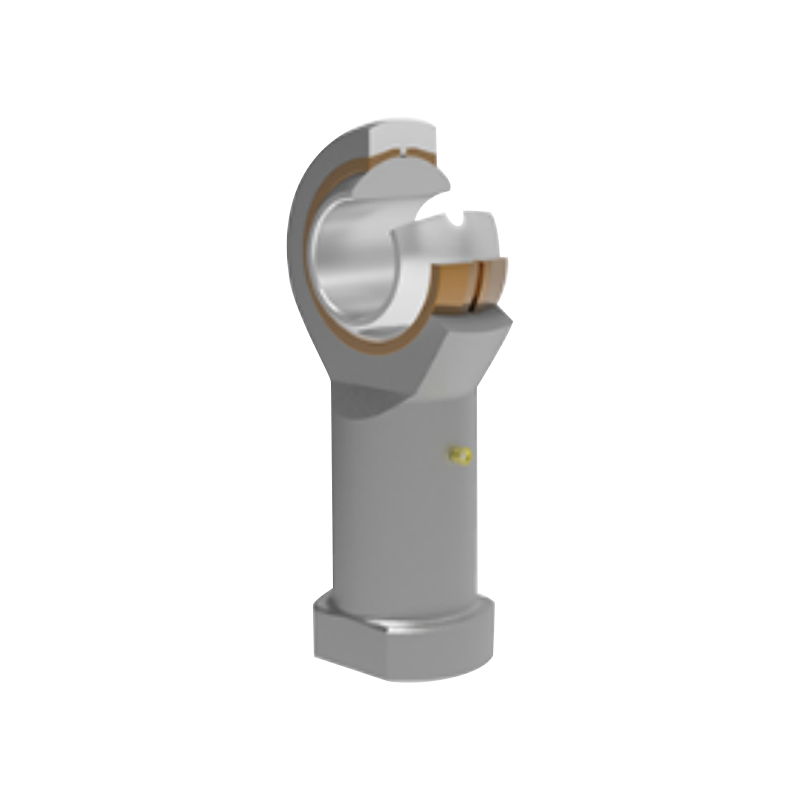
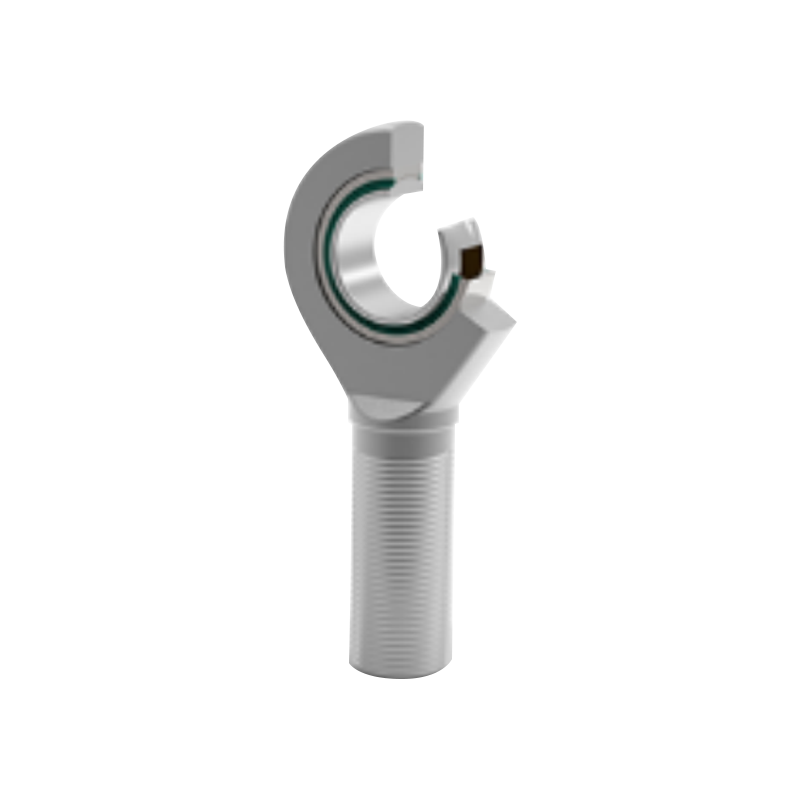
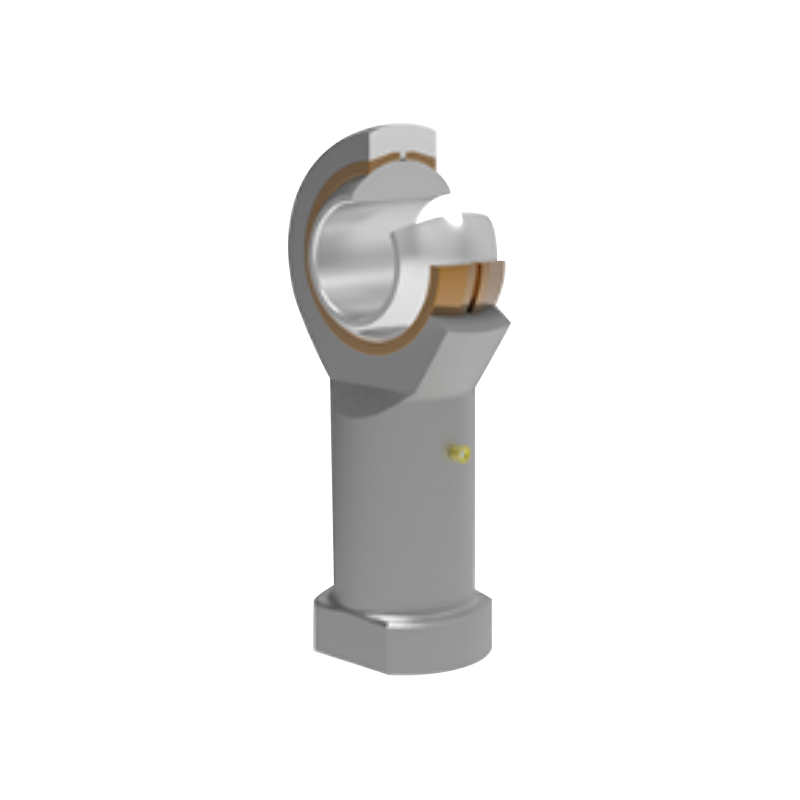
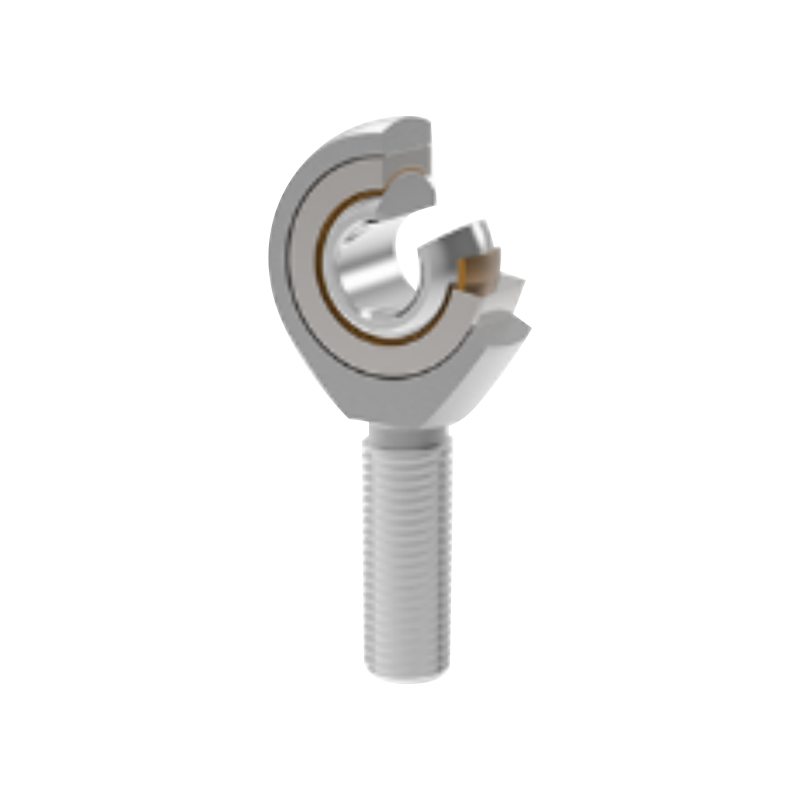
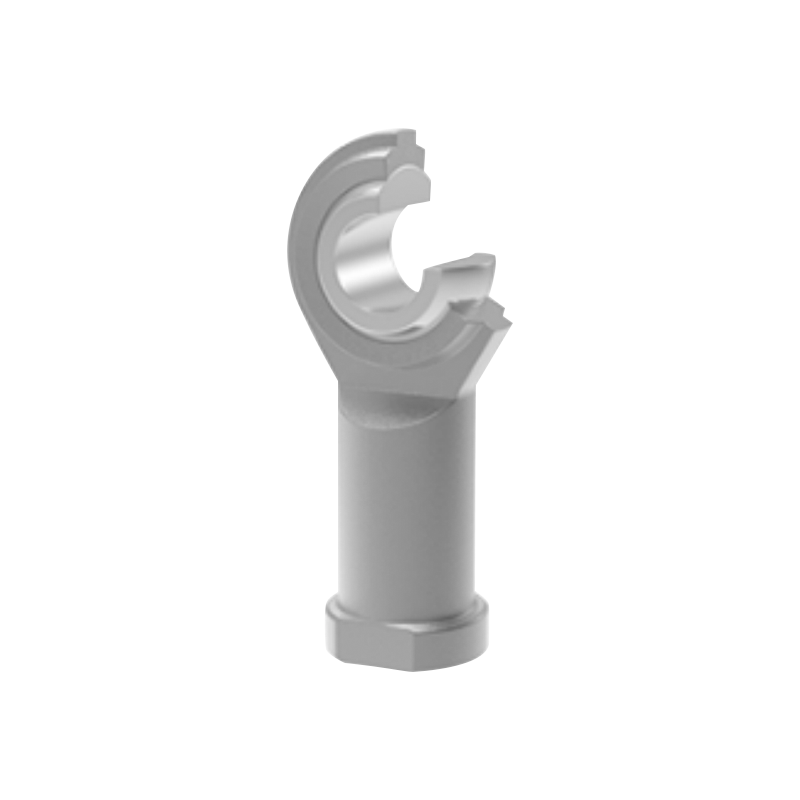
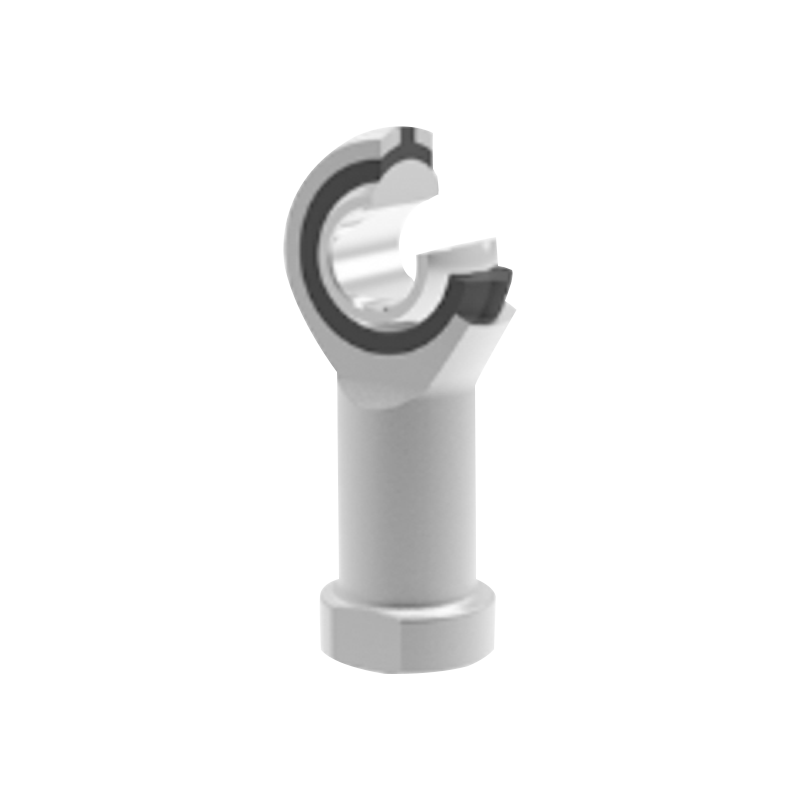
Extruded rod end spherical plain bearings are compact mechanical components designed to connect rods, actuators, linkage assemblies, and structural members while allowing controlled angular movement. The SAZJ series is engineered for applications that demand a combination of compact geometry, high rigidity, corrosion resistance, wear resistance, and dependable service over an extended operating life. Its construction brings together a galvanized carbon steel rod end body, a hardened and hard chrome plated bearing steel inner ring, and an extruded structural design intended for demanding industrial environments.
Unlike ordinary hinges or simple clevis connections, a rod end spherical plain bearing accommodates angular misalignment between connected components. This ability is especially valuable in automation equipment, industrial robots, medical mechanisms, aerospace assemblies, precision instruments, and motion-control systems. A shaft or stud can be supported through the spherical inner ring while the rod end body remains securely attached to a threaded rod or actuator. The result is a flexible connection that can transmit load without forcing every connected part to remain perfectly aligned.
The SAZJ extrusion rod end bearing is particularly suited to engineers seeking a practical alternative to bulkier linkage arrangements or less durable standard rod ends. Its compact body saves installation space, its surface treatment supports corrosion resistance, and its bearing materials are selected for strength and wear performance. Flexible lubrication and thread customization further allow the series to be adapted to different machine architectures and precision requirements.
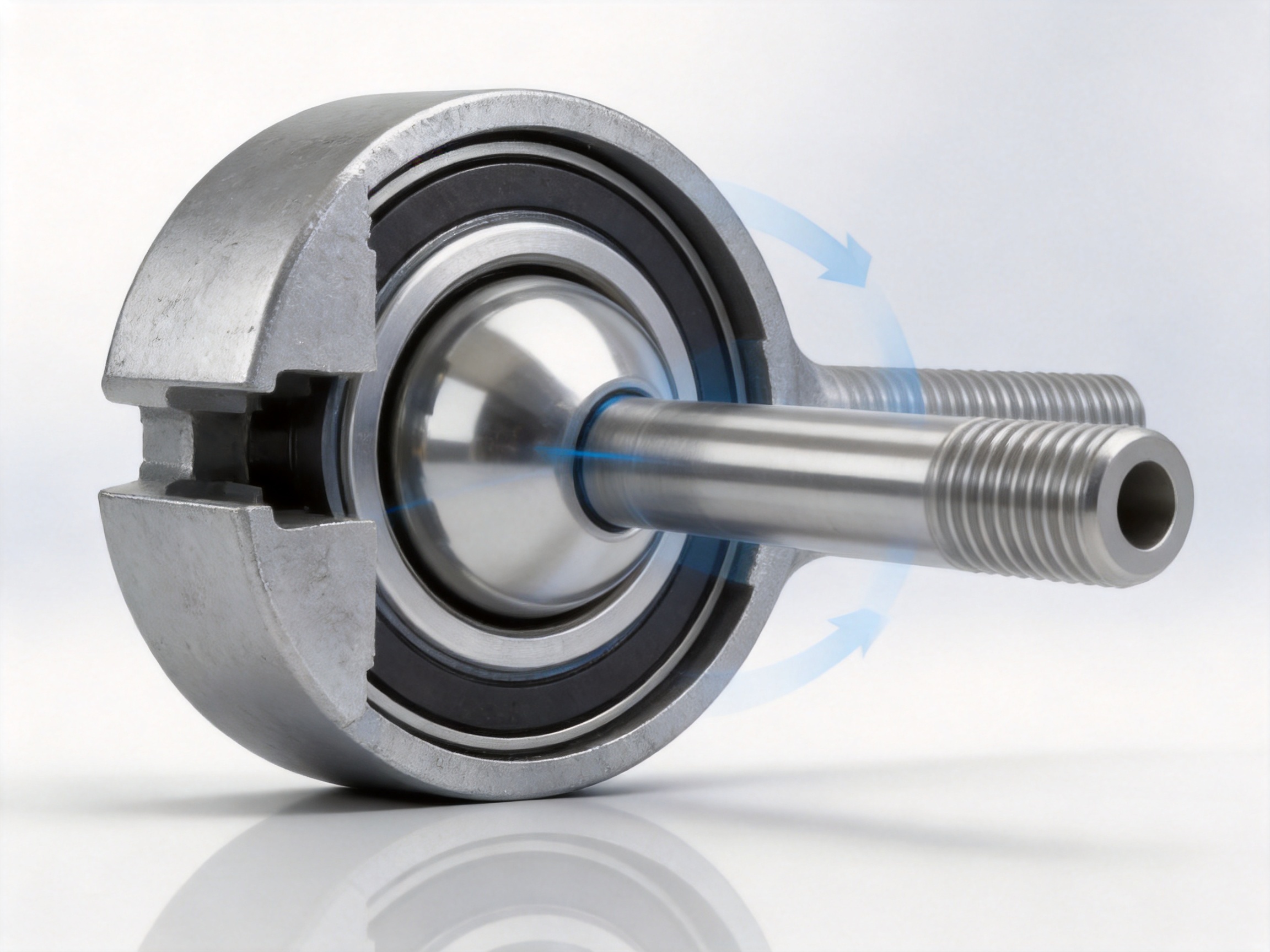
A rod end spherical plain bearing consists of a rod end housing and a spherical inner ring. The housing includes a threaded shank or rod end connection, while the inner ring contains the bore through which a pin, shaft, or fastener is installed. The outer surface of the inner ring is spherical, allowing it to rotate and tilt inside the corresponding spherical seat of the housing.
This arrangement provides oscillating movement and angular accommodation rather than the continuous rolling motion associated with ball bearings or cylindrical roller bearings. The design is therefore well suited to linkages, control rods, actuators, articulated joints, and other mechanisms where the direction of load changes slightly during operation.
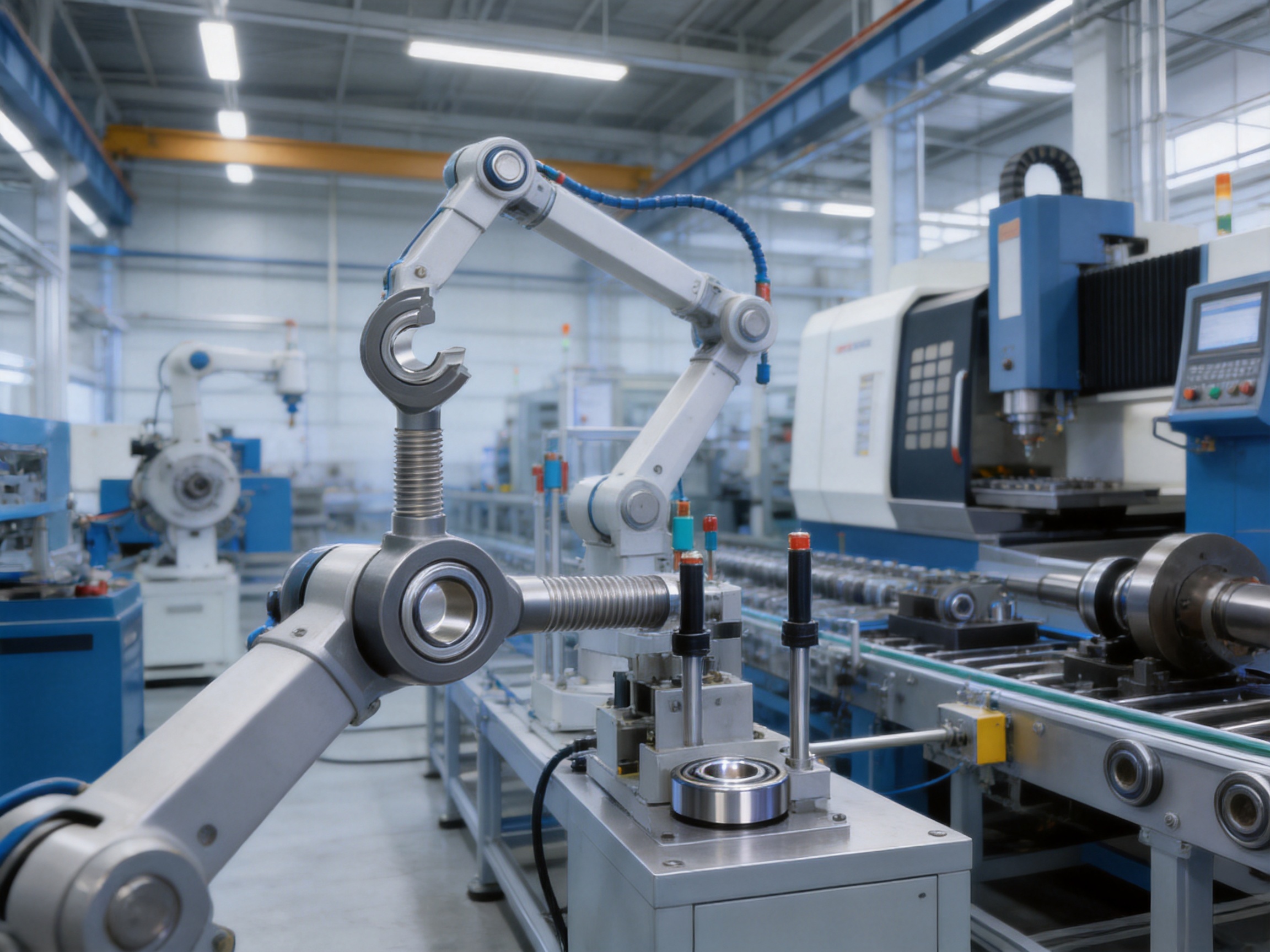
In an industrial robot, for example, a rod end bearing may connect a cylinder to a moving arm. The cylinder may extend along one axis while the robot arm moves through several angular positions. Without a self-aligning joint, this movement could create bending loads, edge pressure, and premature wear. A spherical plain bearing allows the joint to adjust its angle while maintaining a stable connection.
The SAZJ series uses an extruded rod end structure. Extrusion supports a compact form and provides a consistent body shape suitable for repeatable production. Compared with a poorly designed or oversized joint, an extruded rod end can reduce unnecessary material, simplify installation, and help designers maintain a clean mechanical layout.
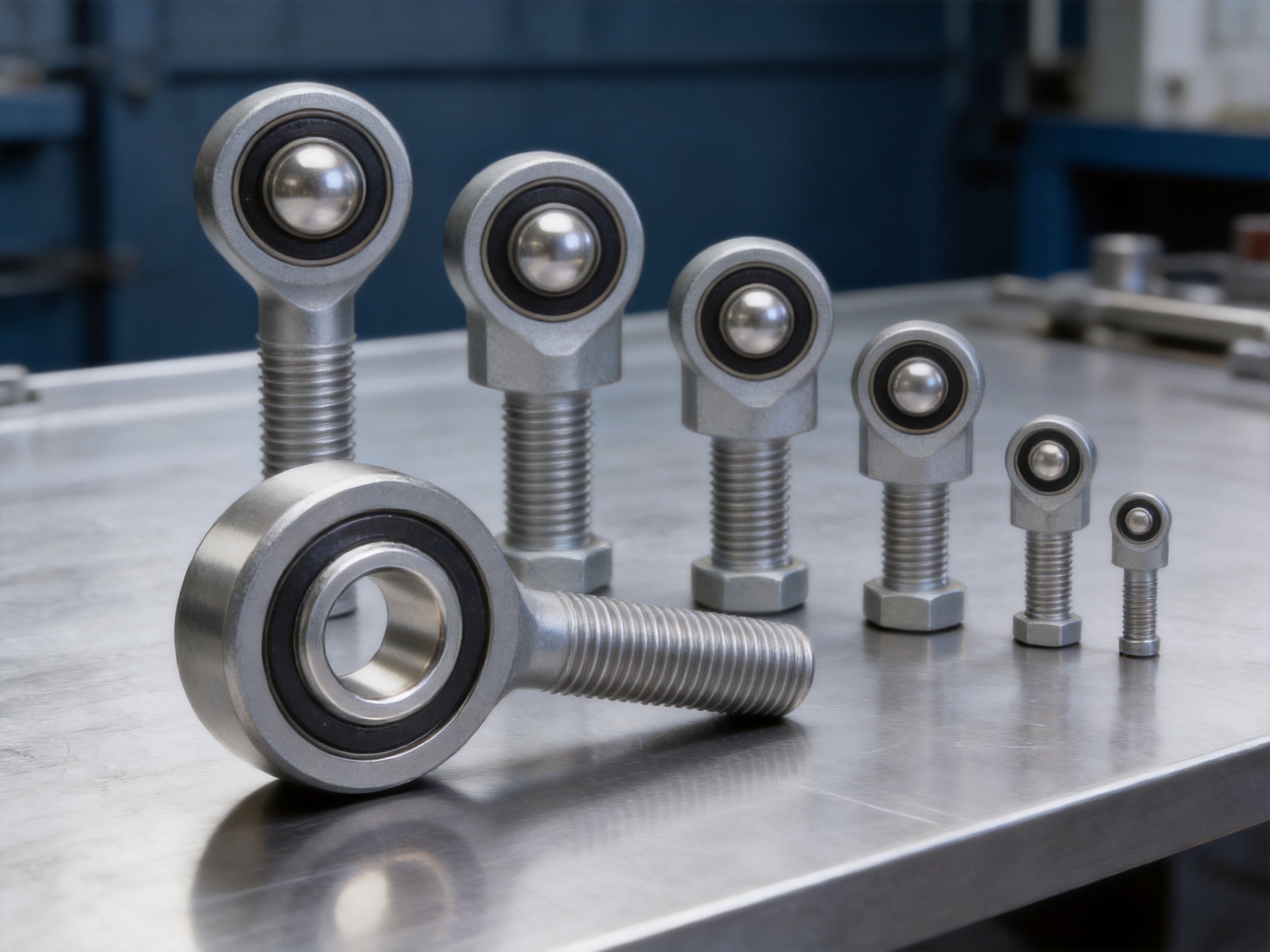
The series is available in several inch-based bore and thread sizes, including models from SAZJ4 through SAZJ19. The selection covers small precision linkages as well as larger mechanisms requiring higher load capacity. Dynamic load ratings listed for the series range from 3.6 kN to 34 kN, while static load ratings range from 3.8 kN to 44 kN across the stated models.
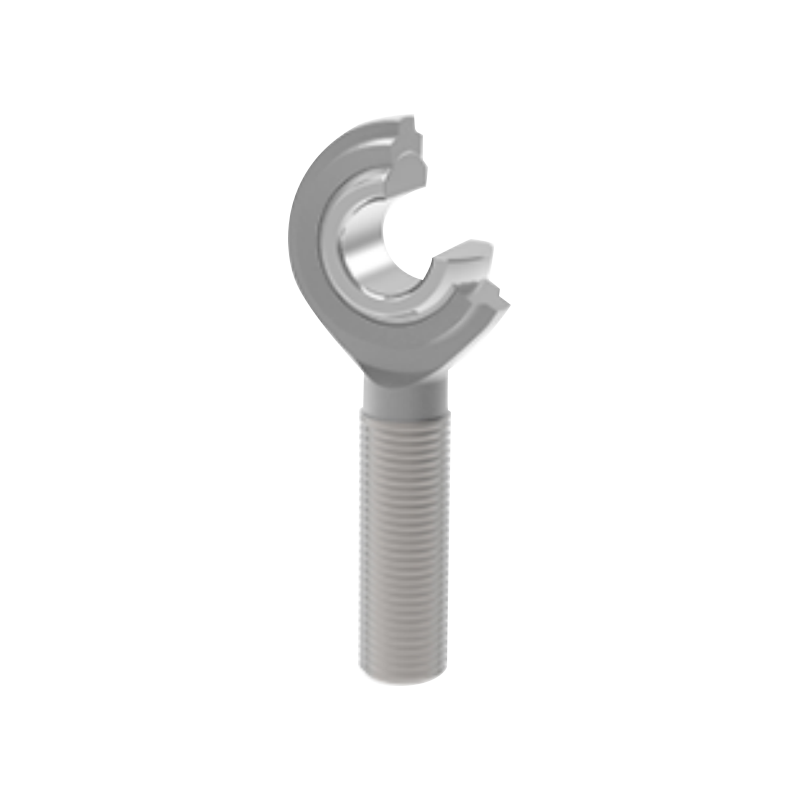
SAZJ extrusion rod end bearings
The rod end body is manufactured from carbon steel and finished with a galvanized surface. Carbon steel provides a strong and rigid foundation for the threaded connection and bearing housing. This is important because the rod end body must support both axial forces through the shank and radial or angular loads around the spherical bearing seat.
Galvanizing adds a protective layer that helps reduce the risk of corrosion caused by humidity, handling, storage, and general industrial exposure. The surface treatment is useful in machinery environments where the component may encounter condensation, airborne contaminants, or occasional contact with less aggressive fluids. It also improves the visual consistency of the part and supports longer serviceability than untreated carbon steel.
The galvanized body offers a practical balance between performance and cost. In many applications, a fully stainless steel component may be unnecessary or may increase procurement and manufacturing costs. The standard carbon steel and galvanized construction can therefore be an economical choice where strong mechanical performance and general corrosion resistance are required.
The inner ring is made from bearing steel and undergoes hardening to improve resistance to deformation, indentation, and wear. The spherical surface is the primary contact area between the inner ring and the housing, so maintaining surface hardness is essential to stable joint movement and consistent load distribution.
After hardening, the inner ring receives hard chrome plating. The chrome layer supports surface durability and helps protect the ring from wear during repeated oscillation. It can also provide additional resistance to corrosion and surface damage when the joint operates in demanding conditions.
Hard chrome plating is especially valuable in spherical plain bearing applications because the contact motion is often oscillatory rather than continuously rotating. Oscillating motion can repeatedly load the same small areas of the contact surface. A properly hardened and plated inner ring helps limit the development of scoring, galling, and premature surface deterioration.
The combination of bearing steel, heat treatment, and hard chrome plating gives the inner ring a useful performance advantage over basic uncoated steel joints. It also contributes to dimensional stability, which is important when a bearing is installed in a precision linkage or an alignment-sensitive mechanism.
For applications that require higher corrosion resistance, the rod end body and inner ring can be manufactured from stainless steel. The stainless steel version is identified by adding “X” after the model number, as in an SAZJ series model with the “/X” designation.
Stainless steel construction can be considered for medical equipment, laboratory systems, food-processing machinery, coastal installations, outdoor mechanisms, and other applications where humidity or corrosive exposure is more severe. Material selection should be based on the actual environment, cleaning agents, temperature, load, and expected service life.
The availability of both standard galvanized carbon steel and stainless steel versions allows engineers to avoid a one-material-fits-all approach. A standard version may provide the best value for a protected factory environment, while the stainless steel option may be more appropriate when corrosion protection is a primary design requirement.
One of the main advantages of the SAZJ series is its compact rod end configuration. Industrial machinery increasingly requires more functions within smaller envelopes. Compact joints help reduce the size of linkages, simplify guarding, and provide additional clearance around moving parts.
A compact bearing can also reduce the mass of an articulated assembly. Lower joint mass may improve response in robotic or automated equipment, particularly when the actuator must repeatedly accelerate and decelerate the connected mechanism. Reduced mass can support lower energy consumption and help minimize vibration, although the final result depends on the complete system design.
Compared with a separate pin, bushing, spacer, and alignment arrangement, an integrated rod end bearing can simplify the connection. Fewer separate parts may reduce assembly time, lower the risk of incorrect installation, and make replacement more straightforward.
Rigid threaded connections can transmit unwanted bending forces when two linked components do not remain perfectly aligned. This can happen because of assembly tolerances, frame deflection, thermal expansion, actuator movement, or uneven loading. The spherical inner ring of a rod end bearing allows angular adjustment and helps prevent the connection from behaving as an unintended rigid joint.
The SAZJ models include approximate angular movement values listed in the product data. These values range from approximately 10 degrees to 13.5 degrees depending on the model. The permitted angle should always be checked against the actual load, speed, lubrication condition, installation arrangement, and movement pattern.
Proper angular accommodation can help reduce side loading on actuators and connected shafts. It may also improve the motion quality of a linkage by allowing the joint to follow its natural path instead of forcing adjacent components to compensate through bending or distortion.
Basic rod ends with untreated contact surfaces may experience accelerated wear when exposed to repeated oscillation, high loads, inadequate lubrication, or contamination. The hardened and hard chrome plated inner ring used in this series is designed to provide a more durable working surface.
This construction is advantageous in machinery that performs frequent cycling. Examples include packaging equipment, pick-and-place systems, production-line actuators, medical positioning devices, and automated inspection mechanisms. The actual service life will depend on load, movement amplitude, speed, environment, maintenance, and installation accuracy, but the material and surface treatment provide a strong foundation for long-term use.
The galvanized rod end body offers a practical level of protection for general industrial environments. Corrosion can increase friction, interfere with thread installation, damage joint surfaces, and make future maintenance more difficult. A protective surface treatment helps preserve the component during storage and service.
For more aggressive conditions, the stainless steel option provides an additional level of material protection. This two-level material strategy gives purchasing and engineering teams more flexibility than a product line available in only one construction.
Lubrication is an important factor in the performance of spherical plain bearings. The SAZJ series allows flexible lubrication through an oil cup or through the rod end eyelet on applicable models. Small bores below 6.35 mm are excluded from this lubrication provision, so the product selection and maintenance plan must account for the specific bore size.
A serviceable lubrication arrangement can be a major advantage over joints that cannot be replenished. In applications with continuous cycling, high loads, elevated temperatures, or dusty conditions, scheduled lubrication can help maintain smooth movement and reduce contact wear. Maintenance personnel can also integrate lubrication into an existing preventive maintenance program.
Lubricant selection should be based on temperature, load, speed, material compatibility, environmental contamination, and the manufacturer’s technical recommendations. Excessive lubrication can attract dust or create hydraulic resistance in some mechanisms, while insufficient lubrication can increase friction and wear. A controlled maintenance schedule is therefore preferable to indiscriminate lubrication.
The product line supports different thread precision requirements, allowing the bearing to be matched to applications with varying installation and adjustment needs. This is useful in precision equipment where thread fit, backlash, or adjustment accuracy influences overall machine performance.
Left-hand thread versions are also available. The left-hand version is identified by adding “L” or “LH” after the bearing model number. An example is SALZJ12 1/2 20UNF 2ALH. In a paired linkage, using one right-hand and one left-hand thread can allow adjustment without dismantling the assembly. This arrangement is common in tensioning systems, alignment mechanisms, and adjustable control linkages.
Thread identification should be confirmed carefully before ordering. The catalog includes UNF thread specifications such as 10-32, 1/4-28, 5/16-24, 3/8-24, 7/16-20, 1/2-20, 5/8-18, 3/4-16, and other model-specific configurations. Thread compatibility is essential for safe installation and accurate load transfer.
Choosing a rod end bearing involves more than matching the bore diameter. Engineers should consider dynamic load, static load, thread size, body dimensions, angular movement, installation space, operating temperature, lubrication access, and the direction and frequency of motion.
The bore diameter, identified as d in the product information, ranges from 4.83 mm to 19.05 mm for the listed metric values. The corresponding inch values range from approximately 0.19 inch to 0.75 inch. Larger bore sizes generally correspond to larger body dimensions and higher load ratings, but the correct model must be selected according to the complete loading condition rather than bore size alone.
The dynamic load rating is relevant to moving or oscillating applications. It should not be interpreted as a universal allowable operating load. Actual allowable load depends on the type of motion, load direction, duty cycle, lubrication, temperature, mounting rigidity, and safety factor. The static load rating is useful when evaluating stationary or slowly changing loads, shock loads, and conditions where permanent deformation must be avoided.
| Model | Bore d (mm) | Bore d (inch) | Body Width B (mm) | Ball Diameter dₖ (mm) | Thread | Approx. Angle (°) | Dynamic Rating (kN) | Static Rating (kN) | Weight (kg) |
|---|---|---|---|---|---|---|---|---|---|
| SAZJ4 | 4.83 | 0.190 | 7.92 | 11.10 | 10-32 | 10 | 3.6 | 3.8 | 0.014 |
| SAZJ6 | 6.35 | 0.250 | 9.53 | 12.70 | 1/4-28 | 13.5 | 5.4 | 6.6 | 0.018 |
| SAZJ7 | 7.94 | 0.3125 | 11.10 | 15.88 | 5/16-24 | 11 | 8.5 | 12 | 0.032 |
| SAZJ9 | 9.53 | 0.375 | 12.70 | 18.26 | 3/8-24 | 11 | 11 | 16 | 0.050 |
| SAZJ11 | 11.11 | 0.4375 | 14.27 | 20.62 | 7/16-20 | 10.5 | 14 | 21 | 0.068 |
| SAZJ12 | 12.70 | 0.500 | 15.88 | 23.81 | 1/2-20 | 10 | 18 | 28 | 0.110 |
| SAZJ15 | 15.88 | 0.625 | 19.05 | 28.58 | 5/8-18 | 13 | 23 | 29 | 0.160 |
| SAZJ19 | 19.05 | 0.750 | 22.23 | 33.32 | 3/4-16 | 12 | 34 | 44 | 0.260 |
The table provides a practical comparison of the principal listed models. Additional dimensions, including maximum body length, shank dimensions, minimum shoulder radius, and installation-related lengths, should be checked in the full drawing before final approval. The supplied data identifies dimensions such as C₁ max, d₂, h, I₁ min, I₂, and rₛ min, which are important when the rod end must fit within a defined envelope.
For a reliable selection, first calculate the maximum radial and axial forces at the joint. Next, determine whether the load is static, oscillating, or continuously moving. Then evaluate the maximum angular displacement and confirm that the bearing will not reach its mechanical limit. Finally, verify the thread, mounting clearance, lubrication method, operating temperature, and required safety factor.
The specified operating temperature range for the SAZJ series is 50°C to +150°C as provided in the product information. Because the lower limit is presented without a minus sign in the supplied specification, users should confirm the intended low-temperature value with the manufacturer before applying the bearing in sub-zero environments. The upper value of +150°C indicates suitability for many heated industrial systems, provided that the lubricant, surrounding materials, seals, and adjacent components are also rated for the same temperature.
Temperature affects more than the strength of the steel. Lubricant viscosity changes with temperature, clearances may vary because of thermal expansion, and corrosion protection systems may behave differently in hot or chemically active environments. A bearing used near the upper temperature limit should therefore be evaluated as part of the complete assembly rather than in isolation.
In applications with frequent temperature changes, designers should consider thermal expansion between the rod end, mounting shaft, and connected frame. The spherical joint can help accommodate angular changes, but it does not eliminate all thermal stresses. Correct shaft tolerance and mounting practice remain important.
For outdoor or humid applications, the galvanized surface can help protect the carbon steel housing. However, galvanizing is not a substitute for environmental assessment. Salt spray, aggressive chemicals, abrasive dust, and continuous immersion may require the stainless steel version or additional protective measures.
UKL Bearing Manufacturing Co., Ltd. integrates research and development, production, and international distribution. The company operates a modernized factory with production capabilities covering forging, turning, heat treatment, grinding, assembly, and packaging. This integrated structure allows key stages of bearing manufacture to be coordinated rather than managed as isolated operations.
For rod end bearings, process coordination is particularly important. The body must maintain the correct shape and thread geometry, while the inner ring requires controlled heat treatment, precision finishing, and surface plating. Assembly must then produce a joint with appropriate movement, load support, and dimensional consistency.
Control over multiple manufacturing stages can shorten communication paths when adjustments are required. It also allows engineering and production teams to evaluate how material selection, machining, heat treatment, and finishing influence final performance. This is valuable for standard production as well as customized orders.
Forging and forming processes create the fundamental geometry of the rod end body. A well-controlled forming process can produce a strong material structure and provide a consistent starting shape for subsequent machining. The extruded design of the SAZJ series benefits from repeatable body production, which supports dimensional consistency across batches.
Forming is followed by machining operations that establish the bore seat, threaded shank, shoulders, and other functional features. Maintaining a stable relationship between these features is essential because misalignment can affect installation, load distribution, and angular movement.
Turning is used to create accurate external and internal geometries in the rod end body and inner ring. Grinding provides a further level of surface and dimensional refinement, particularly for the inner ring’s spherical surface and bore. These operations support the high precision expected in robot bearings, medical equipment, and other motion-control systems.
Surface quality influences friction, wear, lubrication retention, and the smoothness of oscillating movement. A controlled grinding process helps reduce unwanted roughness and supports stable contact between the inner ring and housing. The goal is not simply to achieve a polished appearance, but to create a functional surface with suitable geometry, hardness, and contact behavior.
Heat treatment strengthens the bearing steel inner ring and improves its resistance to working loads. Process parameters must be controlled to achieve the intended hardness without creating excessive distortion or compromising dimensional accuracy. After heat treatment, finishing operations restore the required geometry.
Hard chrome plating then provides the specified wear-resistant surface. Plating quality depends on preparation, bath control, thickness management, adhesion, and post-plating finishing. These factors influence the service behavior of the inner ring in oscillating contact.
The galvanized surface on the rod end body provides a separate layer of protection. Together, heat treatment, hard chrome plating, and galvanizing give the product a multi-stage material and surface engineering approach rather than relying on untreated steel.
Assembly is the stage where the rod end body and spherical inner ring become a functional joint. The assembled bearing must permit the required angular movement while maintaining sufficient support and stability. Excessive looseness can reduce precision, while insufficient clearance can increase friction or restrict movement.
Packaging also contributes to product quality. Bearings should be protected from impact, moisture, contamination, and thread damage during storage and transportation. Proper packaging is especially important for export shipments traveling through different climates and handling environments.
UKL reports a monthly production capacity of approximately 10,000 to 50,000 units. This capacity supports both regular industrial supply and larger OEM or distributor programs, subject to model mix, customization, inspection requirements, and production scheduling.
Robotic systems require joints that can tolerate repeated motion, changing load direction, and small alignment variations. Rod end spherical plain bearings are suitable for connecting actuators, end-effectors, linkages, and support mechanisms. Their compact size helps preserve working space, while their angular movement capability supports articulated motion.
In automated production equipment, a rod end may be cycled thousands or millions of times. Engineers should evaluate the oscillation angle, cycle frequency, load spectrum, lubrication interval, and contamination level. A hardened and hard chrome plated inner ring provides a durable contact surface, while the available lubrication arrangements support planned maintenance.
Medical positioning systems, diagnostic equipment, rehabilitation devices, and laboratory automation often require accurate and quiet movement within a compact structure. The stainless steel version may be considered where cleaning, humidity, or corrosion resistance is important. Thread precision options can also support mechanisms that require controlled adjustment and stable positioning.
Any bearing used in medical equipment must be evaluated against the applicable regulatory, cleanliness, material, and maintenance requirements of the final device. The bearing specification is one part of a wider validation program involving the complete machine.
Aerospace and precision instrument mechanisms may benefit from compact, rigid joints that accommodate small angular changes without adding unnecessary bulk. The low weight of the smaller SAZJ models can be useful in lightweight assemblies. However, aerospace applications require detailed validation of material traceability, environmental conditions, vibration, temperature cycling, lubrication, and safety requirements.
Rod end bearings are commonly installed on hydraulic cylinders, electric actuators, pneumatic cylinders, control rods, and adjustable linkages. The bearing allows the actuator rod to transmit force while accommodating angular movement between the actuator and the driven component.
Where a linkage requires in-place length adjustment, a right-hand and left-hand threaded arrangement can be useful. Rotating the connecting member may alter the effective length without removing the joint. This can simplify alignment during commissioning and maintenance.
CNC machines and intelligent manufacturing systems depend on accurate positioning and stable mechanical connections. Rod end bearings may be used in guards, tool-changing mechanisms, sensor linkages, clamping systems, and auxiliary motion assemblies. The compact design helps conserve space around machine structures, while the corrosion-resistant surfaces support long-term factory use.
Before installation, inspect the bearing for transport damage, contamination, thread damage, or visible plating defects. Confirm the model number, bore size, thread specification, handedness, and material suffix. A left-hand thread bearing must not be confused with a standard right-hand thread model.
The mating shaft or pin should have the correct diameter, surface finish, hardness, and fit for the inner ring bore. It should be clean, free of burrs, and properly aligned. A damaged or oversized pin can create excessive contact pressure and prevent the spherical inner ring from moving freely.
Apply installation force only to appropriate surfaces. Do not hammer directly on the plated inner ring or use the bearing body as an unintended impact surface. When tightening the threaded shank, use the recommended wrenching feature or suitable fixture. Excessive torque can distort the housing or damage the thread.
The rod end should be installed so that the primary load is carried in the intended direction. Avoid applying unnecessary bending moments to the threaded shank. If a jam nut is used, make sure it is tightened against a suitable surface and does not interfere with the bearing’s angular movement.
After installation, move the linkage through its full operating range manually or at low speed. Check for binding, excessive looseness, interference, and unexpected contact between the bearing body and adjacent components. Confirm that the maximum operating angle remains below the specified approximate angle for the selected model.
Where lubrication is applicable, use the designated oil cup or rod end eyelet. Do not force lubricant through a passage that is not designed for lubrication. The small-bore models below 6.35 mm do not provide the same lubrication arrangement, so their maintenance requirements should be planned accordingly.
A maintenance plan should reflect the actual operating conditions rather than relying only on calendar intervals. High-cycle robotic mechanisms may require more frequent inspection than lightly loaded adjustment linkages. Exposure to dust, moisture, chemicals, vibration, and temperature variation should also influence the inspection schedule.
During inspection, check for increased radial play, rough or uneven movement, unusual noise, corrosion, damaged threads, surface flaking, and lubricant contamination. A change in movement resistance may indicate inadequate lubrication, excessive load, contamination, or damage to the contact surfaces.
Lubrication should be replenished with a compatible lubricant at an interval appropriate for the duty cycle. Before adding new lubricant, remove contamination from the accessible area. Mixing incompatible greases or oils can reduce lubricant performance and should be avoided unless compatibility has been confirmed.
If the bearing is exposed to abrasive particles, inspect the joint more frequently. Abrasive contamination can act as a grinding medium between the spherical surfaces. Protective covers, cleaner machine layouts, and improved sealing around the surrounding mechanism may extend service life.
Replacement should be considered when the bearing develops excessive play, visible scoring, severe corrosion, thread damage, or restricted angular movement. A worn rod end can affect the accuracy of the entire mechanism and may create secondary damage in actuators, shafts, brackets, or sensors.
Different machines impose different requirements on rod end bearings. Thread precision, thread handedness, material, lubrication access, and dimensional preferences may vary according to the customer’s design. The SAZJ series supports customization of thread precision and provides left-hand thread and stainless steel options.
OEM and ODM customers can benefit from a manufacturer that combines product development with production and export experience. UKL reports more than 15 years of OEM and ODM export experience and serves customers across Europe, Asia, Africa, Russia, North America, and other markets. This international exposure can help coordinate packaging, documentation, communication, and shipment requirements for different regions.
A successful customized bearing project should begin with complete technical information. This includes the load spectrum, movement type, maximum angle, speed, temperature range, environmental exposure, lubrication method, available installation space, thread specification, and expected service life. Drawings, samples, and test requirements should be reviewed before mass production.
For precision equipment, it is also useful to define acceptance criteria in advance. These may include dimensional tolerances, angular movement, torque, hardness, plating condition, surface roughness, corrosion resistance, packaging, and traceability. Clear criteria help align product development, quality control, and customer inspection.
For distributors and OEM customers, product performance is only one part of the purchasing decision. Consistent supply, stable quality, technical response, packaging, and after-sales support can have an equally important impact on total cost and production continuity.
UKL’s integrated production model covers R&D, manufacturing, assembly, packaging, and international distribution. This model allows the company to support customers from initial product selection through repeat orders and technical service. Its reported employee base of 201 to 500 people and monthly production capacity provide a foundation for handling multiple product categories and order volumes.
The company manufactures a broader bearing range that includes cross roller bearings, angular contact ball bearings, spherical roller bearings, cylindrical roller bearings, tapered roller bearings, mounted bearings, Nilos rings, and rod end bearings. This product breadth can be useful when a machine builder requires several bearing types from one technical and supply partner.
UKL also identifies R&D as a central strength, with development work involving high-precision cross roller bearings, dual-direction thrust angular contact ball bearings, and products for CNC machines, robotics, and intelligent automation. Although the SAZJ series is a spherical plain bearing product, this broader engineering environment demonstrates experience with precision motion components and industrial applications.
International support is another practical consideration. A multilingual service team provides technical response, installation guidance, and after-sales maintenance support. For overseas customers, responsive communication can reduce downtime when a bearing selection, installation issue, or replacement requirement arises.
Quality in a rod end bearing is determined by the interaction of materials, geometry, process control, surface treatment, and assembly. A galvanized body alone cannot compensate for poor alignment, and a hard chrome plated inner ring cannot overcome incorrect loading. The value of the SAZJ series comes from the combination of its design features and the manufacturing processes used to produce them.
UKL describes a factory with production lines for forging, turning, heat treatment, grinding, assembly, and packaging. This process chain provides opportunities for inspection and control at multiple stages. Incoming material, formed components, machined features, heat-treated rings, plated surfaces, and final assemblies can each be evaluated against defined requirements.
The company also states that it adopts environmentally responsible processes, promotes material recycling, and optimizes energy usage. Sustainable manufacturing is increasingly relevant to industrial buyers that evaluate not only component performance but also the environmental impact of their supply chains.
Long-term value should be assessed through the total cost of ownership. A bearing with suitable wear resistance, accessible lubrication, reliable corrosion protection, and consistent dimensions may reduce unplanned maintenance and replacement costs. At the same time, the correct model must be selected so that the bearing is not overloaded or exposed to conditions beyond its design capability.
When selecting an SAZJ extrusion rod end bearing, begin by identifying the bore diameter and mating shaft size. Confirm whether the connection uses a metric or inch-based interface and verify the UNF thread specification listed for the required model.
Determine the maximum dynamic and static loads. Include shock, acceleration, deceleration, vibration, and any loads caused by misalignment. The bearing should be selected with an appropriate engineering safety factor rather than operated continuously at the catalog rating.
Calculate the required angular movement and compare it with the approximate angle listed for the selected model. Make sure the surrounding components do not restrict movement or contact the bearing body before the joint reaches its intended position.
Review the operating temperature and lubricant requirements. If the application approaches the upper temperature limit or includes sub-zero operation, confirm the complete temperature specification and choose a compatible lubricant.
Assess corrosion exposure. The galvanized carbon steel version may suit general industrial conditions, while the stainless steel “X” version may be more suitable for aggressive humidity, cleaning, or chemical exposure.
Decide whether lubrication access is required. Applicable models can be lubricated through an oil cup or rod end eyelet, while small bores below 6.35 mm have different provisions. The maintenance team should be able to reach the lubrication point without unsafe disassembly.
Finally, consider whether a left-hand thread or customized thread precision is needed. In adjustable mechanisms, the correct handedness can simplify installation and future alignment.
It is a rod end joint with a spherical inner ring supported inside a housing. The spherical interface allows angular movement and misalignment while transmitting load between a threaded rod or actuator and a shaft or pin. The extruded design refers to the compact manufactured form of the rod end body.
A rolling-element bearing uses balls or rollers to support continuous rotation with low rolling friction. A rod end spherical plain bearing is intended primarily for oscillating movement, angular alignment, and linkage connections. It is selected for joint flexibility and compact load transfer rather than for high-speed continuous shaft rotation.
The standard rod end body is made from carbon steel with a galvanized surface. The inner ring is made from bearing steel, hardened, and hard chrome plated. This combination supports structural strength, corrosion resistance, and wear resistance.
Yes. Stainless steel versions are available for the rod end body and inner ring. The stainless steel option is indicated by adding “X” after the model number, such as an SAZJ series model with the “/X” designation.
Most applicable models can be lubricated through an oil cup or the rod end eyelet. Small bores below 6.35 mm are excluded from this arrangement. The lubrication method should be confirmed for the exact model before installation.
Yes. Left-hand versions can be identified by adding “L” or “LH” after the model number. This option is useful in adjustable linkages and assemblies that use opposing thread directions for length adjustment.
The listed models use inch-based UNF threads, including sizes such as 10-32, 1/4-28, 5/16-24, 3/8-24, 7/16-20, 1/2-20, 5/8-18, and 3/4-16. The exact thread must be matched to the model and mating component.
Suitable applications include industrial robots, automated machinery, actuators, control linkages, medical equipment, aerospace mechanisms, precision instruments, CNC equipment, and intelligent manufacturing systems. Selection should be based on load, movement, temperature, corrosion exposure, and maintenance requirements.
Evaluate bore diameter, thread specification, dynamic and static load, angular movement, operating temperature, lubrication access, weight, installation space, and corrosion conditions. The final selection should also include an appropriate safety factor and verification of the complete assembly.
Provide the required bore, thread, handedness, dimensional tolerances, material, surface treatment, lubrication arrangement, load, movement pattern, temperature, environmental conditions, quantity, packaging requirements, and inspection criteria. Drawings or samples are helpful for confirming the design.
Hard chrome plating provides a durable surface that helps resist wear during repeated spherical oscillation. It works together with the hardened bearing steel substrate to support stable contact and long-term performance.
No. Galvanizing provides useful general corrosion protection, but severe salt spray, chemical exposure, continuous moisture, or immersion may require stainless steel construction or additional environmental protection. The application environment should be reviewed before selection.
The SAZJ extrusion rod end spherical plain bearing is designed for compact, precise, and durable mechanical connections. Its galvanized carbon steel body provides a strong and corrosion-resistant housing, while the hardened and hard chrome plated bearing steel inner ring supports wear resistance and reliable movement. The spherical construction accommodates angular misalignment, and the compact geometry helps engineers save space in increasingly dense industrial equipment.
Flexible lubrication options, left-hand thread availability, different thread precision choices, and stainless steel material variants make the series adaptable to a wide range of machine designs. The listed models cover bore sizes from approximately 4.83 mm to 19.05 mm and dynamic load ratings from 3.6 kN to 34 kN, providing practical options for small precision linkages and higher-load industrial mechanisms.
Beyond the product design, UKL Bearing Manufacturing Co., Ltd. offers an integrated manufacturing platform that includes R&D, forging, turning, heat treatment, grinding, assembly, packaging, and global distribution. Its production capacity, OEM and ODM experience, broader bearing portfolio, technical service, and sustainability initiatives provide additional value for international manufacturers and distributors.
For the best result, the bearing should be selected as part of a complete mechanical system. Careful attention to load, alignment, angular travel, lubrication, temperature, corrosion, thread compatibility, and installation will help the SAZJ series deliver the precision and durability expected from a modern rod end bearing.
1. SAZJ Extrusion Rod End Bearings Product Specification, dimensional and load-rating data supplied for this article.
2. General principles of spherical plain bearing design, oscillating motion, angular misalignment, and lubrication.
3. General engineering practices for bearing installation, shaft fit, load evaluation, and preventive maintenance.
4. Materials engineering references covering carbon steel, bearing steel, galvanizing, hardening, and hard chrome plating.
5. UKL Bearing Manufacturing Co., Ltd. company information regarding R&D, manufacturing processes, OEM and ODM capabilities, production capacity, international service, and sustainability practices.
Product Categories
Contact Us

Jane@ukl-bearing.com
Jenny@ukl-bearing.com
Andy@ukl-bearing.com
Ivy@ukl-bearing.com

+86-510- 88763239
+86-15371057968

No.1 Hehuan Road, Hudai Town, Binhu District, Wuxi City.
Ready to Begin?
Get in Touch

Now!
UKL BEARING
 English
 Español
 русский