Content
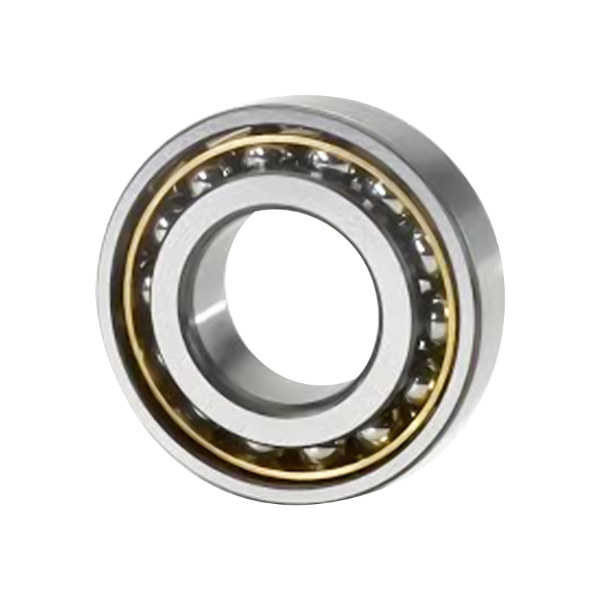
Selecting the optimal rolling component for high-speed rotating machinery requires a deep understanding of operating conditions, internal geometry, and thermal management. Among precision machinery, angular contact ball bearings are the preferred choice due to their ability to handle combined radial and axial loads while maintaining high rotational speeds.
High-speed applications—such as machine tool spindles, turbochargers, high-frequency motors, and aerospace auxiliary power units—place unique demands on bearing performance. The primary challenges include centrifugal force increase, thermal expansion, lubricant film breakdown, and cage instability. A bearing that performs well at moderate speeds may fail prematurely under high rotational velocities due to excessive heat generation or insufficient internal clearance.
To meet these challenges, engineers must evaluate several parameters: contact angle, precision grade, cage material, lubrication method, and preload. The correct combination ensures low temperature rise, high stiffness, and extended service life.
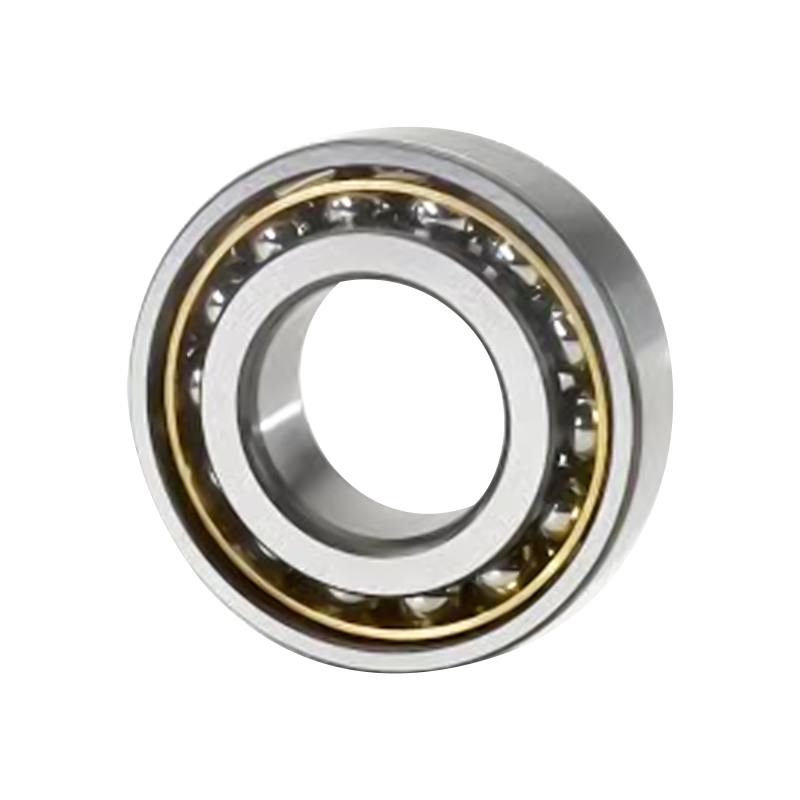
Unlike deep groove ball bearings, angular contact ball bearings are designed with a specific contact angle between the balls and raceways. This angle allows them to support significant axial loads while enabling high rotational speeds. The smaller the ball diameter relative to the pitch circle, and the lighter the cage, the lower the centrifugal force at high speeds.
For most high-speed industrial applications, bearings with a 15° or 25° contact angle are preferred over those with 40°. The reduced contact angle lowers the generated heat and allows a higher limiting speed. When reviewing a 7308 bearing datasheet, the contact angle is indicated by suffixes such as “AC” (25°) or “B” (40°). For ultra-high-speed spindles, a 15° version may be specified, though it is less common in the 7308 size.
The 7308 bearing is a medium-sized angular contact ball bearing with a 40 mm bore, 90 mm outside diameter, and 23 mm width. It is widely used in general-purpose spindles, pumps, compressors, and gearboxes. Its popularity stems from the balance between load capacity and speed capability. However, within the 7308 family, multiple variations exist that significantly affect high-speed performance.
When sourcing for high-speed applications, the cage design and material are critical. Polyamide (nylon) cages are lightweight and offer excellent high-speed characteristics. The 7308 BEP bearing represents a common variant with a polyamide cage and a 40° contact angle. While the 40° angle provides higher axial rigidity, it generates more heat than a 25° counterpart. For genuinely high-speed applications, some engineers prefer the AC type with a brass or PEEK cage.
The table below summarises the main variants relevant to high-speed selection.
| Feature | Standard 7308 | 7308 AC Type | 7308 BEP bearing |
|---|---|---|---|
| Contact angle | 40° | 25° | 40° |
| Cage material | Steel or brass | Polyamide or brass | Polyamide (glass fibre reinforced) |
| Speed capability | Moderate | High to very high | Moderate to high |
| Axial load capacity | High | Moderate | High |
| Typical applications | General machinery | Precision spindles | Pumps, compressors, general spindles |
For applications where limiting speed is the primary constraint, a 7308 bearing with a 25° contact angle and a lightweight cage may be superior to the more common 40° types, even if axial load capacity is somewhat reduced.
High-speed operation requires careful control of internal clearance. At elevated speeds, centrifugal force pushes the balls outward, and the inner ring expands while the outer ring may remain cooler. This can cause a reduction in internal radial clearance and may lead to interference or excessive preload. Therefore, a bearing intended for high speeds should start with a larger than normal internal clearance, typically class C3 or even C4.
For angular contact ball bearings used in pairs or sets, preload is a decisive factor. Light preload is almost always specified for high-speed spindles, while heavy preload is reserved for low-speed, high-stiffness applications. Manufacturers provide preload classes (e.g., light, medium, heavy) which directly influence the maximum achievable rotational speed.
When evaluating a 7308 bearing for a 10,000 rpm spindle, light preload with C3 clearance is a typical starting point. In contrast, a 7308 BEP bearing ordered with medium preload may overheat above 8,000 rpm unless special cooling measures are applied.
The cage separates and guides the rolling elements. At high speeds, cage mass and friction become dominant. Lightweight materials reduce centrifugal load on the cage arms. Below is a comparison of common cage materials for angular contact ball bearings.
| Cage Material | Speed capability | Temperature limit | Wear resistance | Best for |
|---|---|---|---|---|
| Pressed steel | Moderate | High | Good | General industry |
| Machined brass | Moderate to high | High | Excellent | Heavy-duty spindles |
| Polyamide (PA66 GF25) | High | Moderate (≤120°C) | Good | High-speed, low-temp applications |
| PEEK | Very high | Very high (≤250°C) | Excellent | Extreme speeds, aggressive environments |
For most high-speed applications below 120°C operating temperature, a polyamide cage offers the best speed-to-cost ratio. This explains the popularity of the 7308 BEP bearing in general-purpose high-speed rotating equipment.
Lubrication is arguably the most important factor influencing high-speed bearing life. Two main methods are used: oil-air lubrication (oil mist or oil jet) and grease lubrication. Each has different speed limits.
When selecting a 7308 bearing for a continuous high-speed application, confirm the lubricant’s speed parameter (n*dm value). The dm value (pitch diameter in mm × rotational speed in rpm) for a 7308 bearing is approximately 65 mm × rpm. For dm values above 500,000, grease becomes marginal, and oil-air is recommended.
High-speed applications demand good running accuracy to avoid vibration and imbalance. Precision classes follow standards such as ISO P6, P5, and P4 (or ABEC 3, 5, 7). A standard 7308 bearing is usually P0 (normal), suitable for general industrial speeds up to moderate rpm. For high-speed spindles, P5 or even P4 is often specified.
The table below matches precision class with typical high-speed applications.
| ISO Precision Class | ABEC equivalent | Typical high-speed application | Required for 7308 series? |
|---|---|---|---|
| P0 (Normal) | ABEC 1 | Fans, pumps, low-speed gearboxes | No |
| P6 | ABEC 3 | Standard electric motors, compressors | Optional |
| P5 | ABEC 5 | High-speed spindles, CNC routers | Yes |
| P4 | ABEC 7 | Ultra-precision grinding spindles | Rare (custom order) |
For most users considering a 7308 BEP bearing in a high-speed environment, P5 is the recommended minimum precision grade to avoid vibration-induced wear.
Even experienced engineers sometimes select incorrectly for high speeds. The most frequent errors include:
When specifying an angular contact ball bearing for a high-speed rotating assembly, follow this sequence:
Determine the required speed in rpm and the bore size. For a 7308 bearing, confirm that the shaft diameter is 40 mm.
Calculate the n*dm value. If it exceeds 400,000, plan for oil lubrication.
Choose the contact angle. Use 25° for speed priority, 40° for axial load priority.
Select the cage material. Polyamide for general high speed, PEEK for extreme conditions.
Specify the internal clearance – C3 minimum.
Choose preload: light for high speed, medium for moderate speed with good stiffness.
Decide on precision class: P5 for most high-speed spindles, P4 for ultra-precision.
Confirm lubrication method and lubricant type with the manufacturer’s data.
For a 7308 BEP bearing applied in a general-purpose spindle up to 9,000 rpm, grease lubrication with a synthetic high-speed grease, light preload, and P5 precision would form a balanced specification.
Q1: Can a standard 7308 bearing be used at high speed?
A standard 7308 bearing with a steel cage, normal clearance, and grease lubrication is limited to moderate speeds (typically under 5,000 rpm). For high-speed use, a version with a polyamide cage, C3 clearance, and appropriate lubricant is required.
Q2: What is the difference between a 7308 bearing and a 7308 BEP bearing?
The 7308 bearing usually refers to the base design with unspecified cage and clearance. The 7308 BEP bearing specifically indicates a 40° contact angle with a glass fibre reinforced polyamide cage, which offers lower centrifugal mass and higher speed capability than steel-cage versions.
Q3: Which lubricant is best for high-speed angular contact ball bearings?
For speeds below n*dm 500,000, a synthetic grease with a low-viscosity base oil (e.g., PAO 32 or 46) is suitable. Above this threshold, oil-air lubrication with a very light oil (ISO VG 10–22) is necessary.
Q4: How do I know if I need P5 precision for my 7308 bearing?
If your application runs above 8,000 rpm and requires low vibration (e.g., CNC spindle, grinding spindle), specify P5. For pumps or fans at similar speeds, P0 or P6 may be acceptable.
Q5: Can I replace a 7308 AC bearing with a 7308 BEP bearing?
Only if the axial load direction and magnitude are compatible. The AC type has a 25° contact angle, while the BEP has 40°. Replacement requires checking whether the system can tolerate the higher heat generation of the 40° design and whether the axial stiffness change is acceptable.
Selecting the right angular contact ball bearing for high-speed applications requires balancing contact angle, cage material, internal clearance, preload, lubrication, and precision grade. The 7308 bearing family offers a versatile platform, with the 7308 BEP bearing providing a strong solution for moderate-speed, general-purpose spindles. For true high-speed operation, prioritise a 25° contact angle, lightweight polyamide or PEEK cages, light preload, and oil lubrication where n*dm exceeds 500,000. By following the structured approach outlined above, engineers can achieve long service life and stable performance even under demanding rotational velocities.
Product Categories
Contact Us

Jane@ukl-bearing.com
Jenny@ukl-bearing.com
Andy@ukl-bearing.com
Ivy@ukl-bearing.com

+86-510- 88763239
+86-15371057968

No.1 Hehuan Road, Hudai Town, Binhu District, Wuxi City.
Ready to Begin?
Get in Touch

Now!
UKL BEARING
 English
 Español
 русский