Content
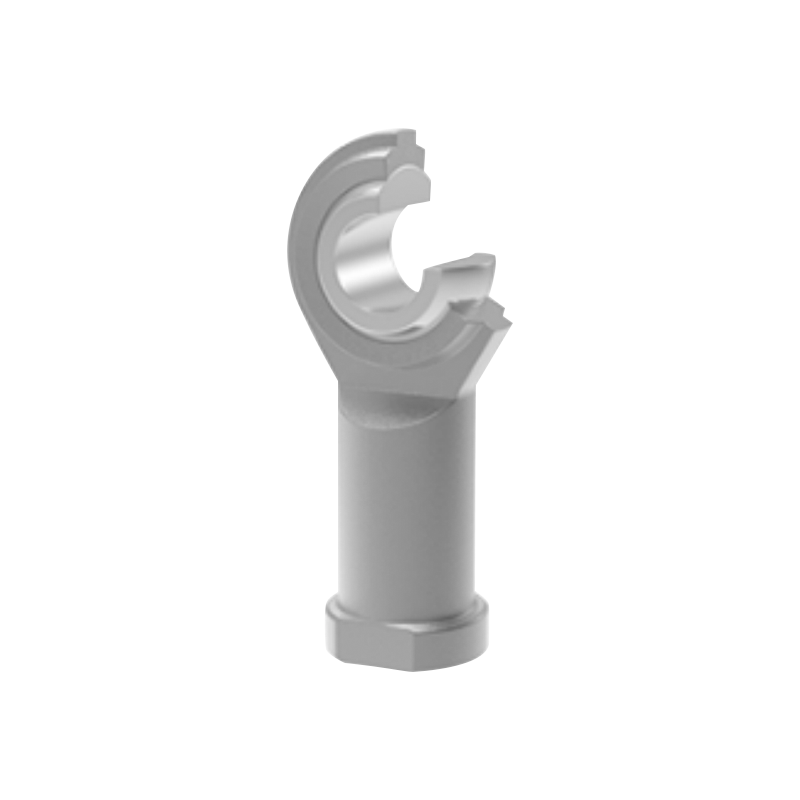
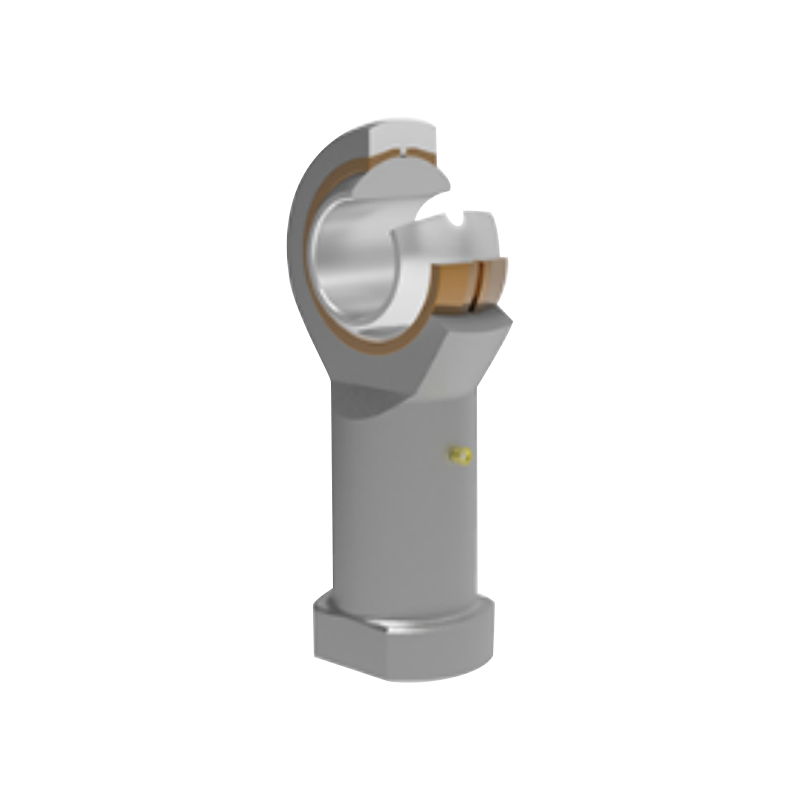
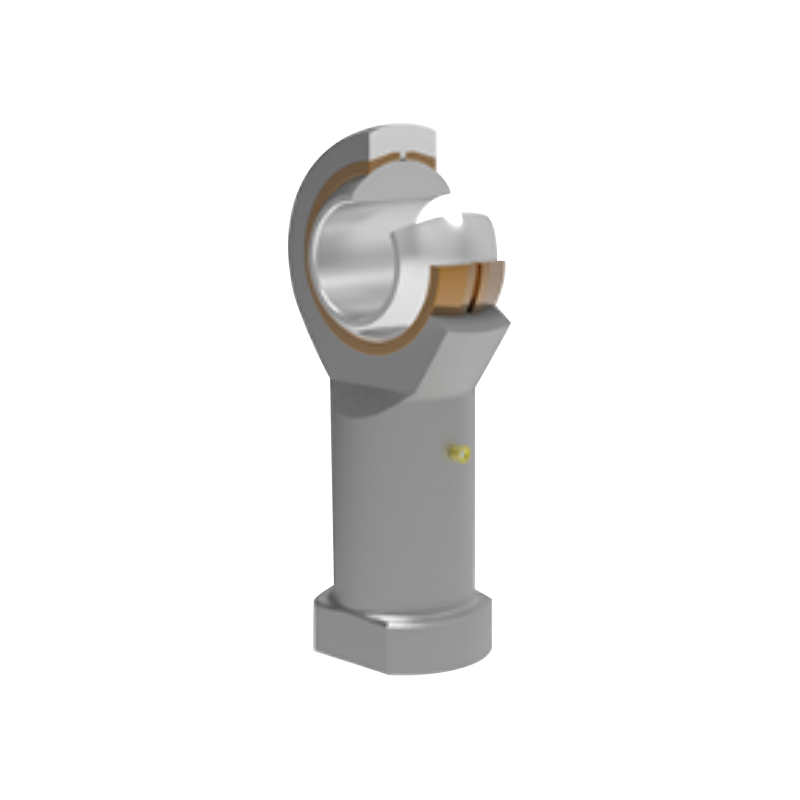
In mechanical design, few components are as deceptively simple yet critically important as the rod end bearing. The SIZJ12 bearing represents a refined evolution of the spherical plain bearing concept, purpose-built to manage high static loads, accommodate angular misalignment, and withstand the rigors of industrial environments. Its designation, SIZJ12, encodes a specific dimensional and thread standard that aligns with 1/2-20 UNF female threads, making it a drop-in solution for many existing linkage designs while offering performance upgrades over generic alternatives.
This guide moves beyond catalog specifications to explore the engineering rationale behind the SIZJ12's selection. We analyze its 28 kN static load capacity, the implications of its steel-on-steel sliding contact, and the practical considerations that differentiate it from variants such as the left-hand threaded SILZJ12. For design engineers and maintenance specialists, understanding these nuances is essential for optimizing service life and system reliability in applications ranging from construction equipment linkages to high-cycle automation arms.
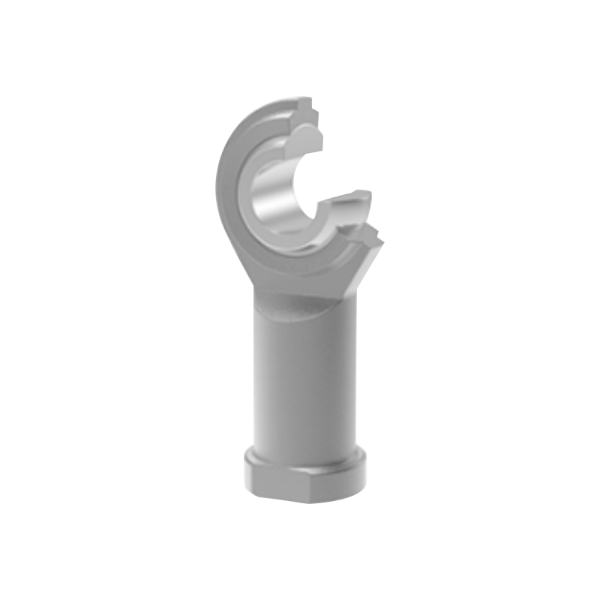
The SIZJ12 is a metric-dimensioned rod end with imperial thread sizing, a hybrid design choice that frequently appears in globally sourced machinery. The table below summarizes its key physical and performance attributes, which form the basis for any engineering selection process. These specifications directly influence the bearing's suitability for specific load paths, envelope constraints, and maintenance intervals.
| Parameter | Value / Specification | Engineering Significance |
|---|---|---|
| Bore Diameter (d) | 12 mm | Matches 12 mm shafts or pins; determines radial load distribution. |
| Outer Diameter (D) | 32 mm | Housing envelope; influences bearing housing design and surrounding structure. |
| Width (B) | 16 mm | Inner ring width; affects axial load support and alignment stability. |
| Thread Configuration | Female, 1/2-20 UNF | Provides fine adjustment capability; compatible with standard UNF rods. |
| Static Load Rating (C₀) | 28 kN | Maximum static load capacity; critical for shock load and holding applications. |
| Dynamic Load Rating (C) | 22 kN | Base for fatigue life calculation under oscillating or rotating loads. |
| Misalignment Angle (Approx.) | ±8° | Angular compensation capability; reduces edge loading and bending stress. |
| Material | Carbon steel body, hardened steel ball, phosphate coating | Balances strength, wear resistance, and corrosion protection. |
The static load rating of 28 kN is particularly noteworthy for demanding applications. This figure is not merely a theoretical maximum but a validated value that indicates the bearing can support a steady, non-rotating load without permanent deformation of the raceway or ball. In construction machinery, where bucket linkages and stabilizer legs experience peak loads during static holds, this margin becomes a reliability differentiator. The steel-on-steel sliding contact, combined with a phosphate-coated body and a chrome-plated ball, ensures that the SIZJ12 remains serviceable even in dusty or mildly corrosive environments, provided that regular lubrication is maintained.
The performance of the SIZJ12 bearing in demanding applications stems from a combination of material selection, geometric tolerances, and the intrinsic characteristics of spherical plain bearings. Unlike rolling element bearings that require precise alignment to avoid brinelling, the SIZJ12's spherical inner ring and ball accommodate angular misalignment, reducing the need for ultra-precise mounting structures. This tolerance simplifies assembly and reduces manufacturing costs, a significant advantage in large-scale production equipment.
Steel-on-Steel Sliding Contact: The SIZJ12 utilizes a steel-on-steel sliding interface, which, while requiring lubrication, offers superior shock load resistance compared to composite or PTFE-lined bearings. Under high static or slow oscillating loads, the metallic contact provides a predictable coefficient of friction and avoids the cold-flow deformation issues that can occur with soft liners. This makes the SIZJ12 particularly well-suited for rod end bearing for construction machinery applications, such as excavator arm linkages, where intermittent shock loads are common.
Furthermore, the 1/2-20 UNF female thread ensures compatibility with a wide range of standard rod ends and adjustment linkages. Its fine pitch allows for precise length adjustments, critical in automation and packaging machinery where positional accuracy directly impacts cycle times and product quality. In the bearing for packaging industry, where high-speed intermittent motion and cleanliness are concerns, the SIZJ12's robust construction and ease of relubrication help maintain uptime and reduce unscheduled maintenance.
A common selection dilemma involves choosing between the SIZJ12 and its left-hand threaded counterpart, the SILZJ12. While both bearings share identical bore, outer diameter, width, and load rating specifications, the thread orientation dictates their application in turnbuckle or push-pull linkage assemblies. The table below highlights the critical differences to guide selection.
| Feature | SIZJ12 | SILZJ12 |
|---|---|---|
| Thread Direction | Right-hand (standard) | Left-hand (reverse) |
| Thread Size | 1/2-20 UNF | 1/2-20 UNF |
| Typical Application | Standard linkages, actuator ends | Turnbuckles, anti-rotation linkages |
| Dynamic Load Rating | 22 kN | 22 kN |
| Misalignment Capability | ±8° | ±8° |
| Part Number Suffix | None | "L" indicates left-hand |
When designing a linkage with opposing threads, the combination of SIZJ12 and SILZJ12 allows for fine length adjustment by simply rotating the connecting rod. This is particularly useful in packaging machinery tensioning systems and agricultural equipment steering linkages. The selection ultimately depends on the mechanical layout and the direction of torque applied during adjustment; however, both bearings offer identical load performance, ensuring that design flexibility does not come at the cost of mechanical strength.
One of the most frequent inquiries regarding the SIZJ12 concerns its suitability for rod end bearing for high temp applications. While the standard steel-on-steel construction offers a clear advantage over polymer-lined bearings in elevated temperatures (typically up to 150°C continuous, with peaks up to 200°C for short durations), proper lubrication is the critical factor. The base carbon steel body and hardened steel ball maintain their mechanical properties within this temperature range, whereas PTFE liners would begin to degrade.
In practice, the SIZJ12 has been deployed in industrial ovens, asphalt plant linkages, and engine mount control rods, where ambient temperatures routinely exceed 100°C. Users report that with high-temperature greases (such as those based on perfluoropolyether or synthetic hydrocarbons), the bearing maintains its wear characteristics and load capacity. However, regular relubrication is non-negotiable, as the expansion of the steel components at elevated temperatures can reduce internal clearance, potentially leading to increased friction if lubrication is inadequate.
Proper installation is foundational to realizing the full performance potential of the SIZJ12 bearing. The following checklist outlines critical steps to avoid common failures, particularly in high-vibration environments associated with automation rod end bearing and construction equipment applications.
Maintenance intervals should be adjusted based on operational duty cycles. For continuous operation in dusty or high-moisture environments, weekly relubrication is advisable. Monitoring the bearing's movement for roughness or increased play can signal the onset of wear, allowing for proactive replacement before a catastrophic failure occurs.
The SIZJ12 bearing has a static load rating of 28 kN. This is significantly higher than many standard 12 mm bore rod ends, which typically range from 15 to 22 kN. The enhanced rating is due to the heat-treated carbon steel body and the optimized spherical contact geometry, making it suitable for heavy-duty applications such as construction equipment stabilizers and large automation arms.
Yes, but with considerations. The standard SIZJ12 construction can withstand intermittent temperatures up to 200°C. However, the grease must be replaced with a high-temperature variant, and the lubrication interval should be shortened. For continuous operation above 150°C, consider a bearing with higher clearance or specialized heat-treated materials, though the SIZJ12 remains a viable option for many industrial oven and engine applications.
The primary difference is the thread direction: SIZJ12 features a standard right-hand 1/2-20 UNF thread, while SILZJ12 has a left-hand thread. They are identical in dimensions, load ratings, and misalignment angles. The choice depends on the linkage design—turnbuckle assemblies typically use one of each for length adjustment, whereas standard push-pull rods use the right-hand version only.
While the SIZJ12 is a metric bearing with a 12 mm bore (0.4724 inches), its outer diameter is 32 mm (1.2598 inches), and the width is 16 mm (0.6299 inches). The thread is the imperial 1/2-20 UNF, making it a hybrid design that fits common adjustment hardware in both metric and imperial systems.
Steel-on-steel bearings like the SIZJ12 require regular relubrication to maintain a lubricating film between the ball and the race. This is essential to prevent metal-to-metal contact, which can lead to rapid wear and increased friction. The benefit is high shock load resistance and longevity in harsh conditions, but the maintenance regime is more demanding than that of maintenance-free composite bearings.
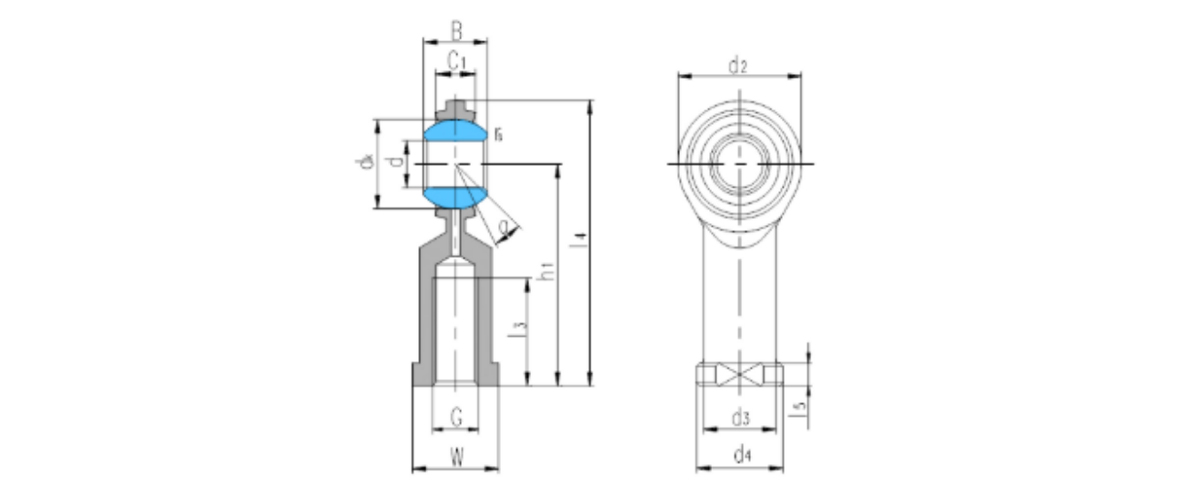
The following SVG illustration provides a cross-sectional representation of the SIZJ12 rod end bearing, highlighting its primary components and the load transfer path through the spherical interface. The design emphasizes the robust steel-on-steel contact zone and the female thread configuration that integrates with standard linkages.
Product Categories
Contact Us

Jane@ukl-bearing.com
Jenny@ukl-bearing.com
Andy@ukl-bearing.com
Ivy@ukl-bearing.com

+86-510- 88763239
+86-15371057968

No.1 Hehuan Road, Hudai Town, Binhu District, Wuxi City.
Ready to Begin?
Get in Touch

Now!
UKL BEARING
 English
 Español
 русский