Content
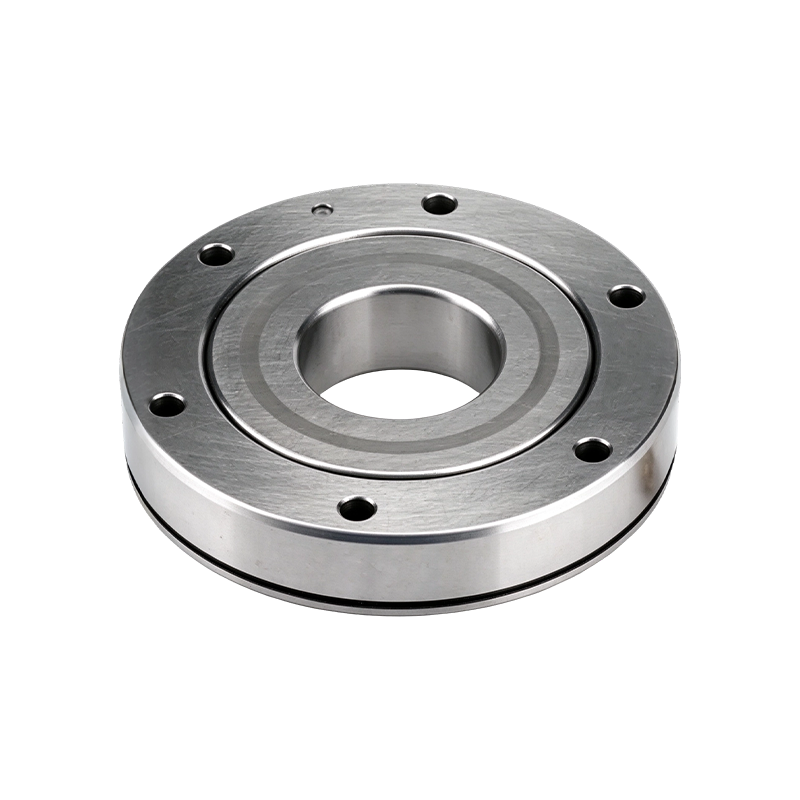
Cross roller bearings, also known as crossed roller bearings, are a highly specialized type of bearing that plays a critical role in improving the precision, reliability, and overall performance of machinery in various applications. These bearings are designed to handle loads in multiple directions, making them highly suitable for precision machinery that requires high rigidity and rotational accuracy.
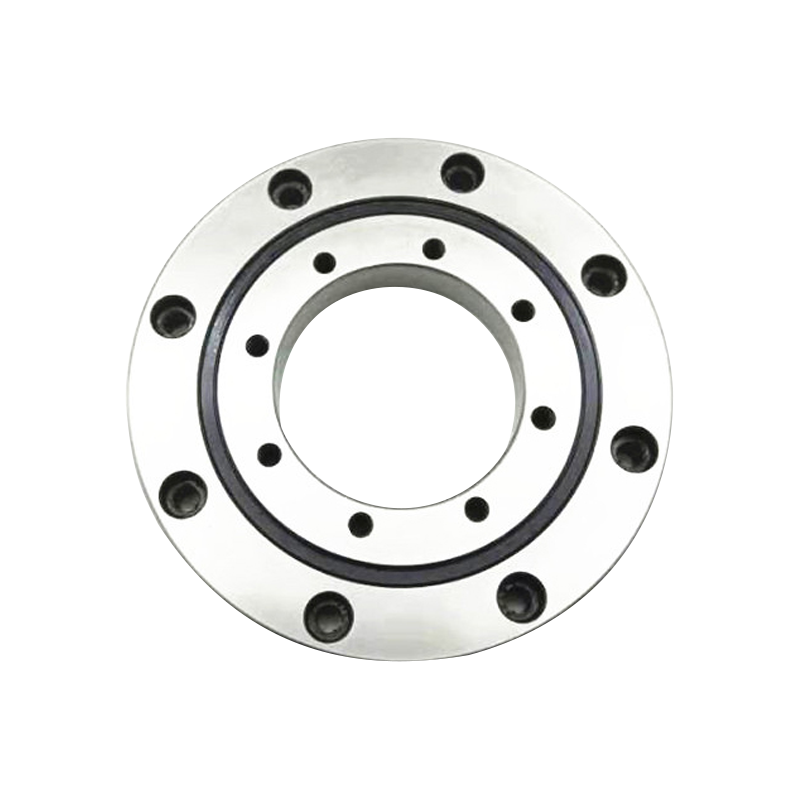
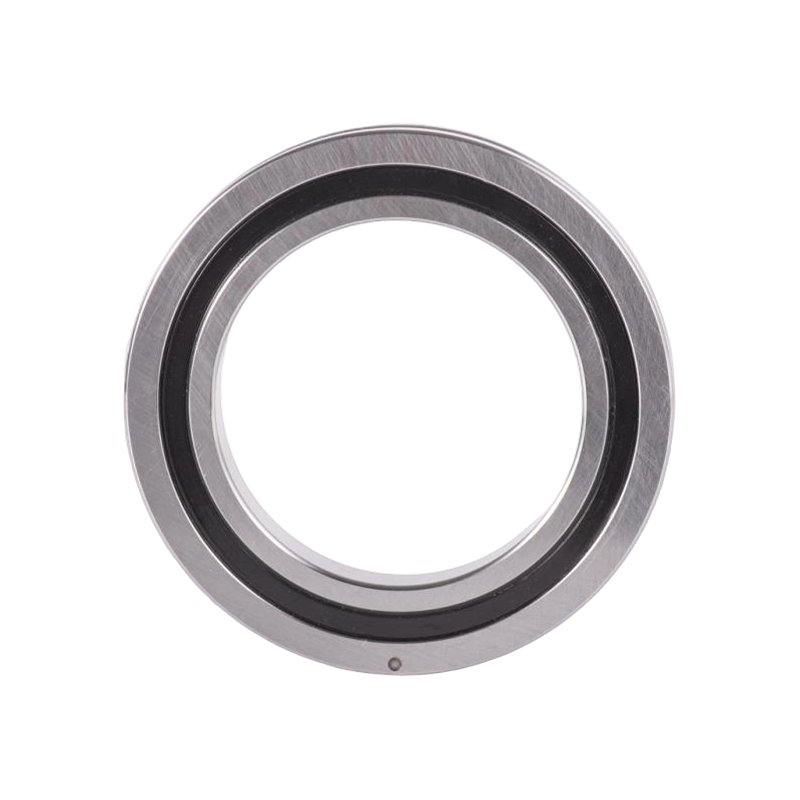
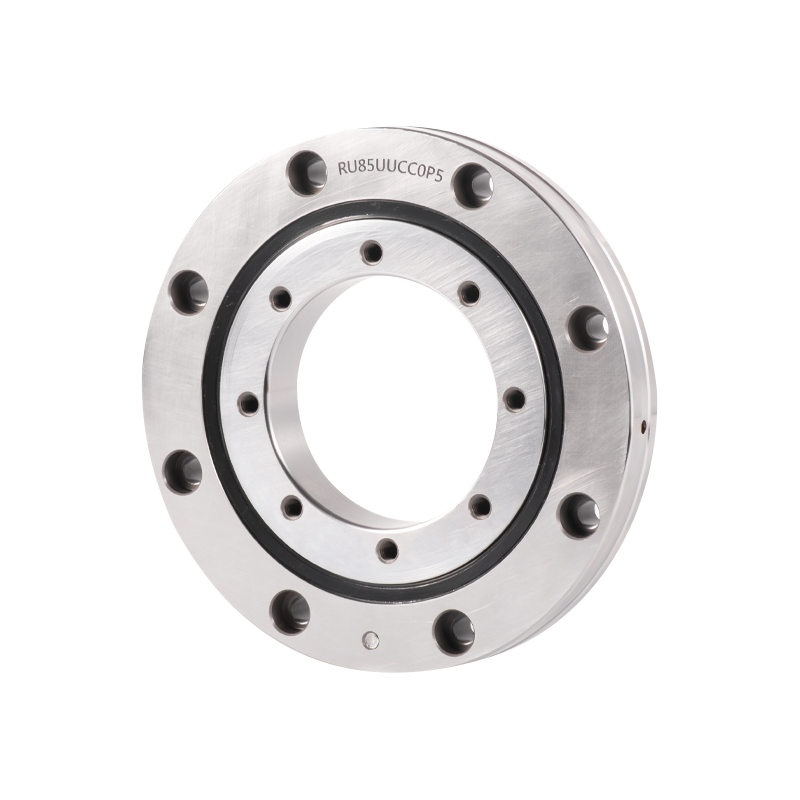
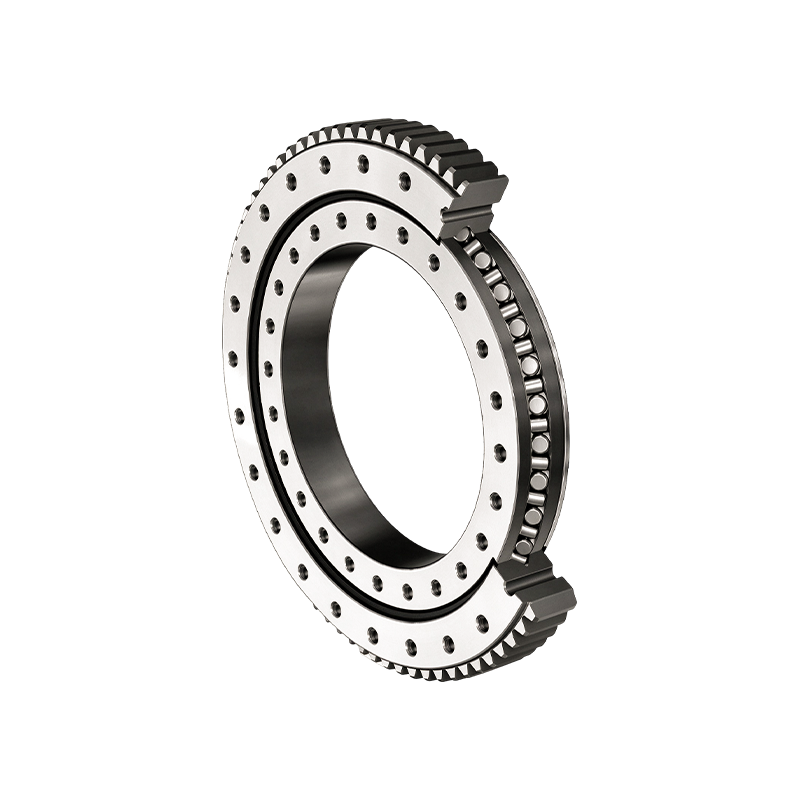
A cross roller bearing is a type of rolling element bearing in which cylindrical rollers are arranged crosswise at 90° angles to each other inside the bearing. The rollers sit in V-shaped raceways, which are designed to handle loads from all directions—radial, axial, and even overturning moments. The key feature of these bearings is their ability to provide high stiffness and high precision while occupying minimal space.
This structure, combined with the use of separators or spacers between the rollers, enables a single bearing to perform multiple functions, ensuring smooth and accurate operation. As such, cross roller bearings are vital in industries that require precise, reliable motion.
Cross roller bearings are distinct due to their internal arrangement of cylindrical rollers. These bearings come in various structural designs, each suited to specific applications. The primary structural types include:
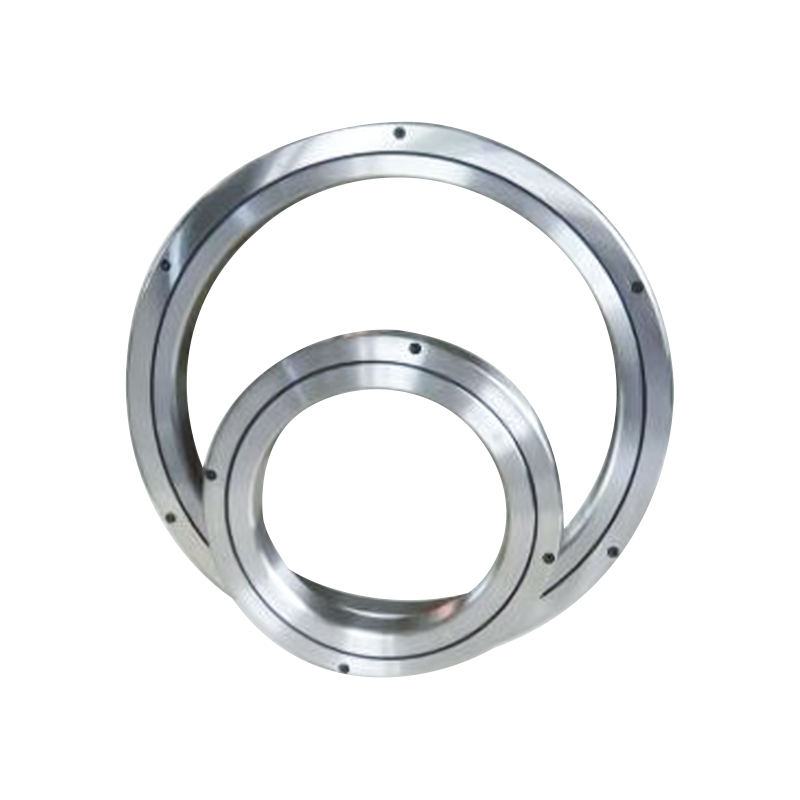
Outer Ring Separable, Inner Ring Integrated
In this design, the outer ring can be separated, but the inner ring remains fixed. This configuration is ideal for applications that require quick assembly and easy maintenance.
Outer Ring Integrated, Inner Ring Separable
Here, the inner ring is separable, which is useful when rotation of the inner ring is required without impacting the overall structure of the machine.
Both Outer and Inner Rings Integrated
This is a robust design used in high-performance applications where both the outer and inner rings are permanently integrated. It provides maximum rigidity and stability.
The working principle behind cross roller bearings is simple yet effective. When load is applied, the rollers are oriented at 90° angles to each other, allowing them to carry loads from different directions simultaneously. This crosswise arrangement distributes the load evenly across the rollers, ensuring minimal deformation and high precision.
Cross roller bearings offer several advantages that make them indispensable in various machine tool applications. Here are some of the key benefits:
Due to their remarkable capabilities, cross roller bearings are widely used in a variety of industries. Some of the most common applications include:
Industrial Robots
Cross roller bearings are essential components in robotic joints and rotating parts of industrial robots. Their high rigidity and precise movement ensure that robots can handle heavy loads with minimal deviation. This is crucial in industrial automation, where precision is required in tasks such as assembly, painting, and welding.
Machine Tools and Precision Machinery
The rotational accuracy and load capacity of cross roller bearings make them ideal for use in precision machine tools. They are used in the rotary tables of machining centers, which require high-precision movement for tasks such as CNC machining.
Medical Equipment
In medical devices that require precise motion, such as surgical robots or diagnostic equipment, cross roller bearings provide the required accuracy and reliability. Their ability to handle loads from all directions ensures stable movement in sensitive medical machinery.
Measuring Instruments
Cross roller bearings are also employed in precision measuring instruments, where even the slightest deviation in movement can lead to incorrect measurements. The bearings help maintain accuracy in equipment used for measurements in laboratories and industrial settings.
Rotary Tables
Cross roller bearings are commonly used in rotary tables for precision tasks. Whether in a machining center or a laboratory setting, the high load-carrying capacity and precision provided by these bearings ensure smooth and accurate rotation.
| Feature | Details |
|---|---|
| Structure | Cylindrical rollers arranged at 90° angles in V-shaped raceways |
| Load Handling | Handles radial, axial, and overturning moment loads simultaneously |
| Precision | High rotational accuracy and minimal deflection |
| Size | Compact design for space-saving applications |
| Applications | Industrial robots, precision machine tools, medical equipment, etc. |
| Rigidity | High rigidity for handling high torque loads |
| Durability | Long lifespan and minimal maintenance required |
| Bearing Types | Outer ring separable, inner ring integrated; both rings integrated |
UKL Bearing Manufacturing Co., Ltd. is a prominent industrial and trading enterprise in China, known for its excellence in precision bearing manufacturing. Combining research and development (R&D), production, and sales, UKL has positioned itself as a leading provider of high-performance bearing solutions, catering to industries with exceptional demands for precision and reliability.
As a professional bearing factory, UKL specializes in creating high-quality bearings that meet the rigorous standards required for various industrial applications. Their expertise spans across multiple industries, including machine tools, robotics, medical devices, and more, ensuring that customers receive technical support and tailored solutions to meet their unique needs.
Key Capabilities of UKL Bearing Manufacturing Co., Ltd.:
UKL Bearing Manufacturing Co., Ltd. is committed to providing precision bearings that help drive efficiency and performance across industries worldwide, supporting businesses with high-quality, reliable products.
The bearing assembly process is a critical step in ensuring the quality and functionality of the final product. In the video, you will witness the meticulous process of bearing assembly, where skilled technicians carefully install the rolling elements, such as steel balls or rollers, into the bearing’s raceways. This process requires precision and attention to detail to ensure that the bearings function smoothly under load and perform reliably over time.
Cross roller bearings are an essential component in precision machinery, offering unparalleled benefits in terms of load handling, rigidity, and accuracy. Their ability to simultaneously handle multiple load types makes them ideal for applications across various industries, including robotics, machine tools, medical devices, and measuring instruments. Whether for high-precision tasks or for minimizing space without compromising on performance, cross roller bearings provide an invaluable solution for modern machinery.
By understanding the structure, advantages, and applications of cross roller bearings, engineers and manufacturers can make informed decisions when choosing bearings for their equipment. With continued innovation, these bearings will undoubtedly continue to play a vital role in the advancement of precision machinery.
1. What is the main advantage of using cross roller bearings in machinery?
Cross roller bearings offer high rigidity and precision while occupying minimal space. They can handle radial, axial, and overturning moment loads simultaneously, which is ideal for applications requiring multi-directional load-bearing capacity.
2. In which industries are cross roller bearings commonly used?
Cross roller bearings are widely used in industries such as robotics, precision machine tools, medical equipment, and measuring instruments.
3. What are the types of cross roller bearings available?
There are three main types of cross roller bearings: outer ring separable, inner ring integrated; outer ring integrated, inner ring separable; and both outer and inner rings integrated.
4. How do cross roller bearings improve precision in machinery?
The crosswise arrangement of the rollers allows for high rotational accuracy and minimal deflection, ensuring that machinery operates with the highest precision, even under heavy loads.
5. Are cross roller bearings easy to maintain?
Yes, cross roller bearings are designed for long-lasting durability and require minimal maintenance. Their internal structure helps reduce wear and tear, extending the lifespan of the machinery.
Product Categories
Contact Us

Jane@ukl-bearing.com
Jenny@ukl-bearing.com
Andy@ukl-bearing.com
Ivy@ukl-bearing.com

+86-510- 88763239
+86-15371057968

No.1 Hehuan Road, Hudai Town, Binhu District, Wuxi City.
Ready to Begin?
Get in Touch

Now!
UKL BEARING
 English
 Español
 русский