What defines true precision in rotational systems, and how can mechanical components maintain accuracy under complex load conditions without compromising stability?
In modern industrial environments, achieving consistent rotational precision is essential for performance, efficiency, and product quality. This demand has led to the widespread adoption of advanced bearing solutions, among which the YRT bearing has emerged as a critical component.
Designed specifically for applications requiring high axial and radial load capacity combined with precise positioning, the YRT precision turntable bearing integrates structural rigidity with rotational accuracy. Its ability to support bidirectional axial loads, radial forces, and tilting moments makes it indispensable in systems where even minor deviations can lead to performance degradation.
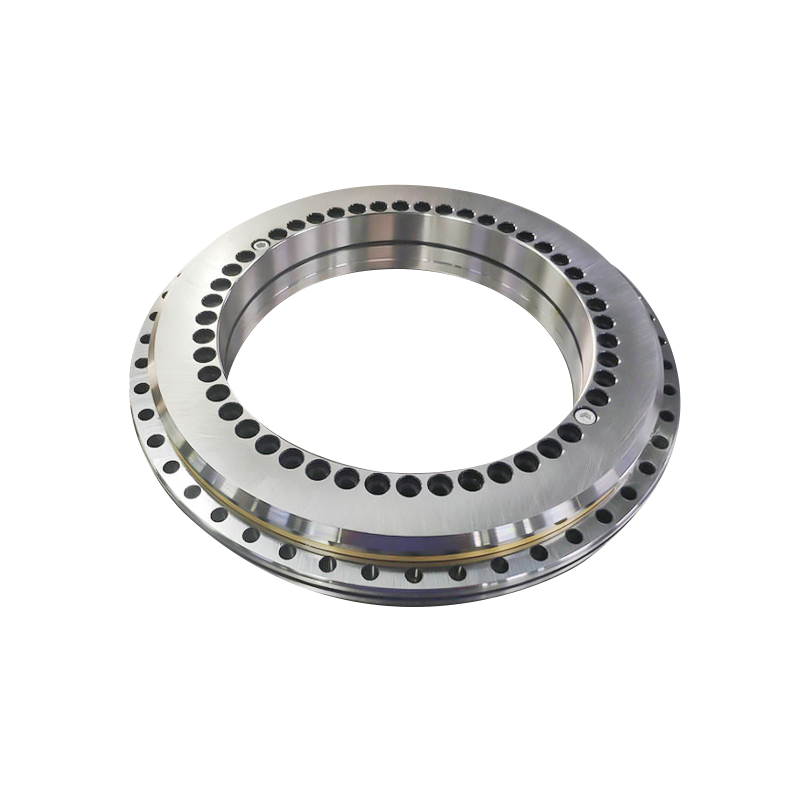
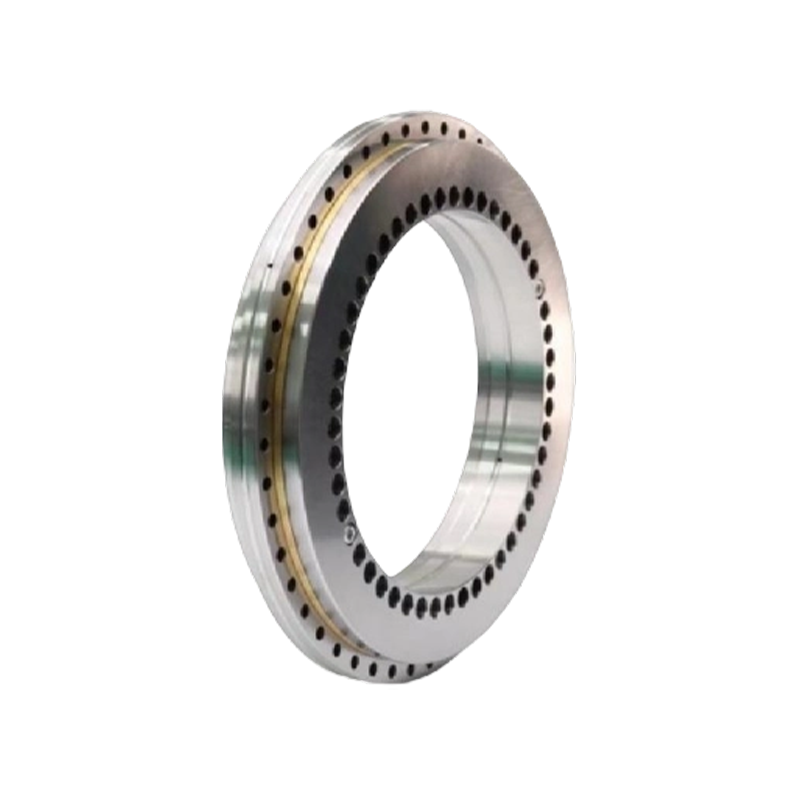
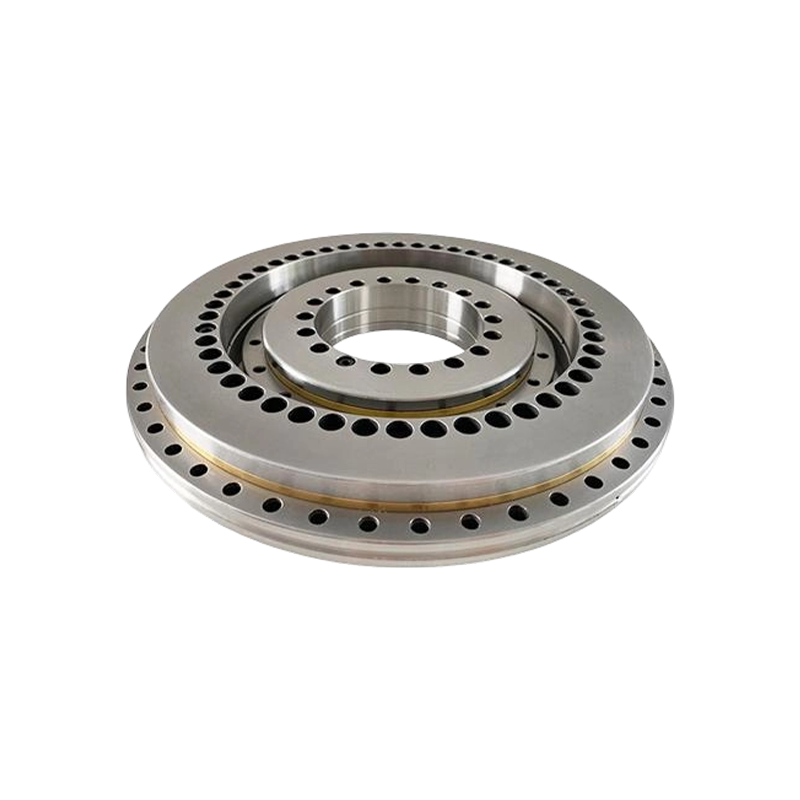
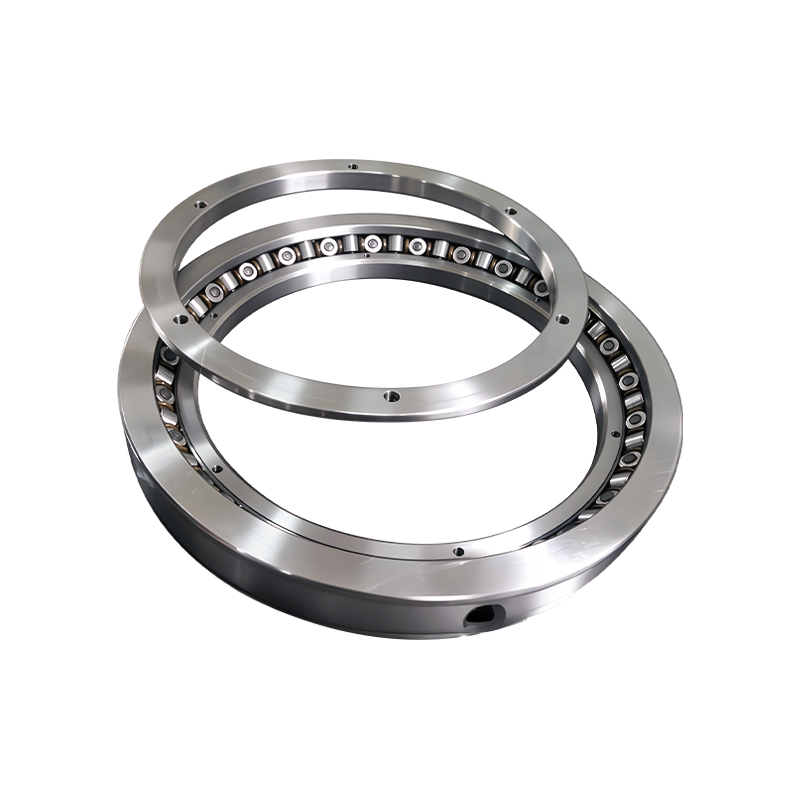
A YRT bearing is a type of rotary table bearing engineered for precision positioning systems. It consists of axial and radial rolling elements arranged in a compact structure, allowing it to handle complex loads while maintaining high rotational accuracy.
The typical structure of a YRT bearing includes:
This integrated design ensures that the bearing can simultaneously support multiple load directions without requiring additional support components.
The YRT precision turntable bearing operates by distributing loads across its axial and radial rolling elements. The axial rollers handle thrust loads, while the radial rollers manage lateral forces. This dual arrangement ensures smooth rotation and precise positioning, even under varying load conditions.
The performance of YRT bearings is defined by several core characteristics that distinguish them from conventional bearing solutions.
YRT bearings are designed with tight manufacturing tolerances, enabling minimal runout and precise positioning. This makes them suitable for applications where angular accuracy is critical.
The combination of axial and radial rolling elements allows these bearings to support:
This multi-load capability enhances system stability.
The preloaded design of a YRT bearing minimizes internal clearance, resulting in high stiffness. This rigidity reduces deformation under load and ensures consistent performance.
Despite their complex functionality, YRT bearings maintain a relatively compact structure, making them ideal for systems with limited installation space.
YRT precision turntable bearings are typically equipped with mounting holes, simplifying installation and alignment in mechanical systems.
| Feature | YRT Bearing | Conventional Bearings |
|---|---|---|
| Load Handling | Axial + Radial + Moment | Usually single-direction load |
| Rotational Accuracy | High | Moderate |
| Structural Rigidity | High | Lower |
| Integration Complexity | Low (integrated design) | Higher (multiple components) |
| Application Suitability | Precision positioning systems | General machinery |
| Preload Capability | Yes | Limited |
The versatility of YRT bearings makes them suitable for a wide range of precision-driven industries.
In machine tool systems, rotational accuracy directly affects machining quality. YRT precision turntable bearings are commonly used in rotary tables, indexing heads, and spindle systems to ensure consistent positioning.
Precision motion control is essential in automated systems. YRT bearings provide stable rotational support for robotic arms, assembly platforms, and positioning devices.
Instruments that require precise angular movement rely on YRT bearings to maintain measurement accuracy and repeatability.
High-performance engineering systems demand components that can operate under complex load conditions while maintaining precision. YRT bearings meet these requirements with their robust design.
YRT bearings maintain consistent performance even under fluctuating loads. Their rigid structure minimizes vibration and ensures smooth rotation.
Optimized rolling element design reduces friction, improving efficiency and extending service life.
Due to their preload and structural integrity, YRT bearings maintain accuracy over extended operational periods.
Choosing the right YRT bearing requires careful evaluation of several factors.
Understanding the magnitude and direction of loads is essential for selecting an appropriate bearing size and configuration.
Although YRT bearings are optimized for precision rather than high speed, operating conditions must still be considered to ensure optimal performance.
Factors such as temperature, contamination, and lubrication conditions can influence bearing performance.
Different applications require varying degrees of accuracy. Selecting the correct precision grade ensures optimal system performance.
Proper installation is critical for achieving the full performance potential of a YRT bearing.
Adequate lubrication reduces wear and enhances performance. Depending on the application, grease or oil lubrication may be used.
Routine checks help identify potential issues early, ensuring continuous operation and preventing unexpected failures.
The increasing demand for precision and efficiency in industrial systems has driven the adoption of YRT precision turntable bearings.
By providing stable and accurate rotational movement, YRT bearings enhance overall system efficiency.
Their integrated design eliminates the need for multiple bearing components, simplifying system architecture.
High rigidity and load capacity contribute to reliable operation, even in demanding environments.
YRT bearings represent a sophisticated solution for high-precision rotational movement, combining structural rigidity, load capacity, and accuracy in a compact design. Their ability to support complex loads while maintaining precise positioning makes them essential in modern industrial systems.
From machine tools to automation equipment, the YRT precision turntable bearing continues to play a vital role in enabling reliable and efficient rotational performance.
1. What is a YRT bearing used for?
A YRT bearing is primarily used in applications requiring high-precision rotational movement, such as rotary tables, indexing systems, and positioning equipment.
2. How does a YRT precision turntable bearing differ from standard bearings?
Unlike standard bearings, a YRT precision turntable bearing can handle axial, radial, and moment loads simultaneously, offering higher accuracy and rigidity.
3. Are YRT bearings suitable for high-speed applications?
YRT bearings are optimized for precision and load capacity rather than high speed. They perform best in moderate-speed, high-accuracy environments.
4. What factors affect the performance of a YRT bearing?
Key factors include load conditions, installation accuracy, lubrication, and environmental conditions.
5. How can the lifespan of a YRT bearing be extended?
Proper installation, regular maintenance, and adequate lubrication are essential for maximizing the lifespan and performance of a YRT bearing.
Product Categories
Contact Us

Jane@ukl-bearing.com
Jenny@ukl-bearing.com
Andy@ukl-bearing.com
Ivy@ukl-bearing.com

+86-510- 88763239
+86-15371057968

No.1 Hehuan Road, Hudai Town, Binhu District, Wuxi City.
Ready to Begin?
Get in Touch

Now!
UKL BEARING
 English
 Español
 русский