
Content
Modern manufacturing has entered an era where precision is no longer an advantage but a basic requirement. Among all CNC equipment, the 5-axis machining center represents one of the most advanced forms of metal cutting technology. It enables simultaneous movement across multiple axes, allowing complex geometries, curved surfaces, and high-accuracy components to be produced in a single setup.
In this highly dynamic system, bearings for 5-axis machining centers play a foundational role. They are not merely supporting components; they are the core elements that determine rotational accuracy, spindle stability, and overall machining quality. Without high precision spindle bearings, even the most advanced CNC control system cannot deliver consistent results.
As machining speeds increase and tolerances become tighter, the demand for low vibration bearing solutions for 5-axis machining centers continues to grow. These bearings must handle extreme rotational speeds, heavy combined loads, and continuous thermal stress while maintaining microscopic accuracy.
A 5-axis machining system operates through complex synchronization between linear and rotary movements. Each axis depends on smooth mechanical motion, and bearings are the interface that ensures this motion remains stable and controlled.
Unlike traditional 3-axis machines, 5-axis systems continuously adjust tool orientation. This means spindle bearings must maintain stability even during rapid directional changes. Any microscopic deviation can result in surface defects or dimensional errors.
High-speed machining generates significant centrifugal forces. High precision spindle bearings are designed to minimize friction and heat buildup, ensuring consistent performance even under extreme rotational speeds.
Vibration is one of the most critical challenges in CNC machining. Even minimal oscillation can affect tool life and surface finish. Low vibration bearing solutions for 5-axis machining centers help absorb and distribute mechanical energy, improving machining consistency.
Different machining requirements demand different bearing structures. The selection of bearing type directly influences performance, durability, and accuracy.
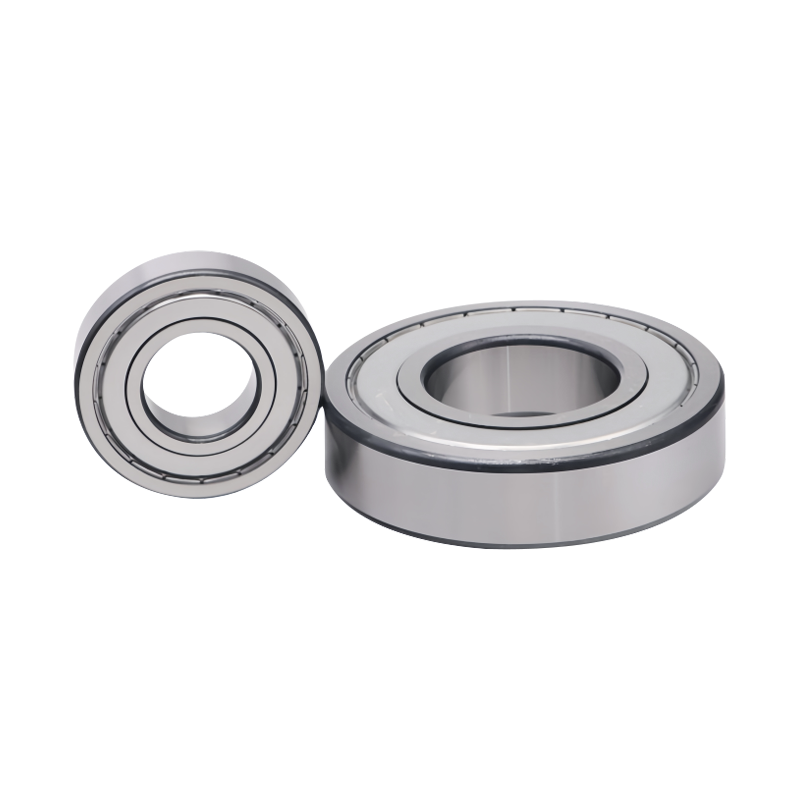
Angular contact bearings are widely used in spindle systems due to their ability to handle both axial and radial loads simultaneously. Their design allows high-speed operation while maintaining precision alignment.
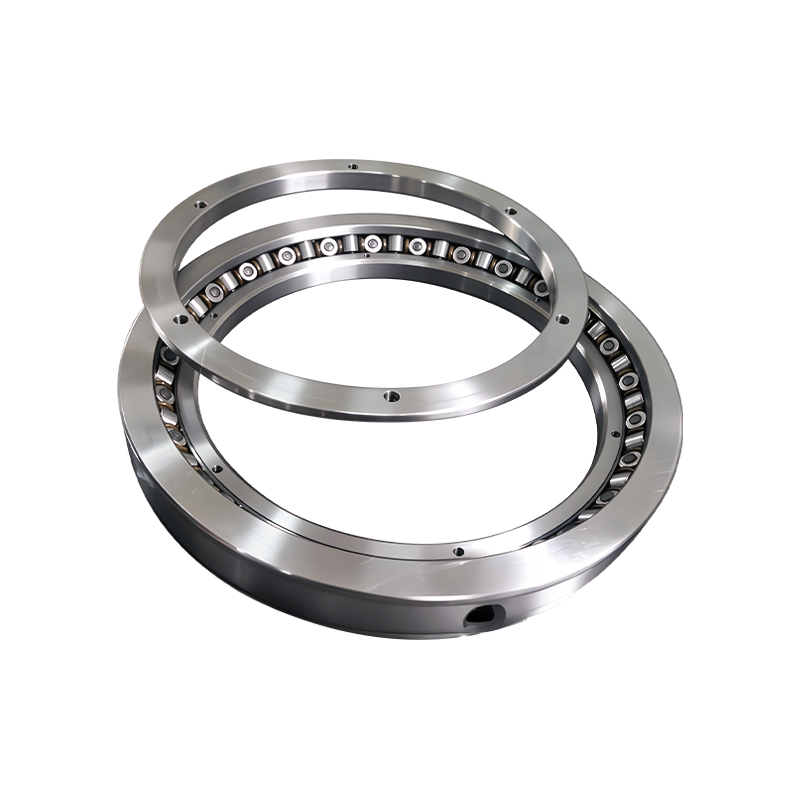
These bearings are optimized for high radial load capacity. They are commonly used in heavy-duty machining applications where structural rigidity is required.
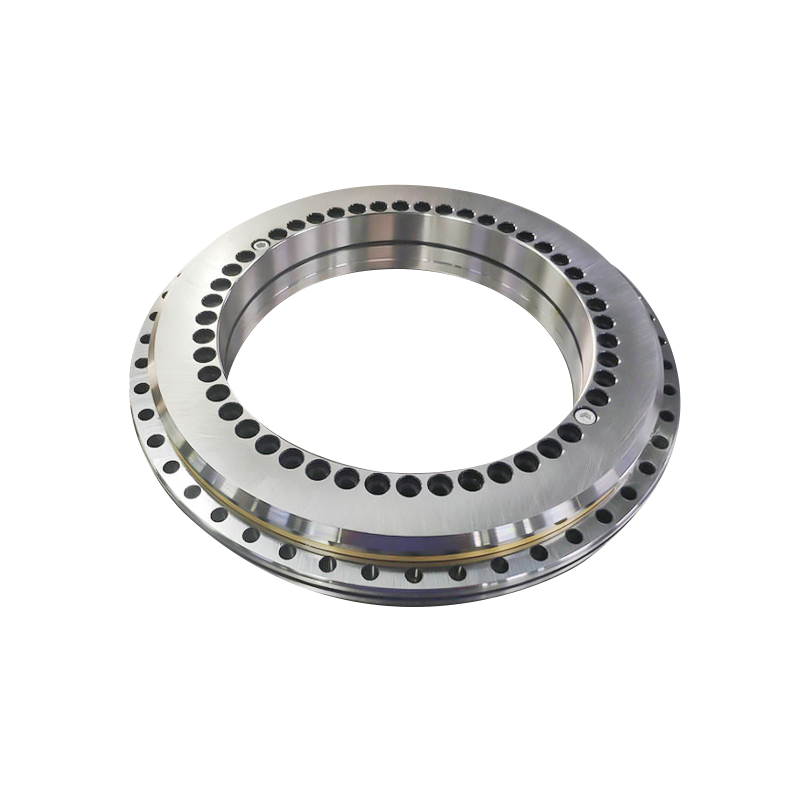
Thrust bearings are responsible for managing axial loads, particularly in rotary tables and indexing systems. They ensure stable positioning during directional changes.
Hybrid bearings combine ceramic rolling elements with steel rings. This structure reduces friction, enhances speed capability, and improves thermal resistance.
| Bearing Type | Load Capacity | Speed Performance | Key Advantage | Application Area |
|---|---|---|---|---|
| Angular Contact Bearings | Medium | High | Precision + speed balance | Spindle systems |
| Cylindrical Roller Bearings | High | Medium | Load resistance | Heavy machining |
| Thrust Bearings | Axial only | Medium | Position stability | Rotary tables |
| Hybrid Ceramic Bearings | Medium | Very high | Low friction, heat resistance | High-speed spindles |
High precision spindle bearings are the heart of modern machining centers. They directly influence machining accuracy, surface finish quality, and system efficiency.
High precision spindle bearings are manufactured with extremely tight tolerances. They are designed to minimize runout, reduce friction, and maintain stability under high-speed conditions.
In 5-axis machining centers, even micron-level deviations can affect final product quality. High precision spindle bearings ensure that rotational motion remains consistent, allowing tool paths to be executed exactly as programmed.
Heat generation is a natural byproduct of high-speed rotation. If not properly controlled, thermal expansion can lead to dimensional drift. Advanced bearing systems are designed to maintain thermal balance and reduce deformation risk.
UKL Bearing Manufacturing Co., Ltd. (Wuxi) is recognized for developing high-performance spindle bearing systems that meet these requirements. As a professional bearing manufacturing company in China, UKL integrates precision engineering with industrial production to deliver stable and reliable bearing solutions for demanding CNC environments.
| Performance Factor | Standard Bearings | High Precision Spindle Bearings |
|---|---|---|
| Rotational Accuracy | Moderate | Extremely high |
| Vibration Control | Basic | Advanced damping |
| Heat Resistance | Limited | Optimized thermal stability |
| Speed Capability | Medium | High-speed optimized |
| Surface Finish Quality | Average | Superior |
Vibration control is a key engineering challenge in CNC machining. It affects surface finish, tool wear, and dimensional accuracy.
Vibration in machining centers typically comes from spindle imbalance, cutting forces, and mechanical misalignment. Bearings must compensate for these dynamic disturbances.
Low vibration bearing solutions for 5-axis machining centers often involve optimized raceway geometry, precision grinding, and improved lubrication systems.
Reducing vibration leads to smoother cutting processes, extended tool life, and improved surface quality. It also enhances machine stability during high-speed operations.
UKL Bearing Manufacturing Co., Ltd. (Wuxi) utilizes advanced grinding and automated assembly processes to ensure consistent vibration control performance across its product range.
Selecting the right bearing system is critical for achieving optimal CNC performance. Several engineering factors must be considered.
Different machining tasks require different load capacities. Combined radial and axial loads are common in 5-axis systems.
High-speed machining requires bearings with low friction and excellent thermal stability.
Higher precision classes ensure tighter tolerances and better rotational accuracy.
Proper lubrication reduces wear and improves operational lifespan.
UKL Bearing Manufacturing Co., Ltd. (Wuxi) provides technical support for global industries with exceptionally high precision requirements. With more than 200 skilled professionals and a fully modernized production base, UKL covers forging, annealing, turning, heat treatment, grinding, and automated assembly, ensuring full control over bearing quality and performance.
| Selection Factor | Standard Requirement | High-End CNC Requirement |
|---|---|---|
| Speed | Moderate operation | High-speed spindle systems |
| Precision | General machining | Ultra-precision manufacturing |
| Load Handling | Light to medium | Heavy-duty combined loads |
| Bearing Type | Standard ball bearings | Angular contact / hybrid ceramic |
| Thermal Control | Basic cooling | Advanced thermal stability |
Proper maintenance ensures long-term stability and consistent performance.
Lubrication reduces friction and prevents premature wear. The correct lubricant type and interval are essential for performance.
Regular inspection helps detect early signs of wear, preventing unexpected downtime.
Temperature monitoring ensures that bearings operate within safe limits.
Scheduled maintenance improves system reliability and extends bearing lifespan.
In the field of industrial applications, UKL Bearing Manufacturing Co., Ltd. (Wuxi) places strong emphasis on product durability and reliability through advanced manufacturing processes and a rigorous quality control system.
As manufacturing continues to evolve toward higher precision and automation, bearings for 5-axis machining centers will remain a critical component in CNC systems.
Future developments will focus on:


Product Categories
Contact Us

Jane@ukl-bearing.com
Jenny@ukl-bearing.com
Andy@ukl-bearing.com
Ivy@ukl-bearing.com

+86-510- 88763239
+86-15371057968

No.1 Hehuan Road, Hudai Town, Binhu District, Wuxi City.
Ready to Begin?
Get in Touch

Now!
UKL BEARING
 English
 Español
 русский
