Content
In the rapidly evolving field of medical technology, even the smallest component can determine the success of a life-saving device. Among these, medical equipment bearings play a silent yet critical role. From robotic surgical arms to MRI rotators, the demand for reliability, hygiene, and performance has never been higher.
While traditional materials may work in less demanding environments, medical devices often require superior corrosion resistance and cleanability. Stainless steel bearings, ceramic components, and advanced plastics are becoming the new standard. These materials withstand repeated exposure to bodily fluids, harsh chemicals, and sterilization processes. For instance, autoclavable bearings must endure high-temperature steam cycles without degradation. Seals and shields further protect internal raceways from contamination, directly extending service life.
Choosing the right lubrication is as critical as the bearing material itself. Medical equipment often operates in sensitive environments where standard greases are not permitted. Some devices require food grade lubricants for bearings, classified as H1 (incidental contact), H2 (no contact), or H3 (rust prevention). Additionally, the lubrication strategy—whether single lifetime lubrication or periodic regreasing—affects both maintenance schedules and device longevity. The right amount and type of oil or grease ensure smooth operation across varying temperatures and chemical exposures.
Applications like dental drills and medical saws routinely exceed 400,000 RPM. Such extreme speeds demand specialized solutions. High speed bearings with higher precision grades (equivalent to ABEC 5 or 7) minimize heat generation and vibration. Angular contact bearings are particularly well-suited for these scenarios, as their design maintains stability under rapid rotation. Tighter raceway tolerances further enhance speed performance, making them a preferred choice for manufacturers of high-RPM medical tools.
Patient and staff comfort is directly tied to equipment acoustics. Low noise bearings for medical devices are essential, especially in imaging suites or operating theaters. Excessive noise often stems from inadequate internal clearance, overloading, or overly loose fits that cause micromotion. By optimizing fit and clearance, manufacturers can achieve years of quiet, smooth operation. Reducing noise not only improves the clinical environment but also signals long-term mechanical health.
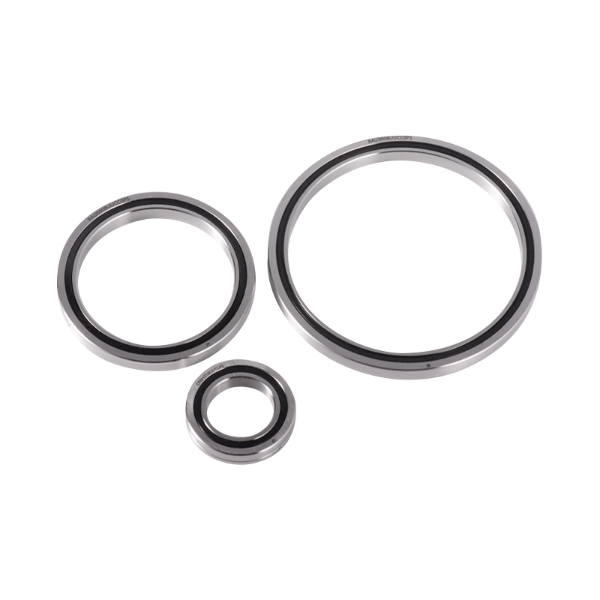
Many medical tools, such as endoscopic cameras or handheld surgical drivers, have severe space constraints. Engineers need small space bearing solutions for medical equipment that deliver full functionality without expanding footprints. Miniature ball bearings and thin section bearings are ideal for such applications. They provide excellent load capacity and rotational accuracy while occupying minimal volume, enabling next-generation miniaturized medical devices.
| Selection Factor | Key Requirement | Typical Solutions |
|---|---|---|
| Material | Corrosion & heat resistance | Stainless steel, ceramic, plastic |
| Lubrication | Biocompatibility & compliance | H1/H2/H3 food grade lubricants |
| High Speed | Stability above 400,000 RPM | Angular contact, ABEC 5/7 precision |
| Low Noise | Patient & staff comfort | Optimized clearance & fit |
| Small Spaces | Compact yet powerful | Miniature ball & thin section bearings |
Selecting the correct bearings directly impacts device safety, lifespan, and regulatory approval. As a professional bearing factory and bearing manufacturing company in China, UKL Bearing Manufacturing Co., Ltd. (Wuxi) supports medical equipment developers with high-performance bearing solutions tailored to precision-demanding applications. From autoclavable stainless steel designs to low-noise high-speed variants, UKL provides technical support without relying on generic off-the-shelf components.
Q1: What are the most common materials for medical equipment bearings?
A1: The most common materials include stainless steel (for corrosion resistance), ceramic (for high speed and electrical insulation), and medical-grade plastics (for lightweight, non-magnetic needs).
Q2: Why do some medical devices require food-grade lubricants in bearings?
A2: Food-grade lubricants (H1, H2, H3) are required to meet safety regulations in environments where there is even a remote chance of incidental contact with patients or sterile fields, ensuring non-toxic operation.
Q3: Can standard bearings handle the high speeds of surgical drills?
A3: No. Standard bearings typically cannot sustain RPMs above 400,000. High speed bearings with precision grades like ABEC 5/7 and angular contact designs are necessary for such applications.
Q4: How does bearing noise affect medical equipment performance?
A4: Excess noise indicates potential issues like insufficient clearance or overloading. Low noise bearings not only improve patient comfort but also suggest smoother operation and longer device life.
Q5: What bearing types are best for very small medical devices?
A5: Miniature ball bearings and thin section bearings are ideal for small spaces. They deliver high rotational accuracy and reliability without taking up significant design space.
For more information on custom-engineered bearing solutions for medical applications, contact UKL Bearing Manufacturing Co., Ltd. (Wuxi) – your reliable partner in precision manufacturing.
Product Categories
Contact Us

Jane@ukl-bearing.com
Jenny@ukl-bearing.com
Andy@ukl-bearing.com
Ivy@ukl-bearing.com

+86-510- 88763239
+86-15371057968

No.1 Hehuan Road, Hudai Town, Binhu District, Wuxi City.
Ready to Begin?
Get in Touch

Now!
UKL BEARING
 English
 Español
 русский